Reviewed · LIMA TOURS
8-Days Peru, The Rise of the Inca Empire
This 8-day Rise of the Inca Empire itinerary is interesting because it stitches together Lima, Cusco, the Sacred Valley, Machu Picchu, and Lake Titicaca with pre-arranged transport. I love the combo of Qorikancha stonework and Sacsayhuaman fortress views, plus the colonial-era stops in Lima. I also like that the pacing is structured around major highlights, so you are not constantly figuring out logistics. The main drawback to consider is that Machu Picchu is timed and circuit-based, so the day can feel less flexible than an independent visit.
With a maximum group size of 15, you usually get easier movement through popular sites and less scrambling at each transfer. It is also the kind of trip where value comes from the bundled pieces, like airport transfers, train tickets, key admissions, and multiple meals. Still, I suggest you stay on top of timing, especially around Machu Picchu, and get the exact hotel and daily schedule in writing before you arrive.
Key highlights at a glance
- UNESCO Lima old town plus the Larco Museum for a fast start to Peru’s layers of culture
- Qorikancha, Cusco Cathedral, and Sacsayhuaman in one Cusco-focused day
- Sacred Valley classics including Pisac market time and the science-y farming terraces of Moray
- Maras salt pans with the iconic white pools on red clay hills
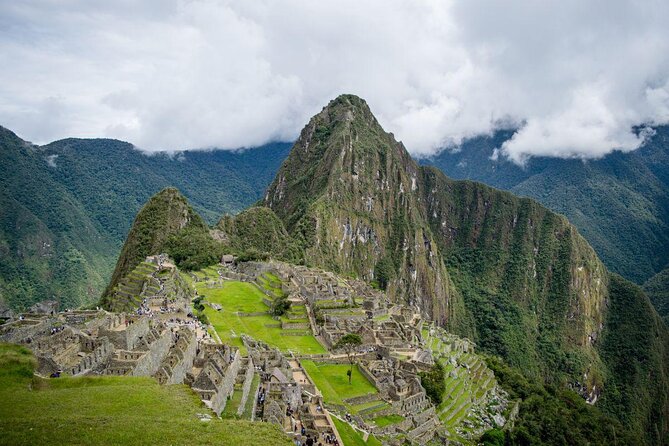
- Machu Picchu by train and bus with a coordinated visit and lunch
- Lake Titicaca Uros and Taquile with typical lunch included
A Rail-to-Relics Route from Lima to Puno
This tour does something I like for first-timers: it saves you from doing the hardest planning parts yourself. You go from Lima to Cusco, then into the Sacred Valley, then Machu Picchu by train, and finally down to Puno for Lake Titicaca. By the time you finish in Puno, you are set up to keep going into Bolivia or just continue onward in Peru.
The logistics are a big part of the appeal. You get pickup and drop-off at the Lima and Cusco airports, plus pre-arranged transport between regions. That matters in Peru, where distances are real and “just figure it out” can quietly eat your energy.
The group size cap at 15 also helps. You tend to get a bit more personal attention, and it is easier for your guide to manage timing when everyone needs to reach gates, buses, or lunch windows.
A few more Lima days worth comparing
- Premium Paracas & Huacachina Day Trip from Lima with Sunset Toast
★ 5.0 · 7,380 reviews - Full Day Tour From Lima: Paracas and Huacachina Oasis
★ 5.0 · 3,694 reviews - Lima Ultimate Peruvian Food Tour
★ 5.0 · 1,845 reviews
Day 1 in Lima: UNESCO Centro Historico and Museo Larco
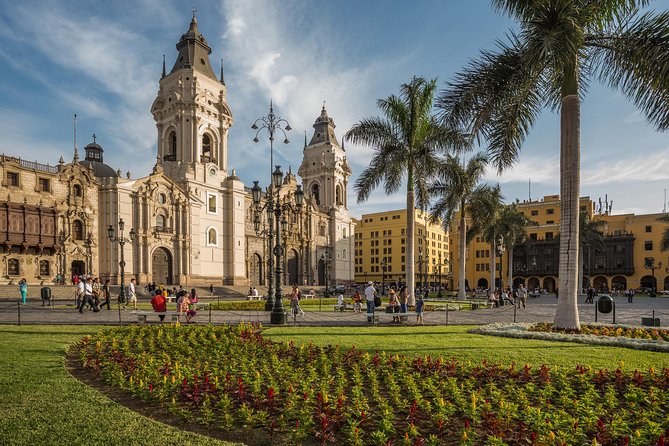
Lima kicks things off with an intense walking and viewing day in the Centro Historico de Lima, a UNESCO World Heritage Site. If you want a quick sense of how colonial Lima shaped the modern city, this is a strong start.
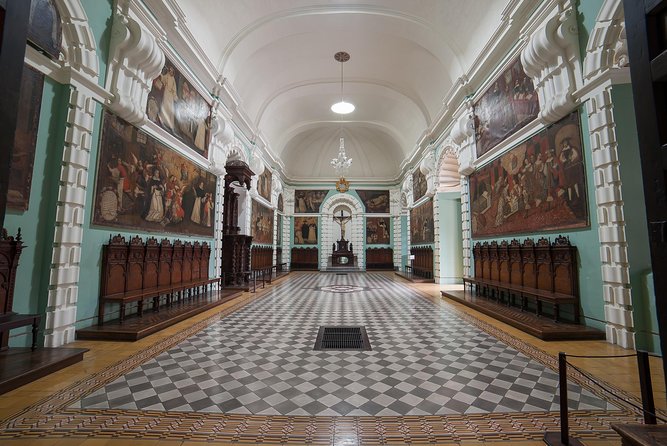
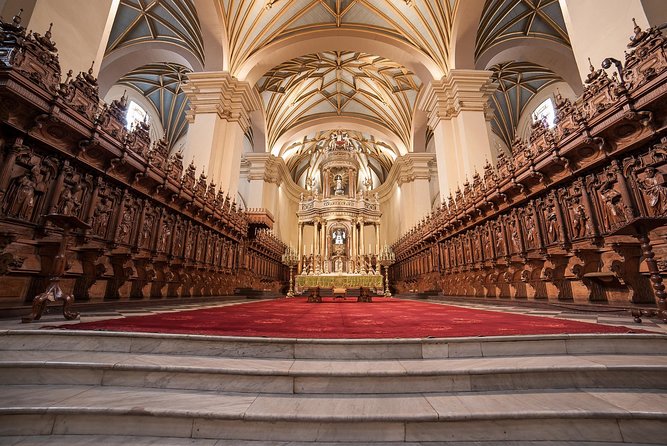
You begin at the Convent of Santo Domingo, rooted in the early foundation era of Lima. From there, the tour connects to the Universidad Mayor de San Marcos, which is famously tied to some of the oldest academic roots in the Americas. You also get a look at historic interior details, like choir stalls and a library collection described as holding around 25,000 books, including some printed as far back as the 15th century.
One of the most human moments in this area is the connection to religious figures, including the mortal remains of San Martín de Porres, San Juan Masías, and Santa Rosa de Lima. Then you move through the Plaza Mayor area, with stops tied to the Government Palace, the Municipality, and the Cathedral, which is presented as a centerpiece of colonial-era art and architecture.
After downtown, you head to the Museo Larco. This museum is a great palate cleanser after colonial streets, because it focuses on ancient Peru. You will see gold pieces, textiles, and ceramics, including examples that the museum describes as erotic ceramics. If that theme is uncomfortable for you, just know it is part of the collection, and you can choose what you spend extra time on.
A practical advantage here is the way the visit supports context. You are not just looking at artifacts, you are getting a clearer picture of how these cultures expressed their cosmovision through art. And the visit includes time at the museum warehouse, which gives you a broader sense of how the collection is organized.
Day 2 in Cusco: Qorikancha, Cusco Cathedral, and Sacsayhuaman
Cusco day starts with a straightforward arrival flow: transfer to the airport, then a flight up, followed by meet and greet and a transfer to your hotel. The small warning I give you here is timing. Your flight Lima to Cusco should be in the morning, because arriving by noon can be too late for the rest of the plan.
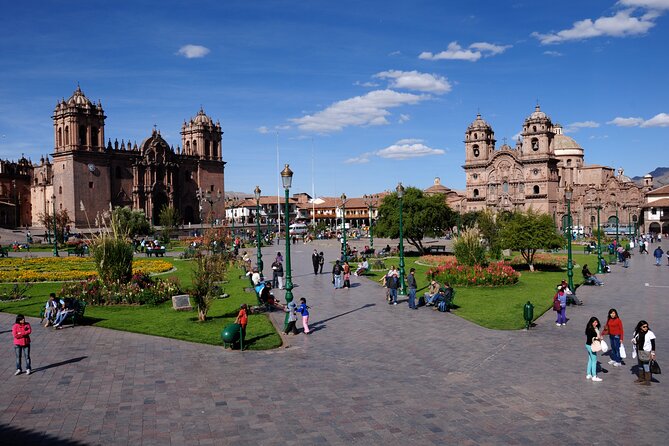
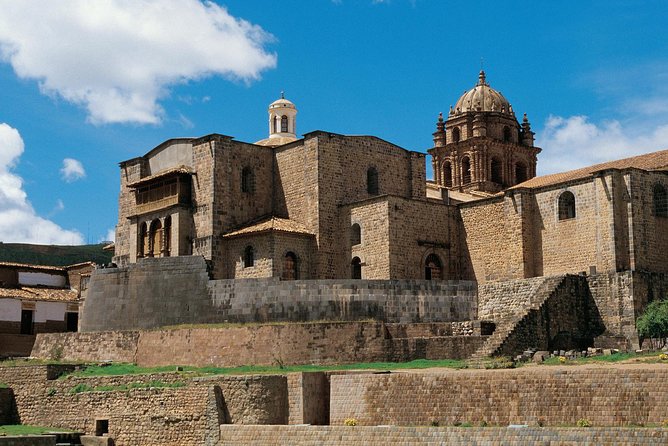
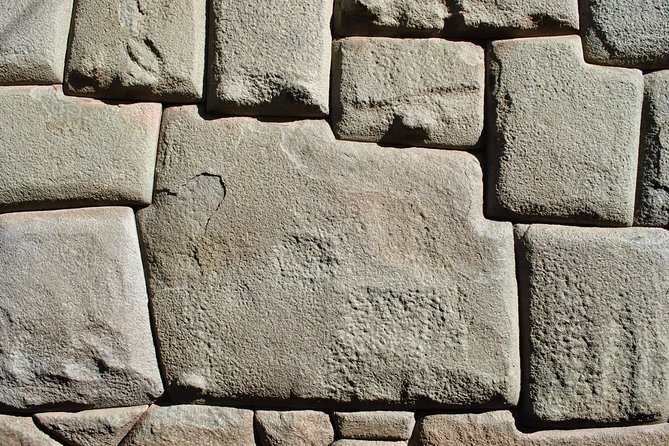
Once you are in Cusco, the first big hit is Qorikancha, the former Temple of the Sun, linked to Inti and described with legend about gold sheathing. Today, the key point is how the Inca foundation became the base for a colonial layer. The Convent of Santo Domingo sits on those Inca foundations, and you still get to admire the finely cut stonework beneath.
Next comes the Cusco Cathedral, built on Inca palace foundations. Here, the emphasis is art and symbolism. You see colonial-era paintings associated with the Cusco School of Art, which blended European techniques with indigenous symbolism. One particularly specific detail highlighted in the visit is the presence of an original cross brought by the first Spanish conquistadors.
Then you head out to Sacsayhuaman and nearby ceremonial sites. This is one of those places where you understand why people call Inca engineering impressive. The fortress area uses enormous stone blocks, described as standing over 4 meters high, fitted without mortar. The scale is the point, but so is the precision.
The tour continues with Q’enqo, a ceremonial center carved into rock, and Tambomachay, also called the Inca Baths. The focus there is on sacred springs flowing through crafted aqueduct channels. You also get Puca Pucará as a panoramic stop on the way back, described as an ancient military outpost tied to protecting the sacred city.
If you are sensitive to altitude, this day can still feel like a lot. But the upside is that the route is well planned, and the stops are close enough together that you are not spending your whole day fighting transit.
Sacred Valley Day 3: Pisac terraces, an artisan market, and Yucay culture demos
Day 3 is your Sacred Valley day, and it is not random. The Urubamba River and the valley’s climate are part of why the Incas cared so much about this region, so the tour frames each stop around that logic.
You begin at the Sacred Valley area, then head to Pisac, an Inca archaeological site perched high above the valley. Pisac is described as one of the most impressive and well-preserved complexes in the Sacred Valley, with terraces, engineering, and religious structures. The views from the ruins are a big part of why it feels memorable.
After exploring the site, you descend to Pisac village itself. This is where you get the layers in a different way: cobbled streets and adobe-style buildings that give the colonial-era feel while still sitting on older Inca foundations.
Then there is market time, and it is one of my favorite included activities because it is practical. You can shop for handmade textiles, ceramics, and silver jewelry directly from local artisans. If you want gifts that do not look like they were mass-produced five hours ago, this is where you can slow down and look for quality.
Later you visit the Inkariy Museum, described as showing representations of pre-Hispanic cultures. You also have lunch during this segment. After that, you go to the Yucay Live Culture Center, which is framed as a place where local settlers demonstrate textile weaving and dyeing, making adobes, and even preparing chicha, a corn-based drink. You also get an encounter with llamas and alpacas, which is a nice, low-pressure break between longer walking segments.
The only caution here is expectations. Culture centers and demonstrations are not always your idea of fun if you prefer pure archaeology. If you are open to the way traditional techniques are explained and shown, it is a valuable, hands-on moment.
A different kind of day out of Lima:
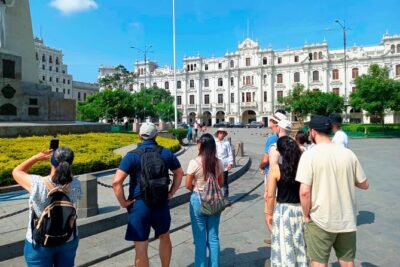
- Lima Half-Day City Walking Tour (Small Groups)
★ 5.0 · 1,508 reviews - Paracas and Huacachina Exclusive Sunset Picnic Tour
★ 5.0 · 1,398 reviews - Unmissable Visit To Paracas, Huacachina And Sunset In The Oasis
★ 5.0 · 1,138 reviews - Paracas, Ballestas Islands and Huacachina Guided Tour
★ 5.0 · 1,100 reviews
Sacred Valley Day 4: Moray microclimates and Maras salt pans
Day 4 leans into the “how did they do that?” side of Inca agriculture.
You start at Moray, known for circular terraces. The tour frames it as an agricultural laboratory that recreated many microclimates, described as up to 20 different conditions. That concept is a great reminder that the Incas were not only builders of stones, they were also masters of farming.
From there, you head to Salinas de Maras, the salt mines near the village of Maras. The salt pans have been used since pre-Inca times, and the tour notes that local families still work them today. You see thousands of small pools filled by salty spring water that evaporates under the sun, leaving salt behind.
This stop is also photo-friendly, because the white salt pools contrast with the surrounding red clay hills. But take the walking slowly. If you get the rhythm wrong on uneven ground, it is easy to rush and miss the whole point of the place.
Machu Picchu by Train: What to know about circuits and timing
If you are booking this tour, Machu Picchu is the headline. The plan takes you by train, starting with boarding at the Ollantaytambo station on a selected train. After arrival at the Machu Picchu station, you transfer by bus on a winding road with views over the Urubamba River canyon.
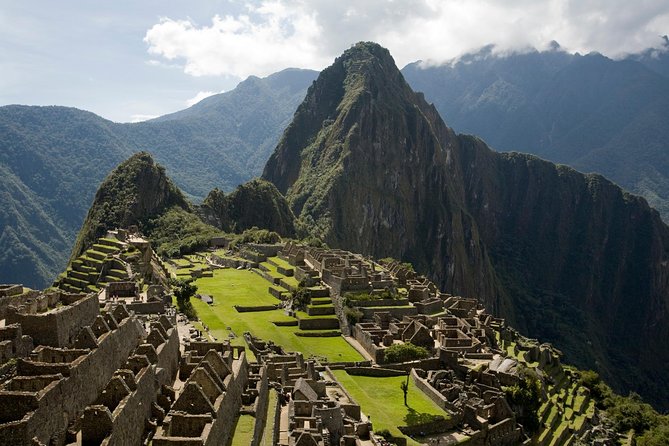
Once you reach the site, the tour covers Machu Picchu’s terraces, staircases, ceremonial areas, and urban sections. It is described as a place that feels full of energy, and that matches what most people experience when they finally stand at the top and see how the town was arranged.
Lunch is included as a buffet at Sanctuary’s Lodge, which is convenient. When food is already planned, you spend less time guessing and more time enjoying your visit.
Here is the important practical reality: Machu Picchu now uses visitor circuits. This tour states that the circuit with route 2 is prioritized, and if it is not available, you will be informed about route 3B or route 1B before tickets are issued. It also states that the Machu Picchu admission ticket is not refundable and date changes are not accepted. So, treat your scheduled date as locked.
The other timing factor is how your day flows after entry and lunch. If you are the type who hates rushing, build in patience mentally. Ask the operator, before you go, for the exact schedule around entry, lunch, and return. Getting those details in advance is the simplest way to protect your time and avoid a stressful scramble.
Comfort tips that matter here: wear shoes with grip, bring a light layer for changing temperatures, and keep your camera strap short so you can move quickly on stairs.
Cusco to Puno Travel Day: Andahuaylillas, Racchi, La Raya, and Pucara
Day 6 turns into a scenic but long travel day, moving by bus from Cusco to Puno.
Along the way, you stop first at Andahuaylillas for a chapel visit, then at Racchi, described as the Temple of the Wiracocha god, with walls and narrow streets highlighted. You also get a lunch segment during the drive.
Then you reach La Raya, described as the natural border between Cusco and Puno. This is one of those points where you get a sense of scale, because you are crossing from one highland zone into another.
Near the end of the day, you visit the Pucará Museum, and the tour also mentions a chance to get a local classic bull-shaped ceramic. You arrive in Puno at the end of the afternoon, which usually means you will have enough time to settle and orient yourself before dinner.
Because it is a bus day, I recommend you plan around comfort. Bring water, wear layers, and keep your own snacks ready in case you get hungry between stops.
Lake Titicaca Day 7: Uros floating islands and Taquile traditions
Now you are in Puno, and the next day is a full Lake Titicaca excursion.
The tour starts with the Uros floating islands, described as handmade islands made of totora reeds, with friendly inhabitants. The key value here is the living element. You are not just looking at a landmark, you are visiting communities that manage and maintain their homes.
Then you go to Taquile Island. The emphasis here is on tradition, with settlers maintaining ancestral customs and colorful typical clothes. You also get time to explore the island and enjoy what is described as the best view of the lake. Lunch is provided and described as typical.
This is the day where weather matters. Lake air can feel chilly even when the sun is out. If you get cold easily, pack a light jacket and keep it accessible.
Day 8: Your easy exit from Puno
Day 8 is simpler. You get a departure transfer and your services end in Puno. This is a smart ending point because Puno is an easy launchpad for continuing to Bolivia or returning to Lima at your own pace.
If you want more control after this trip, finishing in Puno gives you options. You are not stuck having to backtrack to Lima just to catch your next transport.
Price, inclusions, and what you still need to budget
At $1,280 per person, this is not a bargain-basement deal. But it is also not just a “guide and a map” package.
The price includes round-trip airport transfers between arrival and departure, city tour components, Sacsayhuaman tour, and the Machu Picchu excursion with admission plus a buffet lunch at Sanctuary’s Lodge. It also includes Cusco to Puno travel by bus with visits and lunch on route, station to hotel to airport transfers, and the Lake Titicaca day with Uros and Taquile plus typical lunch.
On top of that, you get 7 nights of accommodation in selected hotels, plus 7 breakfasts and 3 lunches. And importantly, you get the train tickets for Machu Picchu, specifically Voyager service tickets.
What is not included is flights and most food and drinks beyond what is listed. That means you still should budget for extra snacks, water, and drinks, plus personal expenses like tips and souvenirs.
If you are comparing value, focus on this: Machu Picchu transport and admissions are usually the biggest standalone cost on any Peru plan. This itinerary bundles them into an all-in structure with guided coverage.
Logistics that can make or break your trip
The big upside of this tour is security and structure. You are not piecing together rides across multiple regions with strangers and last-minute ticket hunts.
The big downside is what I call timing rigidity. Machu Picchu entry circuits can determine how long you stay in specific areas. Also, the tour notes you need passport details at booking for confirmation. This is normal for Machu Picchu tickets, but it means you should not treat paperwork as an afterthought.
Altitude is another factor. The tour explicitly advises bringing medicine or asking your doctor if you suffer from altitude sickness. Even if you have been fine on other trips, this is wise in Cusco and the Sacred Valley zones.
Finally, I recommend you request a clear daily schedule and hotel names well ahead of time. A coordinated trip should feel organized each day. If you wait until the last moment for details, your stress level goes up fast, especially around Machu Picchu.
Who this 8-day Inca Empire tour is for
This is a great fit if you want a guided overview of the Rise of the Inca Empire story, from colonial foundations in Lima through Inca architecture and into Lake Titicaca communities. It also suits travelers who prefer pre-arranged transport and hate the time drain of independent connections.
It is especially good for people who like a strong list of major stops, like Pisac, Moray, Maras, and Machu Picchu, without having to build the day-by-day plan yourself.
If you are the type who wants long, free roaming time at Machu Picchu, or you want to linger without thinking about lunch windows and train timing, you may find the schedule feel tight. In that case, you can still enjoy the sites, but you should manage expectations about flexibility.
Should you book this Peru 8-day Inca Empire itinerary?
Book it if you want an organized route with pre-arranged transport, major sites handled for you, and a strong sweep of Peru’s Inca-era highlights plus Lake Titicaca. You are also set up well at the end in Puno if you want to keep moving toward Bolivia.
Do not book it if Machu Picchu timing flexibility is your top priority, or if you absolutely need a lot of free hours after the main site visit. If you choose to go anyway, fix the risk upfront by confirming your exact Machu Picchu circuit plan and getting your hotel names and daily schedule in writing before departure.
FAQ
FAQ
How long is the tour, and where does it start and end?
It runs about 8 days, starting with arrival and assistance in Lima, and ending in Puno with a departure transfer.
Are flights included?
No. Flight tickets are not included. The itinerary includes transfers and guided travel, but you handle the flights yourself.
What is included for Machu Picchu?
Machu Picchu is included with Voyager service train tickets, assistance for the bus ride to the site, admission ticket, and a buffet lunch at Sanctuary’s Lodge restaurant.
What should I know about Machu Picchu visitor circuits?
The tour prioritizes circuit route 2. If route 2 is not available, you are informed about circuit 3B or circuit 1B so you can confirm before tickets are issued. Machu Picchu admission is not refundable, and date changes or amendments are not accepted.
Does the tour include any meals?
Yes. It includes breakfasts (7), plus lunches (3) and the Machu Picchu buffet lunch, plus typical lunch during the Uros and Taquile day. Food and drinks beyond what is specified are not included.
How many travelers are on this tour?
This tour/activity has a maximum of 15 travelers.
Recently reviewed around Lima
- Lima Highlights! – City Tour & Miraflores, Barranco & San Isidro★ 5.0 · 29 reviews
- Modern and Colonial Lima City Tour.★ 4.5 · 29 reviews
- Lima Surf Trip★ 5.0 · 29 reviews
- Full day Tour Paracas Ica & Huacachina from Lima.★ 5.0 · 29 reviews
- Bohemian and artistic ravine walking tour★ 5.0 · 29 reviews
- Discover Barranco’s Nightlife with Bar Crawl Lima★ 5.0 · 29 reviews
- Cooking Class + Market Tour + City Walking Tour (Full Day).★ 5.0 · 30 reviews
- Machu Picchu, Cusco & Lima 7-Day Tour★ 5.0 · 30 reviews
Lima Tours, compared.

Premium Paracas & Huacachina Day Trip from Lima with Sunset Toast
Read our review →
Full Day Tour From Lima: Paracas and Huacachina Oasis
Read our review →
Lima Half-Day City Walking Tour (Small Groups)
Read our review →
Paracas and Huacachina Exclusive Sunset Picnic Tour
Read our review →
Unmissable Visit To Paracas, Huacachina And Sunset In The Oasis
Read our review →
Paracas, Ballestas Islands and Huacachina Guided Tour
Read our review →