
Reviewed · MACHU PICCHU
Inca Trail To Machu Picchu
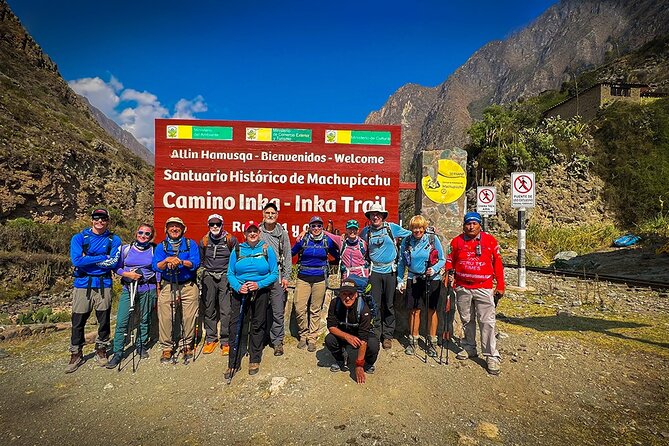
If you want Machu Picchu without the stress of planning every detail, this classic Inca Trail to Machu Picchu package is one of the smartest ways to do it. You’ll walk real Inca roads, sleep at mountain camps, and reach the citadel from Intipunku (Sungate), not from the back row.
What I like most is that the trail day is built around a solid support system, not just a guide and hope. You get authorized porters, a cook, full meals, hot water for hygiene, and camp setup, so you can focus on your breathing and your next viewpoint. The second big win is how much time you spend on the most memorable trail segments, including the big climb over Warmiwañusca pass (4,200 masl).
One consideration: this is not a casual walk. The days include steep climbs at high altitude, and the tour is listed for moderate fitness. If you’re expecting flat, leisurely hiking, you’ll be disappointed.
Key Highlights Worth Booking
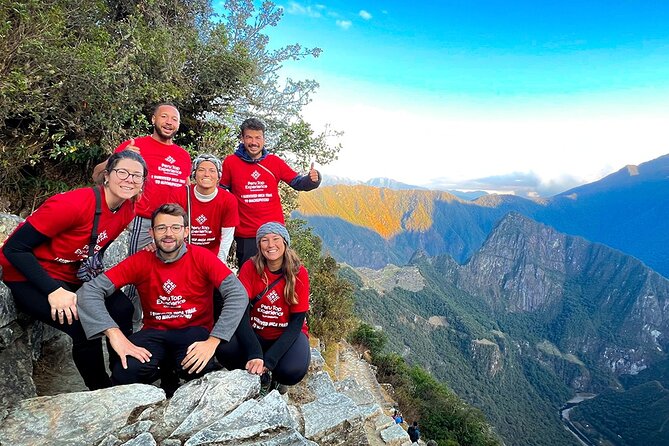
- Sungate arrival on Day 4 gives you a proper viewpoint moment before you enter Machu Picchu
- Full food plan with 3 breakfasts, 3 lunches, and 3 dinners, plus tea time to keep you going
- Warmiwañusca pass (4,200 masl) and multiple Inca sites along the way, so each day has a story
- Camping support that actually matters: tents, thick foam mats, dining tent, and kitchen equipment
- Safety extras included, like a radio transmitter, first aid kit, and an oxygen cylinder
- You travel with your own group (private tour style), not a random mix of strangers
The Inca Trail You Want: Walking In, Not Showing Up
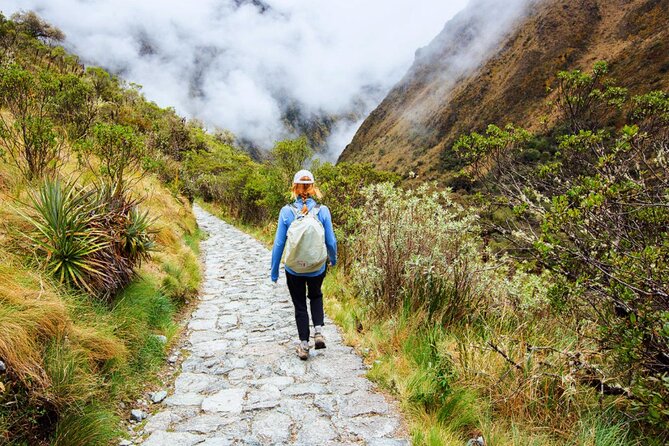
The best part of the classic Inca Trail experience is that Machu Picchu doesn’t feel like an add-on. It feels like the final scene of a film you lived for four days.
Day 1 starts with a calm transition out of Cusco. You get transport to the trail entry area, time for breakfast, and a first Inca site visit before you even reach camp. That sequencing matters because it takes the edge off day-one altitude and makes it easier to settle into a rhythm.
By Day 4, the hike has already filtered you into the right mindset. You’re not just waiting for a bus or checking a box. You reach Intipunku, look toward the citadel, and then finish with a descent to Machu Picchu and a structured visit to the main areas.
And yes, the view moments are real. You’re going to take photos because you’ll want proof later, but the real value is how the trail keeps changing. There are high passes, deep valleys, jungle edges, and archaeological stops that break the walking into something meaningful.
More Inca Trail departures:
- Classic Inca Trail Trek 4D/3N to Machu Picchu (Group Service)
★ 5.0 · 8,653 reviews - Machu Picchu: 4-Day Inca Trail Trek with Panoramic Train Ride
★ 5.0 · 4,568 reviews - Short Inca Trail to Machu Picchu 2D/1N
★ 5.0 · 3,007 reviews
Price and Value: What $880 Really Covers
At $880 per person, the cost can look steep at first glance, especially if you’re used to DIY travel. But here’s where the value shows up: you’re not only paying for the hike.
This price is tied to a full operating package that includes:
- professional licensed guide
- authorized porters and an experienced cook
- camping setup and gear (including thick foam mats)
- full meals (3 breakfasts, 3 lunches, 3 dinners)
- hot water and boiled water for hygiene and canteens
- entrance tickets to the Inca Trail and Machu Picchu
- transport components like the Consettur bus, train back to Ollantaytambo, and transport to Cusco
When you price those items separately, the “cheap vs. expensive” question changes. This tour is more like paying for comfort, access, and logistics that would be hard to reproduce smoothly on your own.
What’s not included is also important. You may need to buy or rent essentials like a sleeping bag (available for $25) and walking poles (available for $15). Also, if you want Huayna Picchu, that’s an additional $80. If you’re trying to keep costs ultra-low, these add-ons can affect your total.
Gear, Camps, and the Support Team That Changes Everything
On the Inca Trail, your biggest enemy is not just the incline. It’s fatigue stacking up day after day.
This is why the support setup is such a deal. You travel with a dedicated team, and they handle the camp details so you can hike. Camping equipment includes tents, thick foam mats, a dining tent, and kitchen equipment. Clean towels show up each morning, and hot water is provided for hygiene. Boiled water is available to refill canteens.
The practical takeaway for you: even though you’re high in the mountains, you don’t have to spend your energy on camp mechanics. That keeps you safer and less likely to push too hard.
Food is also not treated like an afterthought. You get full meals at each scheduled stop, plus tea time during the trek. On the second morning you’ll be offered coca tea, and later you’ll have hot mate at the last camp. Those small warm moments can be the difference between feeling miserable and feeling “okay, I can do the next hour.”
From the reviews pattern, one theme repeats: the guides and crews are great at pacing and morale. People specifically praised guides like Manuel and Juan for steady energy, and they called out cooks like Fausto for the quality of meals. If you’re a traveler who gets nervous when the group moves faster than you can, this is exactly the kind of operator you want.
Day 1: Cusco to Km 82, Llactapata, and Wayllabamba Camp
Day 1 is about getting on the trail with your body prepared, not punished.
You start very early in Cusco. The listed start time is 12:00 am, so you should plan for a truly early pickup and treat it like a real departure day. Transport takes you to the Ollantaytambo sector and then toward Piscacucho (Km 82), where you meet your full support team, including porters and the cook.
Before the hiking really begins, there’s time to have a calm breakfast. That matters because Cusco altitude can make rushed mornings feel rough.
Then you visit Llactapata, an Inca control place positioned strategically for access to Machu Picchu. After the site visit, you walk onward to your first camp: Wayllabamba (3,000 masl / 9,840 feet).
When you arrive at Wayllabamba, the camp team is ready with tents and setup so you can relax as much as possible. There are small shops nearby where you can buy drinks, snacks, or essentials if you want extra comfort.
This day is also where you get a feel for the crew. You share a dinner space with your team, and your guide gives information about Day 2. Think of it as the moment your trek turns from travel into a plan.
More ways to reach Machu Picchu:
- 2-Day Inca Trail to Machu Picchu with Panoramic Train
★ 5.0 · 1,876 reviews - From Cusco: Full-Day Group Tour of Machu Picchu
★ 4.7 · 1,767 reviews - Machu Picchu Day Trip from Cusco
★ 4.5 · 1,644 reviews - 2-Day Tour: Sacred Valley and Machu Picchu by Train
★ 5.0 · 1,127 reviews
Day 2: Warmiwañusca Pass, Pacaymayo, and Wildlife Lessons
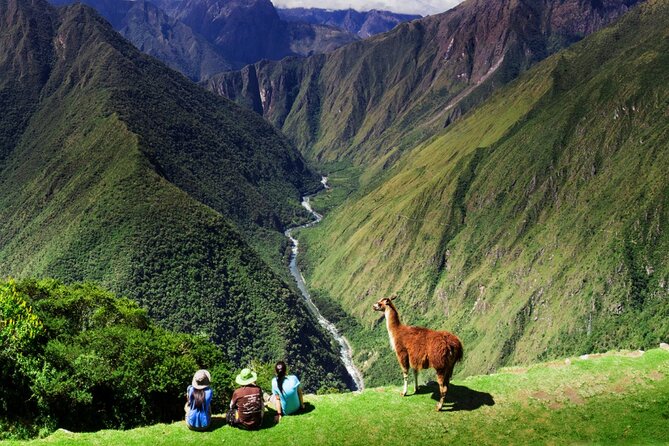
Day 2 is where the classic Inca Trail reputation becomes real.
You wake up in camp, enjoy the morning view of the valley, and get a cup of coca tea to help you start strong. Breakfast follows, and then you move into the first section, which is described as the hardest part.
You climb steadily to Warmiwañusca pass (4,200 masl / 13,776 feet), the highest point of the whole trek. The payoff is what you can see once you arrive. You’ll get a wide view of the valley, plus a chance to look back at the road you already walked and ahead at the path still to come.
After that, the day becomes a descent to the next camp: Pacaymayo (3,500 masl / 11,482 feet). On arrival, lunch is prepared quickly, and the afternoon focuses on learning. Your guide shows you local flora and fauna in the area, which turns the hiking break from “rest time” into “educational time.”
The useful angle here: Day 2 is long, and it can feel like a wall. If you’re prone to pushing too hard at the start, this is the day to resist that urge. A steady pace protects your lungs and keeps you moving with more control.
Day 3: Runkurakay, Sayacmarca, and Phuyupatamarca Panoramas
Day 3 keeps the pace serious, but the scenery shifts in a way that makes the hours fly by.
After breakfast and support team setup, you ascend toward Runkurakay (3,800 masl / 12,470 feet). This segment has time for an archaeological explanation and a real stop, so it’s not just walking between camps.
Next comes the ascent toward another high point area and the chance to see Sayacmarca (3,580 masl / 11,472 feet). The theme of the day is how the surroundings change as you go higher. The panoramas start looking deeper and more jungle-adjacent as your route moves toward the upper reaches.
In the afternoon you arrive at Phuyupatamarca (3,600 masl / 11,930 feet) for panoramic views of the Urubamba Valley, described as the gateway to Machu Picchu. Then the descent begins for your final camp: Wiñaywayna (2,650 masl / 8,692 feet).
At Wiñaywayna, the team has already set up the camp. You’ll get a refreshing hot mate, then dinner, and time to sleep with the finish line close.
If you want the best mental trick for this day: don’t treat it like a grind to Day 4. Treat it like a sequence of stops where you’ll learn something new each time you pause. The guides tend to make this work by tying Inca ruins, place names, and daily life stories together.
Day 4: Intipunku to Machu Picchu, Then Train Back to Cusco
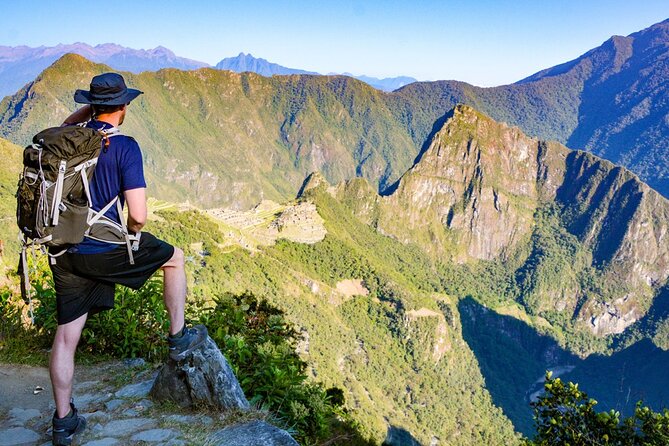
Day 4 is a two-part day: the final approach to Machu Picchu, then the practical trip back to civilization.
You start with breakfast and a short emotional moment as your support team says goodbye. It’s one of the more human parts of the experience, because you’ve been with the same crew since the trail began.
After that, you continue with your guide for about two hours on average until you reach Intipunku, Sungate (2,745 masl / 9,005 feet). From Sungate you get the panoramic view toward Machu Picchu (2,430 masl / 7,972 feet).
Then you descend along a path to Machu Picchu to visit the main areas. After your time at the citadel, you move to the main control gate and board a tourist bus to Aguas Calientes (2,040 masl / 6,692 feet).
There’s free time for lunch, then you go to the train station and take a train back to Ollantaytambo (Expedition/Voyager line mentioned), and then use transport to return to Cusco to finish the trek.
This structure is helpful if you’re thinking about the logistics stress people usually deal with after the hike. Here, you don’t have to figure out how to transition from “out of breath” to “on a schedule.” You do the hard part, then you follow the pre-arranged route back.
Altitude, Pacing, and Safety: What to Expect
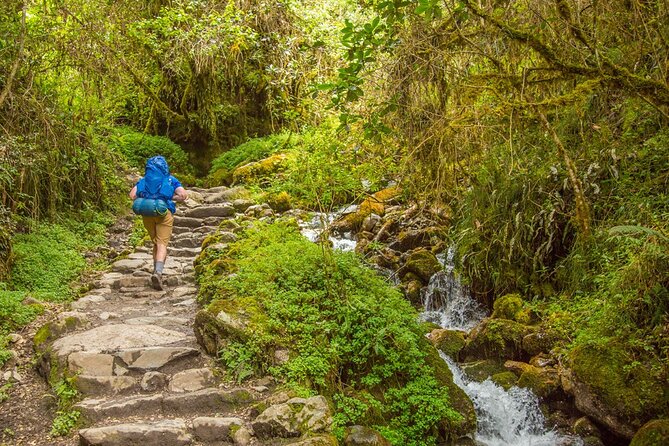
This trek climbs to high elevations, including Warmiwañusca pass at 4,200 masl and other high points above 3,500 masl. That means your day-to-day success depends on how you pace yourself.
One reason guides get praised so often is how they manage effort for groups with different abilities. You’ll usually be happiest if your guide keeps you at a “slow and steady” pace and calls for breaks as needed. That approach helps you finish with energy for the viewpoints and site visits, not just survive the climbs.
Safety also gets real attention in the package. It includes a radio transmitter, a first aid kit, and an oxygen cylinder. That doesn’t mean altitude is risk-free, but it does mean the operation is prepared for problems in the backcountry.
Practical tips you’ll thank yourself for:
- take breaks even if you feel fine, especially early in the day
- focus on steady breathing on climbs
- keep your expectations realistic if you’re coming from a low-altitude environment
What You Should Pack (From What the Tour Covers)
The tour provides camping gear like tents and thick foam mats, plus towels and hot water for hygiene. It also includes boiled water for refills, which can reduce your packing burden.
But you might still want to add:
- a sleeping bag if you don’t already have one (optional add-on listed at $25)
- walking poles if you like extra knee support (optional add-on listed at $15)
- cash for any snacks or essentials you pick up at camp areas like the shop access at Wayllabamba
Also, since you’re at altitude and spending multiple hours on uneven ground, it’s worth taking footwear and layers seriously. The tour gives you the camp base, but you still own your comfort on the trail.
Who This Tour Is Best For
This Inca Trail package fits best if you want:
- a guided experience with real logistical support
- full meals and camp setup so you can hike without stress
- the classic Day 4 arrival via Intipunku
- a structured visit to Machu Picchu’s main sites
It’s ideal for couples, friends, and solo travelers who don’t want to DIY permits, train timing, and camp logistics. It’s also a good match for moderately fit travelers who can handle steep days and high passes.
If you’re someone who needs full physical control or you hate altitude discomfort, you may still be able to do it, but you should be honest about your limits before committing. The tour is explicitly described for moderate fitness, and the itinerary includes serious climbs.
Should You Book This Inca Trail to Machu Picchu?
If you’re weighing DIY versus a guided package, my advice is simple: book this if you want to protect your energy for the trail, not for planning logistics. For most people, the value comes from the combo of porters plus meals plus tickets plus transport, all bundled into one smooth plan.
You should think twice if:
- you’re expecting an easy hike (it’s not)
- you’re trying to avoid any extra purchases like a sleeping bag
- you want Huayna Picchu and haven’t budgeted the additional $80
My final take: this is a classic route for a reason. The camps, the pass moments, the archaeology stops, and the Sungate entrance create a sense of arrival that doesn’t feel manufactured. With the included support system, you can focus on the experience instead of the headaches.
FAQ
What price is this Inca Trail to Machu Picchu tour?
The price is listed at $880.00 per person.
How many days is the tour and what level of fitness do I need?
It’s approximately 4 days. The tour indicates travelers should have a moderate physical fitness level.
Is camping equipment and food included?
Yes. Camping equipment is included (tents, thick foam mats, dining tent, and kitchen equipment), and you receive full food during the tour, including 3 breakfasts, 3 lunches, and 3 dinners.
Do I need to bring a sleeping bag or walking poles?
A sleeping bag is not included, but you can include it for $25.00. Walking poles are not included, but you can include them for $15.00.
Are entrance tickets to the Inca Trail and Machu Picchu included?
Yes. Entrance tickets to the Inca Trail and Machu Picchu are included. Huayna Picchu is not included and costs an additional $80.00.
What time does the experience start?
The start time is listed as 12:00 am.
Is free cancellation available?
Yes, you can cancel for a full refund if you cancel at least 24 hours in advance of the experience’s start time.
Recently reviewed around Cusco
- Cusco Cooking Class by ChocoMuseo in Cusco★ 5.0 · 29 reviews
- ATV Adventure to Moray and Maras Salt Mines – Half Day★ 4.5 · 29 reviews
- 1-day excursion to Machu Picchu from Cusco★ 5.0 · 29 reviews
- Private Tour Sacred Valley, Chinchero, Maras Moray, Ollantaytambo★ 5.0 · 29 reviews
- From Cusco: Humantay Lake with Breakfast and Buffet Lunch★ 4.5 · 29 reviews
- 4 Day – Inca Jungle to Machu Picchu★ 5.0 · 29 reviews
- 2-Day Machu Picchu Tour by Train from Cusco★ 4.5 · 29 reviews
- 2-Day Sacred Valley and Machu Picchu Tour By Train★ 4.5 · 29 reviews
Machu Picchu, compared.
Classic Inca Trail Trek 4D/3N to Machu Picchu (Group Service)
Read our review →
4-Day Inca Trail Trek with Panoramic Train Ride
Read our review →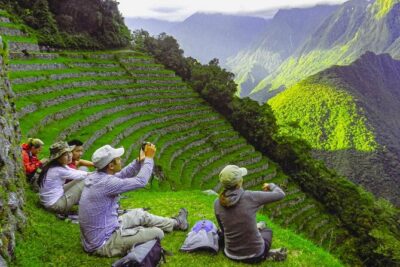
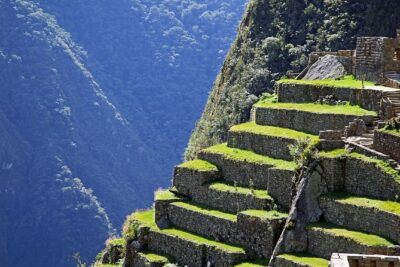
2-Day Inca Trail to Machu Picchu with Panoramic Train
Read our review →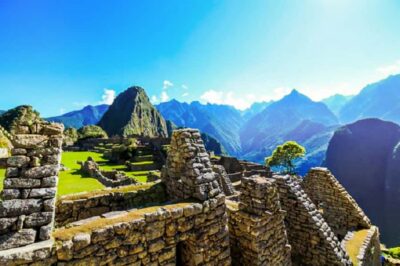

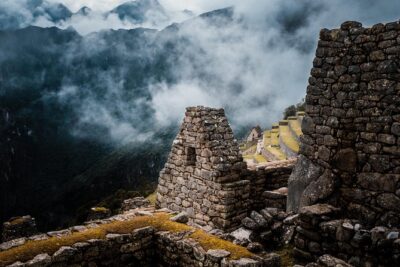
2-Day Tour: Sacred Valley and Machu Picchu by Train
Read our review →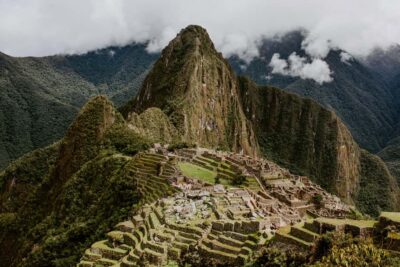
Browse the lists this tour appears in