
Reviewed · MACHU PICCHU
Inca Trail to Machu Picchu (4 Days)
The Inca Trail to Machu Picchu is interesting because you do not just arrive, you earn it, day by day, with camps, passes, and that early-morning Sun Gate moment before Machu Picchu. I like that this version keeps things small (max 8 people) and guided, with a bilingual guide and support crew who handle the hard logistics so you can focus on the hike and the views. One thing to consider up front, the second day climbs high and the mornings start very early, so you need to be ready for real altitude effort.
What I love most is how much is taken care of for you: camping tents (for 2 people), basic sleeping pads, porters and cook for shared gear, plus an emergency oxygen bottle and a first aid kit. I also like the flow into Machu Picchu, where the guided part starts after you join the lineup for the Wiñay Wayna gate opening and you then get a 2-hour guided tour of the ruins.
The main drawback is that this is not a sit-back-and-snack trek. You will hike for 6 to 9 hours per day, day 2 tops out at Dead Woman’s Pass (4,215m), and your schedule runs on pre-dawn timing, including a 5:30 am gate opening on day 4.
Key highlights at a glance
- Small-group trek (max 8 travelers) for a more controlled pace and lots of questions for your guide
- Permits handled by your guide, you bring your original passport (and student card if applicable for the first checkpoint)
- Camping equipment included, plus tents for 2 and a basic sleeping pad
- Day 2 altitude challenge, a big climb to Dead Woman’s Pass at 4,215m
- Sun Gate timing built in, you wait for the 5:30 am gate opening
- Huayna Picchu or Machu Picchu Mountain optional, but you must book ahead
Why the 4-Day Inca Trail Route Feels Worth the Effort
This is a classic reason to come to Peru, not because it is easy, but because it is built for a sequence of experiences. You start low in the Vilcanota River Valley, you work up to high passes, then you finish with Machu Picchu in the early light. It is a route that asks for patience, slow steps, and good timing, especially on the gate-and-Sun Gate morning.
I also like the way this program keeps you moving with structure. Transfers are a mix of bus and train, and the trek is staged across different camps so you are not just marching all day with no rhythm. Past groups highlighted that the guides paid attention to details, shared clear history and cultural context, and kept the tone calm, even when the hike got tough.
Finally, think about the permit reality. The trail needs reservations far in advance, and the notes here are clear, you should reserve about two months ahead to make sure your dates and permits are available.
More Inca Trail departures:
- Classic Inca Trail Trek 4D/3N to Machu Picchu (Group Service)
★ 5.0 · 8,653 reviews - Machu Picchu: 4-Day Inca Trail Trek with Panoramic Train Ride
★ 5.0 · 4,568 reviews - Short Inca Trail to Machu Picchu 2D/1N
★ 5.0 · 3,007 reviews
Cusco to KM 82: Pickup Timing and the First Morning Setup
Your day begins early. You are picked up from your Cusco hotel between 5:45 am and then the start time is listed as 6:00 am, so plan for a short, efficient morning. After pickup, you drive to Ollantaytambo where you get about one hour to eat breakfast on your own and buy last-minute snacks and water.
Then you move by bus to the official trailhead at Piscacucho (KM 82). This is where the permit process matters. Keep your original passport with you. If you qualify as a student, bring your student card for the first Inca Trail checkpoint, since your guide carries the permits for you.
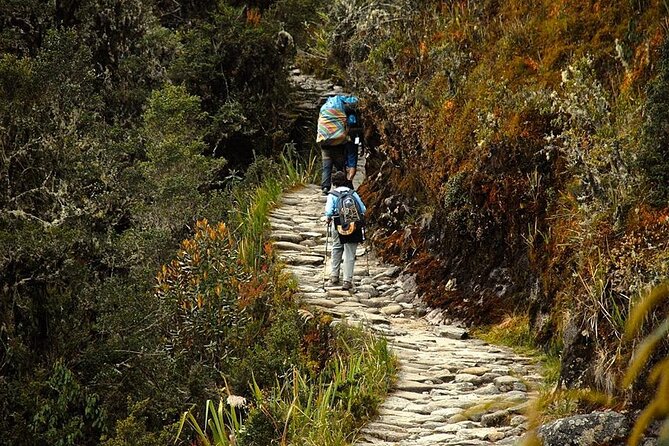
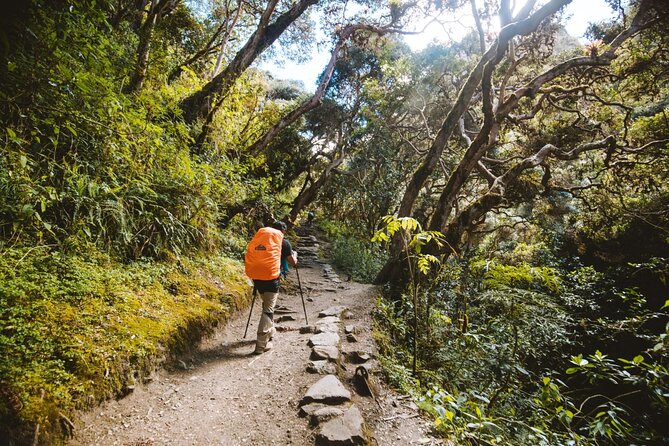
This first day is designed to get you rolling without burning you out immediately. You hike along rolling terrain in the Vilcanota River Valley with small archaeological sites along the way, and lunch is prepared about halfway.
Day 1 to Wayllabamba Camp: Rolling Hills, Short Archaeology Stops, Real Camp Life
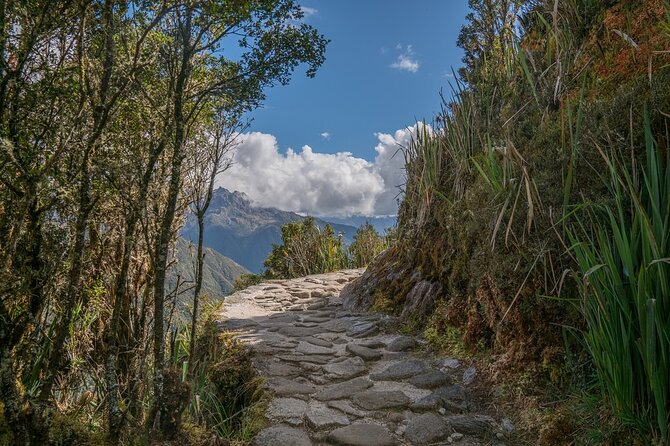
Day 1 covers about 10 kilometers and takes around 6 hours. The profile is described as moderate, rolling and gradually ascending from Piscacucho (2,570m) to Wayllabamba Camp (2,980m). Expect the walking to feel steady rather than punishing, but do not underestimate the altitude and early schedule.
What makes this day feel special is the combination of trail scenery and those scattered Inca-era reminders. As you pass by small archaeological sites, your guide has room to explain what you are seeing and why it mattered. One reason past trekkers praised guides such as Fredy and Adrian is that they did not just point things out, they explained the significance in a way that made the ruins feel less random.
You also get your first real taste of the camp routine. You reach Wayllabamba for the night, with a lunch and dinner included and time to relax once you arrive. This is the “gear and rhythm” day, where your body learns the tempo and your head starts switching into trek mode.
Day 2 to Dead Woman’s Pass: The Hardest Climb, Then the Reward
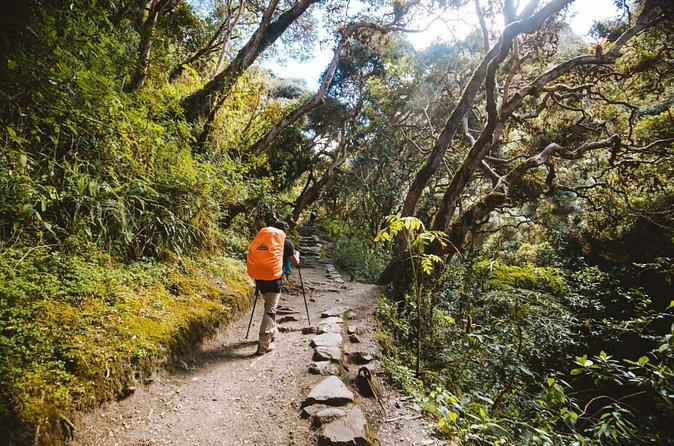
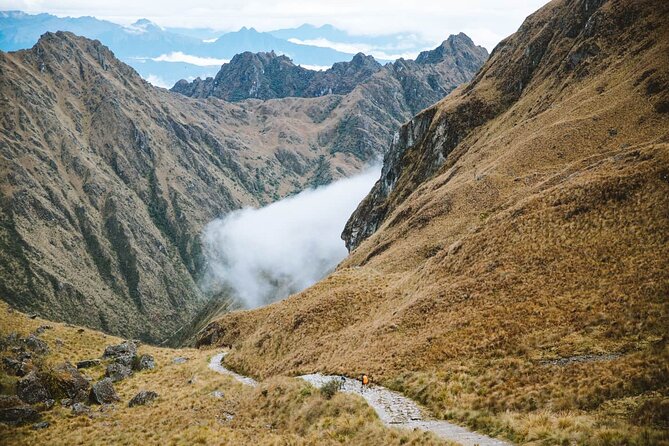
Day 2 is the one that most people feel in their legs. Breakfast is scheduled early, around 6:00 am, and then you take on a steep climb of about 6 kilometers (roughly 5 hours) to Dead Woman’s Pass at 4,215m. After that high point, you descend about 3 kilometers down stone steps for around 2 hours to Pacaymayo Camp (3,600m).
This is the day with the biggest elevation gain so take it slow. The notes stress that you should rest as much as you need because the morning asks you to climb over 1,200 meters. Immediately after crossing Dead Woman’s Pass, you get a payoff: spectacular views of snow-capped peaks and waterfalls.
The best part is that you do not just suffer and then collapse. You arrive at Pacaymayo in time for lunch and then you get a nap and downtime before dinner. That downtime matters because day 3 is long too, about 15 kilometers.
More ways to reach Machu Picchu:
- 2-Day Inca Trail to Machu Picchu with Panoramic Train
★ 5.0 · 1,876 reviews - From Cusco: Full-Day Group Tour of Machu Picchu
★ 4.7 · 1,767 reviews - Machu Picchu Day Trip from Cusco
★ 4.5 · 1,644 reviews - 2-Day Tour: Sacred Valley and Machu Picchu by Train
★ 5.0 · 1,127 reviews
Day 3 to Wiñayhuayna: Inca Stairways, Pass Views, and High Jungle Camp
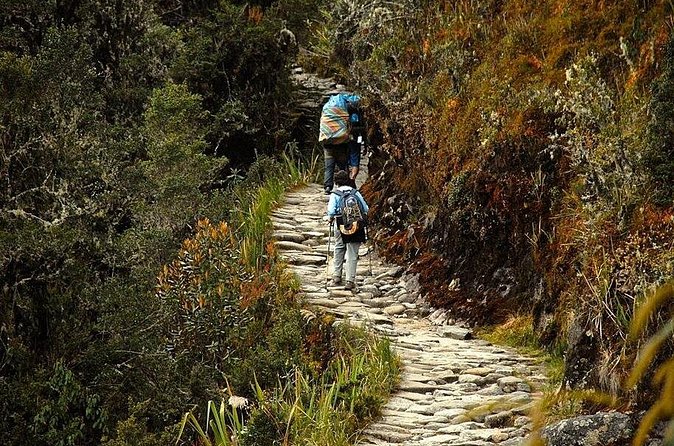
Day 3 mixes effort and interest. You start with about a one-hour uphill hike to visit the Pacaymayo archaeological site, then you continue another one hour to Runquracay Pass (3,950m). There is even a moment to summit for views, which is exactly the kind of “stop breathing and look up” reward that keeps you going.
After that you visit two more archaeological sites, Sayacmarca and Phuyupatamarca, and you have lunch along the way. By late afternoon you reach Wiñayhuayna High Jungle Camp (2,650m), set above a river valley. This camp drop in elevation compared to day 2 is part of why day 3 feels like a long but manageable push, with lots of stopping.
Then comes one of those small details that makes the experience feel human. After dinner, you say a big thank you to your porters and guides. It is a reminder that the trek you see is supported by a team carrying shared equipment and keeping meals and camp running.
Sun Gate on Day 4: The Early Lineup, the First Light, and Machu Picchu Time
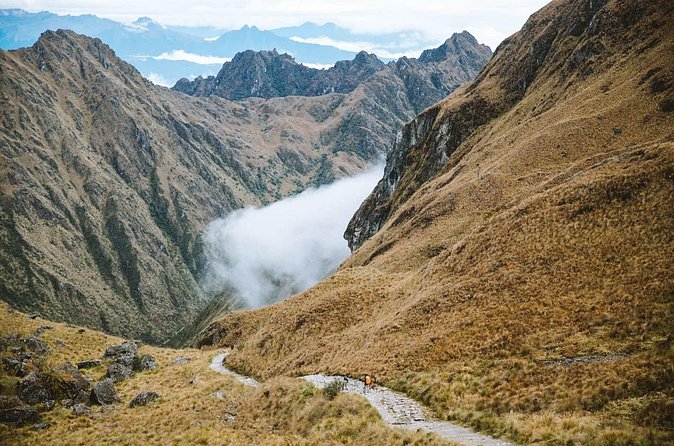
Day 4 is built around the most famous moment on the route. You wake up between 3:30 and 4:30 am, have breakfast, then start hiking early to the Wiñay Wayna checkpoint. You join a lineup, and the gate opens at 5:30 am.
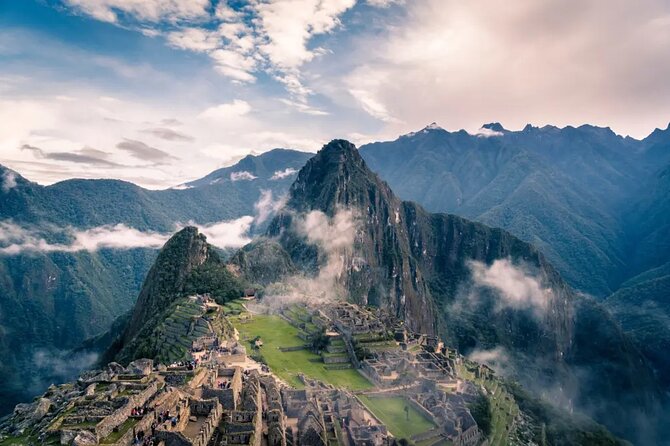
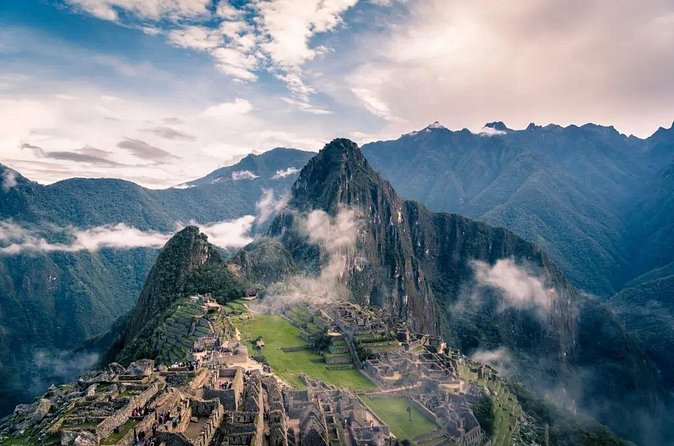
Once it opens, you hike about one hour to reach the Sun Gate. This is where you get first glimpses of light over Machu Picchu ruins, often the emotional peak of the whole trip. The timing is practical too: you see Machu Picchu before most crowds, and you are not dealing with late-day fatigue while trying to absorb everything.
After Sun Gate, you continue down for about 40 minutes to reach the Machu Picchu archaeological complex for a 2-hour guided tour. There is time built into the day for an optional add-on too. If you want Huayna Picchu or Machu Picchu Mountain, it must be booked in advance. That is a good heads-up for your planning, because those options can affect your schedule.
Finally, you go back to Aguas Calientes and then take the train to Ollantaytambo, and a bus back to Cusco. The arrival note says you get back by 8:30 pm and are dropped at Plaza San Francisco, so plan for your own short transfer to your Cusco hotel after that.
What You Get: Camping Setup, Meals, Transfers, and Safety
This trek is support-heavy, which is a big part of why it works. You get a bilingual guide, plus first aid kit coverage, and an emergency oxygen bottle. There is also guided support through the trek days and the Machu Picchu tour.
Camping is handled for you. Included are camping accommodation with a tent for 2 people and a basic sleeping pad. Shared camp equipment is carried by porters, and a cook supports the meals. You also get a sleeping solution called a thermal sleeping bag, but there is an important distinction: the BASIC option excludes the thermal sleeping bag, the porter, and the duffel bag for personal gear.
There is also a stated gear weight limit for personal items carried by support: the thermal sleeping bag and duffel setup is designed around carrying a total of 7 kilograms for each trekker. If you choose BASIC, you should expect a more DIY gear load for your personal items.
Meal coverage is clear in the overall totals: 3 breakfasts, 3 lunches, 3 dinners included. What is not included is breakfast on day 1, plus lunch and dinner on day 4. That matches the fact that you are arriving and exiting Machu Picchu later in the day, including train and bus travel.
Transfers That Matter: Buses, Trains, and the End-of-Day Drop
The transfers are part of the realism here. You will use a bus for the Cusco to trailhead segment, then later you switch to a train and bus combo to get from Machu Picchu area back to Cusco. Specifically, you take a tourist bus from Machu Picchu to Aguas Calientes, then a tourist train from Aguas Calientes to Ollantaytambo for about 2 hours, then a bus to Cusco for about 1.5 hours.
Your tour notes also say a guide for the bus and train transfers is not included. That does not mean you are left alone in a confusing way, but it does mean you should be comfortable following timetables and meeting points without a guide translating every step during the transit legs.
The pickup and drop-off details are practical. Your day starts with a hotel pickup in Cusco, and your day ends with a late drop at Plaza San Francisco. If you are booking a hotel near the center, great. If you are far out, you will want a plan for that late arrival.
Price and Value: Is $963 a Smart Use of Your Peru Budget?
At $963 per person for about 4 days, this trek sits in the “serious trip” category. The value comes from what you are not paying to manage yourself: permits handled, camping support, porters and cook for shared equipment, and entry plus guiding at the key Machu Picchu moment.
Compare that to what it costs in time and stress if you did it piecemeal. You would need to coordinate permits, transport, camp logistics, and guide services. Here, the structure is built in. Also, the small group size helps the experience feel more personal, and the guide is expected to carry the permits and lead the history and cultural interpretation during the hike.
One more value signal is the safety emphasis in the inclusions list. An emergency oxygen bottle and a first aid kit are listed as included, and that matters when you are dealing with an altitude day like Dead Woman’s Pass.
The only “cost” you should weigh is that you are paying for organization, not for freedom to linger. The schedule is tight, including early starts and set checkpoints.
Who This Trek Fits Best, and Who Should Rethink
This tour is marked as suitable for most travelers, and the trek difficulty is described as moderate overall, with day 2 being the toughest. That usually means you should have decent walking endurance, be comfortable with stairs and steep segments, and accept that the second day will feel hard even if you are in shape.
You will likely enjoy it most if you want a guided experience with structure. Past trekkers highlighted guides like Humberto, Fredy, Adrian, and Saul for being attentive and informative, and that lines up with how this program is set up to keep you learning while you hike.
You might want to think twice if you hate early mornings. Day 4 starts with waking between 3:30 and 4:30 am, then you join a lineup and wait for the 5:30 am gate opening. You should also consider how you feel about altitude, since day 2 goes to 4,215m.
If you are traveling with a tight budget, shop for what your option includes. The BASIC option excludes the thermal sleeping bag and some personal-gear support, and that can change how heavy your personal packing becomes.
Practical Tips Before You Go, Based on the Tour Notes
First, reserve early. The trail permits are limited, and the guidance here is to book about two months in advance for availability.
Second, keep your documents close. Bring your original passport and your student card if you want the student credential used at the first Inca Trail checkpoint. Your guide carries the permits, but you still need the documents in hand.
Third, plan for day 1 food. Breakfast is not included on the first day, but you do get that one-hour stop in Ollantaytambo to eat on your own and buy snacks and water. Do not assume everything is handled right away.
Fourth, understand your gear inclusion. If you choose a version that includes a thermal sleeping bag plus porter and duffel support, you follow the 7 kg personal gear limit. If you choose BASIC, those items are excluded, so you will need to plan accordingly.
Finally, be ready for the day 4 schedule and the optional climb. If you want Huayna Picchu or Machu Picchu Mountain, you must book in advance, and that can affect how you build your day around the guided Machu Picchu tour.
Should You Book This Inca Trail Package?
Book it if you want the real Inca Trail experience with camping support, a bilingual guide, and a built-in path to Machu Picchu timed for Sun Gate. The small-group cap is a plus, and the safety items like the first aid kit and oxygen bottle help you feel looked after on an altitude-heavy itinerary.
Pass or at least pause if early mornings and the day 2 climb to 4,215m sound like a mismatch for your body. Also check your option carefully if you are sensitive to sleeping gear, because the thermal sleeping bag and personal-gear porter and duffel are excluded on BASIC.
One decision-making reality: this experience is non-refundable and cannot be changed. If your plans have uncertainty, that risk matters. If your dates are solid, this is a well-organized way to experience the Inca Trail and finish with a guided Machu Picchu morning.
FAQ
What time is the pickup in Cusco?
You are picked up from your hotel in Cusco between 5:45 am and the trek start time is listed as 6:00 am.
What is the maximum group size?
The maximum group size is 8 travelers.
Do I need my passport and student card?
Yes. You should carry your original passport, and a student card is needed for the first Inca Trail checkpoint if applicable.
Are camping tents and sleeping pads included?
Yes. Camping accommodation includes a tent for 2 people and a basic sleeping pad.
What about sleeping bag and personal gear weight?
A thermal sleeping bag, porter, and duffel bag are included as part of the package that supports carrying up to 7 kg per trekker. The BASIC option excludes the thermal sleeping bag and personal-gear porter and duffel.
What meals are included, and what is not included?
Breakfast on day 1 is not included, and lunch and dinner on day 4 are not included. The package includes 3 breakfasts, 3 lunches, and 3 dinners overall.
Recently reviewed around Cusco
- 6-Day ||All Included|| Excursion – MachuPichu & Rainbow Mountain-Humantay Lake★ 4.5 · 8 reviews
- Horseback Riding thru the Mountains of Cusco★ 5.0 · 8 reviews
- Cuzco City Tour and Archaeological Ruins in Half Day★ 5.0 · 8 reviews
- Full Day – Rainbow Mountain tour – Group Service★ 5.0 · 8 reviews
- Half Day Tour in Cusco: Exploring the City and Four Ruins★ 4.5 · 8 reviews
- Machu Picchu and Sacred Valley 2 Day Tour★ 5.0 · 8 reviews
- Cusco 4 Days Machu Picchu and Sacred Valley | All included★ 5.0 · 8 reviews
- Walking Tour in Legendary & Historical Cusco City★ 4.5 · 8 reviews
Machu Picchu, compared.
Classic Inca Trail Trek 4D/3N to Machu Picchu (Group Service)
Read our review →
4-Day Inca Trail Trek with Panoramic Train Ride
Read our review →
2-Day Inca Trail to Machu Picchu with Panoramic Train
Read our review →
2-Day Tour: Sacred Valley and Machu Picchu by Train
Read our review →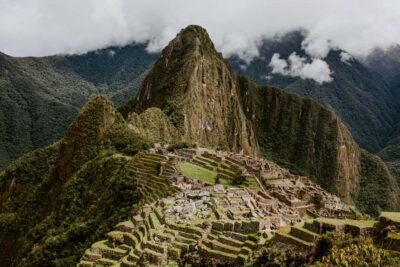
Browse the lists this tour appears in