
Reviewed · PISCO TASTINGS
Lima Historic Center Tour and Pisco Tastings
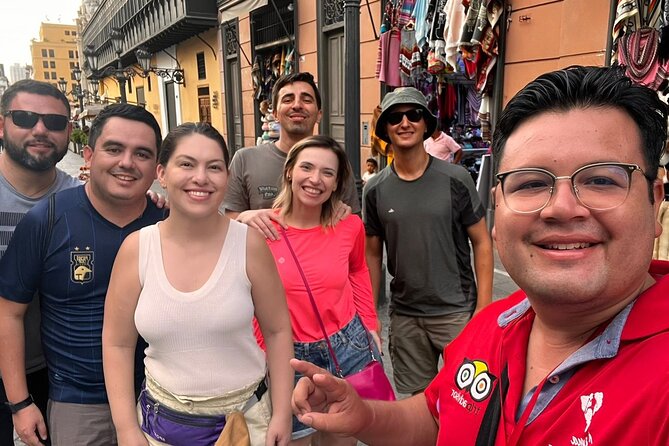
Lima’s historic center can feel like a blur unless you have someone who can connect the dots. This 2 hour 20 minute walk in the Damero de Pizarro area gives you context fast, moving from the big political square to working cultural spots, with Pisco Sour and Peruvian cocoa tastings built in.
Two things I really like are the way the tour spotlights the story behind the buildings (not just the photos) and the mix of stops: classic landmarks plus hands on, modern culture like a chocolate museum and a literature house. The other big plus is the small group size, capped at 30, so the guide can actually pace the conversation.
One possible drawback to keep in mind: the tastings depend on timing and the day’s flow. There’s at least one snag I’d plan around, where the Pisco part didn’t happen when expected, so I recommend confirming that tasting will be included for your group that day.
Key highlights to know before you go
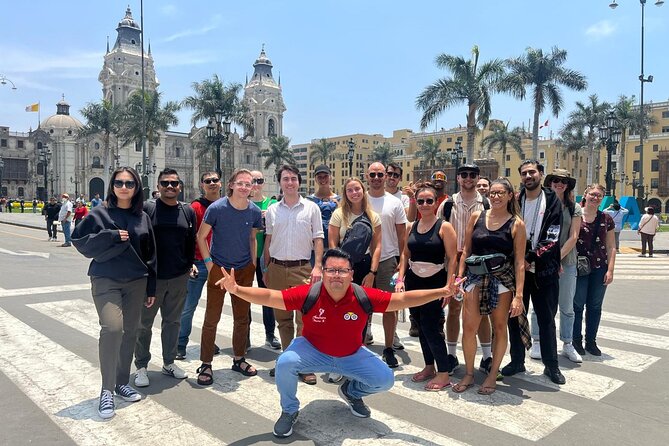
- UNESCO World Heritage setting: Plaza San Martín was declared a UNESCO World Heritage Site in 1988.
- A guided street history lesson: You’ll hear how Jirón de la Unión shifted from aristocratic hangout to major commercial artery.
- Free entry at every listed stop: From churches to cultural centers, the tour includes places marked as free to enter.
- Two tastings: Expect Pisco Sour and Peruvian cocoa tastings, plus an explanation of what you’re tasting.
- Big viewpoints in a short walk: Alameda Chabuca Granda gives sweeping views toward San Cristóbal Hill and the Rímac area.
- A fun payoff at the end: Parque de la Muralla includes a small llama zoo where you can feed them.
Why this Lima historic center walk is worth the $72
This tour hits a sweet spot for time. At about 2 hours 20 minutes, you cover enough ground to feel like you got your bearings, without burning the whole day. And because it stays inside the historic core, you get a dense mix of architecture, plazas, and city energy in one go.
The price is $72 per person, and what you’re really paying for is the guide time and the structured route. All the stop entries you’ll hit on this route are marked free, so the value comes from the explanations and the tastings, not ticket hunting.
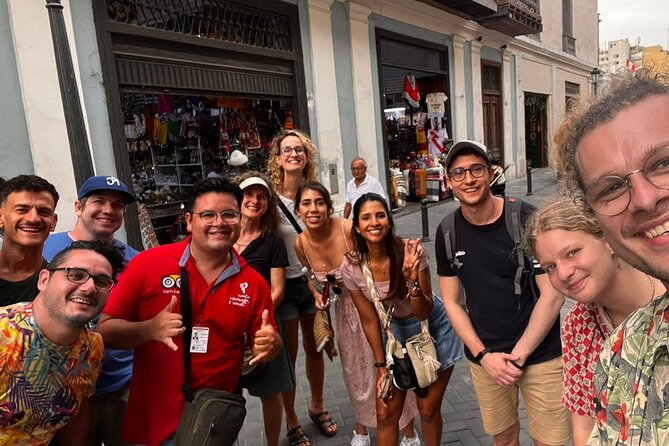
I also like that it’s meant for most travelers. The group size stays at a maximum of 30, which is big enough to find your comfort zone, but not so huge that you get lost every 30 seconds. If you’re traveling solo or as a couple, it’s an easy, social way to learn the center without signing up for a long day.
More Historical Tours in Lima
- Discover Lima: Love Park, Historic Center, and its Catacombs.
★ 5.0 · 696 reviews - Street Food, Market & Old Eateries Tour in Lima’s Historic Center
★ 5.0 · 656 reviews - Lima’s lively Heritage: Exploring the City’s Landmarks Half-day
★ 4.5 · 581 reviews
Starting at Gran Hotel Bolívar, then getting your bearings fast
You meet at Gran Hotel Bolivar Lima on Jirón de la Unión, address 958. That matters because Jirón de la Unión is one of the defining threads of central Lima, historically important and still busy today. Starting here means the first part of your walk connects to the bigger picture, not random streets.
From the start, you’ll be oriented to how the center is laid out, including the link between Plaza San Martín and Plaza Mayor via Jirón de la Unión. If you’ve arrived in Lima and you want your first day to feel less like guesswork, this kind of structured orientation pays off.
Plaza San Martín and the José de San Martín monument
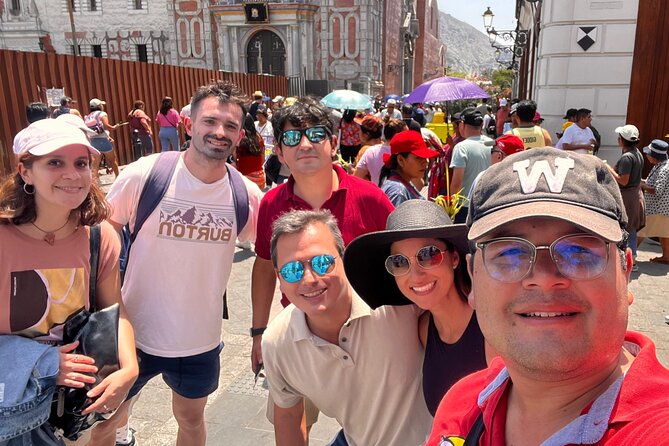
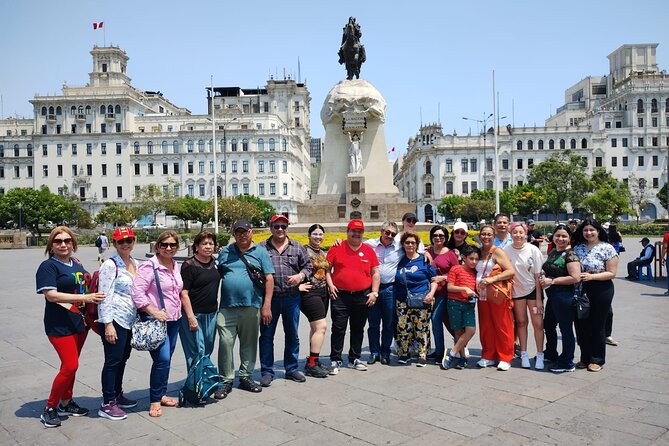
Your first stop is Plaza San Martín, a public square on block 9 of Nicolás de Piérola Avenue (the former Colmena Avenue). In 1988, UNESCO declared this area a World Heritage Site, and it’s easy to see why once you look around and realize how central it is to the historic layout.
The square includes a tribute to José de San Martín, Lima’s liberator figure. The guide’s job here is key: they connect what you’re seeing to the larger story of Lima’s growth and the role of major plazas as civic stages, not just pretty squares.
The practical takeaway is simple. Plaza San Martín helps you understand Lima’s “outside in” approach to history: big political and cultural ideas made visible in stone, plazas, and monuments.
Jirón de la Unión: from aristocrats to shopfronts
After Plaza San Martín, you’ll walk through the story of Jirón de la Unión, which runs along the Damero de Pizarro in the historic center. For years it was considered the most important street in the city, often described as the most aristocratic, with famous residents meeting there.
Later, as the historic center deteriorated, Jirón de la Unión lost that old social character and became heavily commercial. Then, with plans starting in 2005 to revalue the historic center, the street gained renewed commercial importance again. By 2013, it was chosen as the sixth most expensive street in Latin America by Colliers International.
So yes, you’ll walk through a busy shopping corridor. But the point is what the guide does with it, explaining how city life changes without erasing the past completely.
More pisco tastings in Lima:
- 3 Day Tour From Lima: Paracas, Huacachina Oasis & Pisco Vineyard
★ 5.0 · 607 reviews - 2 Day Tour from Lima: Paracas, Huacachina, and Pisco Vineyard
★ 5.0 · 402 reviews - Authentic 4-dish Peruvian Food Cooking Class in Lima + Pisco Sour
★ 5.0 · 126 reviews - Cook an Authentic Ceviche And Peruvian Pisco Sour!
★ 5.0 · 107 reviews
Iglesia y Convento La Merced, and Lima baroque on full display
Stop two brings you to Iglesia y Convento La Merced, Nuestra Señora de la Merced. This minor basilica and convent dates back to 1535, built by Brother Miguel de Orenes, and it takes Archangel San Miguel as its owner.
Look closely at the façade. It’s a finished example of Churrigueresque Lima baroque style, and the central niche features the Virgen de las Mercedes, with other images arranged around her. The basilica also holds a special connection to the Patroness of the Armed Forces of Peru.
This stop is short, so don’t expect a slow art lesson. But it’s a great “visual compression” moment, giving you one strong example of how ornate baroque design shows up in Lima’s colonial-era religious buildings.
Casa O’Higgins: colonial walls tied to a modern memory center
Next you’ll pass through Casa O’Higgins, a colonial style building on Jirón de la Unión near Plaza de Armas. Since 2008, it has functioned as a cultural center for the Pontifical Catholic University of Peru, with a permanent space dedicated to the memory of Bernardo O’Higgins.
Even if you only spend about ten minutes here, it’s a useful reminder that the historic center isn’t just preserved decoration. It also serves as a location for education and public memory, using historic spaces for present day cultural work.
If you’re the kind of traveler who loves context, this stop helps connect the colonial streets to the broader independence era stories that shaped the region.
Plaza de Armas (Plaza Mayor): the founding heart of Lima
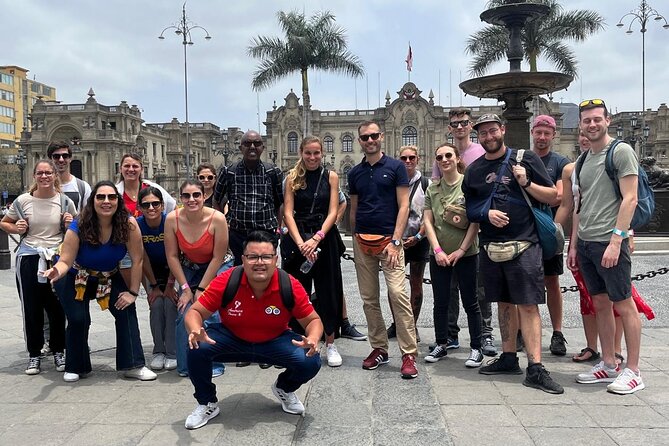
No Lima historic center visit feels complete without Plaza de Armas, also called Plaza Mayor. This is the founding site of Lima, the capital’s main public space, and it’s surrounded by key power buildings.
You’ll get a guided explanation of what defines the square: the Government Palace, the Cathedral of Lima, the Church of the Sagrario, the Archbishop’s Palace, the Municipal Palace of Lima, and the Club de la Unión. The plaza is crossed by several jirones, including Junín, Unión, Huallaga, and Carabaya.
One reason this stop works so well is that it gives you a mental map. Once you understand where government, church authority, and civic life sit relative to each other, the rest of your walk makes more sense.
It’s also where you’ll likely take your best wide shots because the buildings create an obvious visual frame. Just remember, this is a working city square, so expect movement around you.
ChocoMuseo and the pleasure of knowing what you’re tasting
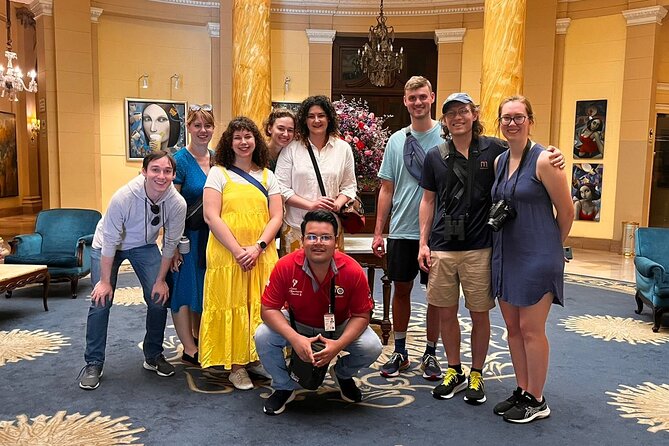
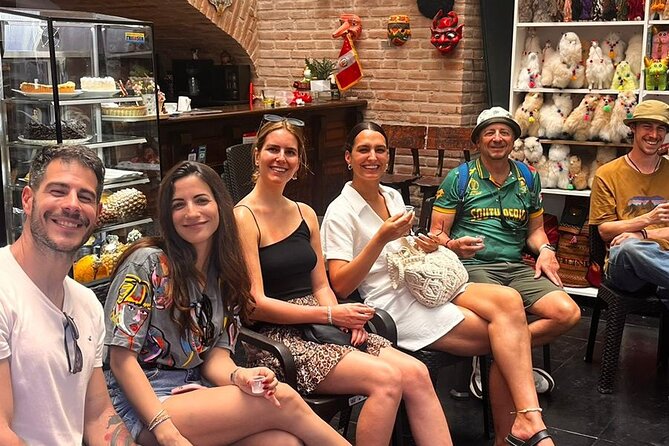
Mid tour, you step into ChocoMuseo, the chocolate museum stop designed around cocoa discovery. The guide explains Peruvian cocoa and its various flavors, and you taste along the way.
This is one of the best “value by design” moments in the tour. A tasting can easily turn into a quick throwaway sample, but cocoa fits perfectly with the historic center theme because Peru’s food history is part of national identity, not just a souvenir gimmick.
I’d treat this as a mini lesson. Notice the differences in flavor as the guide explains how cocoa shows up in multiple presentations. You’ll leave with at least a few new ideas for what to buy later, not just what to eat right now.
Casa de la Literatura Peruana: free admission and a literature break
After the cocoa, you slow slightly at Casa de la Literatura Peruana, the House of Peruvian Literature. It’s a public cultural center located at the Desamparados Station in Lima.
It opened on Tuesday, October 20, 2009, and it’s tied to Peru’s Ministry of Education, specifically the Vice Ministry of Pedagogical Management. Because both admission and services are free, this stop is a low cost way to add variety to a history walk.
Even if you don’t read everything on site, it’s a smart pivot. After churches and plazas, literature gives you a different entry point into how Lima thinks and talks about itself.
Alameda Chabuca Granda: viewpoint time with the Rímac area in view
Next comes Alameda Chabuca Granda, a large viewpoint adjacent to the Government Palace and on the banks of the Rímac River. This is where you trade street level for perspective.
From here, you can see the old Rímac neighborhood, San Cristóbal Hill, the Desamparados Train Station, the Stone Bridge, the Rayitos de Sol Bridge, and a wide horizon of viceregal mansions.
The guide’s explanations help this stop land. Without context, viewpoints can feel like a quick photo break. With context, you start to understand how the city’s layout connects historic centers, hills, and river corridors.
It also helps that the Alameda includes three amphitheaters and stages for varieties and Creole music, so you get a hint that this area is not just scenic, it’s cultural.
Iglesia San Francisco de Asís: art, scale, and a memorable quote
Stop eight is Iglesia San Francisco de Asis, part of the monumental complex of the Basilica and Convent of San Francisco de Lima. It’s also known as San Francisco the Great or San Francisco de Jesús.
This complex is described as one of Lima’s most welcoming and artistic corners, and it connects with nearby religious sites including the Nuestra Señora de la Soledad Sanctuary and the Church of the Miracle. A comment attributed to Ramón Menéndez Pidal, a Spanish philologist and scholar, highlights the church’s scale, calling it the largest and most noble monument the conquest erected in these lands of prodigy.
This church is the kind of stop where height and detail matter, so even a short visit can be rewarding. Watch how the guide points out features, because baroque and convent complexes can blur together if you don’t get a quick framework.
Parque de la Muralla and the San Cristóbal Hill perspective, plus llamas
Your final major stop is Parque de la Muralla, where the guide gives you panoramic explanations of San Cristóbal Hill and the periphery areas often described as Peruvian favelas. This is one of those moments that can change how you see the historic center.
Instead of only focusing on the most polished layers of Lima, you get a bigger view of how the city sits together. It makes the earlier plaza and church stops feel more grounded, like you’re seeing Lima as a living system, not just a museum.
And then you get a practical, fun payoff. This park includes a small llama zoo, and you can feed the llamas and take photos. It’s simple, it’s quick, and it gives the tour a lighter ending.
Pisco Sour and cocoa tastings: what to expect and what to confirm
Pisco Sour is the headline here, paired with Peruvian cocoa tastings. Alcoholic beverages and cocoa tasting are part of what the tour includes, with the tasting value listed at $7. Bottled water is offered during the tour for $2, which is good to plan for since you will be walking.
One caution based on what I learned from the experience feedback is that the Pisco tasting may not always land exactly as expected. If alcohol matters to you, I’d confirm with the operator when you arrive that your group will receive the Pisco Sour portion during the tour window.
If you’re fine with that kind of flexibility, tastings are still a strong reason to book, because they add senses to what you’re learning, and food history is a fast route to connection.
Price, pacing, and who this tour suits best
At $72 for 2 hours 20 minutes, this tour is priced like a guided experience with structured cultural stops. You also get a practical advantage: most of the sites you visit are marked free for entry. That reduces the usual friction where you spend the day juggling tickets and time.
Pacing is a real part of the value. Because each stop is time boxed, you get a broad sweep through Lima’s historic core without the tour turning into a slow museum day. If you prefer slow and lingering, you might want to add extra time after, but for first exposure, this pace works.
This tour fits best if you:
- want an efficient first look at Lima’s historic center
- like architecture and city stories tied together
- enjoy food tastings as part of cultural learning
- want a guide who speaks both English and Spanish
It may be less ideal if you need long quiet breaks, or if you prefer deep museum time over quick, guided stops. Still, the route offers enough variety to keep attention without feeling random.
Should you book Lima América Tours, or pick a different style?
If you want a guided walk that covers the core sights, plus tastings, in a short, manageable window, I think you’ll like this. The route makes sense: plaza power first, churches and colonial streets next, then cultural stops, viewpoints, and a fun llama ending.
The biggest reasons to book are the strong guide focus and the mix of places that are both historic and still active for culture. The one reason to pause is the Pisco tasting timing issue I heard about, so just confirm the tasting portion when you start.
If you’re short on time in Lima, or you want your first day in the center to feel organized and alive, this is a solid choice.
FAQ
How much does the Lima Historic Center Tour and Pisco tastings cost?
It costs $72 per person.
How long is the tour?
It runs about 2 hours 20 minutes.
Where does the tour start and where does it end?
It starts at Gran Hotel Bolivar Lima, Jirón de la Unión 958, Lima 15001, Peru, and it ends back at the same meeting point.
What’s included in the price?
You get a licensed professional guide in English and Spanish, all fees and taxes, and Pisco Sour tastings and Peruvian cocoa tastings. Bottled mineral water is offered on the tour for $2.
What admissions are required for the stops?
Admission tickets for the listed stops are marked free.
What stops are on the route?
You’ll visit Plaza San Martín, Iglesia y Convento La Merced, Casa O’Higgins, Plaza de Armas, ChocoMuseo, Casa de la Literatura Peruana, Alameda Chabuca Granda, Iglesia San Francisco de Asís, and Parque de la Muralla.
Is there a maximum group size?
Yes, the tour has a maximum of 30 travelers.
Is tip, lunch, or private transportation included?
No. Tip, lunch, snacks, and private transportation are not included.
What’s the cancellation policy?
Free cancellation is available up to 24 hours in advance for a full refund. Changes inside 24 hours are not accepted, and cancellation within 24 hours does not receive a refund.
Recently reviewed around Lima
- Lunch Menu at Mangos Larcomar restaurant★ 4.0 · 8 reviews
- Sanctuaries of Lima Private Half-Day Tour★ 4.0 · 8 reviews
- Peru Magistral Lima Paracas Ica Cusco Machu Picchu 8 Days★ 5.0 · 8 reviews
- Excursion to Paracas: Huacachina and the Nazca Lines During 2D/1N from Lima★ 4.5 · 8 reviews
- The Larco Museum Complete Guided Tour with Tranfers (Small Group)★ 5.0 · 8 reviews
- Lima Districts: Miraflores, Barranco and San Isidro★ 5.0 · 8 reviews
- Private Transfer from Lima Airport to Miraflores★ 5.0 · 8 reviews
- Panoramic Tour the Best of the City in a Single Tour★ 5.0 · 8 reviews
Pisco Tastings, compared.

3 Day Tour From Lima: Paracas, Huacachina Oasis & Pisco Vineyard
Read our review →
2 Day Tour from Lima: Paracas, Huacachina, and Pisco Vineyard
Read our review →
Local Market and Peruvian Cooking Class with Pisco Sour in Cusco
Read our review →
Group Cooking Class in Cusco with Pisco Tasting
Read our review →
Historic Walking Tour with Pisco Sour and Local Music
Read our review →
Authentic 4-dish Peruvian Food Cooking Class in Lima + Pisco Sour
Read our review →
Cook an Authentic Ceviche And Peruvian Pisco Sour!
Read our review →Browse the lists this tour appears in