
Reviewed · PISCO TASTINGS
Bilingual Cooking Class with Pisco Cocktail in Cusco
A Cusco cooking class hits different at lunchtime. You go in thinking you will cook a couple dishes, and you leave with a full sense of how Peruvian flavors work, from ceviche technique to a proper pisco cocktail.
I love that the class is hands-on and moves fast, so you are doing the work, not just watching. I also like the small-group size, where the chef can correct your cuts, show you timing, and keep the energy going. If you hate close contact with fish prep or spice smells, this might feel like a lot in 1 hour 30 minutes.
Key points before you book
- Ceviche, Pisco Chilcano, and Lomo Saltado are all on the menu, so you learn a full meal rhythm
- Small group (max 12) means you get real guidance while you cook
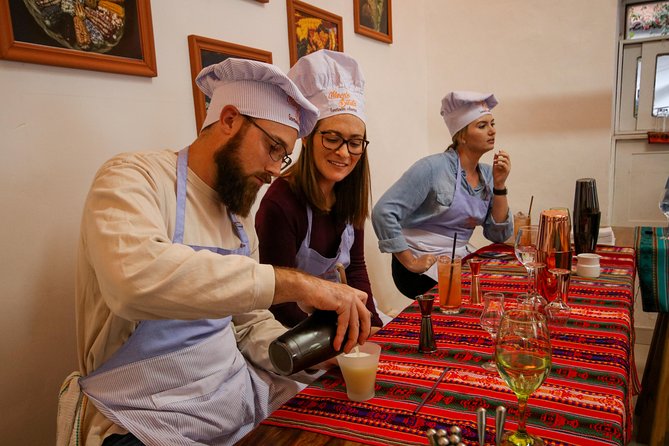
- You will make a passion fruit Pisco Chilcano, not just learn about pisco
- The chef team (including names like Juan and José) shares practical steps plus food stories
- The format is bilingual, so you can follow along comfortably in more than one language
- It is timed for Cusco life, about 1 hour 30 minutes, with the class ending back where it starts
A Cusco midday plan that actually feels like Cusco

This is a lunchtime class starting at 12:00 pm and running about 1 hour 30 minutes. That timing is smart if you have been walking around the Centro Historico De Cusco area in the morning and you want something that is social but not a full night plan.
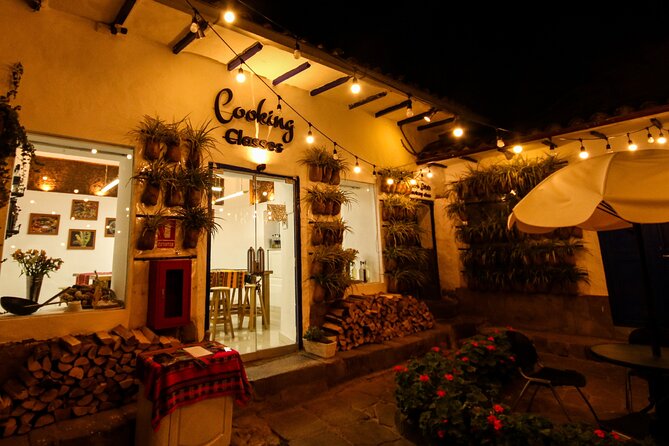
The meeting point is at C. Palacio 135, Cusco 08002, and the experience ends back at that same meeting point. That matters more than it sounds. You do not have to solve transport or figure out where to go after you have cooked and eaten. It is also noted as being near public transportation, so you are not stuck if your route changes.
The big idea here is simple: you use your time well. Instead of hunting for a restaurant where you guess what to order, you cook an entire Peruvian mini feast yourself, and you learn what makes it taste right.
More Cooking Classes in Cusco
- Peruvian Cooking Class Cocktails and Market Tour in Cusco
★ 5.0 · 1,712 reviews - Cusco Cooking Classes and San Pedro Market Tour
★ 5.0 · 691 reviews - Cusco: Peruvian Cooking Class, Cocktails & Local Market Tour
★ 4.9 · 512 reviews
Small-group cooking in Cusco, where you get hands-on help
This is built for active participation. The class keeps a relaxed pace, but it is still fun and fast-paced. The goal is that you finish knowing how to recreate the meal, not just hoping you remember it.
With a maximum of 12 travelers, the chef can spend time with people who need a quick fix. That is where the experience becomes worth the money for me. In a crowded class, you might stand back and wait for instructions. Here, you are more likely to get corrections in the moment, like how to handle ingredients, how to balance flavors, and how to work with a hot cooking station.
You will also sit down and savor the dishes together with your classmates. That shared meal part is not filler. It is how you compare notes in real time, figure out what you did that worked, and learn from what others ended up with.
One more plus: the reviews repeatedly point to the chef being lively and engaged. Names like Juan and José come up, and the common thread is that they keep things friendly while still teaching what to do.
The menu: ceviche, passion fruit Pisco Chilcano, and lomo saltado
You can think of this class as three skills in one sitting.
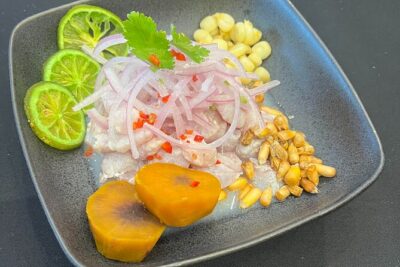
First, fresh Peruvian ceviche. This teaches citrus and timing, plus the way salt, acidity, and herbs work together. You also get the cultural context behind why ceviche is iconic in Peru, not just a recipe you copied.
Second, a passion fruit Pisco Chilcano. This is about learning how pisco drinks should taste and how to build the right balance of sweet, sour, and aromatic notes. Instead of being handed a cocktail and told to enjoy it, you get to participate.
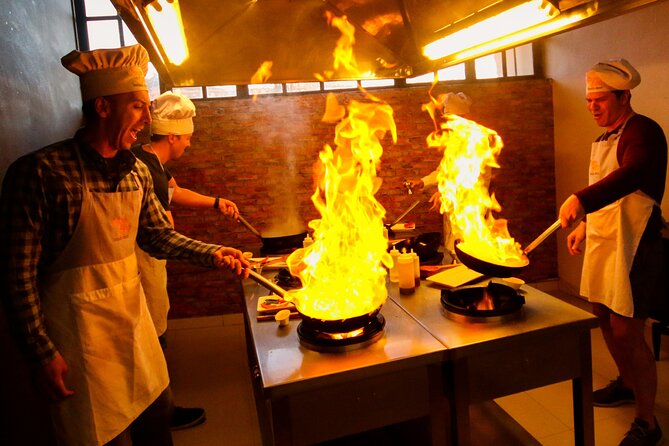
Third, lomo saltado, a classic Peruvian comfort dish known for its speed and smoky edges. You will cook it, and you will learn how heat changes texture and flavor. One review specifically called out the fun of using the wok, which tells you the cooking style stays practical, not staged.
What I like about stacking these three is that they cover different cooking worlds. Ceviche is about freshness and balance. Pisco is about measuring and flavor balance. Lomo saltado is about heat control and fast movement. By the end, you have a clearer idea of what Peruvian cooking is trying to do.
Ceviche in Cusco: balance, timing, and citrus logic
Ceviche can sound simple on paper. Citrus + fish + flavorings. In practice, it is more like a quick chemistry lesson with a cultural heartbeat.
In this class, you will make ceviche, and you will learn essential techniques. The practical value is that you start understanding the logic behind the taste. You will see how acidity changes the overall feel of the dish. You will also learn how seasonings work together instead of overpowering each other.
The best part is that you are not just doing steps mechanically. You are learning stories behind ingredients and flavors, and that changes how you cook later. When you know why a ingredient matters, you stop treating recipes like strict rules. You start adjusting based on taste.
You will also pick up small lessons that help you at home, like being mindful about timing. If you rush, ceviche tastes sharp or uneven. If you take too long, the balance gets weird. The class format is short, so you get quick feedback, which is exactly what you want for technique.
More Workshops in Cusco
- Hands-on Peruvian Cooking Class & San Pedro Market Visit in Cusco
★ 5.0 · 421 reviews - Bean to Bar Chocolate Workshop in ChocoMuseo Cusco
★ 5.0 · 410 reviews - Local Market and Peruvian Cooking Class with Pisco Sour in Cusco
★ 5.0 · 384 reviews - Traditional Peruvian Cooking Class and Market Tour in Cusco
★ 5.0 · 375 reviews
Pisco Chilcano with passion fruit: the cocktail you will actually remember
The class does not stop at food. You also shake up a passion fruit Pisco Chilcano. That detail is key for me because it means you get the fun of cocktail culture without turning the class into a drinking event.
Pisco Chilcano is built on flavor balance. You want the citrusy brightness, the fruity sweetness from passion fruit, and the spirit character to land in the same glass. In a hands-on class, you can taste as you go and learn what needs adjusting, instead of guessing later.
Because the class is bilingual, the explanation can be easier to follow if your Spanish or whichever language you are learning is not fluent yet. Even if you are comfortable with food terms, cocktail steps can be tricky. Being able to follow clearly reduces that stress and helps you focus on taste.
If you like bringing home a skill that feels like a party trick, this is the one. You will remember how it should taste because you made it, and you drank it as a reward right after cooking.
Lomo Saltado at the wok: fast heat, real texture
Lomo saltado is where Peruvian cooking shows you its practical side. It is not fussy. It is about speed and heat, plus classic flavors that keep you coming back for one more bite.
You will cook lomo saltado in the class, and at least one review highlighted the excitement of using the wok. That tells you something useful: this is not purely knife work and mixing bowls. You get the hands-on energy of a hot pan and quick movement.
What you are learning here is the difference between cooking ingredients separately versus letting them steam in the same space. With a wok-style approach, you get more browning and better texture. The end result feels more like what you actually want in a Peruvian lomo saltado, not a bland, soggy version.
You will also get context on why it is considered classic. That matters when you cook later because you will care about the flavor profile, not just the ingredient list. If you know what you are aiming for, you can adjust at home even if you cannot get every exact product.
Centro Historico De Cusco: meeting in the right place
Starting in the Centro Historico De Cusco area makes sense. You get a sense of place immediately, and you are likely already in that part of town if you are sightseeing earlier in the day.
The meeting point is clearly listed as C. Palacio 135. The class ends back at the meeting point, so you do not have the typical worry of ending far from your hotel. That is one less decision you have to make on a day when you are also managing altitude, sightseeing, and meals.
The tour also notes that it is near public transportation. That helps you plan if you are staying somewhere a bit off the center or if the day’s schedule changes.
What to watch for: this experience requires good weather. Even if the cooking itself is indoors, the overall activity may depend on conditions around the venue and timing. If you are booking on a weather-edge day, have a flexible mindset.
What the chef teaches beyond recipes
A big part of why this class gets such strong praise is not just the food. It is what you learn around it.
You are taught essential techniques, and you also hear stories behind Peru’s iconic flavors and ingredients. That is how the class becomes more than a checklist. It turns into a mini crash course on flavor thinking.
The reviews also mention the chef being personally engaged, and that chefs like Juan and José bring energy. One review even touched on conservation and preserving the environment that supports the place. That kind of message can sound abstract, but in a food class it becomes practical. You start thinking about ingredients as part of a living system, not just items on a plate.
And the class wraps with you eating what you made, together. That is important because you get immediate feedback. If something is off, you can connect it to what you did. If it is perfect, you remember why it worked.
Bilingual instruction: easier cooking, less guessing
The class is described as bilingual, which is a real advantage in Peru. Food classes can be hard even when you know the basics. Cooking steps have specific meanings, and one misunderstood word can send you down the wrong path.
In this format, you are more likely to understand what the chef wants you to do. That means you can focus on cooking rather than translating every sentence in your head.
For me, that is the difference between a class that feels like a fun challenge and a class that feels like frustrating homework. The bilingual setup should make this accessible for a wider range of travelers, including people who are not confident with Spanish.
Price and value: what $40 gets you in Cusco
At $40.00 per person for about 1 hour 30 minutes, you are paying for more than a meal. You are paying for instruction, ingredients, and a guided cooking experience that includes both food and a pisco cocktail.
Where it feels like good value is the combination:
- Multiple iconic dishes in one session (ceviche, lomo saltado, plus the cocktail)
- Hands-on coaching in a small group (max 12)
- You get to eat together, so the class ends with payoff, not just a cooked dish to pack up
If you were doing this on your own, you would need ingredients, time, and recipe confidence. Here, you borrow the chef’s guidance for a set price, and you walk out with the practical confidence to recreate the meal later.
Also, the class is commonly booked about 7 days in advance. That tells me the demand is real, likely because people want a reliable Cusco activity that is short, social, and food-focused.
Who should book this cooking class
This is a strong fit if you:
- Want a hands-on Cusco food experience rather than another walking tour
- Are curious about Peruvian classics and want to learn how they actually work
- Like social activities with a smaller group size
- Prefer a class that is short enough to fit into a busy sightseeing day
It is also a good option if you are a beginner. The class is described as suitable for both beginners and confident home cooks, which is usually a sign they teach at a pace where new cooks can follow.
If you are an advanced cook looking for deep technical training, you might still enjoy it for the cultural context and the pisco piece. Just keep expectations grounded: this is a short, friendly class, not a professional prep kitchen boot camp.
Should you book the bilingual cooking class with Pisco in Cusco?
I would book it if you want a compact, high-reward Cusco experience centered on real food and real technique. The strongest reasons are the hands-on structure, the small-group attention, and the full-menu payoff of ceviche, pisco cocktail, and lomo saltado.
I would think twice only if you know you strongly dislike seafood prep or you want something slower and quieter. Also remember it needs good weather, so be flexible if conditions are questionable.
If your goal is to leave Cusco with skills you can actually use, and a meal you made with your own hands, this is one of the more satisfying choices at this price point.
FAQ
Where is the class meeting point in Cusco?
The meeting point is at C. Palacio 135, Cusco 08002, Peru.
How long is the cooking class?
It lasts about 1 hour 30 minutes.
What dishes and drinks will I make?
You will prepare Peruvian ceviche, a passion fruit Pisco Chilcano, and a classic lomo saltado.
Is the class small group?
Yes. The maximum group size is 12 travelers.
Is the class beginner-friendly?
Yes. The class is described as suitable for both beginners and confident home cooks.
Is it bilingual?
Yes. It is a bilingual cooking class.
What is the price?
The price is $40.00 per person.
When does it start and when do we finish?
It starts at 12:00 pm and ends back at the meeting point.
What is the cancellation policy?
Free cancellation is available if you cancel at least 24 hours before the experience’s start time for a full refund.
What if the weather is poor?
The experience requires good weather. If it is canceled due to poor weather, you will be offered a different date or a full refund.
More Pisco Tastings in Cusco
- Group Cooking Class in Cusco with Pisco Tasting
★ 5.0 · 335 reviews - Cusco: Historic Walking Tour with Pisco Sour and Local Music
★ 5.0 · 190 reviews - Cusco by Night: Planetarium Cusco, Dinner, and Pisco Sour
★ 5.0 · 75 reviews - Cusco: Historic Walking Tour with Pisco Sour and Music Show
★ 4.6 · 65 reviews
Recently reviewed around Cusco
- Cusco Cooking Class by ChocoMuseo in Cusco★ 5.0 · 29 reviews
- ATV Adventure to Moray and Maras Salt Mines – Half Day★ 4.5 · 29 reviews
- 1-day excursion to Machu Picchu from Cusco★ 5.0 · 29 reviews
- Private Tour Sacred Valley, Chinchero, Maras Moray, Ollantaytambo★ 5.0 · 29 reviews
- From Cusco: Humantay Lake with Breakfast and Buffet Lunch★ 4.5 · 29 reviews
- 4 Day – Inca Jungle to Machu Picchu★ 5.0 · 29 reviews
- 2-Day Machu Picchu Tour by Train from Cusco★ 4.5 · 29 reviews
- 2-Day Sacred Valley and Machu Picchu Tour By Train★ 4.5 · 29 reviews
Pisco Tastings, compared.

3 Day Tour From Lima: Paracas, Huacachina Oasis & Pisco Vineyard
Read our review →
2 Day Tour from Lima: Paracas, Huacachina, and Pisco Vineyard
Read our review →
Local Market and Peruvian Cooking Class with Pisco Sour in Cusco
Read our review →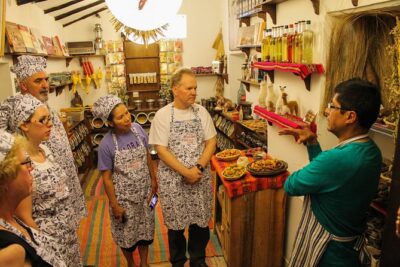
Group Cooking Class in Cusco with Pisco Tasting
Read our review →
Historic Walking Tour with Pisco Sour and Local Music
Read our review →
Authentic 4-dish Peruvian Food Cooking Class in Lima + Pisco Sour
Read our review →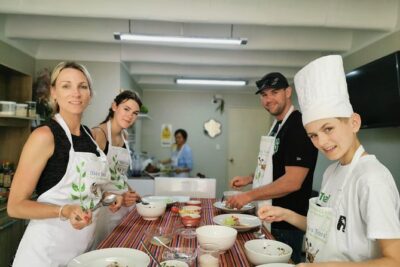
Cook an Authentic Ceviche And Peruvian Pisco Sour!
Read our review →Browse the lists this tour appears in