
Reviewed · WALKING TOURS
Cusco Highlights Walking Tour: History, Culture, Traditions
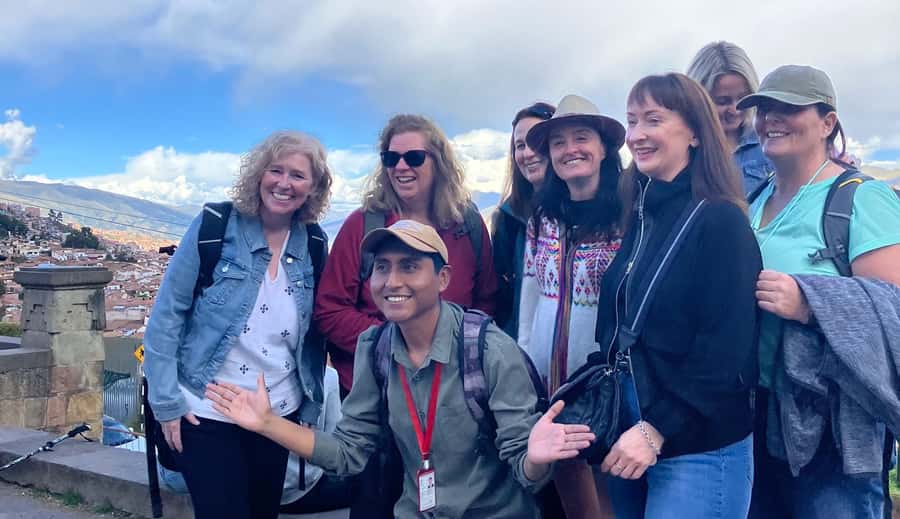
Cusco hits you fast, and this 2-hour highlights walk is a smart way to get your bearings without wasting your first day. I like how it stitches together Inca walls, colonial churches, and local streets in a tight route. I also like that the small-group format (max 10) keeps things friendly, with guides such as Waldo or Nilo answering tons of questions and helping with photos. One drawback to plan for: it moves quickly, and Coricancha entry is not included, so you’re mainly seeing it from outside on this tour.
The result is a tour that feels like a guided map you can actually use later. You get tastings too, with locally made chocolate at ChocoMuseo and a possible chicha moment if the chicha vendor in San Blas is around. If you’re sensitive to steep sidewalks and uneven cobbles, wear shoes that grip, because Cusco is not built for slippery soles.
Key things to know before you go
- A focused 2-hour route that connects Plaza de Armas to San Blas without long transfers
- Inca meets colonial at key landmarks like Plaza Nazarenas, Sun Street (Intikijllu), and Hatun Rumiyoc
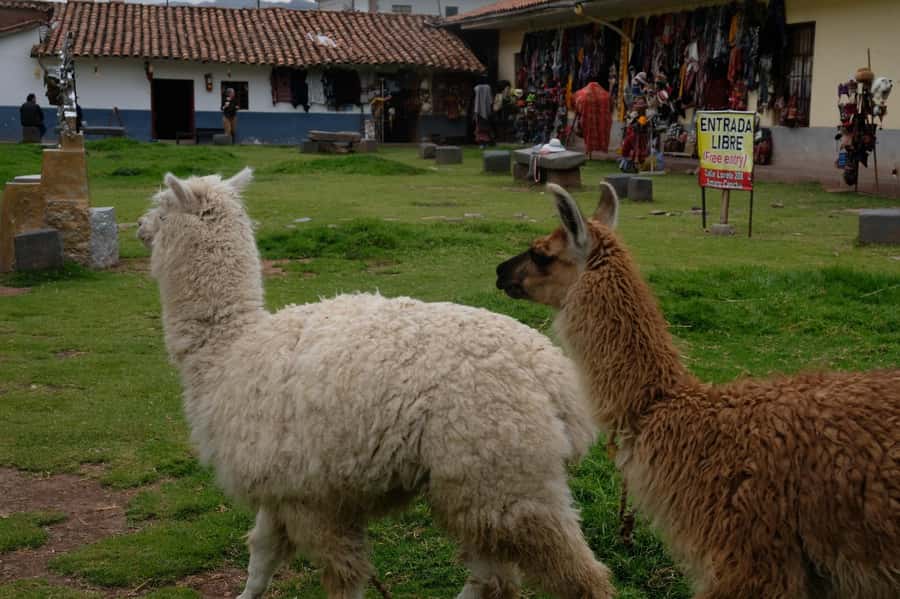
- Amaru Cancha llamas and alpacas stop that’s fun, quick, and hands-on
- ChocoMuseo chocolate tasting plus an optional try of traditional chicha
- Photo spot tips along the way, with guides often helping you get great shots
Why this Cusco highlights walk is such a good first-day move
If you only have a short window in Cusco, the hardest part is deciding what to prioritize. This tour earns its place on your calendar by being practical: it shows you the most important “anchors” of the historic center, then threads you through the smaller streets that most people miss on their own.
What I like most is the mix of scales. You’re not only staring at big monuments. You’re also seeing the kind of details that make Cusco feel real, like the carved Inca masonry you spot along Sun Street, and the lived-in vibe around San Blas, where artisan workshops spill out into the street.
It’s also a nice pace for jet-lag or altitude fatigue. Two hours is long enough to learn patterns (where plazas sit, how neighborhoods connect), but short enough that you’re not wiped out before your real exploring starts.
More Historical Tours in Cusco
- Cusco: Historic Walking Tour with Pisco Sour and Local Music
★ 5.0 · 190 reviews - Cusco: Historical Guided City Tour with 4 Inca Ruins
★ 4.5 · 99 reviews - Machu Picchu Private Archaeological and Historical Guided Tour
★ 5.0 · 86 reviews
Starting at McDonald’s, then walking into Plaza de Armas
You meet in front of McDonald’s in the main square, at Plaza de Armas. It sounds odd, but it’s actually perfect. This is the easiest landmark to find, and it sets the tone because you’re already standing in the old political center of the Inca world, later reshaped under Spanish rule.
The tour spends about 15 minutes at Plaza de Armas with a guided walkthrough and photo stops. This is where you’ll get context for what you’re seeing next: the Cathedral and the Church of the Society of Jesus are more than architecture. They signal how Spanish authority took control of the same sacred geography the Incas already used.
If you want to make the most of this stop, do two things. First, look up at the Cathedral fronts before you look down at your phone. Second, pay attention to the street lines leaving the square. The tour will keep referencing how these paths connect, and that helps you later when you’re choosing your own route.
From Calle Loreto to Cusco’s Inca walls on Sun Street (Intikijllu)
After Plaza de Armas, you head along Calle Loreto and toward Cusicancha and the Coricancha area. Expect short guided segments and constant walking, not museum-style pauses.
Then comes Sun Street, also called Intikijllu. This is one of the most valuable sections because it’s where you can visually track Inca engineering in the middle of a colonial city. The walls here are described as perfectly carved Inca stone, and that precision is exactly why people travel to Cusco in the first place.
You’ll also hear about the historic girls’ convent in the area. The point isn’t just that the building exists. It’s that Cusco’s timeline is layered in real space, and a single street can tell you more about that layering than a long lecture ever will.
Plaza Nazarenas and the 12-Angle Stone on Hatun Rumiyoc
Plazoleta Nazarenas is surrounded by elegant colonial buildings, and it works well as a transition. You’ve been seeing Inca construction details, and now the tour shifts to the colonial “frame” that Spanish builders placed around daily life.
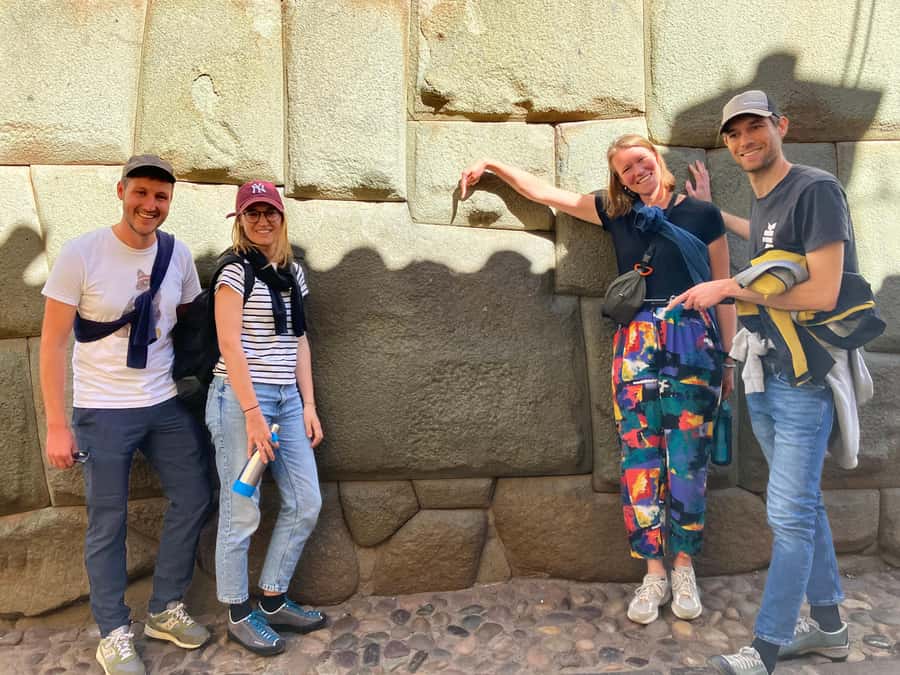
Here, you’ll hear stories connected to Cusco’s noble past, including stops that focus on important figures such as the Palace of Inka Roca. Then you reach Hatun Rumiyoc Street and the star attraction: the famous 12-Angle Stone on Hatun Rumiyoc.
This stop is memorable because it’s easy to understand even if you’re not a history expert. The stone is famous for its geometry and tight fitting, and it gives you something concrete to point at later when you’re trying to explain Cusco to someone back home.
Practical tip: pause long enough to view it from different angles. The more you shift your stance, the more you’ll notice why people get excited about this small piece of masonry.
More Walking Tours in Cusco
- Cusco: Walking Tour with an Experienced Local Guides
★ 4.8 · 636 reviews - Curious Monkey Cusco- Eat the Streets, Walking Food Tour
★ 5.0 · 160 reviews - Cusco: Historic Walking Tour with Pisco Sour and Music Show
★ 4.6 · 65 reviews - Cusco Food Walking Tour & Central Market
★ 5.0 · 48 reviews
Coricancha Temple of the Sun: what’s included, and what you should decide
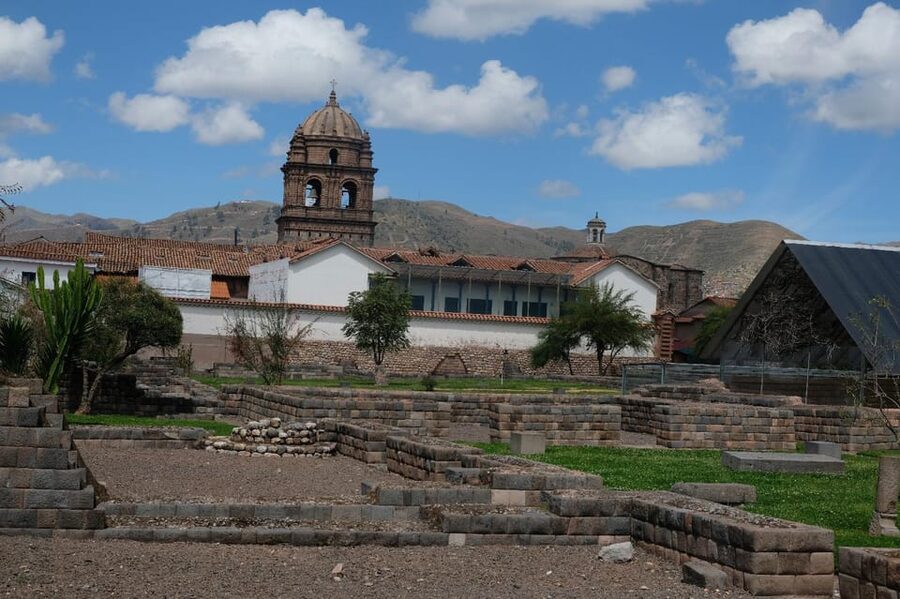
Coricancha shows up as a highlighted stop with photo time and guided explanation. Important detail: Coricancha entrance is not included, and you can see it from outside on this tour.
That’s a fair approach for a 2-hour highlights itinerary. If the tour included entry for everyone, it would slow everything down and likely cost more. Still, it helps to know your options.
Here’s how I’d think about it when planning your day:
- If you want a fast orientation and you’re saving money, keep Coricancha to exterior views on this tour.
- If Coricancha is a top priority for you, plan an extra time block later and decide then, when you’re not rushed.
Some guides can also add an extra option for Coricancha entry depending on your circumstances, but don’t count on it being automatically part of the basic walking flow.
ChocoMuseo chocolate tasting and the local food-and-drink mindset
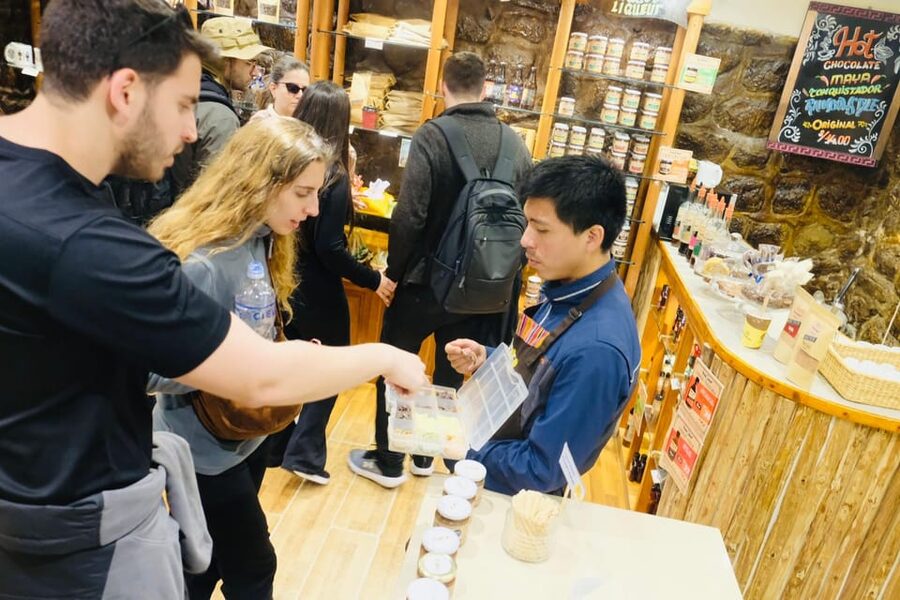
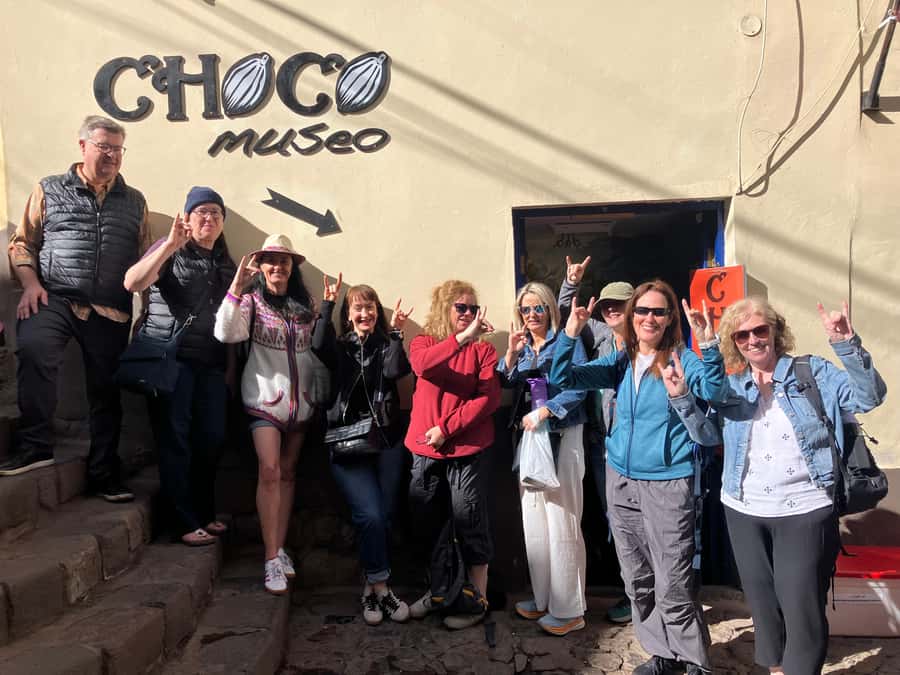
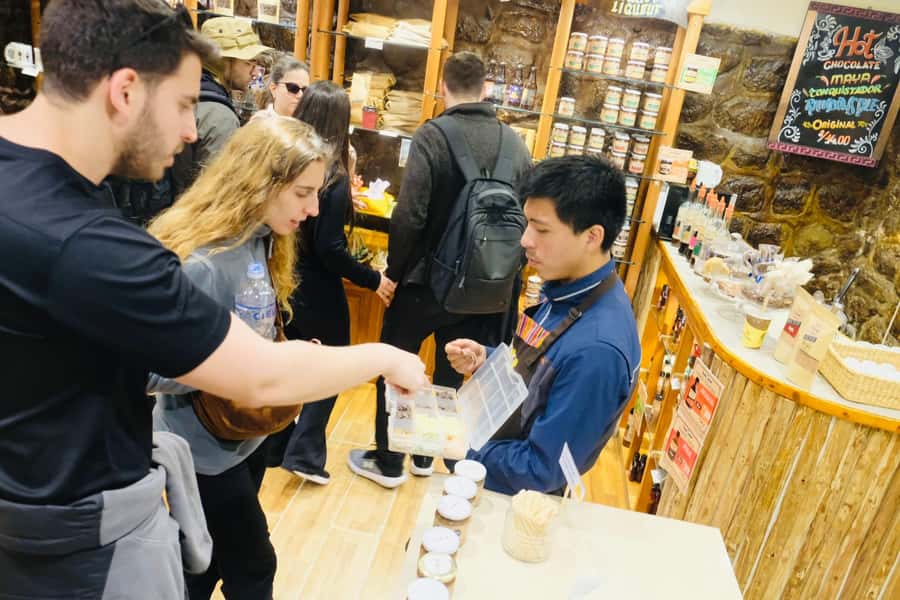
One of the best parts of this tour is the food component, especially because it’s short and intentional. You’ll stop at ChocoMuseo for locally made Peruvian chocolate tasting at the point in the route near the 12-Angle Stone.
Chocolate in Cusco isn’t a random snack. It’s a way to connect the city’s history with its present. You get to taste something produced locally, and your guide typically frames it with small culture notes while you’re walking.
If you’re also interested in the fermented drink culture, the tour may include an optional chicha tasting if the chicha vendor is around during the San Blas portion. In practice, that means you should be ready for a brief detour when the timing lines up.
Also, some bookings are paired with extra street food tastings. If that matters to you, choose the option tied to your booking, or ask your guide what tastings are planned for that specific departure.
San Blas: cobblestones, artisan corners, and Sapantiana aqueduct
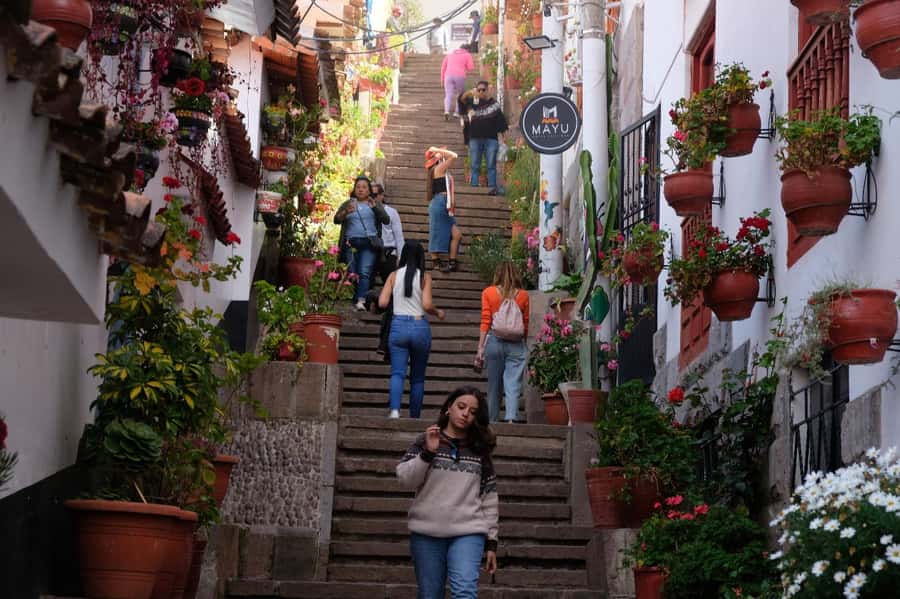
Now for the neighborhood portion. San Blas is known for cobblestone alleys, artisan workshops, and a calmer feel as you wander away from the heaviest tourist pulse around the main square.
The tour uses this section to slow down just enough for you to notice texture. You get photo opportunities, short guided explanations, and time to look at the kind of craft shops you might otherwise walk past.
Two specific highlights here are worth calling out:
- Sapantiana colonial aqueduct, described as hidden, meaning it’s not always obvious unless someone points it out.
- 7 Borreguitos Street, a colorful, photogenic corner that makes for great pictures.
If you love street-level Cusco, this part is gold. Just be aware it’s still walking, and San Blas cobbles can be uneven. Take your time, and don’t try to conquer every stair like it’s a workout class.
Amaru Cancha llamas and alpacas: a quick stop with real charm
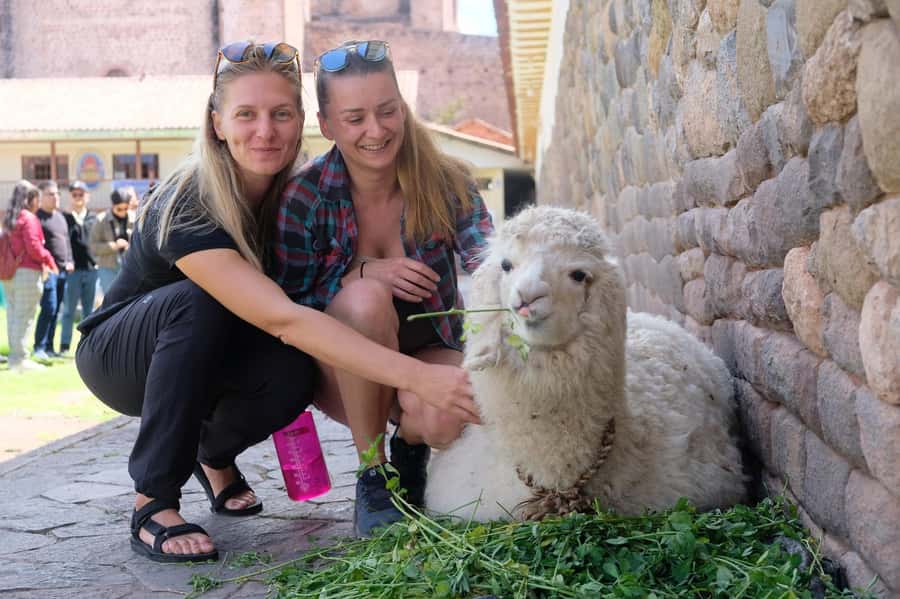
Along the route, you’ll meet llamas and alpacas at Amaru Cancha. This is one of those moments that works for almost everyone because it’s simple and visual, and it fits the tour’s overall theme of meeting Cusco’s living culture, not just reading plaques.
The animals also help break the rhythm of stone and churches. You can reset your legs, take a few photos, and then continue on without feeling like the tour is a blur.
If you’re concerned about altitude, this stop can be an easy checkpoint. You’ll still be walking after, but it gives your body a brief pause.
Mirador de San Cristobal photo stop and how to use it
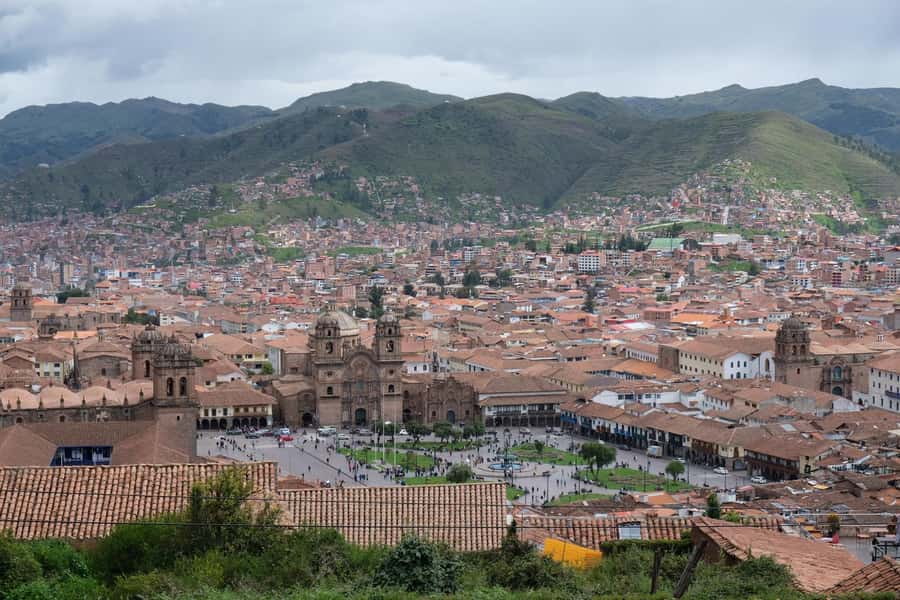
The itinerary includes a Mirador de San Cristobal photo stop with a guided segment and brief timing for sunrise or sunset style viewpoints, depending on your departure.
Even if you’re not there at a peak light moment, a mirador stop is still useful. It helps you understand the city’s topography, and it gives you a frame for your later days when you’re deciding whether a viewpoint is worth the climb.
If you want better photos here, the smartest move is to tell your guide you’re trying to capture a landscape shot and ask where they want you to stand. Guides often know which angles give you cleaner sightlines.
Walking comfort, group size, and pacing in Cusco
The tour is designed for a small group of up to 10 people, with an English-speaking local guide. That small size matters because the route includes frequent short stops for explanations and photos, and big groups can turn those into long waits.
The tour is wheelchair accessible, but it is still a walking tour with a moderate physical condition recommendation. In other words, accessibility exists, but the experience is still built around moving around Cusco’s streets.
What to bring is simple and practical:
- Comfortable shoes
- Sunscreen
- Water
Bring your water and take small sips. Cusco altitude can sneak up on you, and thirst can feel like fatigue.
Price and value: what $15 gets you in real Cusco time
At $15 per person for a 2-hour walking tour, the value comes from concentration. You’re paying for a local guide who connects multiple landmarks into one story you can remember, not just someone walking beside you.
You also get included elements that make it feel more than a basic orientation:
- A guided look at Plaza de Armas and major nearby churches
- Guided exploration of Coricancha as a highlighted stop from outside
- A stop for the 12-Angle Stone
- San Blas walking with a neighborhood feel
- Chocolate tasting at ChocoMuseo when included in your tour version
- Optional chicha tasting if it lines up with availability
- Amaru Cancha llamas and alpacas
In plain terms, it costs less than many full-day excursions, but it gives you a tight, structured introduction that helps you choose what to do next.
One more value point: guide support for questions and photos. People mention guides like Waldo taking extra time, helping with questions, and even speaking English very clearly. That kind of confidence reduces the stress of navigating Cusco on your own.
If you do well during the tour, tip your guide. It’s not required in the data you provided, but it’s a common and appreciated way to support the person doing the actual work for your experience.
Should you book this Cusco Highlights Walking Tour?
Book it if you want:
- A quick first-day orientation anchored at Plaza de Armas
- Inca and colonial stops in a single loop
- Short tastings, especially chocolate at ChocoMuseo and possible chicha
- A small-group guide who can answer questions and help with photo stops
Skip it or swap your plan if:
- You want lots of time inside major sites, because Coricancha entry is not included
- You struggle with walking on uneven cobbles for stretches, because San Blas involves real street walking and you’re on your feet most of the time
- You’re looking for a deep dive into one site only, because this tour is intentionally short and wide
If you’re spending only a couple days in Cusco, I’d treat this as your “set the map in your head” tour, then build the rest of your schedule around what you liked most on the walk.
FAQ
How long is the Cusco Highlights walking tour?
It lasts 2 hours.
Where do I meet for the tour?
You meet in front of the McDonald’s in the main square of Cusco (Plaza de Armas).
What is the price of the tour?
The price is $15 per person.
What major places does the tour cover?
You’ll visit Plaza de Armas, Coricancha, the 12-Angle Stone, and walk through San Blas, with stops that also include areas such as Nazarenas and Sapantiana aqueduct, plus 7 Borreguitos.
Is Coricancha entrance included?
No. Coricancha entrance is not included, though you can see it from outside.
Do I get to try chocolate or chicha?
Chocolate tasting at ChocoMuseo is included if it is part of your tour version. Chicha tasting is optional if available during the San Blas portion.
Are llamas and alpacas included?
Yes. The tour includes a visit to Amaru Cancha for llamas and alpacas.
What should I bring for the walk?
Bring comfortable shoes, sunscreen, and water.
Is the tour wheelchair accessible?
Yes, it is listed as wheelchair accessible. It is still a walking tour, and moderate physical condition is recommended.
What is the cancellation policy?
Free cancellation is offered up to 24 hours in advance for a full refund.
Recently reviewed around Cusco
- Cusco Cooking Class by ChocoMuseo in Cusco★ 5.0 · 29 reviews
- ATV Adventure to Moray and Maras Salt Mines – Half Day★ 4.5 · 29 reviews
- 1-day excursion to Machu Picchu from Cusco★ 5.0 · 29 reviews
- Private Tour Sacred Valley, Chinchero, Maras Moray, Ollantaytambo★ 5.0 · 29 reviews
- From Cusco: Humantay Lake with Breakfast and Buffet Lunch★ 4.5 · 29 reviews
- 4 Day – Inca Jungle to Machu Picchu★ 5.0 · 29 reviews
- 2-Day Machu Picchu Tour by Train from Cusco★ 4.5 · 29 reviews
- 2-Day Sacred Valley and Machu Picchu Tour By Train★ 4.5 · 29 reviews
Walking Tours, compared.
Lima Half-Day City Walking Tour (Small Groups)
Read our review →
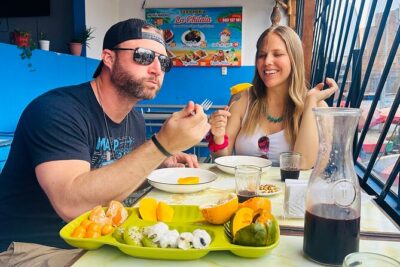
Food & Art: Lima Colors and Flavors Walking Tour
Read our review →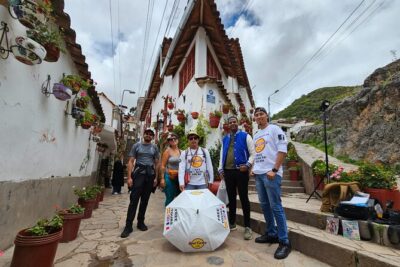
Historic Walking Tour with Pisco Sour and Local Music
Read our review →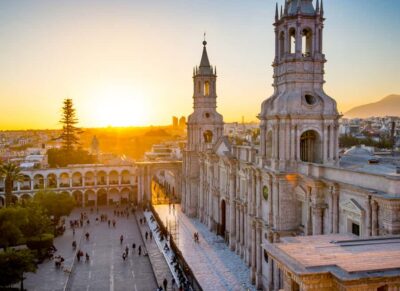
Walking tour in the Historic Center of Arequipa
Read our review →
Curious Monkey Cusco- Eat the Streets, Walking Food Tour
Read our review →
Miraflores Trending Flavors Half-Day Walking Tour
Read our review →Browse the lists this tour appears in