
Reviewed · PERU
From Cusco: Inka Suspension Bridge Qeswachaca – Qeswachaka
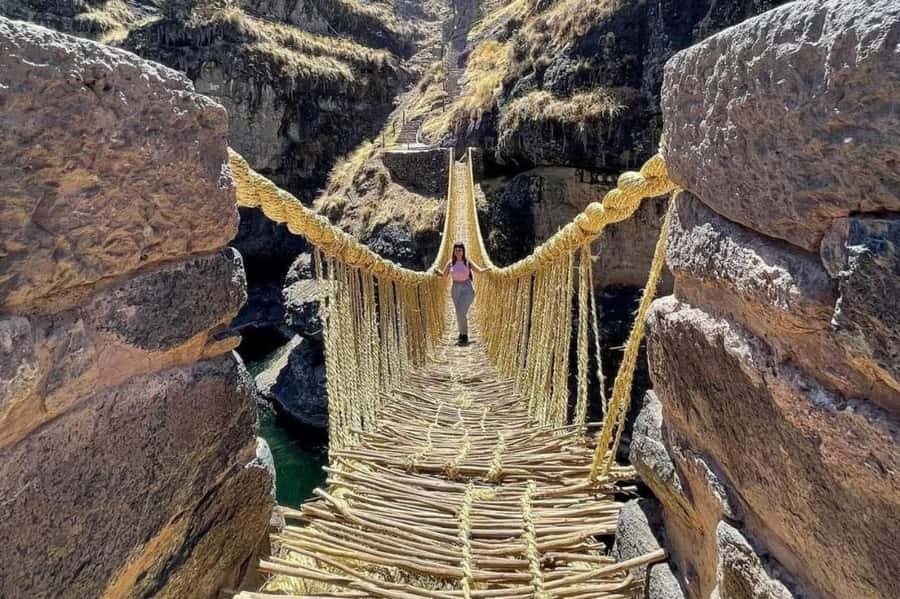
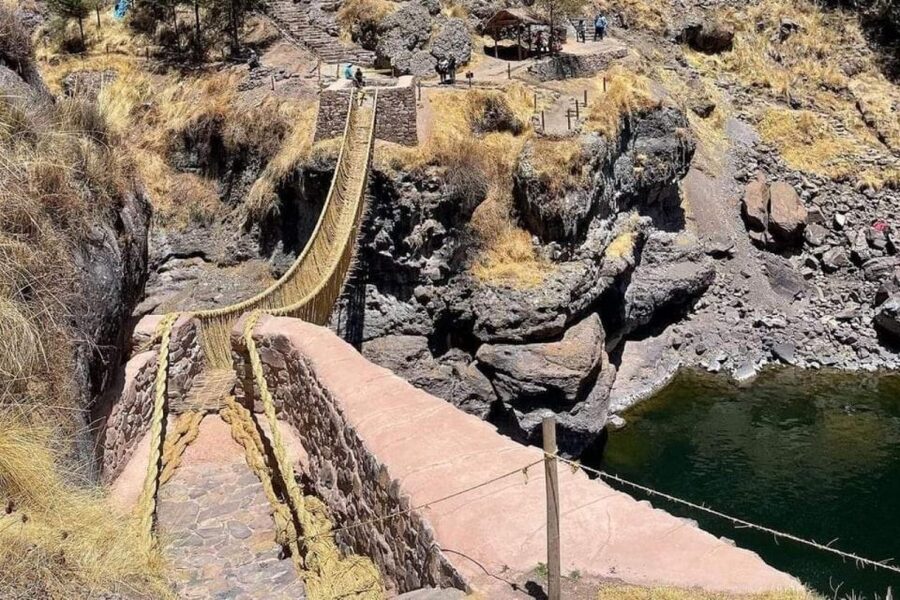
Cusco has plenty of Andean highlights, but this one feels especially human. The big draw is the Qeswachaca rope bridge, hand-woven with plant fibers (Ichu) and still maintained by local communities year after year.
I also like the chance to compare two Inca-style bridges on the same day, first at Q’eswachaca and later at the colonial Inca Bridge of Checacupe. The main drawback to plan for is a long day with early pickup and stretches of travel, so you will want snacks, patience, and a bathroom strategy.
Key points to know before you go
You’ll see four highland lakes in the Cusco region, with short photo stops and quiet moments by the water.
The bridge is real work, not a show: it’s woven by hand with Ichu and maintained annually by nearby communities.
Expect a real walk: crossing Q’eswachaca is the highlight, with views down to the Apurimac River.
You’ll get a comparison stop at Checacupe, so you can notice how architecture changes over time.
Tickets for small extras are not included (including the suspension bridge entrance and the mini-volcano).
English quality can vary: the tour is advertised bilingual, but you may want to be ready to communicate even if English is limited.
Why the Qeswachaca Rope Bridge is the point of this whole day
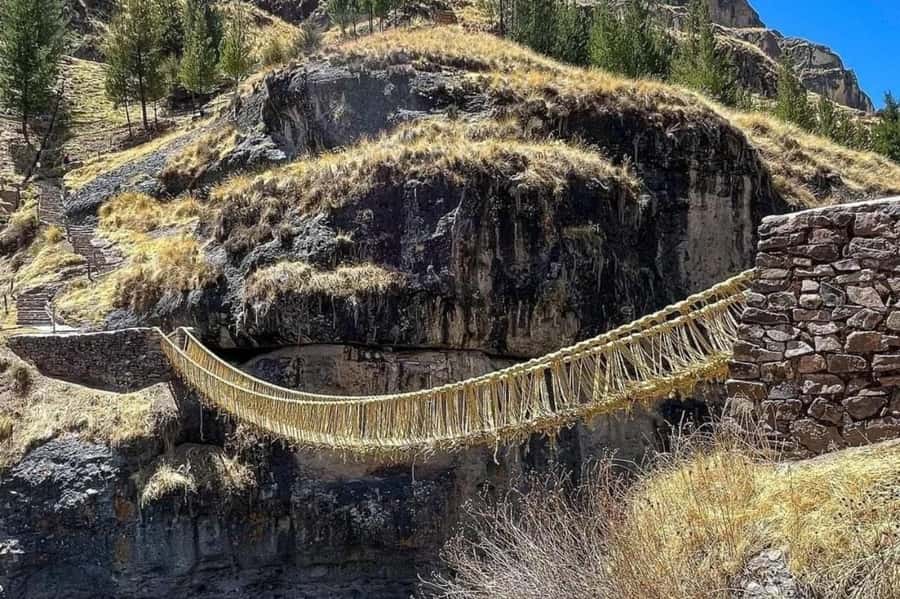
This tour is built around one experience: walking the Q’eswachaca suspension bridge over the Apurimac River. What makes it interesting is that it is not a preserved monument you just look at. It is an active bridge, rebuilt and maintained each year by people from the surrounding four communities, using traditional plant fibers (Ichu). That detail matters, because it turns the visit from sightseeing into a living craft.
I love how the bridge walk quickly strips away the usual museum vibe. You cross, you feel the movement under your feet, and you take in the river below. It is short physically, but it lands hard emotionally, because you are literally stepping into a system that locals keep going.
The other reason this works is the comparison stop later at Checacupe. Many bridge stops are one-and-done. Here, you get a second bridge with different architectural features, so you can leave with a better sense of how styles shift in the Andes.
Other Peru days people book on the same trip:
- From Cusco: Tour Ausangate & 7 Lakes Full Day
★ 4.1 · 16 reviews - Cusco: Ausangate Tour Seven Lagoons + meals
★ 3.7 · 10 reviews - Cusco: Sacred Valley VIP, Pisac, Ollantaytambo
★ 5.0 · 7 reviews
The early Cusco pickup (and why it helps)
The day starts early, with pickup typically between 4:30 AM and 5:10 AM from your hotel area. The reason they run it this way is practical: you travel southwest first, hit the lake viewpoints before the day gets busy, and reach the river and bridge before the later light changes and crowds pick up.
Be ready for a long sit on the bus. Even with the scenic stops, this is still a full-day road trip, about 12 hours total. Bring layers for the morning. Early starts in the Andes can feel chilly until the sun climbs.
Also, note that the tour is not wheelchair-friendly. That’s not surprising given the uneven ground and the bridge approach, but it is important for planning.
Lakes like Pomacanchi, Acopia, Asnaqocha, and Pampamarca
Before you reach the river, you will swing through several lakes in the Cusco region. The itinerary includes a sequence of lakes such as Pomacanchi, Acopia, Asnaqocha, and Pampamarca (sometimes referred to as the Tungasuca area on routes). You usually get short photo stops, plus a calmer moment by the water where you can actually breathe and look around.
This part is not just filler. In the Andes, those lakes do three things for your experience:
- They give you altitude-and-weather orientation before the bridge, so you are not stressed when the hike and crossing start.
- They set the mood, because the view keeps reminding you how high and how far you are from Cusco.
- They break up the travel, so the bridge walk feels like a “moment,” not another stop on a list.
If you’re the type who gets carsick, this is also where you can practice good timing: eat lightly at the start of the day and keep your eyes on the horizon during drives. The tour includes breakfast, but the schedule can place it after a couple hours of travel.
A stop near Yanaoca for Pabellones Volcano
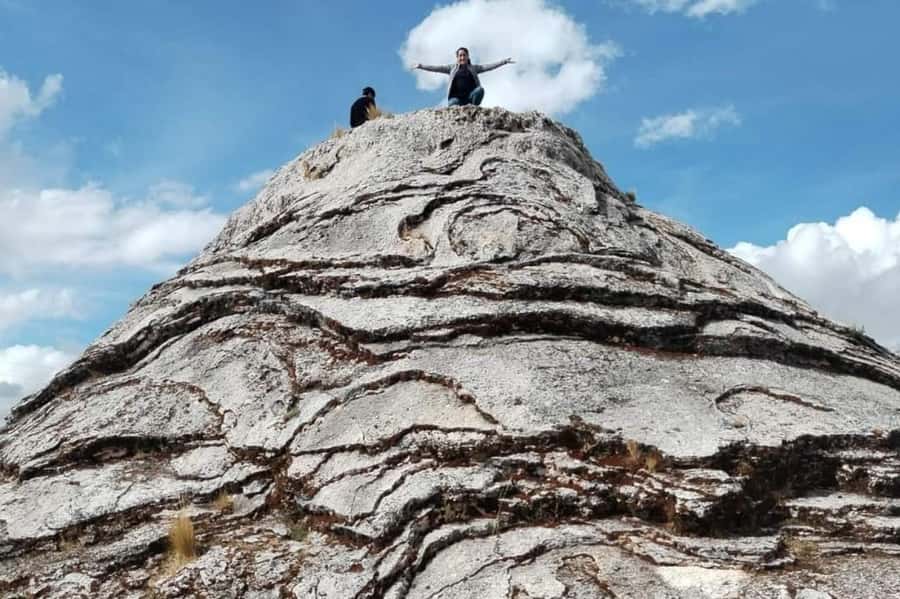
On the route back and forth, the tour includes a stop near the town of Yanaoca to visit the small Pabellones Volcano area. The key point here is expectation management. This is a brief detour, and it is often more about viewpoint and photos than a major hike.
You will likely decide quickly whether it’s worth your energy. If you like quick lookouts, you’ll enjoy the change in scenery. If your brain is already focused on the bridge walk, consider this a chance to stretch, not a second headliner.
Also remember: a mini-volcano ticket is listed as extra (S/2). If you want to keep costs simple, have a few small bills or coins ready.
A different kind of day out of Peru:
- ECONOMIC PRIVATE TOUR IN THE CITY OF CUSCO – HALF DAY
★ 5.0 · 6 reviews - 1-day excursion to Palcoyo Mountain + Breakfast and Lunch
★ 4.0 · 5 reviews - Cusco: Half-Day City Tour
★ 5.0 · 5 reviews - Offer Price Tour Salinas Lagoon and National Reserve 8 hours
★ 5.0 · 4 reviews
Arrival at the Apurimac River and the Q’eswachaca bridge walk
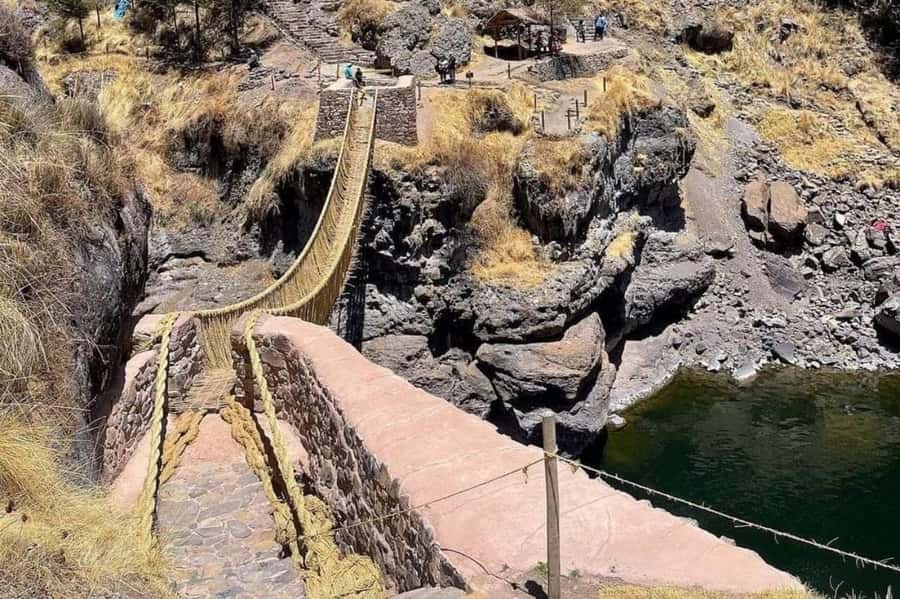
Then comes the main event: the Inca Suspension Bridge at Q’eswachaca, in the district of Quehue, woven by hand with Ichu over the Apurimac River.
What you should expect on the day is two things working together:
- Guidance on how the bridge is made and maintained
- The actual walk across, where you see it in motion
The bridge is annually renovated by local inhabitants from nearby communities. That annual rhythm is the reason this visit feels different from stepping on an old, static bridge. You’re witnessing a structure that depends on ongoing hands-on care.
Practical tips for the crossing:
- Wear shoes with good grip. The approaches and the bridge can be uneven.
- Keep your hands available for balance and follow your guide’s instructions closely.
- Move slowly. Wiggly moments feel more manageable when you do not rush.
If you are sensitive to heights, the views down to the river may feel intense, but the experience is not about adrenaline. It is about rhythm and focus. Treat it like a careful crossing, not like a stunt.
The guide factor: where the experience can swing
A big part of your enjoyment here is the guide. The tour is advertised with a bilingual guide (English and Spanish). In one documented case, a guide named Roland was praised for explaining the bridge technique and ideas behind Inca engineering, plus answering lots of questions about the Andes, climate, and local flora and fauna.
In other cases, English may be less consistent. So, if you are counting on detailed English interpretation, do not assume perfect fluency in every moment. Still, even with limited English, your guide should be able to point out what matters most: the bridge structure, the maintenance, and what you’re looking at.
My advice: ask one simple question early on, like how the bridge is maintained year to year. If your guide can answer clearly, you’ll likely have a great day.
Checacupe: comparing the Colonial Inca Bridge to what you just crossed
On the way back to Cusco, the tour stops at the Colonial Inca Bridge of Checacupe. This is a smart second chapter. You just walked Q’eswachaca, which is woven and maintained in an older style. At Checacupe, you get a different bridge built under later influence, and you can compare the features.
What you can look for, based on the idea of comparison:
- How the structure is built and reinforced
- How materials and form differ from the woven rope bridge
- What stays “Inca-inspired” even as design shifts
Even if you only have a short time here, this stop helps you avoid the common trap of leaving Cusco bridge-focused but conceptually confused. Instead, you can leave knowing that Andean engineering can adapt while still keeping core principles.
Price and value: the ticket extras matter
The tour price is listed at $47 per person, and it includes hotel pickup, transportation, a bilingual tour guide, breakfast, lunch, and safety items like a first aid kit and oxygen.
What is not included:
- Entrance ticket for the suspension bridge (S/20)
- Ticket for the mini-volcano (S/2)
- Personal expenditures
How I think about the value: you are paying for a full day that strings together multiple scenic stops plus one major, hands-on experience. If the bridge entrance and mini-volcano tickets catch you off guard, your true total rises a bit, but it is still a reasonable add-on for a day-trip that covers a lot of ground.
Also, you get breakfast and lunch, which matters with an early start. With these kinds of long tours, meal costs can balloon fast if you have to buy everything on your own.
Logistics reality check: long rides, limited breaks, and what to bring
This is where you need to be honest with yourself. Between pickup, lake stops, the river approach, and the return drive, you are going to spend lots of time in a vehicle. One review noted that the day can feel like mostly traveling in bus, and it criticized the lack of bathroom breaks and warning.
Even if your day runs more smoothly, assume you might not get frequent restroom stops. So bring:
- Water
- A light snack for between meals (especially if you get hungry early)
- Layers for morning cold and afternoon sun
- Small cash for entrance tickets and the mini-volcano fee
Don’t plan to be “hands-on relaxed” all day. Plan to be mentally ready for travel.
Who should book this Q’eswachaca day trip
This tour is a great fit if you:
- Want the bridge walk to be the centerpiece, not just a photo stop
- Like understanding how Andean traditions still function in daily life
- Enjoy scenic lake viewpoints but don’t need long hikes every hour
It may not be the best fit if you:
- Need frequent bathroom breaks and frequent downtime
- Want a strictly polished, fluent English experience at every step
- Have mobility constraints that make uneven ground and a bridge crossing hard
Should you book this tour?
Yes, you should book if walking the Q’eswachaca bridge is on your must-do list and you can handle an early start plus a long day of driving.
Book it with confidence if you want an experience that feels lived-in, guided by explanations of bridge construction and the annual community work that keeps it running. Book it with a little extra caution if you are very sensitive to long bus rides or you need consistent English interpretation, because communication quality can vary and the day can run tight.
FAQ
FAQ
What is the duration of the tour from Cusco?
The tour runs for about 12 hours.
When does pickup happen in Cusco?
Pickup is scheduled between 4:30 AM and 5:10 AM, and you should wait in your hotel lobby about 10 minutes before the pickup time.
Is the Q’eswachaca suspension bridge entrance fee included?
No. The entrance ticket for the suspension bridge is S/20 and is not included.
Is breakfast and lunch included?
Yes. Breakfast and lunch are included in the tour.
Is the mini-volcano ticket included?
No. The mini-volcano ticket is S/2 and is not included.
Where does the tour end?
The tour ends around 5:00 PM, finishing near Plaza Kusipata and about a block from the Plaza de Armas area.
Recently reviewed around Peru
- Offer Price Tour Salinas Lagoon and National Reserve 8 hours★ 5.0 · 4 reviews
- From Cusco: Tour Ausangate & 7 Lakes Full Day★ 4.1 · 16 reviews
- ECONOMIC PRIVATE TOUR IN THE CITY OF CUSCO – HALF DAY★ 5.0 · 6 reviews
- 1-day excursion to Palcoyo Mountain + Breakfast and Lunch★ 4.0 · 5 reviews
- Cusco: Zipline in the Sacred Valley★ 5.0 · 4 reviews
- Cusco: Sacred Valley VIP, Pisac, Ollantaytambo★ 5.0 · 7 reviews
- Cusco: Half-Day City Tour★ 5.0 · 5 reviews
- Cusco: Ausangate Tour Seven Lagoons + meals★ 3.7 · 10 reviews