
If you like your Sacred Valley sights to feel hands-on, this day trip hits the sweet spot. You start in Salinas de Maras, where thousands of shallow salt pools have been worked for centuries. Then you head to Moray, famous for circular terraces that were used as an agricultural experiment.
Two things I really like about this tour are the off the beaten path feel and the way the guide brings the places to life. One review specifically praised Josie for being personable and explaining the science of Incan farming in both English and Spanish. I also like that you get a small-group experience, so the day does not feel rushed or lost in a crowd.
One consideration: the base price does not cover everything you’ll need on the ground. You should plan for the entrance ticket at PEN 90 per person plus meals, which add up if you are on a tight budget.
Key things to know
- Small group pace with a compact vehicle and personal guide attention
- Maras salt pans history linked to Wari origins and later Inca expansion
- Moray terraces are a crop lab with circular levels, irrigation, and microclimate thinking
- Bilingual guiding (English and Spanish), with one reviewer highlighting Josie’s clarity
- Optional cultural stops like an alpaca yarn dye demonstration and a salt-products shop
A Smooth Cusco Start That Sets the Tone
This tour is built for an easy start. You meet at the operator’s office in Cusco (Plateros 324) for the 8:30 am departure, and the experience ends back at the same meeting point after about 6 hours 30 minutes.
What matters here is that you do not have to solve a mystery meeting spot on your own. Hotel pickup and drop-off are part of the promise, which is a big deal in Cusco, where traffic, streets, and tour timing can turn into a stress test.
The group size is kept small. The booking info lists a maximum of 10 travelers, and reviews mention a vehicle set up for around 15 seats. Either way, the intent is the same: you get enough time with your guide to ask questions and actually hear the answers.
More Day Trips in Cusco
- Cusco: Rainbow Mountain and Red Valley Day Trip with Meals
★ 4.9 · 4,893 reviews - Cusco: #1 Rainbow Mountain & Red Valley Day Trip with Meals
★ 4.8 · 2,342 reviews - Cusco: Rainbow Mountain & Red Valley Premium Day Trip with Meals
★ 5.0 · 2,249 reviews
Why This Day Works as a Sacred Valley Alternative
Most people doing a Sacred Valley day trip focus on a few big names and call it a win. This one does something smarter. It pairs a living industry (salt harvesting) with an agricultural idea lab (Moray’s terraces).
That pairing changes how you see the region. You stop thinking of the Andes as just dramatic scenery and start understanding how people used the mountains. Salt production depends on weather and evaporation. Terrace farming depends on irrigation and microclimates. Put together, it feels practical, not just scenic.
And it is the exact kind of day that works well if you want something meaningful without signing up for a full overnight itinerary.
Salinas de Maras: 3,600 Salt Wells and the Quiet Math of Evaporation
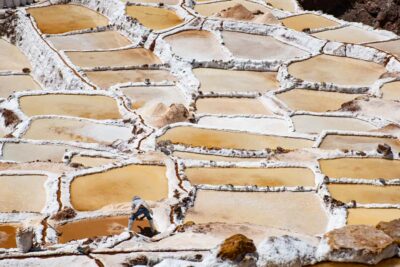
Your first real stop is Salinas de Maras, home to more than 3,600 salt wells cut into a mountainside. The pools are shallow, filled with salt water that gradually evaporates. Over time, salt crystallizes and can be harvested. The practice is described as being around for more than 500 years.
The story also goes deeper than Inca postcards. The salt pans are believed to have originally been constructed by the Wari civilisation, which predates the Inca. Later, the Inca recognized the economic opportunity and expanded the salt pans up the mountainside.
That timeline matters because it helps you read what you see. When you look down at those stacked pools, it is not just a pretty geometry. It is evidence of long-term engineering and a resource economy that outlasted empires.
What to watch for while you’re there
- The way the salt pools follow the slope, like step-by-step grids rather than random holes
- The evaporation logic, the idea that the landscape is working as part of the process
- How the site looks different from different angles, especially when light hits the crystallized salt
A practical note
Wear shoes you feel good walking in. This is not a place built for bare minimum effort. Also, expect sun. Even if clouds roll in, you are still at altitude sun levels in open air, and salt flats reflect light.
Moray Terraces: Incan Crop Lab, Not Just an Instagram Circle
After Maras, you go to Moray, about 4.5 miles from Maras town and 39 miles from Cusco. Moray’s signature feature is a set of circular agricultural terraces. They are described as being up to 330 feet deep and built with retaining walls connected to an irrigation system.
Here is the key idea you want to carry through your visit: Moray can be seen as a crop lab. The terraces were used to create micro-climates, letting farmers experiment with different growing conditions. That means the circular design is not just decorative. The depth, the structure, and the irrigation all contribute to different temperature and moisture patterns.
If you love farming, botany, or simply the human brain at work, Moray hits hard. It is one of the best examples of Andean engineering as applied science.
What you’ll likely feel at the terraces
The space encourages you to slow down. From the edges, you get a sense of scale, then you connect it to function. When a guide explains how irrigation ties terraces together, the whole layout starts making sense as a system, not a curiosity.
A possible drawback
Moray is impressive, but it is also easy to visit in a too-fast, too-busy way if you are not paying attention. The tour’s value is that the guide helps you connect the dots so you do not just pass through circles. If you want real learning, show up mentally ready to listen.
More visits to the Maras salt mines:
- From Cusco: Sacred Valley & Maras Salt Mines Tour with Lunch
★ 4.8 · 2,227 reviews - From Cusco: Moray, Maras Salt Mines & Chinchero Weavers Tour
★ 4.8 · 1,925 reviews - Cusco: Sacred Valley, Pisac, Ollantaytambo, Salt Mines Moray
★ 4.6 · 1,058 reviews - Cusco:Chinchero,Moray & Salt Mines drop-off in Ollantaytambo
★ 4.8 · 793 reviews
The Small-Group Difference: How a Bilingual Guide Changes the Day
This is where the tour earns its rating. You get transport plus a bilingual guide included. One review praised the guide’s ability to explain things clearly in both English and Spanish, and another named Josie as especially knowledgeable and personable.
That bilingual angle is not just a nice-to-have. It shapes how you experience complex topics like:
- why evaporation creates crystals
- how micro-climates can be created with farming structure
- why the Wari to Inca transition matters economically
Also, a smaller group makes the day more human. You are not shouting across seats or competing for attention at each viewpoint. You can hear, you can ask, and your questions do not vanish into the noise.
Vendor Stops That Actually Add Context
You may include a couple of additional stops along the way. Reviews mention two vendor stops that felt more educational than distracting.
First, there is a local market stop where women do a demonstration of how they clean and dye alpaca yarn. This is a hands-on way to connect the region’s materials culture to daily life, not just to souvenirs. It also helps you understand why wool products are so common and valued here: the process is skilled, and the colors are not random.
Second, there is a shop stop where you can purchase products from the Maras salt mines. If you want to bring something home that relates directly to the place you visited, this is one of the most logical shopping moments of the day. Just keep expectations grounded. You are buying salt products and local goods, not imported luxury.
The upside of these stops is simple: they break up the day and give you a cultural thread between the two main sites.
What You’re Paying For: Price, Entrance Fees, and Meals
The tour price is $59 per person for transport and a bilingual guide, with a duration of around 6 hours 30 minutes. That is a solid base rate for a day that combines two major sights and includes pickup and drop-off.
But you should budget the extras upfront:
- Entrance ticket: PEN 90 per person (not included)
- Meals: PEN 70 per person (not included)
This is the only part that can surprise people. When a tour feels like a full experience but costs extra at the gate and at lunch, it can mess with your sense of value.
Here’s how to think about it. The $59 mainly covers logistics and guiding, plus the time you spend at Salinas and Moray. If you already planned to enter both sites and eat on your own anyway, the add-ons are just part of the math. If you were hoping for a no-extra-fees day, this is not that.
If you want to keep costs down, set your spending limit for tickets and lunch now, before you are hungry or on the spot.
How to Plan Your Day So It Feels Enjoyable
Even with hotel pickup and a compact schedule, you’re going to be outside and moving between viewpoints. That means a few simple choices make the day smoother.
I’d plan for:
- Comfortable walking shoes (salt areas and terrace viewing areas can be uneven)
- Sun protection, since you’ll spend time in open air
- Water, because you’ll want it between stops
- Layers, because mountain weather can change quickly
Also, if you tend to get impatient on guided tours, this one is the type where listening pays off. The value is in connecting processes to place.
Who Should Book This, and Who Might Skip It
This trip is a great fit if you want:
- Sacred Valley sights that are more than a quick checklist
- A day that connects history, agriculture, and local livelihoods
- A guided explanation in English and Spanish
- A small-group pace with less crowd pressure
It may be less ideal if you:
- Hate paying entrance fees and prefer everything bundled
- Want a pure photo-only tour with minimal explanations
- Struggle with outdoor walking or uneven terrain
If you’re on the fence, think about your travel style. If you like learning how things work, Maras and Moray make sense as a pair.
Should You Book the Maras and Moray Day Trip?
Yes, if you want a meaningful day that feels practical, not just scenic. The combination of Salinas de Maras salt wells and Moray’s agricultural terraces gives you two different windows into how people built food and economy in the Andes. Add a small group, hotel pickup and drop-off, and bilingual guiding, and you get a day that runs with purpose.
Book it if you like to ask questions and you enjoy being taught, even briefly. Skip it if your priority is minimal spending beyond the headline price, or if you prefer lots of free time over guided context.
If you do book, go in expecting a mix of salt work and terrace science, plus a couple of cultural add-ons like alpaca yarn dye and salt-products shopping. It is a day with more to think about than most half-day plans.
FAQ
How long is the Maras Moray day trip?
It runs for about 6 hours 30 minutes.
What time does the tour start?
The start time is 8:30 am.
Where is the meeting point in Cusco?
The tour starts at HEIDI TRAVEL EIRLC, Plateros 324, Cusco 08000, Peru.
Does the price include entrance tickets and meals?
No. The entrance ticket is PEN 90 per person, and meals are PEN 70 per person. Transport and the bilingual guide are included.
How many people are on the tour?
The maximum number of travelers is listed as 10, and reviews describe a compact van for about 15 seats.
Is there hotel pickup and drop-off?
Yes. Hotel pickup and drop-off are part of the tour, and the activity ends back at the meeting point.
Are there any vendor or cultural stops during the day?
Yes, reviews mention stops such as a market demonstration on alpaca wool cleaning and dyeing, and a shop selling products related to the Maras salt mines.
What language is the guide?
The guide is bilingual.
Is the tour refundable if I cancel?
No. This experience is non-refundable and cannot be changed for any reason. The amount paid will not be refunded if you cancel or request an amendment.
More Visits to the Moray Terraces
- Sacred Valley and Maras Moray Tour with Full Day Buffet Lunch
★ 5.0 · 670 reviews - ATV Tour to Moray Maras and Salt Mines in the Sacred Valley
★ 4.5 · 530 reviews - Sacred Valley: Chinchero, Moray, Ollantaytambo & Pisac+Lunch
★ 4.8 · 501 reviews - Sacred Valley: Maras & Moray by Quad Bike from Cusco
★ 4.6 · 418 reviews
Recently reviewed around Cusco
- 6-Day ||All Included|| Excursion – MachuPichu & Rainbow Mountain-Humantay Lake★ 4.5 · 8 reviews
- Horseback Riding thru the Mountains of Cusco★ 5.0 · 8 reviews
- Cuzco City Tour and Archaeological Ruins in Half Day★ 5.0 · 8 reviews
- Full Day – Rainbow Mountain tour – Group Service★ 5.0 · 8 reviews
- Half Day Tour in Cusco: Exploring the City and Four Ruins★ 4.5 · 8 reviews
- Machu Picchu and Sacred Valley 2 Day Tour★ 5.0 · 8 reviews
- Cusco 4 Days Machu Picchu and Sacred Valley | All included★ 5.0 · 8 reviews
- City Tour Cusco With Qoricancha and 4 Ruins★ 5.0 · 8 reviews
Maras Salt Mines, compared.
Sacred Valley & Maras Salt Mines Tour with Lunch
Read our review →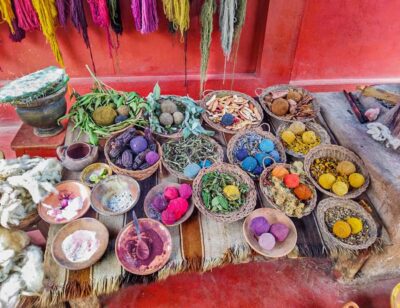
Moray, Maras Salt Mines & Chinchero Weavers Tour
Read our review →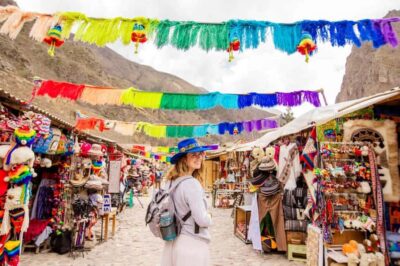
Sacred Valley, Pisac, Ollantaytambo, Salt Mines Moray
Read our review →
Chinchero,Moray & Salt Mines drop-off in Ollantaytambo
Read our review →
Sacred Valley and Maras Moray Tour with Full Day Buffet Lunch
Read our review →
ATV Tour to Moray Maras and Salt Mines in the Sacred Valley
Read our review →
Tour Sacred Valley & Maras – Moray with buffet lunch
Read our review →Browse the lists this tour appears in