
Reviewed · SACRED VALLEY
Sacred Valley Moray Ruins & Maras Salt Mines Tour From Cusco (Half Day Tour)
This is one of those Sacred Valley trips that feels efficient because you stack three very different places into one day: a living village heritage stop, a real scientific-looking Inca agricultural site, and the famous Maras salt wells. I like that you get both culture and visuals, not just ruins and photo ops. Moray terraces are the star for me, and the salt mines deliver on the wow factor fast. One thing to consider is that admission tickets are not included, so your total cost will creep up a bit at the sites.
I also like the tour’s pace. In my experience with this style of private route, you should be able to stop for photos and listen to the story without feeling shoved along. If you’re lucky enough to have guides like Carlos with driver Alex or Bernabé with driver Jesus, you’re likely to get clear explanations and a calm, patient rhythm. A possible drawback is that lunch is optional, so if you skip it, plan to eat something small before you start or you might feel snack-hungry later.
If you want the Sacred Valley highlights without the stress of figuring out multiple connections on your own, this is a strong choice. The mix of Chinchero textiles, Moray, and Maras salt mines makes the day feel purposeful, not random. Just go in knowing you’ll spend several hours in a car, and you’ll want comfortable footwear for uneven ground at the stops.
Key Highlights You Should Care About
- Chinchero textiles demo with a local family, where you can see how Andean weaving traditions still work
- Moray circular terraces with irrigation channels that look like a giant agricultural prototype
- Maras salt mines photo stop, with thousands of small salt wells on a hillside
- You may be able to take salt as a small souvenir from the mines area
- Private transportation and guide, so you can move at your group’s pace
- Small group feel, because it’s only your group on the private tour
Sacred Valley in One Day, Without the Headache
Sacred Valley can swallow your whole schedule if you try to do it piece by piece. This kind of half-day style outing helps you focus on the places people talk about for a reason, while keeping the logistics simple: private transportation, a tour guide, and a route that makes sense geographically.
What I like most is that the day tells a story. You start in a village area tied to earlier agricultural life, then you move to an archaeological site that reads like an experiment station, and you finish with something still operating today, the salt wells. By the time you’re photographing the terraces at Moray and then the shimmering salt pools at Maras, you’ll understand why this region mattered so much to the people who built it and the communities that still live nearby.
This is also a good fit if your trip to Peru is packed. You might be arriving in Cusco, doing day trips, or trying to stay flexible. A structured day like this can be less stressful than self-guided travel, especially if you want better context than a quick read on your phone.
More visits to the Maras salt mines:
- From Cusco: Sacred Valley & Maras Salt Mines Tour with Lunch
★ 4.8 · 2,227 reviews - From Cusco: Moray, Maras Salt Mines & Chinchero Weavers Tour
★ 4.8 · 1,925 reviews - Cusco: Sacred Valley, Pisac, Ollantaytambo, Salt Mines Moray
★ 4.6 · 1,058 reviews
Chinchero: Terraces, Temples, and Andean Textiles
Chinchero sits in the Sacred Valley between Urubamba and Cusco. The archaeological remains here are mostly agricultural terraces and temples built by pre-Inca civilizations, long before the Incas. That timing matters, because it means you’re not just seeing an Inca-era site. You’re seeing evidence of long-term farming and religious importance in the same region.
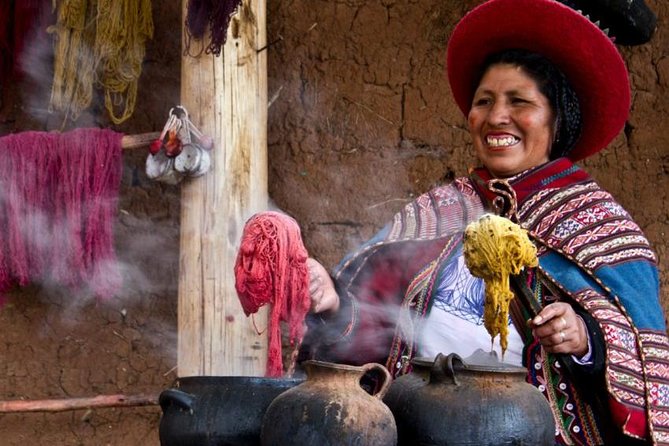
For me, the biggest reason to stop in Chinchero is the way it connects past and present. You’ll spend time at the ruins, then you meet a local family for a textile demonstration. That practical craft piece is the cultural glue of the morning.
Textiles in the Andes are not just decoration. They reflect knowledge passed down through generations, and the demonstration gives you a chance to see that work in a direct, human way rather than only admiring finished products. If you get a guide who can connect patterns and techniques to local life, it makes the weaving stop feel more grounded, less like a sales pitch.
Practical note: the stop includes 2 hours and mentions that an admission ticket is not included. So it’s smart to budget a little extra for site entry.
Moray’s Circular Terraces: A Real Agricultural Laboratory
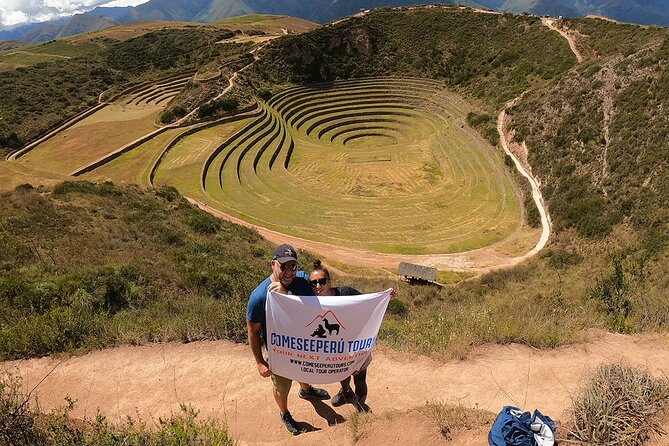
Moray is one of those places where your first reaction is visual, then your brain catches up. You’ll see circular terraces with irrigation channels arranged like a set of giant rings. The overall design looks planned to control water and growing conditions, not just to build something impressive.
This is where Moray turns from pretty ruins into a lesson. It functioned like a prototype agricultural laboratory, a kind of giant greenhouse system. The ancient Peruvians experimented with growing and improving plants across different latitudinal zones, using the terraces to simulate environmental differences. The idea is simple to grasp once you stand there: change conditions, observe results, and adapt farming knowledge.
Moray is also described as having religious importance. Today, it’s preserved as a center for ritual offerings to Pachamama, the earth. That gives the site an extra layer. You’re not only seeing an agricultural design, you’re seeing a place that still connects farming, belief, and ceremony.
Another plus is that Moray pairs well with good pacing. If your guide is attentive, you’ll get time to walk around the terraces without feeling rushed. One of the common themes in strong Sacred Valley guides is patience, and it matters here because the site rewards slow looking.
Practical note: the Moray stop is listed as 2 minutes in the information provided, which may reflect a brief on-site segment in the schedule format rather than actual time for exploring. In practice, your guide’s pacing will matter a lot. Wear shoes with grip and be ready for uneven ground.
Salinas de Maras: Thousands of Salt Wells Still Working
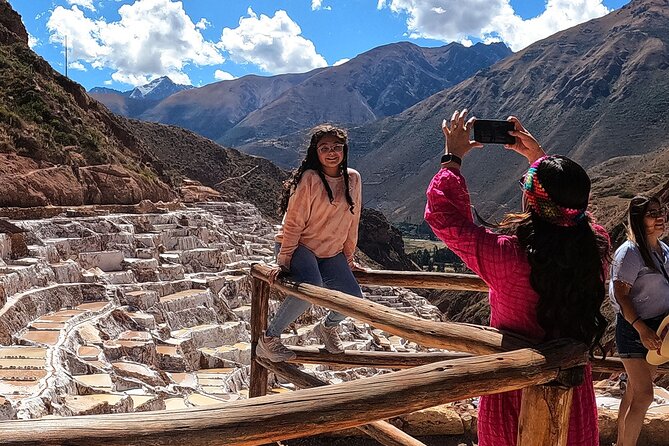
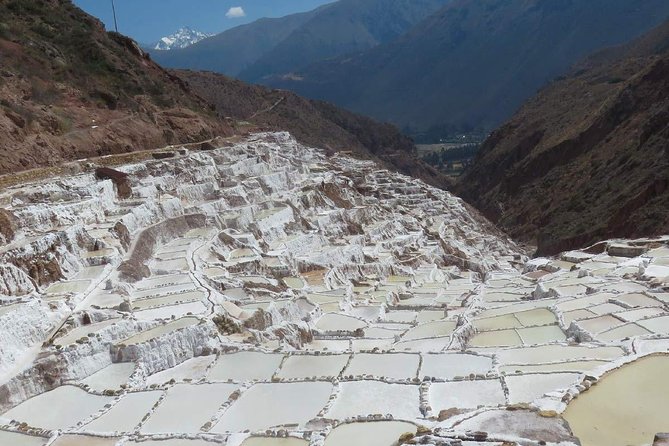
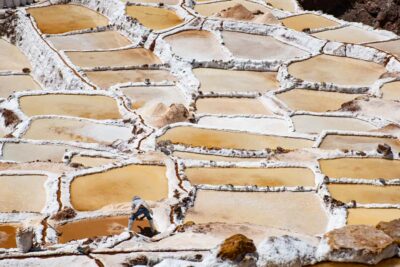
Then you head to Salinas de Maras, the hillside salt mines that are so distinctive you can spot them from a distance once you get close. The mines sit northwest of the district of Maras on a slope, and they’re made up of around 5,000 small wells.
Here’s what makes them special: the wells aren’t randomly dug. They’re filled during dry periods with salty water that comes from a natural spring at the top. The water flows into the wells and then, when conditions allow, it crystallizes into salt. The salt wells are described as family-run with long inherited knowledge, passed from family to family. The use and exploitation are believed to trace back to the beginning of Tahuantinsuyo, the Inca empire.
This is why Maras hits hard for photos. You’re not looking at a dead monument. You’re seeing an active production landscape. The salt basins create patterns that change with light and weather, and your camera will notice details even if you only stop briefly.
One of the best small perks in the description is that you can take a souvenir of salt. If that matters to you, ask your guide what’s the easiest and most appropriate way to get a small amount.
Practical note: admission tickets are not included for this stop. The amount can vary by site rules, so consider bringing a bit of extra cash or having a card ready.
More visits to the Moray terraces:
- Cusco:Chinchero,Moray & Salt Mines drop-off in Ollantaytambo
★ 4.8 · 793 reviews - Sacred Valley and Maras Moray Tour with Full Day Buffet Lunch
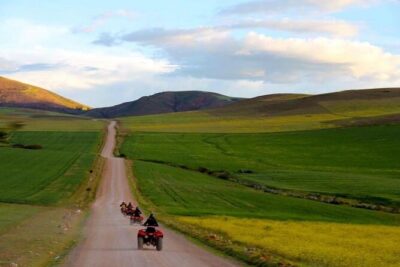
★ 5.0 · 670 reviews - ATV Tour to Moray Maras and Salt Mines in the Sacred Valley
★ 4.5 · 530 reviews - Sacred Valley: Chinchero, Moray, Ollantaytambo & Pisac+Lunch
★ 4.8 · 501 reviews
What’s Included, What You Should Budget For
This tour includes private transportation and a tour guide. That combination is the real value driver on short schedules, because private transport saves you time and uncertainty, and a guide helps you read what you’re seeing.
Not included:
- Lunch (optional)
- Tips
- Admission tickets for the stops, since tickets are explicitly listed as not included
At $105 per person, you’re paying for three things that are hard to recreate cheaply on your own: coordination, interpretation, and a tight route through multiple sites. If you’ve got limited time in Cusco, the value usually improves, because you buy time back rather than just convenience.
If you prefer to travel lean, treat this like a culture and photo day. Bring water. Consider a snack for the drive. If you plan to eat lunch, confirm where and when it fits in the day so you don’t lose the chance to see Maras at your preferred time of day.
The Pace and Group Feel: Why Private Works Here
This is a private tour, meaning it’s only your group. That matters on Sacred Valley days because the best sites depend on movement and attention, not just location.
You’ll be in a vehicle between sites, and having private transportation usually means:
- fewer stops to pick up strangers
- easier bathroom breaks
- less time wasted waiting on other people’s pace
In the review-style feedback you might hear from past guests, the praise tends to focus on guides like Willy, Ruben, Julio, Bernabé, and drivers like Alex, Jesus, and Renee, with a repeated emphasis on pacing and safety. Even when you don’t get the exact same team, that pattern tells you what to look for in a good operator: smooth driving, clear explanations, and no pressure to buy.
Also, since the tour says most travelers can participate and service animals are allowed, it should work for many people. You’ll still want to be prepared for walking on uneven surfaces at ruins and around the salt wells.
Timing Tip: How to Make a 7-Hour Day Feel Smooth
The tour starts at 8:00 am and is listed as 7 hours (approx.). That’s not a quick hop. It’s a full morning that likely stretches into mid or late afternoon, depending on the route flow and where lunch falls.
To make the day feel easier:
- Start hydrated. Cusco and the Sacred Valley region can make mornings feel longer than expected.
- Wear layers. You’ll move between viewpoints and open areas.
- Plan for photo time. Moray and Maras are the places where you’ll want extra seconds per shot.
If you get a patient guide, you can control the pacing more. In strong guided days, you do not feel rushed at the stops. Your best souvenir is often the memory of what the place means, not just the picture.
Who This Tour Is Best For
This tour is especially worth it if you:
- want Sacred Valley highlights in one go
- enjoy archaeological context and how it links to real life
- like food for photos, meaning salt patterns, terraces, and textile demonstrations
- prefer the simplicity of private transportation with a guide
It may not be ideal if you:
- hate car time and prefer to walk everywhere
- want a relaxed, slow day with lots of free time
- only care about one site and would rather spend more time in fewer places
The sweet spot is the traveler who wants structure, understands that admission fees might add up, and is happy to follow a guided route with time for photos.
Should You Book This Sacred Valley Tour?
Yes, if you want a smart, efficient day that connects Chinchero, Moray, and Maras into one coherent route. The best argument for booking is the mix: you’re not only seeing ruins, you’re seeing ongoing human work at the salt wells and meeting locals through the textile demonstration.
Before you go, double-check two things: that you’re comfortable with a roughly 7-hour schedule starting at 8:00 am, and that you’re okay paying extra for admission tickets at the stops and optional lunch. If those points fit your style, this tour is a very solid way to see the Sacred Valley without turning your schedule into a patchwork of transfers.
FAQ
What time does the Sacred Valley Moray and Maras tour start?
The tour starts at 8:00 am.
How long is the tour?
It runs for about 7 hours (approx.).
What is the price per person?
The price is $105.00 per person.
What does the tour include?
It includes private transportation and a tour guide.
Are admission tickets included for Chinchero, Moray, and Salinas de Maras?
No. Admission tickets are not included for the stops mentioned.
Is lunch included?
Lunch is optional, so it is not included.
More Sacred Valley Days
- 2-Day Tour: Sacred Valley and Machu Picchu by Train
★ 5.0 · 1,127 reviews - The Ultimate Full Day Sacred Valley Tour
★ 5.0 · 644 reviews - Sacred Valley & Machu Picchu 2D1N
★ 5.0 · 617 reviews - 6 Days Exploring Cusco, Sacred Valley & Machu Picchu
★ 5.0 · 470 reviews
Recently reviewed around Cusco
- 6-Day ||All Included|| Excursion – MachuPichu & Rainbow Mountain-Humantay Lake★ 4.5 · 8 reviews
- Horseback Riding thru the Mountains of Cusco★ 5.0 · 8 reviews
- Cuzco City Tour and Archaeological Ruins in Half Day★ 5.0 · 8 reviews
- Full Day – Rainbow Mountain tour – Group Service★ 5.0 · 8 reviews
- Half Day Tour in Cusco: Exploring the City and Four Ruins★ 4.5 · 8 reviews
- Cusco 4 Days Machu Picchu and Sacred Valley | All included★ 5.0 · 8 reviews
- Machu Picchu and Sacred Valley 2 Day Tour★ 5.0 · 8 reviews
- Walking Tour in Legendary & Historical Cusco City★ 4.5 · 8 reviews
Sacred Valley, compared.
Sacred Valley & Maras Salt Mines Tour with Lunch
Read our review →
2-Day Tour: Sacred Valley and Machu Picchu by Train
Read our review →
Sacred Valley, Pisac, Ollantaytambo, Salt Mines Moray
Read our review →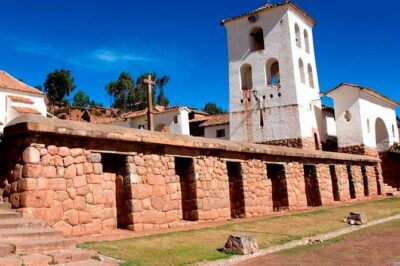
Sacred Valley and Maras Moray Tour with Full Day Buffet Lunch
Read our review →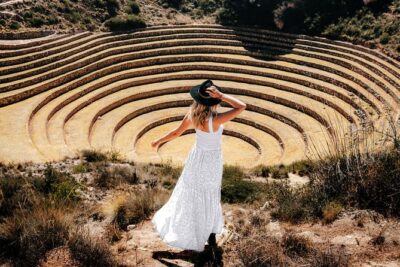

ATV Tour to Moray Maras and Salt Mines in the Sacred Valley
Read our review →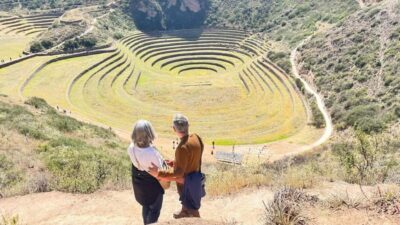
Browse the lists this tour appears in