
Reviewed · MARAS SALT MINES
Tour to Maras Moray and Salineras 1/2 Day
Cusco has its usual highlights, but this route gives you a different kind of wow. You get the working salt mines of Maras and the stone Moray terraces that were used like an Andean agricultural experiment. I also like that the tour keeps moving while still explaining what you are seeing in plain, useful terms.
My favorite part is how the stops connect. Maras shows salt as an economy and a tradition, Moray shows experimentation in farming, and Chinchero adds the human side with an artisan market rooted in Inca and colonial layers. One consideration: the big entry tickets for attractions are not included, and the timing is tight, so you will want to decide fast what you want to linger on.
Key highlights worth knowing
- Pickup in Cusco and small-group feel (max 18), so you are not stuck in a huge crowd.
- Salineras de Maras salt pans with 3,000+ wells, still worked by families today.
- Moray’s circular terraces as an agricultural laboratory for crops like potatoes and corn.
- Chinchero’s Inca-on-top-of-colonial site plus an artisan market with textile traditions.
- Guide commentary that actually helps you understand what you are looking at, not just dates and facts.
Why Maras, Moray, and Chinchero fit a 1/2-day plan
This tour is built for people who want more than one postcard moment in a short window. In about six hours, you cover three different lenses on the same region: salt production, farming science, and local craft life.
You should come prepared for a change of scenery every stop. One moment you are looking at thousands of small salt wells in Maras, the next you are looking at circular terraces at Moray, and then you shift into Chinchero, where trade and textiles take center stage. If you like variety and you do not want to spend your whole day commuting, this is a strong use of time.
The other big plus is that it is not just a drive-by. The tour includes a professional guide service and enough time at each key point to make the visits meaningful, even if you are not the type who stops for 20 photos every 50 meters.
More visits to the Maras salt mines:
- From Cusco: Sacred Valley & Maras Salt Mines Tour with Lunch
★ 4.8 · 2,227 reviews - From Cusco: Moray, Maras Salt Mines & Chinchero Weavers Tour
★ 4.8 · 1,925 reviews - Cusco: Sacred Valley, Pisac, Ollantaytambo, Salt Mines Moray
★ 4.6 · 1,058 reviews
Pickup, timing, and how the day flows from Cusco
The tour starts at 9:00 am at Pl. Haukaypata 172, Cusco 08002. It is a group tour with transport, and the day ends back at the same meeting point, so you do not have to figure out return logistics.
Expect about 40 minutes at Salineras de Maras, 50 minutes at Moray, and 40 minutes at Chinchero. The overall duration is listed as about 6 hours, which is right in line with a morning schedule that feels full but not exhausting.
Because the itinerary moves quickly, I recommend you show up ready to walk and take in multiple sights. If you are the type who wants long, slow museum-style pacing, you may feel rushed. If you like quick context plus active sightseeing, you will likely enjoy it.
Maras first stop: colonial-era signals in today’s town
Before you get to the salt pans, the tour starts in the town of Maras. This is a smart opener because it frames what you are about to see. Maras was declared Villa de San Francisco de Asís and played an important role during the Viceroyalty, when it was described as the main salt supplier of the southern highlands.
What to pay attention to here is not a single monument, but the visible clues in the built environment. The church and houses preserve shields tied to indigenous nobility on their facades. That detail matters because it helps you see the salt story as more than a natural phenomenon. It is tied to people, status, and an economy that ran for generations.
This stop can be brief in a half-day tour, so focus on noticing those facade details when you can and listening to the guide’s explanation. It will make the later salt mines feel less random and more connected.
Salineras de Maras: 3,000+ working wells and the community behind them
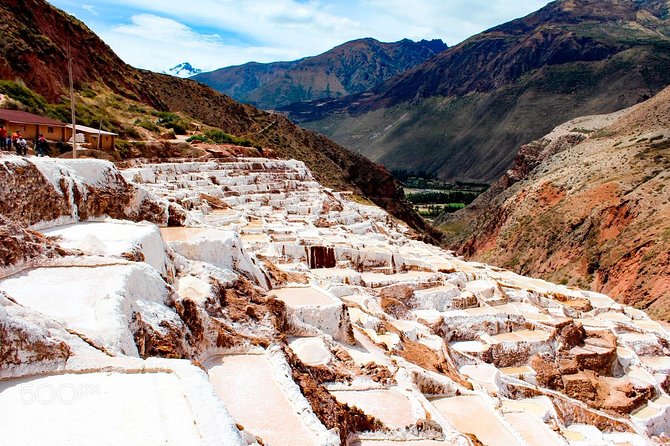
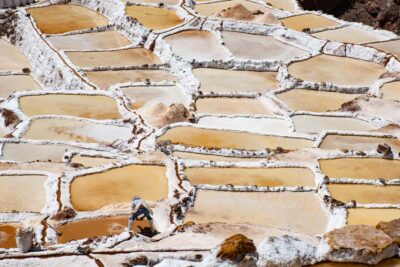
Salineras de Maras is the headline stop, and it earns the attention. You will see more than three thousand wells in the salt mines, and the work is not just historical. The mines are still in use, with more than 360 families continuing the tradition of extracting salt.
This is one of those places where the scale hits you once you are there. From a distance, it can look like a patchwork. Up close, it is thousands of individual wells, each part of a system that has been maintained through family knowledge.
You will also hear that the commercialization of the salt is handled by the association Maras Sal, which has been responsible for community interests since the late 1980s. That’s valuable context because it explains why the site feels both local and organized, not like an isolated tourist attraction.
A practical heads-up: the stop is listed as 40 minutes, and the admission ticket for Salineras is not included. So if you want to maximize time, check your wallet plan before you arrive and plan to spend that 40 minutes actively exploring the most interesting angles.
More visits to the Moray terraces:
- Cusco:Chinchero,Moray & Salt Mines drop-off in Ollantaytambo
★ 4.8 · 793 reviews - Sacred Valley and Maras Moray Tour with Full Day Buffet Lunch
★ 5.0 · 670 reviews - ATV Tour to Moray Maras and Salt Mines in the Sacred Valley
★ 4.5 · 530 reviews - Sacred Valley: Chinchero, Moray, Ollantaytambo & Pisac+Lunch
★ 4.8 · 501 reviews
Moray circular terraces: an Andean agricultural laboratory made of stone
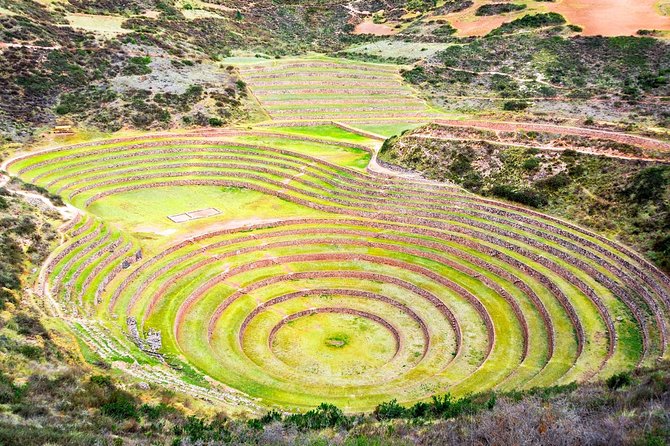
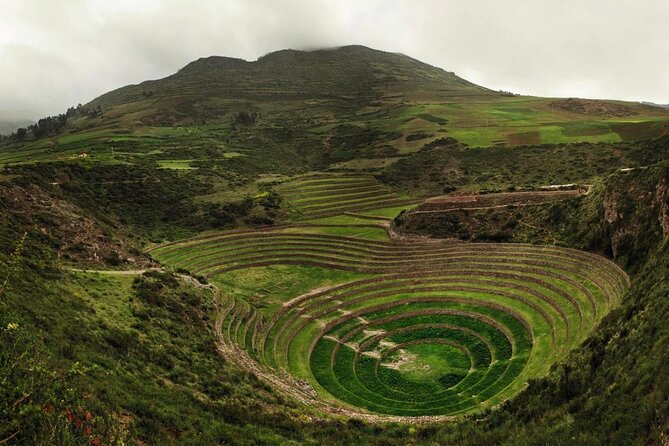
Moray is where the tour shifts from production to experimentation. The circular terraces look like a design feature, but the explanation turns them into something more practical: they were used as an agricultural laboratory.
The big idea is that the Andean approach to agriculture challenged nature by using the geography to their advantage. The terraces created conditions that allowed access to a wide variety of species, including potatoes and corn among others. In other words, the stone rings were not just decorative. They were part of a system for trying, learning, and producing.
You get about 50 minutes here, which is enough time to understand the shape, walk through the viewing areas, and connect the guide’s explanation to what you are seeing.
One drawback to consider: Moray admission is not included, and you will likely want to keep the ticket line or purchase step in mind so it does not eat into your time. Also, since the stop is timed, plan to decide early where you want your best viewpoints instead of circling forever.
Chinchero: the Túpac Inca Yupanqui estate, plus a textile market you can watch
Chinchero is about 28 km from Cusco on the paved road toward Urubamba, so you get a sense of leaving the city and heading into a different rhythm.
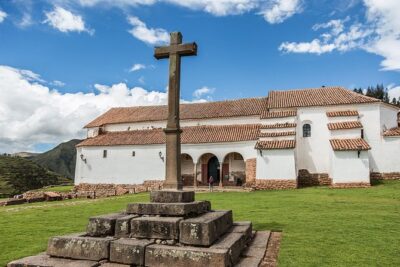
This stop is built around two main layers: an archaeological and colonial site, and a living marketplace. The remains relate to what used to be the royal hacienda of Túpac Inca Yupanqui. On top of Inca foundations, you get a colonial structure described as a temple-like space, and that blend helps you see how power shifted over time while older foundations remained.
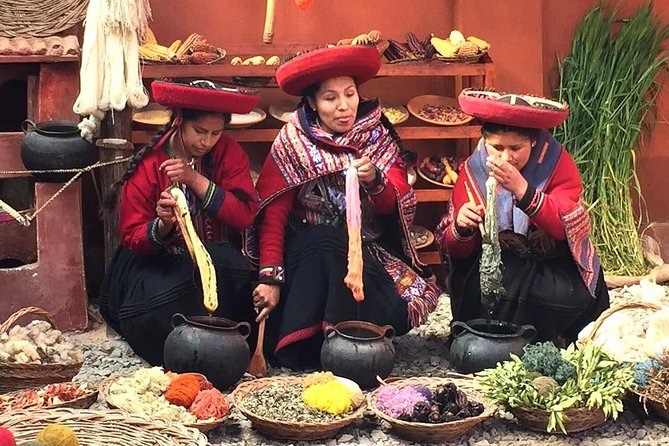
Then comes the part most people love: the artisan market. It was originally dedicated to exchanging agricultural products between valley villagers and people from higher parts. Today, it functions as a colorful display of movement and trade, with handicrafts and textile garments described as following pre-Columbian style.
You are given about 40 minutes, and Chinchero admission is free. That makes this stop a strong value moment because you spend time doing something interactive. Even if you do not plan to buy, watching how the market works gives you a real sense of everyday culture, not just a static site.
Shop-smart note: this is a market. If you want textiles or crafts, you will get more out of the experience if you go in ready to compare and ask. If you are not buying, treat it like a window into how people still make and trade goods.
Price and what your $29 really covers
At $29 per person, this tour is priced like an efficient sampler. What you are paying for is not just transportation, you are also paying for group transport and a professional guide service.
What is not included is important. The tour lists income to the different attractions (tickets), plus feeding, extra drinks, and accommodation. That means your total cost can rise a bit depending on ticket prices for Salineras de Maras and Moray.
Here is the value logic I would use: you are paying for organized access, timed visits, and guided context across three stops that many people otherwise piece together on their own. If you are short on time in Cusco and you want less planning, the guide and transport can easily justify the base price.
If you are the kind of traveler who already knows you will hit every ticket anyway and you are comfortable arranging everything, you might question the guide fee. But for most people who want a clean half-day plan, this is solid value.
The guides and commentary: why the experience feels easier
One of the clearest strengths of this tour is the guide approach. The experience is described as having engaging commentary throughout the day, and the guides are noted as friendly and good at explaining things clearly.
That matters more than it sounds. Maras, Moray, and Chinchero each have their own background. When the guide can connect salt production to community work, link terrace shapes to farming experiments, and show how market trade relates to older exchanges, your visit becomes understandable right away.
In practical terms, it means you spend less time guessing and more time looking. You also get better at asking questions, even if you only do it once. That little boost in confidence can turn a quick day into a memorable one.
Who should book this tour, and who should skip it
Book it if you:
- Want an efficient route that hits Maras, Moray, and Chinchero in one go.
- Enjoy guided context, especially for sites that can look confusing without explanation.
- Prefer a small group size (max 18) and an organized plan with pickup and transport.
Skip it or consider a different plan if you:
- Hate ticket add-ons and want everything included in one price. Admission to attractions is not included.
- Need lots of downtime. The stops are timed, so you will not have long, wandering hours.
- Are looking for a full-day deep dive into fewer locations. This is a half-day pace, by design.
Travel tips for a smoother Maras, Moray, and Salineras morning
These are simple moves that help you get more out of the scheduled time:
- Bring a plan for tickets in advance. Since admission is not included for key sites, set aside money before you start walking through stops.
- Wear shoes for uneven surfaces and short climbs. Salt areas and terrace areas typically involve standing and walking more than you might expect.
- Keep your attention on the guide’s explanations at the start of each stop. The Maras town context helps you read the salt mines, and Moray’s farming explanation helps you read the terraces.
- If you want market photos or potential purchases at Chinchero, decide how long you will spend before you get distracted. The stop is about 40 minutes.
If you do these, the day stays fun instead of stressful.
Should you book this Maras Moray and Salineras tour?
I think this tour is a good booking for most people doing Cusco for a short stretch and wanting three high-impact experiences without overplanning. You get a focused route, professional guide service, and a group size that is capped at 18, which usually means you can actually hear the commentary.
The tradeoff is timing and ticket add-ons. If you are comfortable with an efficient schedule and you plan for attraction fees, you will likely feel like you got a lot of value out of a single morning and early afternoon.
If you want one clear decision rule: book it when your priority is context plus efficiency, not maximum time at a single site. If that sounds like you, this one makes a lot of sense.
FAQ
What time does the tour start?
The tour starts at 9:00 am.
Where does the tour meet?
The meeting point is Pl. Haukaypata 172, Cusco 08002, Peru.
How long is the tour?
The duration is listed as about 6 hours.
Does the tour return to the same meeting point?
Yes, the activity ends back at the meeting point.
How many people are in the group?
The maximum group size is 18 travelers.
What is included in the tour price?
It includes group tourist transport and professional guide service.
Are entrance tickets to the attractions included?
No. Income to the different attractions to visit is not included.
Is food included?
No. Feeding is not included.
How long do you spend at Salineras de Maras, Moray, and Chinchero?
You spend about 40 minutes at Salineras de Maras, 50 minutes at Moray, and 40 minutes at Chinchero.
What is the cancellation policy?
Free cancellation is available, and you can cancel up to 24 hours in advance for a full refund.
Recently reviewed around Cusco
- Cusco Cooking Class by ChocoMuseo in Cusco★ 5.0 · 29 reviews
- ATV Adventure to Moray and Maras Salt Mines – Half Day★ 4.5 · 29 reviews
- 1-day excursion to Machu Picchu from Cusco★ 5.0 · 29 reviews
- Private Tour Sacred Valley, Chinchero, Maras Moray, Ollantaytambo★ 5.0 · 29 reviews
- From Cusco: Humantay Lake with Breakfast and Buffet Lunch★ 4.5 · 29 reviews
- 4 Day – Inca Jungle to Machu Picchu★ 5.0 · 29 reviews
- 2-Day Machu Picchu Tour by Train from Cusco★ 4.5 · 29 reviews
- 2-Day Sacred Valley and Machu Picchu Tour By Train★ 4.5 · 29 reviews
Maras Salt Mines, compared.
Sacred Valley & Maras Salt Mines Tour with Lunch
Read our review →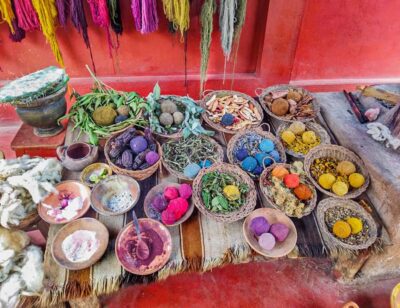
Moray, Maras Salt Mines & Chinchero Weavers Tour
Read our review →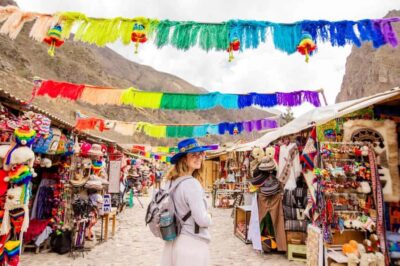
Sacred Valley, Pisac, Ollantaytambo, Salt Mines Moray
Read our review →
Chinchero,Moray & Salt Mines drop-off in Ollantaytambo
Read our review →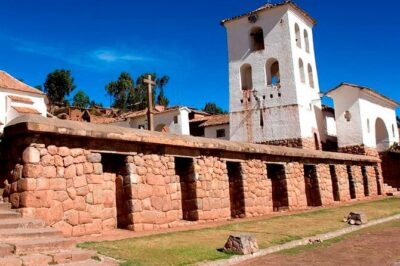
Sacred Valley and Maras Moray Tour with Full Day Buffet Lunch
Read our review →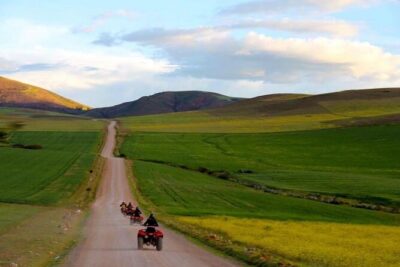
ATV Tour to Moray Maras and Salt Mines in the Sacred Valley
Read our review →
Tour Sacred Valley & Maras – Moray with buffet lunch
Read our review →Browse the lists this tour appears in