
Reviewed · WALKING TOURS
Walking City tour Puno
Puno is interesting because it shows you Peru as a mix, not a museum. This Walking City tour focuses on how Andean beliefs, Spanish Catholic art, and everyday city life touch the same streets, with stops that are easy to walk and short enough to keep moving. I especially like the Andean-Baroque details you get up close at the cathedral and the market stop that explains living traditions. One thing to think about is that two key entrances cost extra in cash, so you will want a small wad of soles ready.
I also like that the route stays practical: you get skyline views from Huajsapata Hill, then you keep walking through places that local people actually use, like Parque Pino and the markets. If you are lucky enough to have a guide like Samuel from past groups, you can expect clear English and good background context that helps you connect Puno to the rest of Peru. The possible drawback is simple, short tours can feel like a sampler, so if you want long museum time or deep religious architecture lectures, you may want something longer.
Key highlights on this Puno walking route
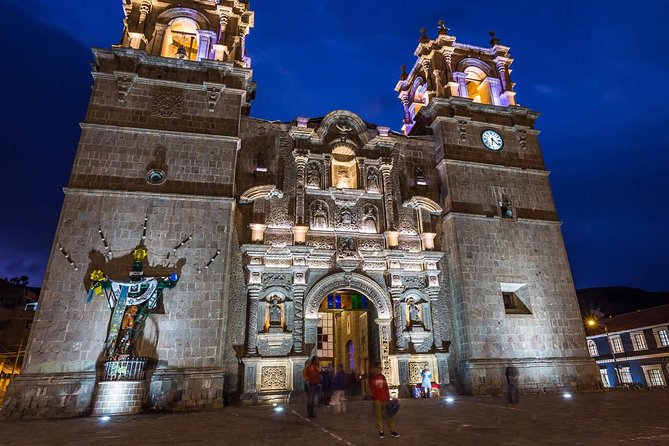
- Catedral de Puno façade details that blend Catholic and high-Andes symbols, explained in plain language
- Museo Municipal Carlos Dreyer for quick context on pre-Inca and Inca objects, plus local museum collections
- Huajsapata Hill with Manco Cápac statue and a breather with wide views over Puno and Lake Titicaca
- Mercado Laykakota, the Witches’ Market with guidance on respectful questions, photo etiquette, and ethical buying
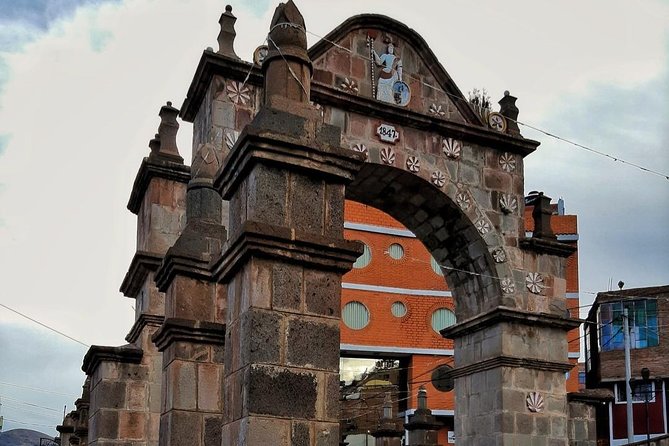
- Arco Deustua with 1847 independence history tied to nearby street life
- San Juan Bautista and the Virgen de la Candelaria story, including how February processions change the streets
Puno on Foot: why this 90-minute loop works
This tour is built for first-time orientation. You start in the center, then you move outward just enough to read the city from different angles, without getting stuck on a long bus ride. In about 1 hour 30 minutes you see the main storytelling points that make Puno feel like Puno.
The route is also a good value format. You pay for a local guide, not a big ticket experience with lots of waiting. And because the group is limited to 15 people, the guide can keep things moving and still answer questions without turning it into a factory line.
One practical note: the day matters. The experience needs good weather, since it is mostly walking and you want those viewpoint moments to be clear.
More walking tours in Puno:
- Puno: History and Culture Walking Tour
★ 4.1 · 13 reviews - Lima Half-Day City Walking Tour (Small Groups)
★ 5.0 · 1,508 reviews - Cusco: Walking Tour with an Experienced Local Guides
★ 4.8 · 636 reviews
Price and what you should budget beyond the $33.99
The listed price is $33.99 per person, and what you get for that is straightforward: a guided walk that hits the key landmarks and explains what you are looking at. The tour itself does not include two cash-only entry fees.
Plan for this extra cost:
- Carlos Dreyer Museum tickets: PEN 15.00 per person, cash only
- Cathedral entrance ticket: PEN 15.00 per person, cash only
That means your real total depends on whether you go inside those two places. If you want the full learning arc, bring enough cash to cover both. If you skip one entrance, you can still enjoy the outside architecture and the rest of the walk, but you will lose some of the context.
Plaza de Armas to Catedral de Puno: Andean-Baroque made touchable
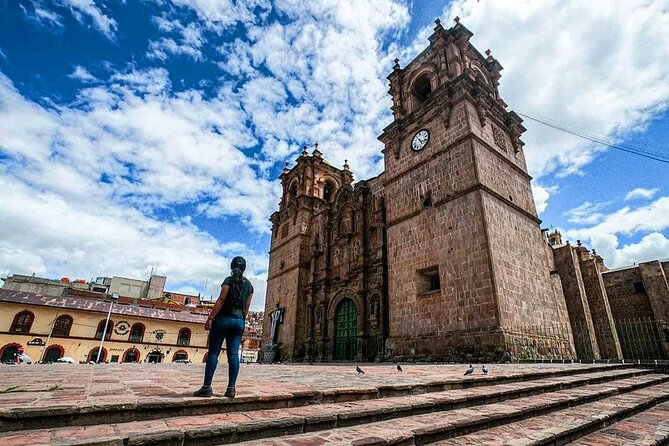
You begin at the Plaza Mayor de Puno, where the cathedral façade fills your view fast. The guide focuses on the carved symbolism, including sirens described as playing the charango, native flowers, and faces that mix Catholic imagery with high-Andean beliefs. This is not just decoration talk, it is a quick lesson in how local creativity shaped religious art.
You also get the story of the cathedral’s construction, tied to an indigenous master builder, Simón de Asto, with support from local miners. That detail matters because it reframes the building from a foreign import into a local project made in stone.
You will spend about 10 minutes here. For most people, that is perfect pacing. If you love architecture and could stare at carvings for an hour, you might wish the stop were longer, but the rest of the route would suffer.
Museo Municipal Carlos Dreyer: compact context for Lake Titicaca country
Just off the main square, the Museo Municipal Carlos Dreyer gives you a timeline in a manageable chunk. The museum visit is about 20 minutes, which is enough to get oriented and pick up names and categories without feeling like you are sprinting.
You can expect pre-Inca and Inca ceramics and stonework, plus funerary objects and mummies connected to the Altiplano region. There is also a colonial and republican art gallery area, including pieces collected by the German artist Carlos Dreyer. If you have limited time in Puno, this museum stop helps you understand why Lake Titicaca culture is more than a postcard.
The museum tickets are not included, and they are cash-only (PEN 15.00). If you arrive without cash, you might feel stuck deciding on the spot. I suggest planning ahead so you do not have to trade off the museum for convenience.
A few more Puno days worth comparing
- From Cusco: Vinicunca Rainbow Mountain ATV Tour with Meals
★ 4.6 · 1,060 reviews - From Puno: Uros, Amantaní & Taquile Islands 2-Day Tour
★ 4.5 · 452 reviews - Tour to Uros and Taquile Islands in a Fast Boat
★ 5.0 · 419 reviews - From Puno: Floating Islands of the Uros Half-Day Tour
★ 4.4 · 394 reviews
Huajsapata Hill: a gentle climb, then the big view
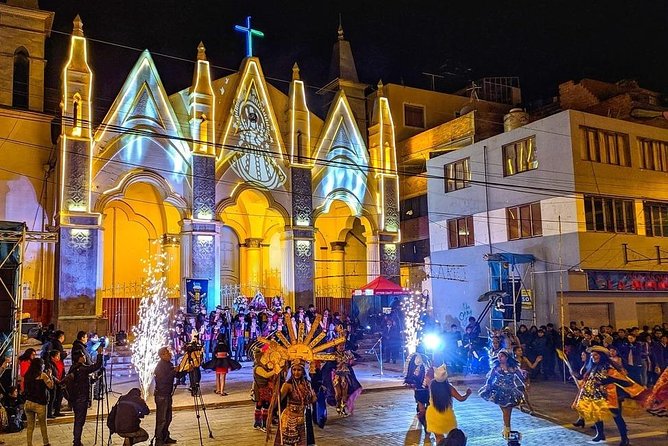
Next comes a gentle climb to Cerrito Huajsapata, crowned by a statue of Manco Cápac, the legendary founder of the Inca Empire. The hill stop lasts about 10 minutes, but it is designed as a reset for your eyes.
This is where you look out at the city spread beneath you, and where Lake Titicaca stretches toward the horizon. Even if you have seen water from bridges before, the altitude and the light around Puno make the view feel different.
The big practical win here is pacing. After museums and architecture, the climb and pause help you absorb what you have learned. If it is windy or cold, dress for it, but you still get your payoff.
Mercado Laykakota, the Witches’ Market: how to observe without being weird
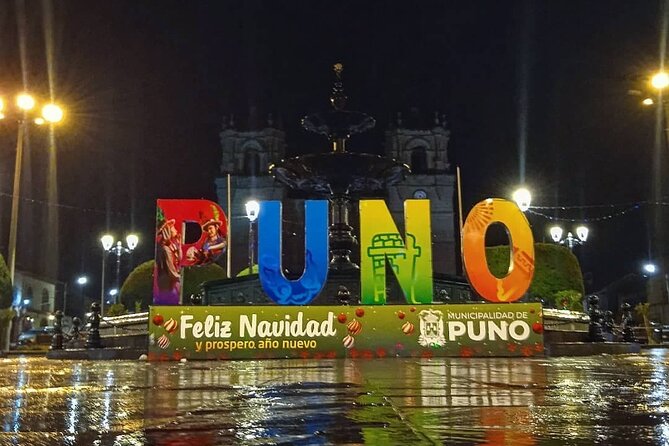
This is one of the most interesting stops on the route, and it comes with guidance that makes it comfortable. At Mercado Laykakota, you meet herbalists and ritual-goods vendors where shelves are full of muña and coca, along with amulets and offerings used in Andean folk healing and devotion.
The guide explains how ritual practices called despachos connect to daily life and festivities. That makes the market more than a photo opportunity. You learn what people are doing and why, so you can observe with respect instead of just hunting for spectacle.
You are also given practical rules:
- Ask before photographing when appropriate
- If you want to buy small items, do it ethically and consider supporting local families
This stop lasts about 15 minutes, which is enough to get a sense of the stalls and vocabulary without getting tired. Past visitors also picked up on the fun side, like getting tempted by fruits and small bites while you are already surrounded by vendors. If you want to snack, plan to eat lightly since you are still walking afterward.
This is also where your questions matter most. If you want context, ask it here, not at the end when you are focused on leaving.
Arco Deustua: independence history in a photogenic pause
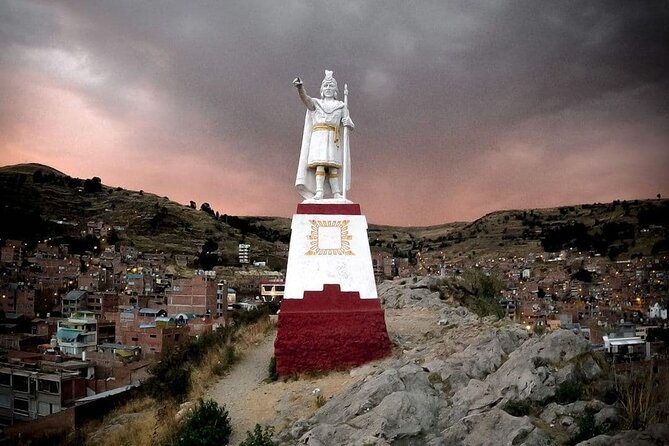
From the market, you continue toward Arco Deustua, the stone arch built in 1847 to honor heroes of Peru’s independence after the battles of Junín and Ayacucho. The guide points out inscriptions and decorative details so the arch becomes readable, not just pretty.
This is a short stop, about 10 minutes, but it is timed well. You get a clean photo moment, then you move along Jirón Lima back toward the center, linking 19th-century memory with modern street life.
If you dislike quick photo stops, you might find it slightly brief. But if you like a mix of meaning and momentum, this arch works as a satisfying waypoint.
Parque Pino and Dr. Manuel Pino: the city’s social living room
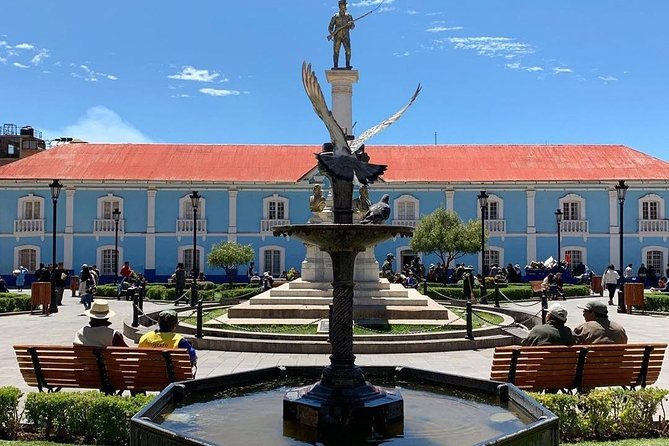
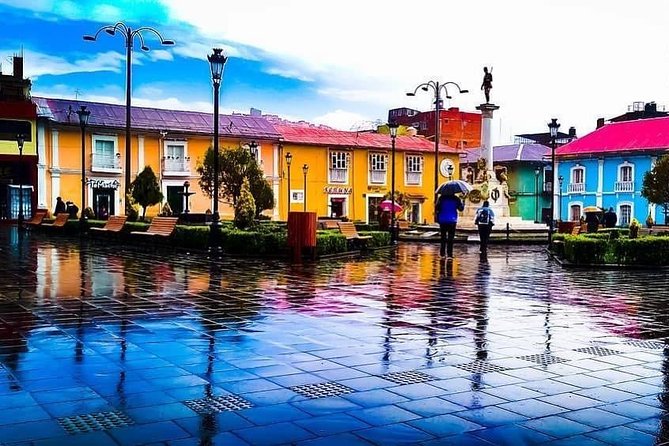
At the north end of pedestrian Jirón Lima, you reach Parque Pino, often described as Puno’s social hub. Under clipped trees, people hang out, pass by, and use the space like a local meeting point.
The key landmark is the monument to Dr. Manuel Pino, a local hero of the War of the Pacific, unveiled in 1901. The guide helps you connect nearby landmarks, including the mention of San Juan church and classic facades, so you start recognizing the city layout as you walk.
This stop is about 10 minutes, and that is intentional. You get a moment to people-watch and reset before the final church stop, when your attention shifts back to religious art and devotion.
Iglesia de San Juan Bautista and the Virgen de la Candelaria
Across Parque Pino sits Iglesia de San Juan Bautista, linked to devotion to the Virgen de la Candelaria. One visual detail that stands out is the church’s French-ogival façade, paired with a modest interior that holds the image people connect with deeply.
This stop lasts about 10 minutes. The guide explains how devotion took root in the 18th century and how February processions transform the streets with music and dance. If you are visiting outside February, you still leave with a clearer sense of why Puno’s calendar matters.
When doors are open, you can enter quietly and appreciate the altars. The key here is etiquette. You are not on a performance schedule, you are there to observe local worship.
How the guide experience changes the whole walk
The tour lives or dies by the guide, and the good news is that past experiences highlight strong communication and professionalism. One guide named Samuel impressed with clear English and a knack for adding context beyond the immediate stops, including connections to other Andean cities like Cuzco.
Even if your guide is not Samuel, the format still tends to work well for Q and A. The stops are close together, time is short enough that questions do not drag forever, and the guide has a lot of material to translate the details into something you can actually remember.
If you are shy about speaking up, you will still get the story. But if you want your visit to feel personal, asking one or two questions at the cathedral or market will pay off.
What I’d watch for on your feet and your photos
This tour is walk-based, and while the climbs are described as gentle, you should still plan for uneven sidewalks and changes in altitude around the center. Comfortable shoes matter, especially if the weather turns and streets feel slick.
Photo-wise, the market is the place to be careful. You are taught to ask before photographing, which is respectful and usually makes vendors more willing to answer questions. The cathedral also rewards careful looking, not just fast snapping.
Finally, keep an eye on timing. Because the tour packs several meaningful stops into about 90 minutes, the pacing stays brisk. If you want a slower, deeper pace, consider adding independent time after the tour for the place you liked most.
Who should book Walking City tour Puno
This tour is a strong fit if you:
- Want quick orientation to Puno’s central landmarks
- Like tours that explain what you are seeing, not just where to stand for a photo
- Appreciate a mix of architecture, museum context, and market culture
- Are short on time but still want viewpoint energy at Huajsapata Hill
It is less ideal if you want a museum-focused day, since the museum time is about 20 minutes. Also, if you hate walking, the overall format may feel too active for comfort.
Should you book Walking City tour Puno?
If you like your sightseeing with explanations and you want Puno’s center route covered efficiently, I think this is an easy yes. The price is fair for a guided walk, and the itinerary includes the moments that help you understand the city quickly: the cathedral façade symbolism, museum context, a Lake Titicaca viewpoint, and the Laykakota market with respectful guidance.
Before you book, do two things. First, pack cash for PEN 15.00 tickets for the cathedral and the Carlos Dreyer museum if you want the full inside experience. Second, plan around weather, since the tour needs good conditions to deliver the viewpoint payoff.
FAQ
How long is the Walking City tour Puno?
It lasts about 1 hour 30 minutes.
Where does the tour start and end?
It starts at Plaza Mayor de Puno (Plaza Mayor de Puno5X5C+QR3, Puno 21001) and ends at the Mercado Central de Puno (Oquendo 154, Puno 21001).
What is included in the tour price?
The tour includes a local guide.
What costs are not included?
The Carlos Dreyer Museum ticket and the Cathedral entrance ticket are not included. Both are listed as cash only (PEN 15.00 per person).
Is the group size limited?
Yes. The tour has a maximum of 15 travelers.
Is this tour suitable for most people?
The information says most travelers can participate.
Do I need good weather for this experience?
Yes. It requires good weather. If it is canceled due to poor weather, you are offered a different date or a full refund.
Can I cancel for free?
Yes, there is free cancellation. You can cancel up to 24 hours in advance for a full refund.
When will I receive confirmation?
You receive confirmation at the time of booking.
Recently reviewed around Puno
- Full Day Tour of Uros and Taquile by Speedboat★ 5.0 · 8 reviews
- Private Transfer from Juliaca Airport to Puno or Viceversa★ 5.0 · 8 reviews
- Uros Floating Islands Tour in Puno★ 3.7 · 9 reviews
- FULL DAY QUECHUA ROUTE on shared service★ 5.0 · 9 reviews
- Chullpas de Sillustani Inca Cemetery Tour by Tourist Bus★ 5.0 · 9 reviews
- Private Tour from Puno to Tiwanaku★ 4.5 · 9 reviews
- Half-Day Uros Floating Islands Tour from Puno★ 2.3 · 9 reviews
- Bus Puno to Cusco Route of the Sun★ 4.5 · 10 reviews
Walking Tours, compared.
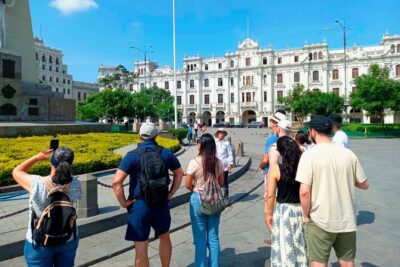
Lima Half-Day City Walking Tour (Small Groups)
Read our review →
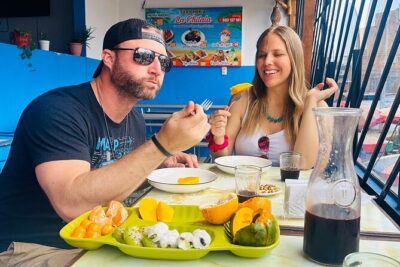
Food & Art: Lima Colors and Flavors Walking Tour
Read our review →
Historic Walking Tour with Pisco Sour and Local Music
Read our review →
Walking tour in the Historic Center of Arequipa
Read our review →
Curious Monkey Cusco- Eat the Streets, Walking Food Tour
Read our review →
Miraflores Trending Flavors Half-Day Walking Tour
Read our review →Browse the lists this tour appears in