
Reviewed · SANTA CATALINA MONASTERY
Arequipa, Historic and Colonial City and Santa Catalina Monastery
This is a smart, high-impact way to see why Arequipa is called the White City, and to get inside Santa Catalina, a monastery that was closed to the public for nearly 400 years. You also get volcano-framed viewpoints around Carmen Alto and Yanahuara, so the city clicks faster than it does on your own.
I like two things right away. First, the air-conditioned coach with hotel pickup and drop-off keeps you moving without wrestling taxis between viewpoints. Second, the guide adds context that makes the colonial streets and church walls feel more meaningful, not just pretty. One possible drawback: the day leans heavily toward religious sites, so if you prefer more street time and less church time, plan accordingly.
Key highlights at a glance
- Carmen Alto and Yanahuara viewpoints with sweeping views of Misti, Chachani, and Picchu-Picchu
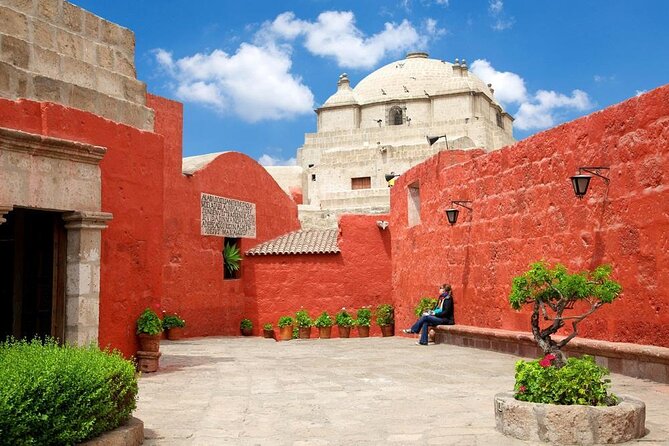
- Santa Catalina Monastery with entry included, plus slow, peaceful walking through plazas and gardens
- Fewer logistics hassles thanks to a vehicle route and a small group size (max 15)
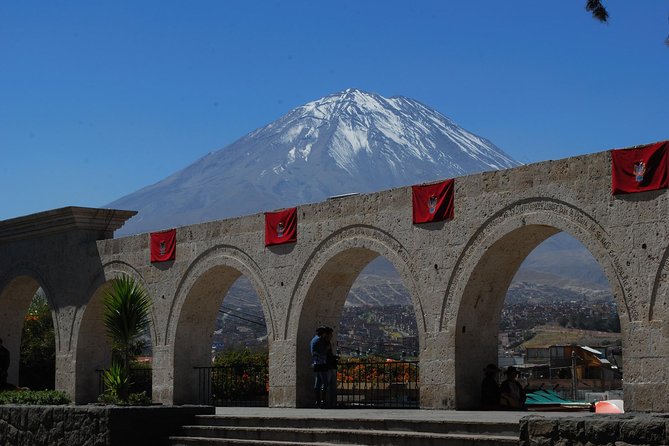
- Sillar stone everywhere, including Andalusian-style architecture in Yanahuara
- Plaza de Armas classics, with the 16th-century Cathedral area plus Jesuit cloisters
- Weather can matter for volcano visibility, especially in wetter months
Why Arequipa’s White City plus Santa Catalina is such a good combo
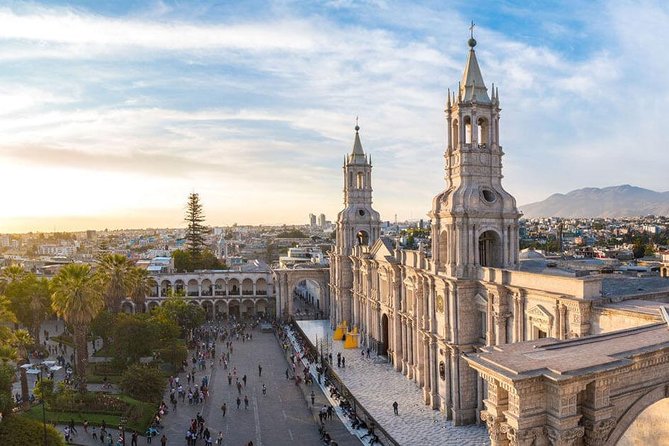
Arequipa has a look that stands out right away. Much of it is built with sillar, a pale volcanic rock, which gives the city that chalky-white glow. The best part is that this tour does not just show you buildings, it gives you a route where the views and the architecture explain each other.
Then there is Santa Catalina. This isn’t a quick photo stop. You walk through a whole internal world of plazas, narrow alleyways, and lush gardens, inside a Dominican monastery that was closed to the public for centuries. If you have only a short time in Arequipa, this kind of access is exactly why a guided tour beats a DIY shuffle.
One practical note: the schedule is built around a small set of major sights. That means it is efficient, but it can feel religion-heavy for some people, and you will do your share of walking.
More City Tours in Arequipa
- Arequipa: Walk through the Historic Center of the City
★ 4.9 · 87 reviews - Arequipa Walking Tour city center and drinks experience
★ 5.0 · 72 reviews - Arequipa Food Tour: Ancestral Cuisine & City Tour
★ 5.0 · 52 reviews
Price and value for a 3.5-hour Arequipa highlight run
At $61 per person for about 3 hours 30 minutes, the value mostly comes from what is included. You get a professional guide, an air-conditioned vehicle, and hotel pickup and drop-off, which saves real time and avoids spending your limited daylight negotiating transit.
Entry costs are also partly handled for you. The Santa Catalina Monastery stop has admission included, while other major areas on the route are listed as free admission. That combination matters: monastery entry alone can be a chunk of your budget, and guides help you make sense of what you are seeing once you are inside.
If you are the kind of traveler who hates wasting half a day on logistics, this is a strong option. If you love wandering with no structure, you might prefer to build your own route. Still, even then, Santa Catalina is the part that is hardest to recreate with the same flow.
Getting picked up and seeing the city without the taxi treadmill
Your day starts with pickup from your hotel in Arequipa and then you head out by vehicle. The vehicle does two important jobs for you. It gets you to viewpoints like Carmen Alto and El Mirador de Yanahuara without tiring transfers, and it helps the route pack in more than you would likely manage solo.
The group size is kept small, up to 15 travelers, which usually means you are not stuck waiting forever at every corner. Also, because this is an afternoon start (2:00 pm), you may get softer light for photographs compared to a strict morning tour, depending on the season.
The trade-off is straightforward: once you are in a set itinerary, you follow the timing. If you want extra time in Plaza de Armas or you want to linger at a specific church detail, you will need to do it at the mercy of the schedule, unless your guide gives you a little flexibility.
Stop 1: St Lazarus quarter origins, then Carmen Alto volcano views
You start with the Historical Centre of Arequipa, and the first big moment is the viewpoints around Carmen Alto. This is where you get the city’s natural “frame.” From here, the farming terraces below look layered and patterned, and the volcanoes feel like guardians around the city: Misti, Chachani, and Picchu-Picchu.
Why this stop matters: it gives you geography before you walk into streets. Once you understand where the city sits, even the colonial buildings feel anchored to place, not just stacked on a map.
The St Lazarus quarter also matters because it connects the dots to the city’s roots. The walk is described as lovely and flower-lined, with historic homes along the way. If you like street-level atmosphere, this is your “slow down” segment before the more structured monument stops.
If you care most about volcano views, plan for weather. In wetter months, the volcano view can be less dramatic, and you may feel cloud cover more than the sharp peaks you expected.
More Santa Catalina Monastery visits:
- Arequipa: Walking Tour and Santa Catalina Monastery
★ 4.4 · 7 reviews - Arequipa: City Tour and Santa Catalina Monastery
★ 4.5 · 6 reviews - Arequipa Walking Tour and Santa Catalina Monastery
★ 5.0 · 4 reviews - Lima Walking Tour: Historic Center, Market & Monastery
★ 5.0 · 96 reviews
Yanahuara’s sillar arches and Andalusian-style charm at El Mirador
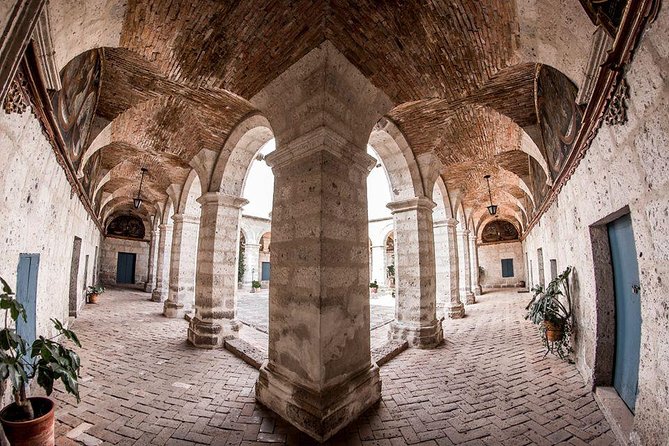
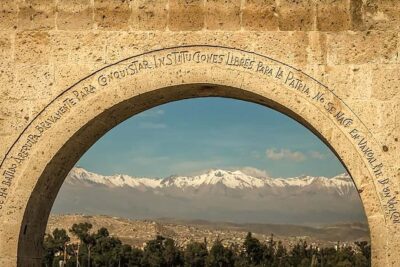
Next you head into the colonial district of Yanahuara, which is famous for the church that has an Andalusian feel and for its viewpoint architecture made with sillar stone arches. The white buildings are not just decorative. They reflect the volcanic geology that shaped the city’s materials and its look.
You also stop at El Mirador de Yanahuara, which is one of those places where you can stand, look, and finally “get” the scale of Arequipa. It is not just a view. It is a visual reset that makes your later museum-like stops feel less random.
A practical tip: bring something for sun or light drizzle. This area is outdoors for viewpoint moments, and late afternoon weather can be moody. If you want photos, give yourself a few minutes to try different angles, because the arches and streets create strong framing.
Drawback to keep in mind: this section has fewer “deep dive” details and more “see it, appreciate it, move on.” If you want long conversations about architecture, you will rely on the guide to add that layer quickly as you walk.
Plaza de Armas and the 16th-century Cathedral area
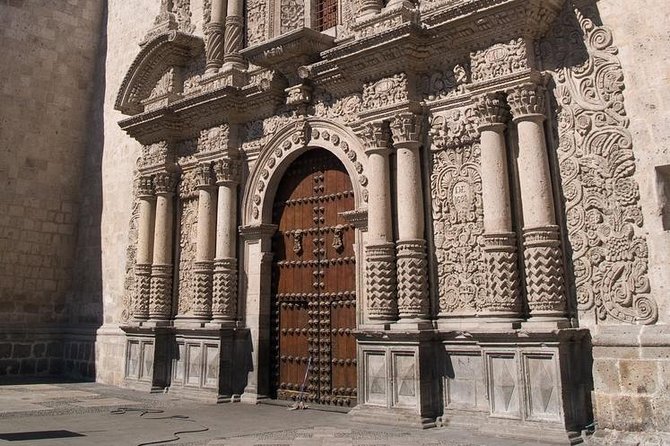
After viewpoints, the route lands where you expect the story to get official: Plaza de Armas. Here you are in the heart of the UNESCO-listed center, with the cathedral area and the arches that ring the plaza.
The Basilica Cathedral of Arequipa is dating to the 16th century, and the guide explains what you are looking at so it does not become a name you forget five minutes later. This is also a good time to slow your pace and people-watch for a minute, since plaza time tends to feel more open than monastery corridors.
One scheduling consideration: if you want views from the cathedral tower, pay attention to timing. There is at least one scheduling pattern where the cathedral is treated as a late stop, and one traveler noted tower access can close around 4 pm. If tower views are a must for you, confirm timing with the operator or plan to do tower plans on another day.
Santa Catalina Monastery: what makes it feel like a city inside a city
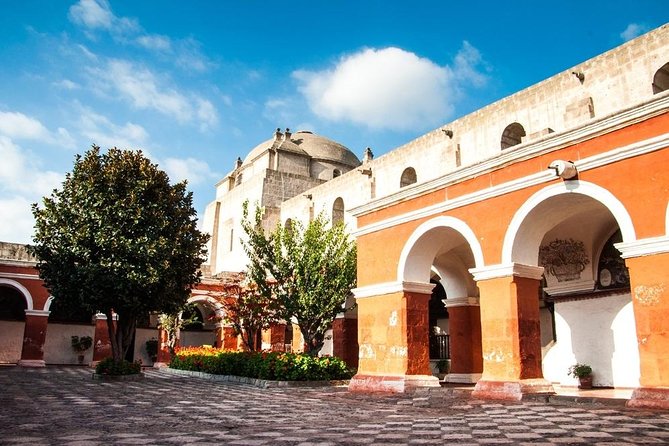
Now the main event. The tour heads to the Monasterio de Santa Catalina, a Dominican religious site that was closed to the public for nearly four centuries. When you enter, the feel changes fast. It is quiet, structured, and strangely alive, with the monastery laid out like its own little world.
What you will walk through is not just one corridor or one courtyard. You see peaceful plazas, narrow alleyways, and lush gardens, which is why this place sticks in your memory. The scale of the layout gives you a built-in sense of time and routine, and it is easy to understand how a community could function as a whole separate from the outside city.
This is also where good guiding pays off. The monastery is full of visual details, but they can blend together if you have no orientation. The guide’s explanations help you notice patterns and purpose. In past groups, guides like Victor or multilingual support in some departures have helped people get a more personal feel for the site, especially when translation was offered.
Dress code matters here. Shorts are not allowed in religious places, so you will want long pants or a long skirt. If you forget, you may feel stuck with last-minute solutions, and you do not want that stress mid-tour.
Igreja de la Compañía de Jesús cloisters and the Saint Ignacio Dome
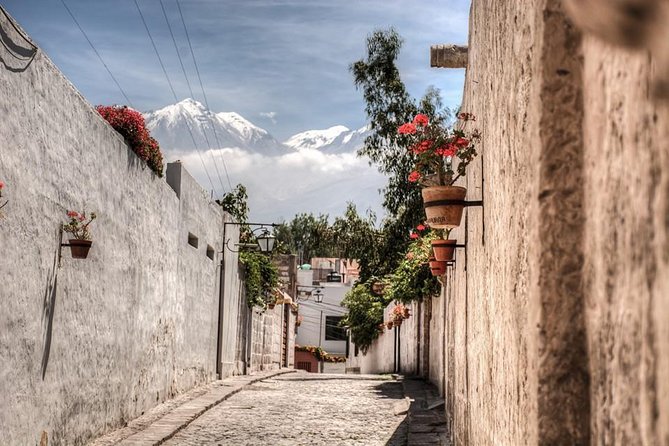
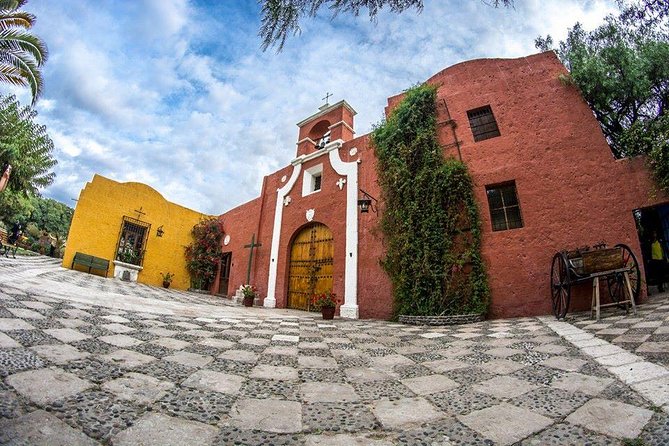
Before or after Plaza de Armas time, you also stop at the Church of the Society of Jesus, known as Iglesia de los Jesuita or the Church of the Company of Jesus. It was founded in the 17th century, and it is known for cloisters and the Saint Ignacio Dome.
If you liked how Yanahuara brought in Andalusian-style vibes, this is the next layer: Jesuit religious architecture with dramatic enclosed spaces. Cloisters are where you start noticing rhythm in the building, the way light falls into the stone, and why these spaces were designed for both movement and calm.
This portion is a good follow-up to Santa Catalina because it shifts you from one style of religious life into another. Even if you are not religious, the architecture helps you understand what mattered to these communities, and how they used space to shape daily routines.
Who should book this tour, and who should skip it
This tour is a strong fit for you if:
- you have only a short window in Arequipa and you want maximum value without spending time planning transit
- you care about viewpoints of Misti, Chachani, and Picchu-Picchu and want them slotted into the route
- you want guided context that helps you understand churches and the monastery beyond photo snapshots
You might want to skip or choose a different style if:
- you want a more varied mix of markets and neighborhoods, because the schedule does lean toward religious sites
- you dislike walking inside churches and cloisters and prefer fewer indoor stops
Should you book the Arequipa Historic and Colonial City with Santa Catalina Monastery tour?
Yes, I would book it if your goal is to understand Arequipa quickly and confidently. The strongest reason is the pairing: White City viewpoints plus Santa Catalina. That combination is hard to replicate solo without spending extra time figuring out routes and without missing the context a good guide provides.
If you go, do two things to make it better. Wear long pants or a long skirt for religious stops. Then, if volcano views are a priority, go on a day when conditions are clear, since wetter periods can soften those peak views.
FAQ
FAQ
What time does the tour start?
The tour starts at 2:00 pm.
How long is the Arequipa city tour?
It takes about 3 hours 30 minutes.
How much does the tour cost?
The price is $61.00 per person.
Is hotel pickup and drop-off included?
Yes, hotel pickup and drop-off are included.
What transportation is used?
You travel by an air-conditioned vehicle.
Is the Monasterio de Santa Catalina admission included?
Yes, admission to the Monasterio de Santa Catalina is included.
Are other attractions free to enter?
The tour notes free admission for the Historical Centre of the City of Arequipa stop and the Plaza de Armas area, while Santa Catalina has included admission.
Is food included?
No, food and drinks are not included.
Is there a clothing requirement for religious places?
Yes. Shorts are not allowed in religious places. Wear long pants or a long skirt.
What is the maximum group size?
The tour has a maximum of 15 travelers.
Can I get a full refund if I cancel?
You can cancel for a full refund up to 24 hours before the experience’s start time. If you cancel less than 24 hours before, the amount is not refunded.
More Historical Tours in Arequipa
- Walking tour in the Historic Center of Arequipa
★ 4.4 · 180 reviews - Discover Lima: Love Park, Historic Center, and its Catacombs.
★ 5.0 · 696 reviews - Street Food, Market & Old Eateries Tour in Lima’s Historic Center
★ 5.0 · 656 reviews - Lima’s lively Heritage: Exploring the City’s Landmarks Half-day
★ 4.5 · 581 reviews
Recently reviewed around Arequipa
- 2-Day Tour to the Magical Colca Canyon★ 4.5 · 29 reviews
- Full Day Tour to Colca Canyon from Arequipa★ 4.0 · 34 reviews
- Full Day Tour To The Salt Lake Salinas in Arequipa★ 4.5 · 34 reviews
- Full Day Trip to Colca Canyon from Arequipa★ 4.0 · 34 reviews
- Tour Fullday Colca Canyon with Breakfast and Typical Lunch★ 4.3 · 35 reviews
- Colca 2 Days and 1 Night★ 5.0 · 35 reviews
- 2 Day Trek Including Transfer to Puno / Colca Canyon★ 4.5 · 38 reviews
- 3-Day Colca Canyon trek with Professional Guide★ 5.0 · 40 reviews
Santa Catalina Monastery, compared.
Lima Walking Tour: Historic Center, Market & Monastery
Read our review →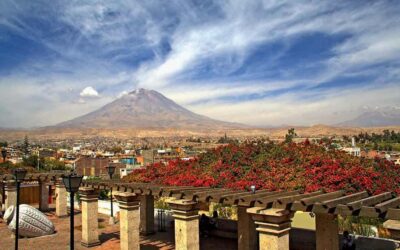
Arequipa Walking Tour and Santa Catalina Monastery
Read our review →Browse the lists this tour appears in