
Reviewed · MACHU PICCHU
Private 2 Days Inka Trail to Machu Picchu
This is interesting because it compresses the classic Inca Trail into just two days, then lands you at Machu Picchu twice, once as a big first reveal from the trail and again for an early guided visit inside the citadel. I especially like the way the route layers Inca ruins and rainforest paths before you ever hit Machu Picchu, and I also like that you get a private experience with guides such as José, Carlos, Edgar, Richard, and Yang Zhu, who clearly adjust their pace to your group.
The main drawback to keep in mind is the early starts and the steady uphill, so you do need moderate fitness and proper trekking footwear.
Key highlights before you go
- Two Machu Picchu moments: a dramatic first view from Inti Punku, then a guided visit the next morning
- Private pace with strong guiding from people like José and Carlos, with room for questions and photos
- Classic Inca Trail stops including Chachabamba, Winay Wayna, and the engineering-packed platforms
- Optional Huayna Picchu with a morning time slot (10:00 am group) and about a one-hour climb
- One night in Aguas Calientes so you’re rested and ready for the early day-two access
- All core transport included: Cusco pickup, train to km 104, and the return via Ollantaytambo
A 2-day Inca Trail that times Machu Picchu when crowds are lower
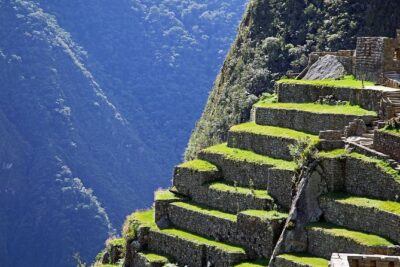
Machu Picchu is famous for a reason, but the real win here is timing. You see it once from the Inca Trail corridor, then you go again for the guided tour. That first sight from Inti Punku (Puerta del Sol) helps you understand what you’re about to enter, because the ruins sit in your mind before you even step into the citadel.
You also avoid the feeling that you just showed up, rushed around, and left. With this schedule, day one is about walking from km 104 through Inca sites, then settling in Aguas Calientes for the night. Day two starts early and gets you onto the guided circuits while most people are still thinking about morning coffee.
The private format matters, too. In the trail world, group size can change everything, from photo-taking to how often you stop for breath. People who went with guides such as José and Carlos specifically praised the relaxed vibe and the way the guide kept them comfortable while still hitting the key sites. If you like your history explained in a human way, this format is a strong fit.
More ways to reach Machu Picchu:
- Classic Inca Trail Trek 4D/3N to Machu Picchu (Group Service)
★ 5.0 · 8,653 reviews - Machu Picchu: 4-Day Inca Trail Trek with Panoramic Train Ride
★ 5.0 · 4,568 reviews - Short Inca Trail to Machu Picchu 2D/1N
★ 5.0 · 3,007 reviews
Day 1: The km 104 launch, Chachabamba, Winay Wayna, and the Puerta del Sol reveal
Your day starts very early. The start time is listed as 4:00 am, with a morning transfer from your Cusco hotel to the train station. The train ride runs for about 3 hours until km 104, where you begin walking. That train segment is not just a transfer. It sets the rhythm, so the trek begins feeling intentional rather than chaotic.
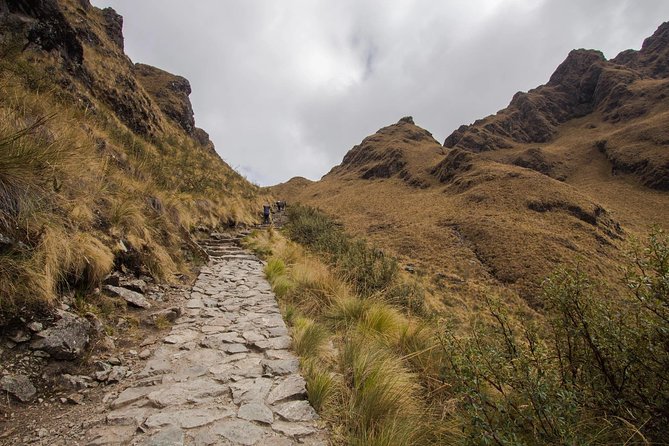
Once you start the hike, your guide takes you on foot toward the ruins of Chachabamba. This is one of those “small-but-meaningful” Inca sites that makes the trail feel like an actual Inca route, not just a long path to a destination. After that, you move through a stretch that includes a refreshing waterfall stop. Even if you’re focused on views, it’s nice when the trail gives you a break in a natural way.
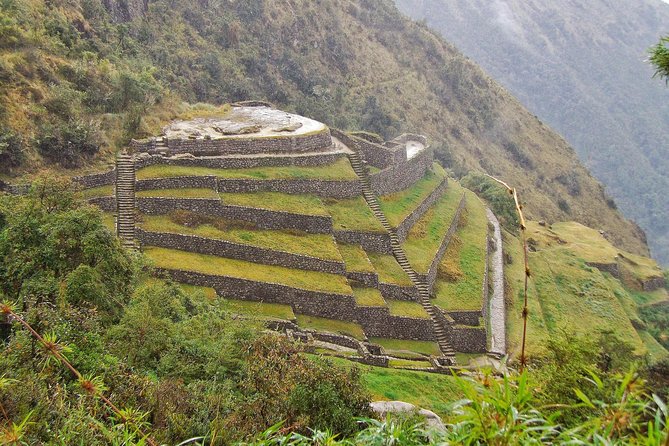
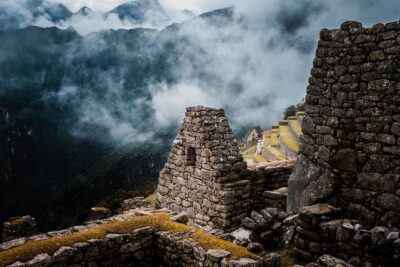
Then comes Winay Wayna, including the impressive platforms. This part of the route is worth paying attention to because it shows Andean engineering in practical form: terracing, structured space, and buildings that make sense once you’re looking at the slope instead of just the postcard.
After lunch, the hike continues toward Inti Punku, the Puerta del Sol. This is where the day delivers its biggest emotional payoff. From Inti Punku, you get a panoramic first sight of Machu Picchu with the town below on the hill. It’s a strong moment, because you’re standing in the same overall view line that helps you grasp the site’s placement.
Finally, you take the bus down to Aguas Calientes for dinner and your overnight. One note that helps with comfort: water and snacks are not included, so I recommend planning to buy or carry your own small supplies for the long day.
Overnight in Aguas Calientes: Why a night here makes day two easier
Aguas Calientes is the base town for Machu Picchu access, and having one night there is more than a convenience. It turns day two into something you can do with focus, instead of hauling yourself out of Cusco and trying to get up the trail on pure momentum.
You’ll have dinner included, and you’ll sleep in your included accommodation for the night. That matters because the next morning begins with a 5:30 am start after breakfast. When you’re already well-rested, you can enjoy the experience instead of just surviving it.
This is also where the private guide support helps. You’re not trying to figure out bus lines, timing, or where you need to stand. The tour includes bus service up and down to the citadel on the Machu Picchu day, which removes a lot of stress from a schedule that is already early and packed.
My practical tip: treat the evening like a pre-hike logistics check. Set out your warm layers, keep your trekking essentials together, and make sure you know how you’ll get back to the train station the next day.
Day 2 at Machu Picchu: sectors, Intihuatana, and an early start
Day two begins with breakfast, then you begin the trek to Machu Picchu at 5:30 am. That early start is one of the quiet advantages of this tour format. It gives you time to experience the citadel while the day is still unfolding, and it also gives your guide time to walk you through the layout in a way that feels organized.
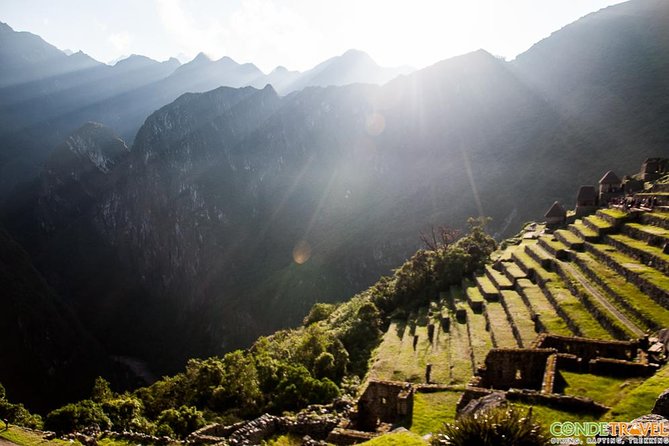
Your guided tour covers different sectors of the archaeological complex, including the Intihuatana, the sundial used by ancient Peruvians settlers. That’s not just a photo stop. When the guide talks through what you’re looking at, the site starts to feel less like random stonework and more like a planned system.
You’ll want to pace yourself, because there’s a lot of uphill and stair movement once you’re in the complex. If you’ve ever toured places with long stair climbs, you know the trick is not to burn out on the first steep section. A good private guide can help you keep steady.
The tour also gives you an optional add-on: climbing Huayna Picchu. If you choose it, you join the 10:00 am group, and the walk takes about an hour. The payoff, based on the tour’s own framing, is a breath-taking view and an unforgettable experience. If you’re the type who likes perspective shots and you don’t mind vertical effort, Huayna Picchu is often the highlight.
A few more Cusco days worth comparing
- Cusco: Rainbow Mountain and Red Valley Day Trip with Meals
★ 4.9 · 4,893 reviews - Salkantay Classic Trek 5 Days from Cusco
★ 5.0 · 4,062 reviews - 4-Day Salkantay Trek with Sky Camp Stay
★ 5.0 · 3,346 reviews - Excursion to Rainbow Mountain Full Day Optional Red Valley
★ 5.0 · 2,996 reviews
Huayna Picchu optional climb: who should say yes
Huayna Picchu is optional, but it changes the tone of day two. Without it, you can focus on the main guided sectors and keep the day smoother. With it, you trade extra effort for a different angle on Machu Picchu, one that lets you feel the site’s scale.
The key practical detail is timing. You can choose the 10:00 am group for the climb. The walk takes about an hour, so plan on a steady, focused pace.
This is a good choice for you if:
- You’re comfortable with steep trails and stairs
- You want a unique view that feels removed from the main path
- You like your day to include one clear physical goal
This is not ideal if:
- You’re unsure about your stamina after the trek in
- You get winded quickly on sustained climbs
- You’d rather spend the citadel day taking it slow and absorbing more explanations
If you’re on the fence, I’d treat it as a fitness question, not a willpower question. The Inca Trail already gives you plenty to earn your Machu Picchu memories.
Train back and the return to Cusco via Ollantaytambo
After your Machu Picchu time, you’ll board the train from Aguas Calientes to Ollantaytambo at 18:20. This timing is important. The instructions say to be at the station at least half an hour in advance, so build in margin. That’s not just for departures, it’s for comfort when you’re tired and carrying a pack after a full day.
Once you arrive in Ollantaytambo, a driver meets you outside the station and brings you back to Cusco. That keeps the end of the trip simple. You’re not trying to stitch together local transport after what is already a long two days.
If you like smooth endings, this kind of transfer plan is exactly what you want for Machu Picchu travel. It means your last memories are still part of the trip, not part of the scramble.
Price and value: what $570 includes and why it matters
At $570 per person, this is not the budget route. But for what it bundles, it starts to make sense fast. You’re paying for the hard parts of Inca Trail travel: the Inca Trail and Machu Picchu entrance access, a two-day private tour guide, an overnight stay in Aguas Calientes, and the major transport legs.
What you get included is substantial:
- all transportation included
- breakfast, lunch, and dinner (with meals covered for day one and day two breakfast)
- one night accommodation
- train journey from Ollantaytambo to km 104 and return from Machu Picchu
- bus service up and down to the citadel
- entrance to Inca trail and Machu Picchu
When you compare that kind of package to trying to assemble everything on your own, the cost starts looking like you’re buying certainty and time. You’re not hunting for tickets, coordinating bus schedules, or trying to interpret which train you need when your brain is running on pre-dawn hours.
I’d also call out one practical cost you should plan for: water and snacks are not included. That’s normal on many treks, but it means you should budget for small items you’ll want on the trail and between meals.
The guides you hear about, and why that makes a difference on the trail
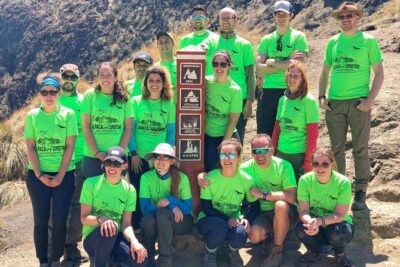
The most praised aspect across the feedback you have here is the guides. People named guides like José, Carlos, Edgar, Richard, and Yang Zhu, and they repeatedly describe the same pattern: friendly service, strong knowledge, and an ability to make the group feel at ease.
What that means for you is simple. When you have a guide who stays close and answers questions, the trek becomes more than walking for walking’s sake. You get context about Inca culture and the natural world, plus help with comfort and pacing.
One detail that stood out is that guides were reported to tailor pace to a group’s preference and to provide assistance when needed. That’s exactly what you want on a steep, early-day itinerary. Even if you’re physically capable, fatigue is real. A private guide who reads your pace makes the experience more enjoyable.
If you care about photography, you’ll also appreciate that the guides helped take photos and took time to explain what you were looking at, not just moving you along. That’s an underrated part of value.
What to pack for two days of Inca Trail and Machu Picchu stairs
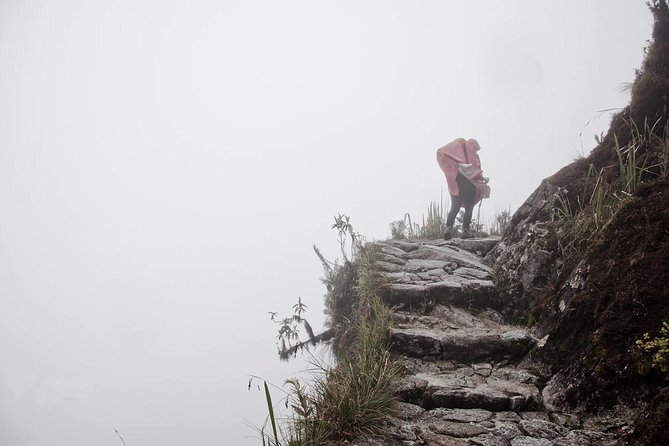
The tour data is clear about the basics: you need correct footwear for trekking, warm clothes, and waterproof clothing in case of rain. Don’t treat that as generic advice. Wet stone plus steep stairs is where comfort goes to die, so bring gear that works in real walking conditions.
Here’s what I’d prioritize:
- trekking shoes you trust on uneven ground
- warm layers for early mornings
- waterproof outer layer, plus something that keeps your legs from getting soaked
- a small plan for water and snacks since they are not included
Also, pay attention to the optional Huayna Picchu climb. If you plan to do it, you might want slightly different traction or layering choices than you’d use for the main Machu Picchu sectors.
And because the start is very early, you’ll want to think about sleep and recovery. Hydrate in the evening, not just the morning. Eat your included dinner without overthinking it, then wake up ready.
Who this private 2-day Inca Trail is best for
This tour is private, so it’s ideal when you want control over pacing and attention. It’s also a strong match for first-time Machu Picchu visitors who still want the Inca Trail experience instead of only riding up at the last minute.
A few specifics from the tour info:
- You should have moderate physical fitness
- Children must be at least ten years old for walking the Inca Trail
- It is a private tour, so only your group participates
So I see it working well for:
- couples who want a shared, guided journey
- families with older kids who can handle steady trekking
- travelers who want Machu Picchu but hate the idea of spending the whole day in a chaotic crowd
If you’re a total beginner, this may still be doable if you prepare, but the early mornings plus stair-heavy Machu Picchu sectors will be the reality check. If you’re already comfortable hiking, you’ll likely feel more like you’re enjoying the trail rather than managing it.
Should you book this 2-day private Inca Trail to Machu Picchu?
I’d book it if you want three things in one package: a real Inca Trail walk, a thoughtful guided Machu Picchu tour, and a schedule that gives you two Machu Picchu moments without making you spend every second on logistics.
I would pause if any of the following are true:
- You really struggle with early starts and long uphill days
- You don’t have good trekking footwear and warm waterproof gear
- Huayna Picchu sounds like too much and you know the thought of it will stress you out
If you’re comfortable with the physical side and you want a smoother, private feel with guides like José and Carlos, this tour is a very solid value for what it bundles.
FAQ
What time does the tour start?
The start time is listed as 4:00 am, with a transfer from your Cusco hotel to the train station.
How long is the train ride on day one?
The train ride to km 104 lasts about 3 hours.
Where does the trek begin on day one?
The trek begins at kilometre 104 after the train ride.
What time does day two start at Machu Picchu?
Day two begins at 5:30 am after breakfast, with the trek toward Machu Picchu.
Is Huayna Picchu included, or is it optional?
Huayna Picchu is optional. If you choose it, you join the 10:00 am group and the climb takes about an hour.
What is included in the tour price?
Transport is included, along with one night accommodation, a guide for two days, breakfast on day two, and lunch and dinner on day one, plus entry to the Inca Trail and Machu Picchu. Bus service up and down to the citadel is also included.
What is not included?
Water and snacks are not included.
What is the return travel like after Machu Picchu?
You board the train from Aguas Calientes to Ollantaytambo at 18:20, then a driver brings you back to Cusco. You should arrive at the station at least half an hour early.
How far in advance can I cancel?
Free cancellation is allowed up to 24 hours in advance of the experience’s start time for a full refund.
Recently reviewed around Cusco
- 6-Day ||All Included|| Excursion – MachuPichu & Rainbow Mountain-Humantay Lake★ 4.5 · 8 reviews
- Horseback Riding thru the Mountains of Cusco★ 5.0 · 8 reviews
- Cuzco City Tour and Archaeological Ruins in Half Day★ 5.0 · 8 reviews
- Full Day – Rainbow Mountain tour – Group Service★ 5.0 · 8 reviews
- Half Day Tour in Cusco: Exploring the City and Four Ruins★ 4.5 · 8 reviews
- Cusco 4 Days Machu Picchu and Sacred Valley | All included★ 5.0 · 8 reviews
- Machu Picchu and Sacred Valley 2 Day Tour★ 5.0 · 8 reviews
- Walking Tour in Legendary & Historical Cusco City★ 4.5 · 8 reviews
Machu Picchu, compared.
Classic Inca Trail Trek 4D/3N to Machu Picchu (Group Service)
Read our review →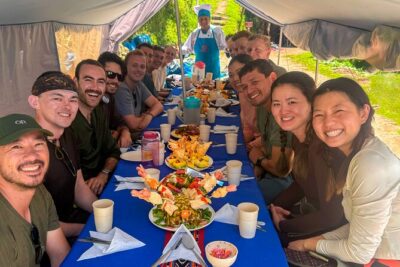
4-Day Inca Trail Trek with Panoramic Train Ride
Read our review →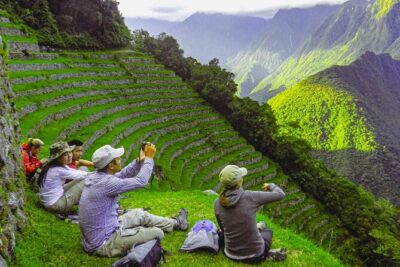
2-Day Inca Trail to Machu Picchu with Panoramic Train
Read our review →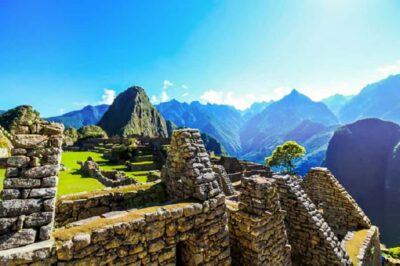

2-Day Tour: Sacred Valley and Machu Picchu by Train
Read our review →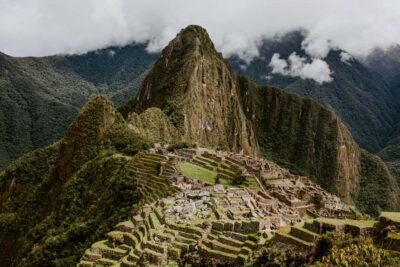
Browse the lists this tour appears in