
Reviewed · CITY TOURS
City Tour Cusco
Cusco city tours get good fast when you mix major Inca sites with guided context, and this one does exactly that in about half a day. You start at Plaza de Armas and roll through five stops where you can actually see how the Incas engineered stone, space, and ritual life.
I especially like the way the route balances big-picture storytelling with on-the-ground details, whether your guide is Jhonny, Victor, Jorge, Saul, or Elvis. It also feels well paced, since the tour keeps moving without rushing you into a checklist. One drawback to plan for: entrance fees are not included, so the total cost will be higher than the $32 headline price.
Key things to notice before you go
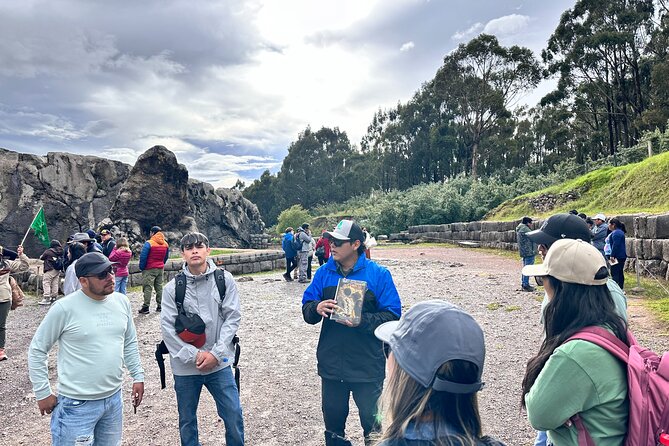
- A tight 5-hour circuit: five major sites, each with about an hour of guided time.
- Inca meets Spanish at Qorikancha: you will see the layered architecture up close.
- Small group feel (max 12): easier questions, plus time for photos with guides like Victor.
- Admissions are extra: you pay for archaeological access on top of the tour price.
- Oxygen ball included: handy to have along in Cusco, just in case you want it.
- Private transportation: shorter hops between stops, with no long bus ride.
Cusco in half a day, without feeling like you missed the point
If it is your first time in Cusco, you want two things: momentum and clarity. This tour gives you both. The itinerary is built around the “why” of the sites, not just the “what.” That matters because Cusco’s history is layered, and it is easy to get lost if you only look at walls and ignore the meaning.
You also get a practical rhythm: short rides between stops, then about an hour on site with an official tourism guide. In real terms, that is enough time to actually understand what you are looking at, and still stay comfortable before altitude fatigue catches up.
One more reason I like it: the group size stays small, with a max of 12 travelers. That creates a better dynamic. You are not stuck at the back while the guide talks. You can ask questions and listen in, even if you are traveling solo or with family.
More City Tours in Cusco
- Cusco: Half-Day City Tour with Sacsayhuaman and Q’enco
★ 4.6 · 1,129 reviews - City Tour Cusco Qoricancha Sacsayhuaman y Tambomachay
★ 4.7 · 617 reviews - Cusco City Tour Four Ruins in Half-Day
★ 5.0 · 530 reviews
Start at Plaza de Armas, then get your bearings fast
The tour begins at Plaza de Armas, Cusco’s central square. That is a smart choice because you can orient yourself immediately, especially on day one. The tour also returns you back to the same meeting point, so you are not left figuring out your way home after a busy day of walking and stone stairs.
The guide meeting point is also convenient if you are staying near the historic center. The tour notes that it is near public transportation, which is useful if you plan to hop on and off for other activities later.
Qorikancha, the Temple of the Sun and the Inca-Spanish mix
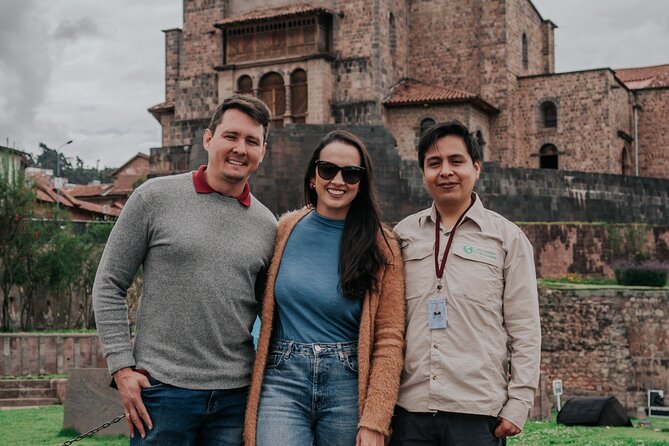
Your first major stop is Qorikancha (Temple of the Sun). You get a guided visit of about 45 minutes, which is just the right amount of time for a site this layered. You will look at the architectural fusion of Inca and Spanish colonial building styles, and the guide ties those materials back to the site’s religious role.
Here is what makes Qorikancha worth it on a city tour: it is not just a monument. It is a story you can see in stone. You get a quick lesson on how sacred Inca spaces were repurposed and reinterpreted later, without the tour turning into a dry lecture.
Practical note: Qorikancha entrance is not included. Budget for that ticket separately, so you are not surprised when you arrive at the gate.
Saqsayhuamán fortress walls, and why the stones matter
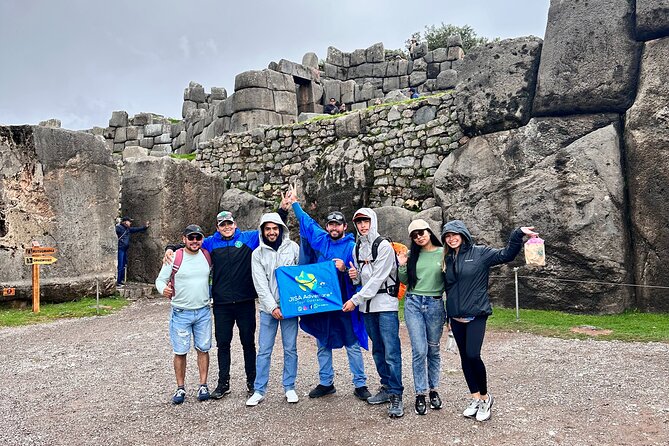
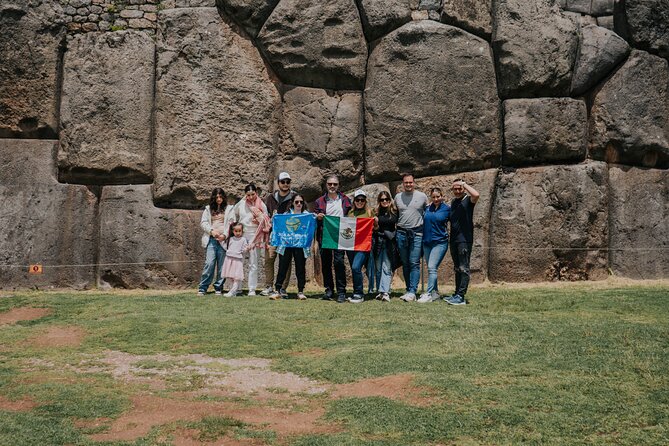
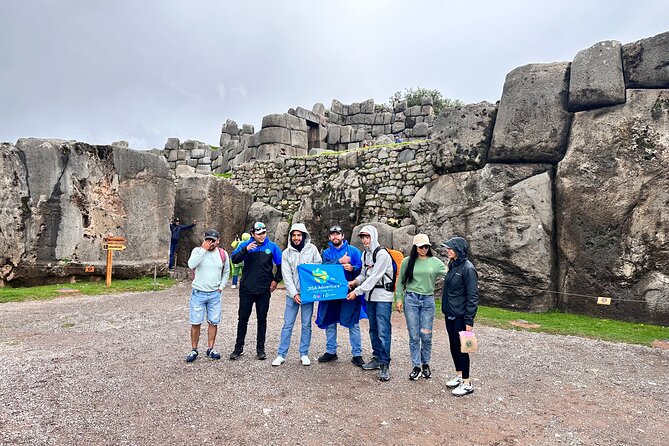
Next up is Saqsayhuamán. After a short vehicle transfer (about 20 minutes), you arrive at one of the big Inca strongholds above Cusco. You get roughly an hour with a guide to explore the fortress, focusing on the enormous carved stones and imposing walls.
This stop is the one where you start to understand Inca construction as a system, not just impressive rocks. The guide explains Inca building techniques and the ceremonial or historical importance of Saqsayhuamán. Even if you are not a “technical archaeology” person, the scale lands fast. It helps that the walls and stonework create natural sightlines, so you can picture how the space would have been used.
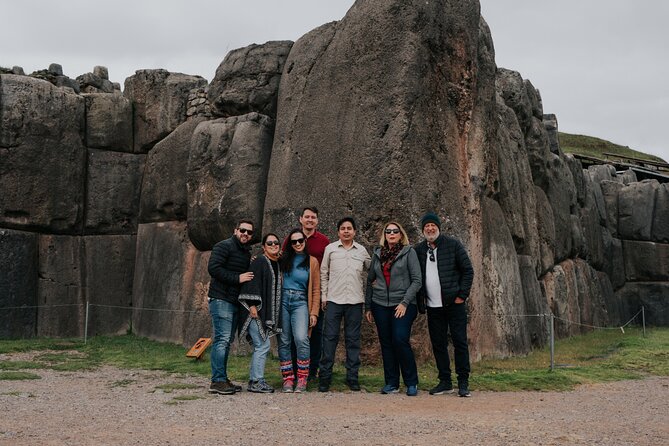
If you like photos, this is usually a strong choice. The walls are visually dramatic, and the elevated viewpoints help you feel the location. Guides like Victor were also praised for making sure there was time to capture pictures, which is a real quality-of-life detail.
Entrance note again: tickets are not included, so plan ahead.
A few more Cusco days worth comparing
- Classic Inca Trail Trek 4D/3N to Machu Picchu (Group Service)
★ 5.0 · 8,653 reviews - Cusco: Rainbow Mountain and Red Valley Day Trip with Meals
★ 4.9 · 4,893 reviews - Machu Picchu: 4-Day Inca Trail Trek with Panoramic Train Ride
★ 5.0 · 4,568 reviews - Salkantay Classic Trek 5 Days from Cusco
★ 5.0 · 4,062 reviews
Q’enqo ritual center, underground chambers carved in rock
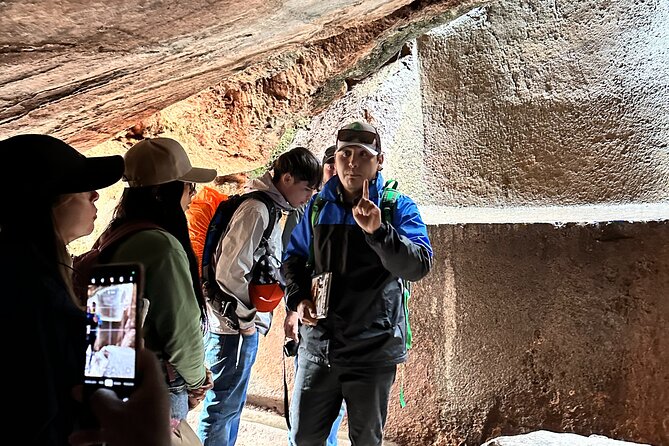
Then you head to Q’enqo, described as a ritual center on a rocky outcrop. This is one of the more atmospheric stops on the route, mainly because you are not just looking at open stonework. You are exploring spaces with underground chambers and altars carved into the rock.
The guide connects those physical features to Inca rituals and worldview. In plain terms, this is where your understanding starts to shift from “fortress and temple” toward “how people mapped belief onto place.” Q’enqo feels a bit more mystical than the fortress sites, and the tour structure helps: you get a guided walkthrough before you start trying to read the site on your own.
One thing to keep in mind: rock-carved spaces can be uneven. Wear shoes you feel confident in. You do not need trekking boots, but you do want traction and comfort.
Puka Pucara, the red military fortress
After another brief drive (about 15 minutes), you reach Puka Pucara. This site is a military fortress, and the key visual cue is the red construction, which makes it easier to remember later when you compare it to the more gray stone of other ruins.
You get about an hour on site, including time to learn about its defensive and strategic function during the Inca Empire. For me, this stop balances the tour because it shifts from ritual spaces back to practical power. It helps you understand how the Incas built for both ceremony and control.
Drawback consideration: because it is a fortress, the focus is on function, not on big “wow” reconstructions. If you only want the most famous photo spots, your enjoyment might depend on how much you like the guide’s explanation.
Tambomachay, water worship and hydraulic engineering
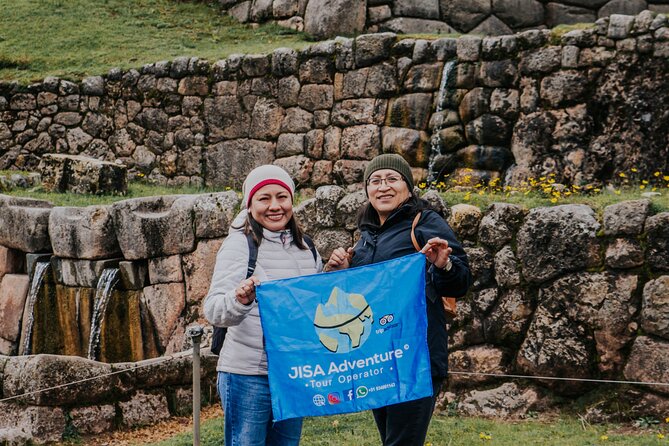
Your final visit is Tambomachay, also known as the Baño del Inca. This part of the tour leans into ceremony and water worship. You will see stone fountains and canals, and you will learn how the Incas used advanced hydraulic engineering to manage water.
What makes Tambomachay a good ending is the change of pace. After strongholds and carved ritual spaces, water systems feel grounding. The stone channels also give you something tangible to connect to the idea of sacred life, because you can follow the route water would take.
You will wrap up your visits and return by transportation to Cusco, ending again at the meeting point.
Price and value: what $32 really covers (and what it does not)
At $32 per person for about five hours, the tour price is mostly paying for the human and the logistics: an official tourism guide plus private transportation, along with an oxygen ball. That is a solid setup if you want a guided day without the hassle of arranging transport between scattered ruins.
But here is the part you should plan for early: entrance tickets are not included. The tour notes a tourist entrance of $25 (partial ticket, all archaeological centers) and separate Qorikancha entrance of $7. So your real “all-in” cost is more than $32.
Is it still good value? Usually yes, if you want structure. The guided time at each stop is what turns ruins into a coherent picture. If you like learning and prefer not to guess your way through sites, paying for the tour plus admissions tends to make sense.
If you are traveling on a super-tight budget, compare this to self-guided options. You will save money, but you lose the storytelling that explains why each site mattered.
Guides make or break the day, and this route is guide-friendly
The reviews highlight something important: guide energy. Names keep showing up in the feedback, including Jhonny, Victor, Jorge, and Saul. People also mention Elvis in the broader Cusco context of working with this company.
The practical takeaway for you: this tour is the kind where an engaged guide helps a lot. Each stop has enough complexity that a high-energy, explanatory style makes the difference between seeing ruins and understanding them.
It also helps that the tour is short enough to feel manageable. Several comments mention the time felt right, meaning the pacing supports attention instead of draining it.
And yes, there is even a light moment in one group memory, where an inside joke involved Richard saying hi to Johnny Walker. That tells me something too: the guides are not just reciting facts, they are building a friendly group atmosphere.
What to bring and how to get the most from each stop
This part is simple, but it matters. The itinerary is multiple sites in a row, so you want to be comfortable more than fancy.
Bring:
- Comfortable walking shoes with grip
- A light layer, since Cusco mornings and afternoons can feel different as you move around
- Water and a snack for breaks between stops
And use the oxygen ball as intended for your comfort. Cusco altitude affects people differently, and having it included means you do not need to scramble for extra supplies mid-day.
Photo tip: at big stone sites like Saqsayhuamán, start early in your guided time. Guides sometimes manage timing so you get good angles without feeling rushed, especially if your guide is like Victor, who is praised for making sure there is time to capture pictures.
Who should book this city tour, and who might want a different plan
This tour is a good fit if:
- You are in Cusco for a short stay and want a first-day overview
- You like guided explanations that connect stonework to ritual and history
- You prefer a small group with private transport instead of a large bus day
- You want an itinerary that is focused, not spread across 10 half-finished stops
It may be less ideal if:
- You only want one or two “top” sites and would rather spend the rest of your day on your own
- You strongly prefer fully self-directed travel where you control exact timing and tickets
If you are unsure, think about your travel style. If you enjoy turning sightseeing into understanding, this route will feel efficient.
Should you book City Tour Cusco (Qorikancha to Tambomachay)?
If you want a clean introduction to Cusco’s Inca-era power centers and sacred spaces, I think this is an easy yes. The structure works: start in the city core, hit five major sites, get guided context at each stop, and return to Plaza de Armas.
Two reasons to choose it over random exploring are the official guide time and private transportation. Two reasons to plan ahead are entrance fees and the fact that the day is still active, with real walking at multiple archaeological sites.
Book it if you want clarity quickly and you value explanations that make the stones mean something.
FAQ
How long is the City Tour Cusco?
The tour is listed as approximately 5 hours.
Where does the tour start?
The tour starts at Plaza de Armas in Cusco.
Does the tour end back at the meeting point?
Yes. The activity ends back at the meeting point.
What is included in the price?
The price includes an oxygen ball, an official tourism guide, and private transportation.
What entrance fees are not included?
Tourist entrance tickets are not included, and the info provided lists $25 for a partial ticket covering all archaeological centers, plus $7 for Qorikancha.
What stops are included during the tour?
The tour includes Qorikancha, Saqsayhuamán, Q’enqo, Puka Pucara, and Tambomachay.
How large is the group?
The maximum group size is 12 travelers.
What days and hours is the tour offered?
It runs Monday through Sunday, with operating hours listed as 12:00 AM to 6:00 PM.
Can most travelers participate?
The tour notes that most travelers can participate.
What is the cancellation policy?
This experience is non-refundable and cannot be changed for any reason. If you cancel or ask for an amendment, the amount you paid is not refunded.
Recently reviewed around Cusco
- Cusco Cooking Class by ChocoMuseo in Cusco★ 5.0 · 29 reviews
- ATV Adventure to Moray and Maras Salt Mines – Half Day★ 4.5 · 29 reviews
- 1-day excursion to Machu Picchu from Cusco★ 5.0 · 29 reviews
- Private Tour Sacred Valley, Chinchero, Maras Moray, Ollantaytambo★ 5.0 · 29 reviews
- From Cusco: Humantay Lake with Breakfast and Buffet Lunch★ 4.5 · 29 reviews
- 4 Day – Inca Jungle to Machu Picchu★ 5.0 · 29 reviews
- 2-Day Machu Picchu Tour by Train from Cusco★ 4.5 · 29 reviews
- 2-Day Sacred Valley and Machu Picchu Tour By Train★ 4.5 · 29 reviews
City Tours, compared.
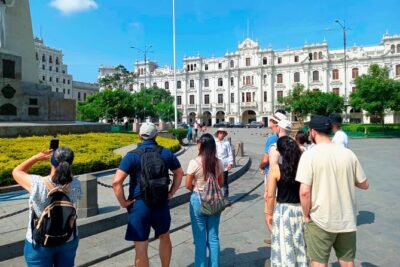
Lima Half-Day City Walking Tour (Small Groups)
Read our review →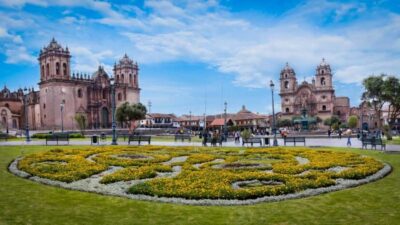
Half-Day City Tour with Sacsayhuaman and Q’enco
Read our review →
City Tour Panoramic Bus Departure From Larcomar
Read our review →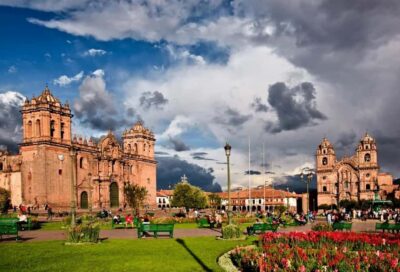
City Tour Cusco Qoricancha Sacsayhuaman y Tambomachay
Read our review →
Lima’s lively Heritage: Exploring the City’s Landmarks Half-day
Read our review →
Sightseeing Tour of the City on an Open-Top Bus
Read our review →
Lima City, Central Market & Catacombs Tour (Pick-up & Drop Off)
Read our review →Browse the lists this tour appears in