
Reviewed · CITY TOURS
Cusco Half Day City Tour: Four Ruins
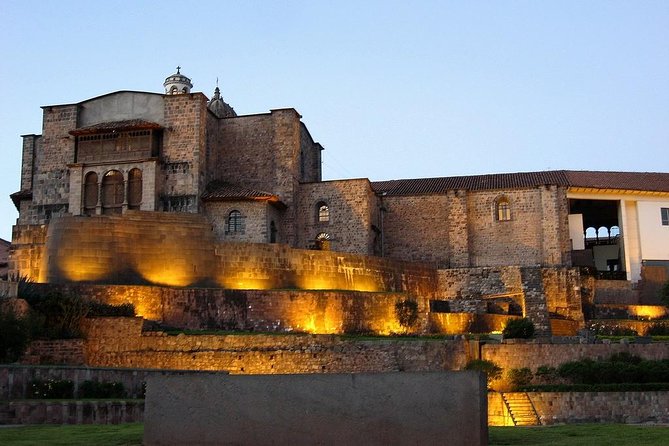
Cusco’s Inca ruins are usually spread out, so a tour that strings together four sites in one focused outing feels efficient and smart. This one hits fortress views, a carved monolith temple, and water-powered terraces without turning the day into a slog. The small group size helps keep it calmer than the usual bus parade.
I like that you get a bilingual guide (English and Spanish), so the story does not vanish halfway through your tour. I also like the mix of architecture and mystery, from Sacsayhuaman’s massive zigzag walls to Q’enqo’s “labyrinth” temple with a canal no one can fully explain.
One possible drawback: the timing can feel tight. The itinerary says about 6 hours, but some departures run closer to 4, and that can mean less time to wander slowly.
Quick hits before you go
- Maximum 15 people keeps the experience more personal and easier on the photo lines
- Four different ruins types in one loop: fortress, ritual temple, settlement/baths area, Inca spring terraces
- Spectacular high views from Sacsayhuaman where you can spot sacred peaks like Ausangate and Pachatusán
- Q’enqo’s carved-rock details include 19 niches and an amphitheater-like space
- Tambomachay’s flowing water turns the end of the tour into a quieter reset at altitude
Cusco half-day logistics that actually matter
This is a classic “get oriented fast” Cusco tour. You start at HEIDI TRAVEL EIRLC. (Plateros 324) at 10:00 am, and you come back to the same meeting point. Transport is included, which matters because Cusco traffic and road bumps can eat time you would rather spend walking.
Expect walking at three of the four stops. The good news is it is not described as extreme trekking. The honest note is altitude is real, especially if you arrived in Cusco only recently. Even short climbs can feel bigger than the distance suggests. Plan to move at your pace, take breaks, and drink water.
Group size is capped at 15, and that is a big deal at Sacsayhuaman and Q’enqo, where crowding can turn ruins into hurried checkpoints. You’ll still have company, but it should feel manageable.
More City Tours in Cusco
- Cusco: Half-Day City Tour with Sacsayhuaman and Q’enco
★ 4.6 · 1,129 reviews - City Tour Cusco Qoricancha Sacsayhuaman y Tambomachay
★ 4.7 · 617 reviews - Cusco City Tour Four Ruins in Half-Day
★ 5.0 · 530 reviews
Price and what you should budget for
The tour price is $45 per person, and transport plus a bilingual guide are included. For a half-day with four sites, that is solid value on paper, mainly because you are paying for time and logistics, not just entry fees.
But budget for entrance costs, because they are not included. The info lists:
- Qorikancha PEN 20 per person
- Entrance to sites PEN 70 per person
That means your total out-of-pocket could be higher than the headline price. I’d treat the listed amounts as your starting point and confirm the exact total on the day, so you are not doing math with your breath running out at 12,000 feet.
Also keep in mind that a couple of people noted the day felt slightly rushed or shorter than the stated schedule. If you want long, slow exploring, you might need extra time beyond this tour.
What guides do best here, and why it changes everything
You are not just being walked to stones. You are getting explanations. In the feedback you can see a pattern: the guide matters a lot.
People highlighted guides named Edith and Freddy, praising clear communication in both English and Spanish and a style that stays considerate, not pushy. That is not a small point in Cusco. If you get winded, you want a guide who lets you stop, catch your breath, and still feels confident guiding the group.
I also like that the tour has a reputation for friendly organization once you are actually underway. Still, a few people pointed out occasional confusion at the start or pickup delays. My practical advice: if your schedule is tight, build buffer time on that morning.
One more practical detail. An extra stop at an alpaca wool shop came up as a pleasant surprise for some people. It was not the core ruins time, but it can be useful if you want a quick, local context for textiles while you are in Cusco.
Stop 1: Sacsayhuaman, zigzag walls and big-views payoff
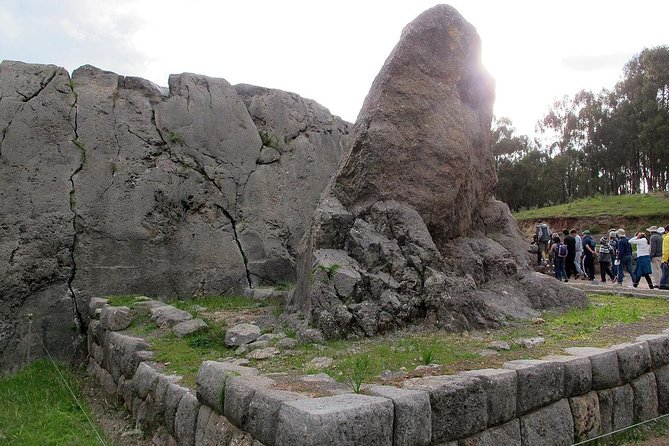
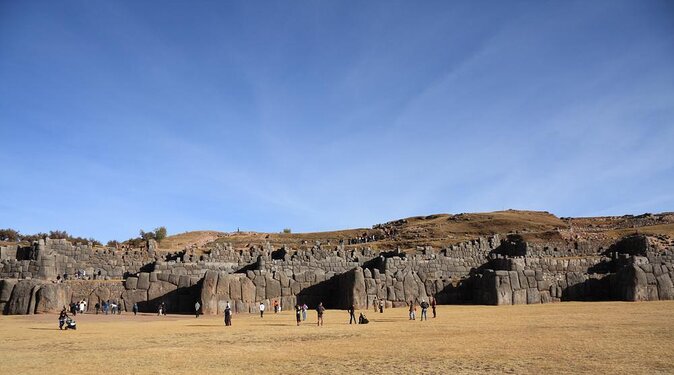
Sacsayhuaman sits above Cusco and is the kind of place that makes you tilt your head back and forget what day it is. The name in Quechua is said to mean place where the hawk is satiated. It is presumed to have been a fortress, though it also fits ceremonial theories.
What you will notice first is the scale. The main wall uses a zigzag design and giant stones, reportedly up to 5 meters high and 2.5 meters wide. Those blocks are described as weighing between 90 and 125 tons. Even if you do not obsess over measurements, you can feel the engineering ambition.
The “why it matters” part for me is the way Sacsayhuaman blends military and sacred purpose. The site has sacred elements like residential buildings, towers, shrines, warehouses, roads, and aqueducts. When the Spanish arrived in the 16th century, they reportedly labeled it a fortress. Later, during the Inca rebellion in Vilcabamba, it is believed to have served again in a defensive role.
And yes, the views are part of the experience. From here, you can see peaks like Ausangate, Pachatusán, and Cinca, mountains that were considered sacred. I love ruins that come with a sky-and-mountain context, because it helps you understand why these places were meaningful beyond the stones.
Time tip: at this stop, prioritize the viewpoints and the wall lines. If the group is moving fast, do not get stuck trying to read every detail. You can always come back later on your own.
A few more Cusco days worth comparing
- Classic Inca Trail Trek 4D/3N to Machu Picchu (Group Service)
★ 5.0 · 8,653 reviews - Cusco: Rainbow Mountain and Red Valley Day Trip with Meals
★ 4.9 · 4,893 reviews - Machu Picchu: 4-Day Inca Trail Trek with Panoramic Train Ride
★ 5.0 · 4,568 reviews - Salkantay Classic Trek 5 Days from Cusco
★ 5.0 · 4,062 reviews
Stop 2: Q’enqo, the carved labyrinth and its unanswered questions
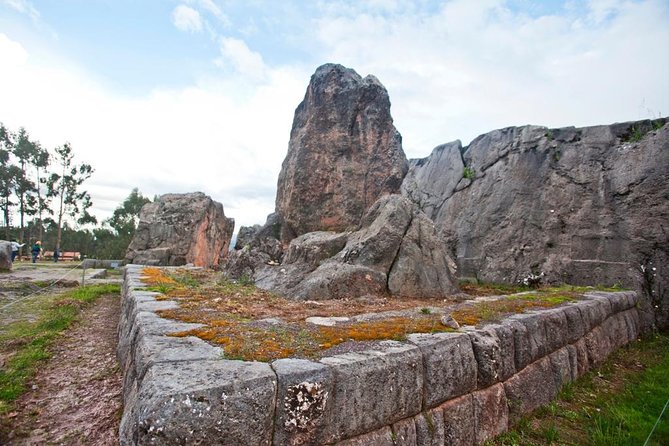
Q’enqo is about mystery, but the mystery is physical, not vague. The name is tied to the idea of a labyrinth or zigzag, and the temple is known for a crooked canal cut into the rock. Researchers have guessed at what it carried, including possibilities like holy water, chicha (corn beer), or blood.
The canal matters because it connects to theories about ritual use. One theory links it to death rituals, including ideas about embalmment or testing a person’s life-path based on what the liquid did. Another angle suggests sacrifice to sun, moon, and star gods.
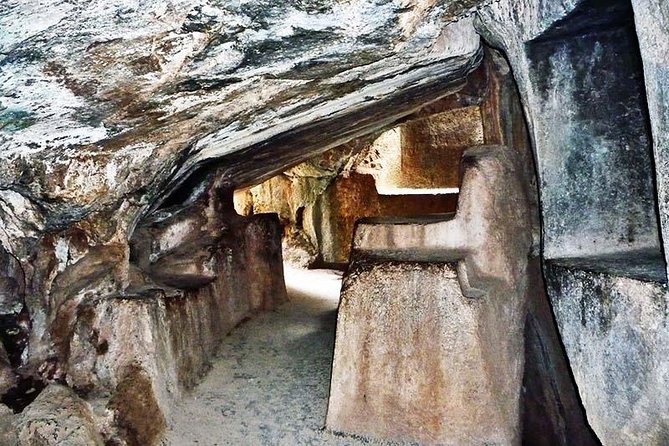
Then there is the standout structural fact: Q’enqo is described as carved out of a single massive monolith. You see man-made tunnels that connect with natural chambers, and the temple is stretched across a hillside, so you walk through different levels of rock and space.
One detail you can actually spot is a chamber with 19 small niches set up like an amphitheater. The function has been lost, but the design is specific enough that you’ll get the sense this was meant for watching, offering, or ritual movement.
Drawback to plan for: Q’enqo is not a “sit and read” site unless you have more time than a half-day offers. If you want to slow down and interpret every carving, you may want to return with a guide for a deeper look later.
Stop 3: Puka Pukara, Red Fort, uneven rock, and water-and-road traces
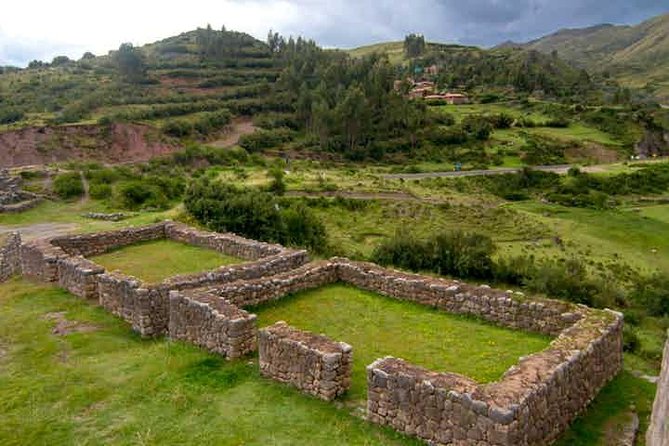
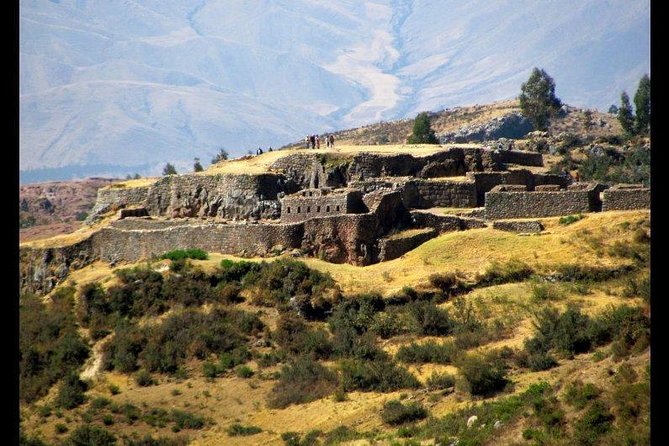
Puka Pukara is sometimes described with a “place with systems” feel. The name means red fort, linked to the earth tone and the location. Here you’ll see enclosures, inner squares, canals, aqueducts, baths, and an ancient road that connects to the larger Inca road network known as Qhapaq Ñan.
This stop’s “wow” factor is the construction texture. The rocks appear more uneven than at other Inca sites. The site also has a layered layout, built as three walls or levels.
A fun detail that helps you picture the planning: the first wall has a sinuous path that avoids cutting through protruding rocks. Instead of flattening everything, the builders worked with the natural shapes and shaped the route around them.
There are also rooms of different sizes arranged irregularly, which again suggests practical design rather than neat symmetry. At the west you can enter a trapezoidal high place via an outside staircase. Some descriptions mention that in pre-Hispanic times, this place may have functioned as both barracks and a tambo (hostel) for an entourage waiting to visit the baths at Tambomachay.
Finally, there’s a rumor about a chincana tunnel that may have linked Puka Pucara with Tambomachay. You probably will not solve that mystery today, but the idea adds a sense of connection between the sites.
If you start feeling winded, this is a good place to pause. The uneven terrain is part of the charm, but you do not need to speed. Let your lungs catch up, then enjoy the patterns in the stonework.
Stop 4: Tambomachay, the Inca Bath and a spring that kept running
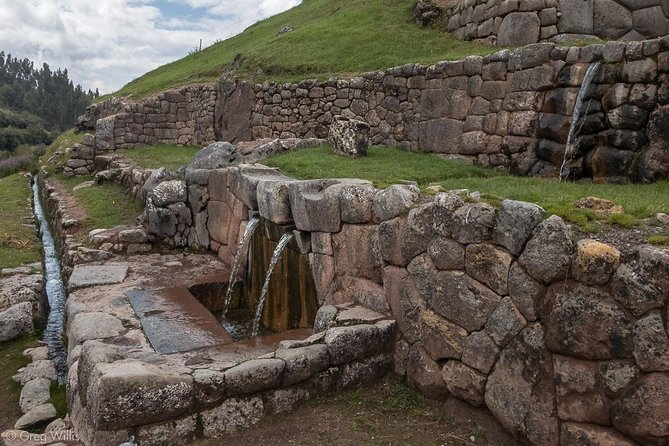
Tambomachay is often called El Baño del Inca, the Bath of the Inca. Its exact function is not nailed down, but the description is compelling: it sits about 4 miles north of Cusco at roughly 12,150 feet (3,700 meters). That altitude alone tells you the Incas were comfortable building important things in high places.
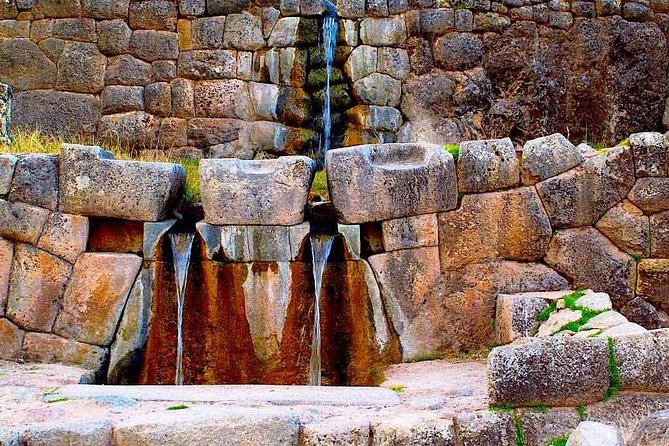
The structure is made of three stepped terraces with precise Inca stonework. Some retaining walls have trapezoidal niches. The bigger story is the water. The site is built over, or into, a natural spring that continuously feeds aqueducts, canals, and waterfalls across the terraces.
Why this matters: even if the “spa” theory is only part of the truth, the constant water would have been useful and powerful. Inca elites could take ceremonial pauses here. The sound and movement of water also makes the site feel quieter than the harsher fortress-and-ritual stops earlier in the day.
You can think of Tambomachay as a gentle landing: same altitude, different mood. After you’ve seen stone engineering and ritual architecture, this feels like a place designed for function and calm.
Time note: the stop is listed as about 45 minutes, which is short but enough if you focus on the terraces and water flow. If you want more, save it for a later return when you can linger.
Pace, comfort, and how to avoid a rushed-feeling day
This tour is set up to be efficient, which is great, but it can mean less time for long exploring. Some departures reportedly ran around 4 hours even though the schedule says about 6. That does not mean the tour is bad. It just means you should plan your expectations.
Here is what I recommend to make it feel good anyway:
- Wear comfortable walking shoes with grip.
- Bring a light layer. Cusco air cools fast, and sites sit at height.
- Take slow breaths and let your guide know if you need a slower pace.
- Use short photo targets. Pick one wall line at Sacsayhuaman, one chamber view at Q’enqo, one terrace perspective at Tambomachay.
One review detail that I really like: a guide did not push people to walk faster if they could not handle the stairs. You want that kind of care because altitude does not reward stubbornness.
If you are sensitive to timing, build a buffer for morning pickup. A few people described pickup delays of about 30 to 40 minutes. That is not something you can control, but you can control your day planning.
Who this tour is best for
I think this is a good fit if you:
- Want a fast way to see major Cusco-region Inca sites without planning your own transport
- Prefer a small group setting over crowded buses
- Like guided context, especially for places with unanswered mysteries like Q’enqo
- Want a tour that blends big stone engineering with ritual and water features
It may be less ideal if you:
- Want hours and hours at each ruin to photograph slowly and read every panel
- Need a very strict start time with no wiggle room
- Have very limited mobility, because you will still do some walking and stairs depending on how you move
Should you book this Cusco four ruins half-day tour?
I’d book it if you want high value per hour. Four stops, transport included, and a group size capped at 15 makes it a practical way to get oriented around Cusco’s Inca sites. The focus on interpretation, plus bilingual guidance, helps you understand what you are looking at instead of just taking photos and guessing.
Skip or adjust expectations if you hate tight schedules. If you want deep lingering at one site, treat this as your highlights sampler, then plan a longer return to the one you love most.
If your altitude is still new, go in with a gentle plan. This tour works best when you move like a tourist, not like a speed runner.
FAQ
Which Inca sites are included on this tour?
You’ll visit Sacsayhuaman, Q’enqo, Puka Pukara, and Tambomachay.
How long is the tour?
The duration is listed as about 6 hours.
What is the group size limit?
The tour maximum is 15 travelers.
What does the price include?
Transport and a bilingual guide (English and Spanish) are included.
Are entrance fees included?
No. Entrance to Qorikancha is listed as PEN 20 per person, and entrance to sites is listed as PEN 70 per person.
What time does the tour start?
The start time is 10:00 am.
Where do you meet for the tour?
The meeting point is HEIDI TRAVEL EIRLC, Plateros 324, Cusco 08000, Peru.
Does the tour offer both English and Spanish?
Yes, the guide is bilingual in English and Spanish.
Can I cancel for a full refund?
Yes. You can cancel up to 24 hours in advance for a full refund.
Recently reviewed around Cusco
- Cusco Cooking Class by ChocoMuseo in Cusco★ 5.0 · 29 reviews
- ATV Adventure to Moray and Maras Salt Mines – Half Day★ 4.5 · 29 reviews
- 1-day excursion to Machu Picchu from Cusco★ 5.0 · 29 reviews
- Private Tour Sacred Valley, Chinchero, Maras Moray, Ollantaytambo★ 5.0 · 29 reviews
- From Cusco: Humantay Lake with Breakfast and Buffet Lunch★ 4.5 · 29 reviews
- 4 Day – Inca Jungle to Machu Picchu★ 5.0 · 29 reviews
- 2-Day Machu Picchu Tour by Train from Cusco★ 4.5 · 29 reviews
- 2-Day Sacred Valley and Machu Picchu Tour By Train★ 4.5 · 29 reviews
City Tours, compared.
Lima Half-Day City Walking Tour (Small Groups)
Read our review →
Half-Day City Tour with Sacsayhuaman and Q’enco
Read our review →
City Tour Panoramic Bus Departure From Larcomar
Read our review →
City Tour Cusco Qoricancha Sacsayhuaman y Tambomachay
Read our review →
Lima’s lively Heritage: Exploring the City’s Landmarks Half-day
Read our review →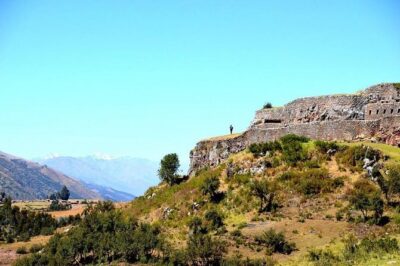
Sightseeing Tour of the City on an Open-Top Bus
Read our review →
Lima City, Central Market & Catacombs Tour (Pick-up & Drop Off)
Read our review →Browse the lists this tour appears in