
Reviewed · QORIKANCHA
Cusco Half Day Tour: Cathedral, Qorikancha & 4 Inca Ruins
Cusco can feel like sensory overload on day one, so I like tours that make smart connections fast. This half-day route pulls you into the layers of Cusco, from Spanish churches built on Inca foundations to huge Inca stoneworks, plus a look at how the Incas treated water and ritual space.
Two things I really like: you get transport plus a bilingual guide (English and Spanish), and the plan is paced to work as a first-day introduction, not a full endurance march. I also like that you hit Qorikancha and Sacsayhuaman, two places that make the Inca-Spanish story in Cusco feel real and physical.
One thing to consider: the tour language can depend on your group. In one experience I saw, the guide Beto was great but the day ran fully in Spanish, so if you are relying on English details, it is worth asking what languages your group will use that day.
Key points that make this tour worth your time
- A tight circuit of six major sites in about 5 hours, with a mix of walking and driving so you do not burn out.
- Cusco Cathedral sits on Inca palace foundations, showing how Spanish builders literally reused sacred ground.
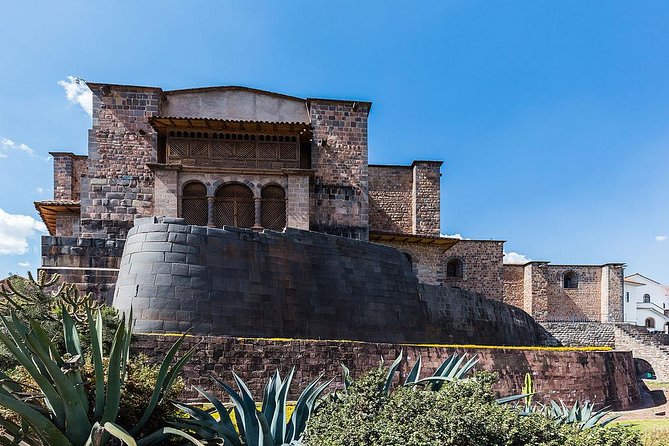
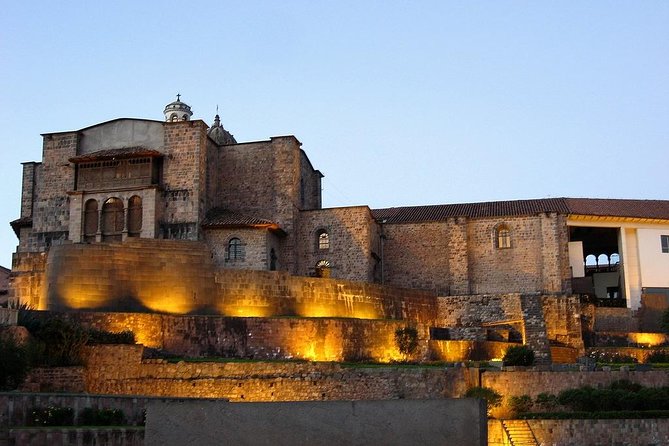
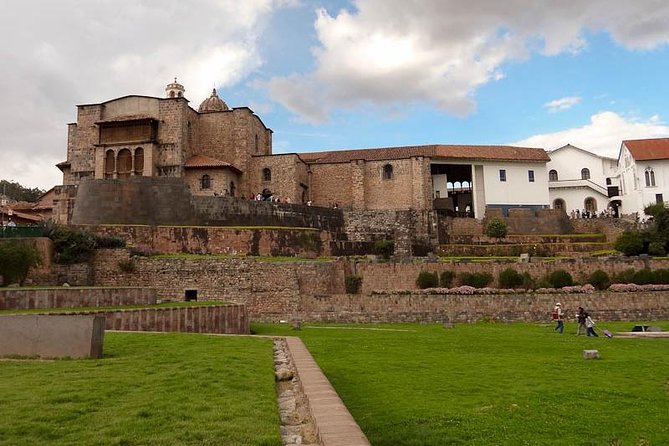
- Qorikancha is the clearest Inca-Hispanic fusion you can see in Cusco, with the Sun Temple layered under later religious buildings.
- Sacsayhuaman’s stone engineering is the highlight for many people, with huge cut blocks and no mortar.
- Q’enqo adds the mystery factor, carved stone chambers and an unknown canal purpose that sparks questions.
- Puka Pukara is free, so you get extra sites value without extra ticket cost.
1:00 pm start, small group size, and how the pickup really works
This tour starts at 1:00 pm and runs about 5 hours. That timing can be a smart move if you just arrived in Cusco earlier that day, because you avoid the morning rush and you still get out in daylight.
The group cap is 15 travelers, which usually keeps things flexible when the sites get busy. You also get transport as part of the experience, so you are not stuck doing long taxi-hops on your own.
Pickup is offered from hotels in the historic centre of Cusco. One real-world snag I noticed in a day like this is that sometimes pickup and drop can end up at a central point rather than right at your hotel door, especially if your lodging is treated as outside their pickup zone. Before you go, confirm exactly where you will meet, and if you want the closest option, stick to places clearly within the historic centre.
More Qorikancha visits:
- Cusco City Sightseeing, San Pedro Market, Cathedral and Qorikancha Temple
★ 4.5 · 139 reviews - Private Cusco Walking Tour: Inca Museum, Qorikancha and San Pedro Market
★ 5.0 · 15 reviews - Qorikancha and Four Ruins Cuckoo City Tour
★ 5.0 · 14 reviews
Cusco Cathedral: Spanish power built over Inca sacred ground
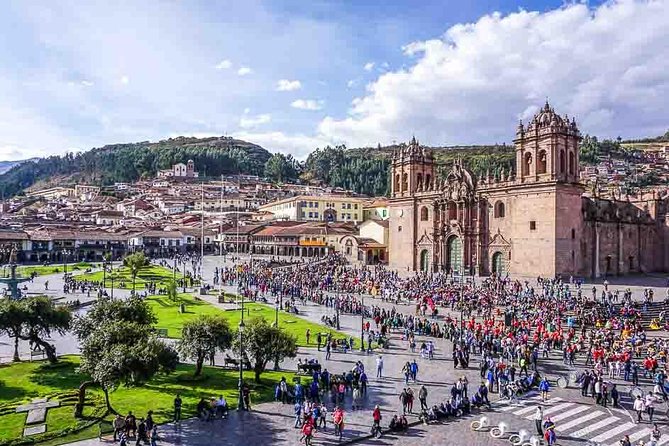
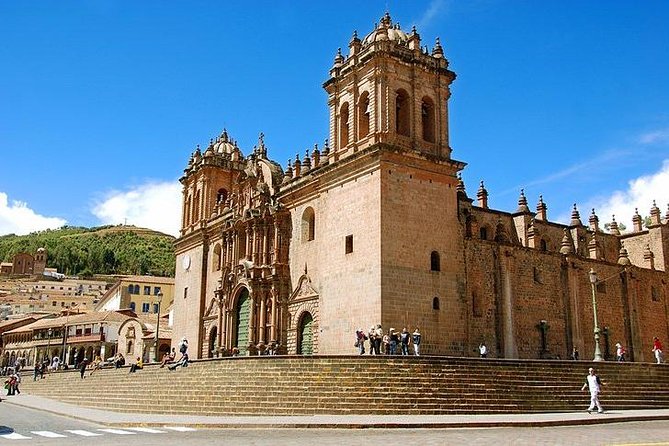
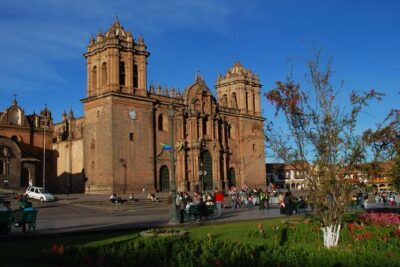
Cusco’s Plaza de Armas is the heart of the city, and the Cathedral Basilica of the Assumption puts you right in the middle of the story. This stop is listed at about 1 hour, and the ticket for the Cathedral is not included.
Here is what makes it more than just another church. The Cathedral was built using the foundations of an Inca sacred site called kiswarkancha, which had acted as the palace of Viracocha’s kingdom ruler area long before the Spanish arrived. The goal of the placement was overt: remove Inca religion from that space and replace it with Spanish Catholic Christianity.
The architecture is designed in a Latin cross shape, but the deeper hook is the “what sits beneath” feeling. The Spanish used Inca labor to build it because so much of the local population was Quechua Inca descent at the time. That means the building is not only Spanish, it is also stitched into the Inca workforce and Inca-built groundwork.
What to watch for: spend a few minutes just orienting yourself in the plaza before you go in. The Cathedral is part of a set of churches around the square, and once you see how the buildings frame the same public space, the whole Spanish takeover strategy makes more sense.
Potential drawback: the Cathedral can move slower than you expect if you stop often for photos and details. On at least one day, the tour ran longer than the original plan, and this is the kind of stop where extra minutes can quietly add up.
Qorikancha: the Sun Temple fused with Santo Domingo gold and stone
Next is Qorikancha (also spelled Koricancha). This stop also takes about 1 hour and has a separate entry fee that is not included. The listed cost for Qorikancha is 20 soles, shown as about $5.60 per person.
If you want the best visual shorthand for Inca and Spanish blending, this is it. Qorikancha is the Sun Temple remains used as foundations for the Santo Domingo church and convent. So you are not looking at two unrelated periods, you are looking at one period layered over the other.
What you will notice fast is the precision and the stonework. Inca stones are famous for their tight fit, but here you also get the “angle obsession.” Some stones have over 30 angles, and one block is listed as having 24 angles and 6 sides. It is the kind of detail that makes you want to step closer, then closer again.
Inside, the walls in many chambers have coverage described as gold and silver leaf. There are also ceremonial niche holes connected to the winter solstice in low relief. In the lower part of the complex, you can see fountains and gardens where conquered tribes arrived to deliver offerings.
At the top level, the site’s inner sanctum was reserved for the highest authorities of the time, and it drew people from across the empire who wanted to worship and pay tribute to Tahuantinsuyo gods.
Value tip: this stop is one of the most visually impressive in the half-day loop, so if you are considering skipping something later because time is tight, do not cut Qorikancha. It is also a helpful anchor for understanding the other sites you will see that afternoon.
Sacsayhuamán: the 12-square-mile fortress and the 100-ton stone puzzle
Sacsayhuamán is where your brain stops thinking in “normal building materials.” The stop is listed at about 1 hour and the ticket is not included.
Location matters here. It is about 1.25 miles from Cusco’s square, at an altitude of 12,140 feet, and it sits with mountain backdrops mentioned as Ausangate, Pachatusán, and Sencca.
The scale is also big in plain terms: the site covers 12 square miles. It is not just one structure either. The area includes multiple archaeological and architectural sites, named as Kolcampata, Qenqo Grande and Qenqo Chico, Laqo, Kusilluchayoq, Lanlakuyuq, Llaullipata, Chacan, Pukapukara, and Tambomachay.
Now for the engineering flex. It is believed that around 20,000 men worked to cut and transport gigantic stones from Huaqoto and Rumiqolqa to build this fortress. The walls are made of megalithic stone blocks listed as weighing 99 to 138 tons, fitted and joined with no mortar.
What to do on site: take a slow walk along one section of the wall and watch how the stone edges create repeating patterns. Your eyes start to understand the logic of the fitting, even if you cannot trace every block.
Possible drawback: at this altitude, even a simple walking pace can feel harder than you expect. If you are arriving from lower altitude or you have had a rough first day, take your time. This is not a place to sprint for views.
A few more Cusco days worth comparing
- Classic Inca Trail Trek 4D/3N to Machu Picchu (Group Service)
★ 5.0 · 8,653 reviews - Cusco: Rainbow Mountain and Red Valley Day Trip with Meals
★ 4.9 · 4,893 reviews - Machu Picchu: 4-Day Inca Trail Trek with Panoramic Train Ride
★ 5.0 · 4,568 reviews - Salkantay Classic Trek 5 Days from Cusco
★ 5.0 · 4,062 reviews
Q’enqo: labyrinth tunnels, the crooked canal, and the ritual mystery
Q’enqo is listed as about 1 hour and is about 15 minutes from Cusco. The ticket is not included.
Q’enqo means labyrinth or zig-zag in Quechua, and the name fits. The temple centers on a crooked canal cut out of rock. Researchers say the canal carried some kind of liquid, but the purpose is uncertain. Hypotheses include holy water, chicha (corn beer), or blood. The range of theories points toward death rituals, including ideas like embalming or testing whether someone had lived a good life, based on how liquid flowed.
Then there is the structure itself. Q’enqo is described as being carved out of a single monolith, with man-made tunnels and natural chambers stitched together across a hillside. One chamber includes 19 small niches and is set up as an amphitheater.
The purpose of that theater space is lost over time, but the working thought is that it supported sacrifice to sun, moon, and star deities.
Why this stop is so good: it gives you a different kind of “Inca greatness.” Sacsayhuamán is about massive building. Q’enqo is about hidden spaces and ritual design you can walk through.
How to enjoy it: be open to uncertainty here. The site is powerful partly because it cannot be fully explained, and the stone labyrinth makes you feel like you are stepping into a function that mattered to people deeply.
Tambomachay: Inca baths and the ongoing water story
Tambomachay is the water stop, listed at about 30 minutes with an included ticket? It says admission ticket not included, so assume you need the right coverage for it.
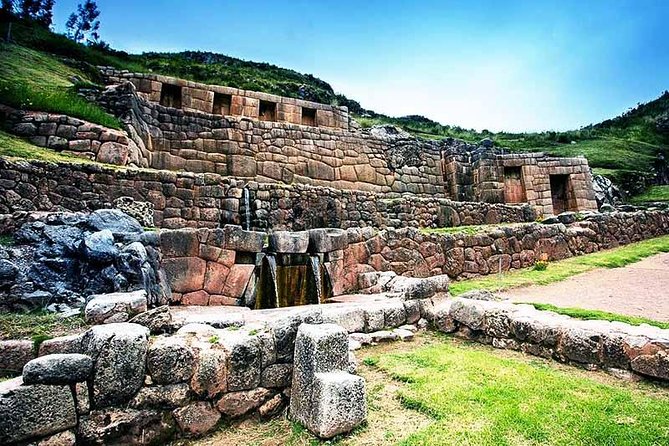
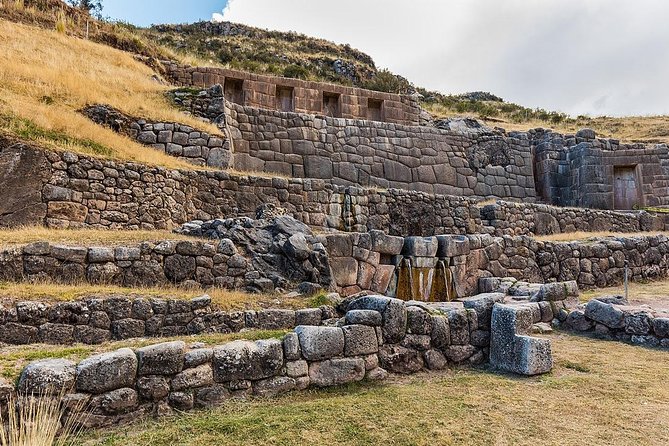
It sits 4.5 miles northeast of Cusco at 12,350 feet. This is described as an Inca bath built with precisely cut stones, and water from nearby streams runs through aqueducts and small cascades.
The connection is explicit. Tambomachay is tied to veneration of water, a big part of Andean worldview. You get two aqueducts with artistic engravings in rock that transport and supply a constant flow of clean water all year round. The name Tambomachay is given as meaning place of rest, which leads experts to believe the Incas came here to rest.
The practical upside: the site is also described as one of the best hiking routes, so even if your stop time is short, you get a sense of movement and scenery instead of only standing and staring.
Small caution: with only 30 minutes, keep your camera ready but do not spend it all at the first angle. Wait a minute and walk, because the water features and the flow lines are easier to understand after you move a bit.
Puka Pukara: the tambo-like fortress vibe, and why free matters
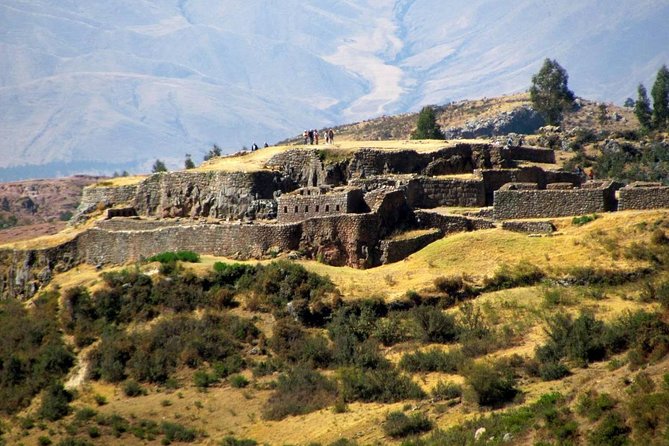
Puka Pukara is last on this circuit and is listed for about 30 minutes. The ticket status here is clear: admission is free.
This complex includes halls, inner plazas, aqueducts, watchtowers, and paths. It is described as playing the role of a tambo, a place of rest and lodging. There is also a legend: when the Inca visited Tambomachay, he was accompanied by a large retinue that stayed at Puka Pukara.
Its fortified appearance is why it is often called a fortress. Even if you do not know all the history behind the names, the structure reads like a functional base for people traveling with authority.
Why I like putting it at the end: it gives you a final “why this mattered” feeling that complements the big show stops. Plus, getting a free site on a half-day schedule is just good value.
Price and value: what you pay, what you still need
The tour price is $27.00 per person, and it includes transport plus a bi-lingual guide (English and Spanish), with pickup offered in the historic centre. It also includes a mobile ticket.
What is not included matters, because Qorikancha and several other sites are ticketed. The tour lists:
- Qorikancha entrance: 20 soles (about $5.60 per person)
- Entrance to sites using the tourist ticket: 70 soles for 2 days or 130 soles for 10 days
Here is the practical logic you can use. If you plan to visit multiple ticketed sites during your time in Cusco, the multi-day tourist ticket can save money compared to separate entries. If you only care about a handful of stops, you might end up buying less through the pass. The key is to avoid the wrong system at the wrong time.
One caution I learned from a similar day: it is easy to be guided into buying the ticket in the simplest place you find it, even if the multi-day option is the smarter deal. Before you pay, ask which ticket covers which sites on your route. That one question can keep you from overspending.
Also remember this tour is about 5 hours, so you are paying for a coordinated sequence. If you tried to do this independently, you would likely spend time figuring out transport and entry coverage on your own.
Who should book this, and who might rethink it
This tour is a strong fit for:
- First-time visitors who want a high-impact Cusco orientation without committing to a full day
- People who like seeing the contrast between Inca architecture and Spanish Catholic buildings
- Travelers who want transport and a guide handled for them, especially during a shorter stay
It might be less ideal if:
- You need very detailed English-only narration at every stop. The tour is offered in English, but group language can shift depending on who is booked.
- You get tired easily at altitude. Several stops are above 12,000 feet, so pacing matters.
If you want a smooth day, this is also a good choice to pair with later plans. It gives you names and visual anchors so the rest of Cusco makes more sense.
Should you book the Cusco Cathedral, Qorikancha and 4 Inca Ruins half-day tour?
Yes, if you want an efficient Cusco sampler that actually shows you how the city was built on top of itself. The combination of Cusco Cathedral over kiswarkancha, Qorikancha’s Inca-Spanish fusion, and the megalithic ambition at Sacsayhuamán gives you three different angles on why Cusco matters.
Book it if you like structure, you want a guide to connect the dots, and you are okay managing tickets separately. For the best value, plan your entry strategy ahead of time so you do not pay twice or buy an option that is not the best fit for your schedule.
FAQ
What time does the tour start, and how long is it?
The tour starts at 1:00 pm and runs about 5 hours.
Is pickup included, and where do they pick you up?
Pickup is offered from hotels within the historic centre of Cusco. The service does not include pickup from private residences or hotels outside the historic centre.
Are entrance tickets included in the tour price?
No. Entrance to Qorikancha and other sites is not included. The tour price covers transport and the guide.
Do I need separate tickets for each site?
Some entrances are listed separately, like Qorikancha (20 soles). Other sites can be covered with the Cusco tourist ticket, listed as 70 soles for 2 days or 130 soles for 10 days.
What language is the guide?
The tour includes a bi-lingual guide in English and Spanish. The tour is offered in English.
How big is the group?
The maximum group size is 15 travelers.
Is Puka Pukara included for free?
Yes. Puka Pukara is listed as admission ticket free.
What is the cancellation policy?
Free cancellation is offered up to 24 hours before the experience start time for a full refund. If you cancel within 24 hours of the start time, the amount paid is not refunded.
Recently reviewed around Cusco
- 6-Day ||All Included|| Excursion – MachuPichu & Rainbow Mountain-Humantay Lake★ 4.5 · 8 reviews
- Horseback Riding thru the Mountains of Cusco★ 5.0 · 8 reviews
- Cuzco City Tour and Archaeological Ruins in Half Day★ 5.0 · 8 reviews
- Full Day – Rainbow Mountain tour – Group Service★ 5.0 · 8 reviews
- Half Day Tour in Cusco: Exploring the City and Four Ruins★ 4.5 · 8 reviews
- Cusco 4 Days Machu Picchu and Sacred Valley | All included★ 5.0 · 8 reviews
- Machu Picchu and Sacred Valley 2 Day Tour★ 5.0 · 8 reviews
- Walking Tour in Legendary & Historical Cusco City★ 4.5 · 8 reviews
Qorikancha, compared.
Cusco City Sightseeing, San Pedro Market, Cathedral and Qorikancha Temple
Read our review →
Private Cusco Walking Tour: Inca Museum, Qorikancha and San Pedro Market
Read our review →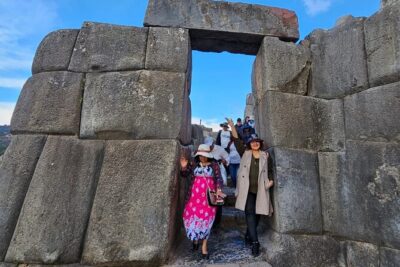
Browse the lists this tour appears in