
Reviewed · CITY TOURS
City Tour in Cusco
Cusco in half a day is interesting because this route strings together big ideas, Catholic Cusco and Inca Cusco, without making you sprint. I like that it keeps a small group size and runs with pickup from the Historic Center, so you spend less time figuring out transport and more time looking closely. One thing to consider: the main sights use separate tickets, so the $12.80 base price can grow once you add entrances.
The lineup also hits more than the usual highlight photos. I especially like the mix of places with clear purpose, like Sacsayhuaman as an Inca fortress and Tambomachay as a working water site, where you can still see the aqueduct logic. If you are short on cash for tickets, or you hate ticket lines, you’ll want to plan ahead.
Key highlights you’ll feel on this tour
- Pickup in Cusco’s Historic Center with authorized transportation, so you can start fast
- English or Spanish guidance from a bilingual professional guide
- Inca sites with real function, from message runners at Puka Pukara to water worship at Tambomachay
- Stops timed well for an early arrival day, with a 5-hour overall loop
- Small group cap of 18 travelers, which usually means easier pacing
- Most admissions are extra, but Puka Pukara is free, which helps
A tight Cusco intro with pickup and a small group (about 5 hours)
This tour is built for people who want a strong first impression of Cusco without overplanning. You get picked up from your accommodation in the Historic Center area, then you roll to multiple major stops on comfortable, authorized tourist transportation. The total time is about 5 hours, so it fits nicely if you just landed, if you are pacing yourself for altitude, or if you want a day that does not swallow your schedule.
The best practical advantage here is how the day is structured. With a maximum of 18 travelers, it is not a huge crowd situation. That matters because Cusco’s streets can be slow, and Inca stone sites usually reward you for taking a minute to look instead of being rushed like a conveyor belt. You also get a professional bilingual guide (Spanish and English). If you speak English, you will still be in a group that can understand explanations clearly, and if you prefer Spanish, the guide can switch gears.
You should plan around weather. The tour info specifically calls for a waterproof jacket or poncho for rain, plus sun protection. Cusco weather can change quickly, and because you are outdoors across several stops, being ready makes the day feel easier. You also get water and snacks, which is a smart touch for a half-day when you might not want to hunt for food between sites.
So yes, you are seeing a lot in one go, but it is not a drive-by. The stops are long enough for you to get oriented and understand what you are looking at.
More City Tours in Cusco
- Cusco: Half-Day City Tour with Sacsayhuaman and Q’enco
★ 4.6 · 1,129 reviews - City Tour Cusco Qoricancha Sacsayhuaman y Tambomachay
★ 4.7 · 617 reviews - Cusco City Tour Four Ruins in Half-Day
★ 5.0 · 530 reviews
Cusco Cathedral and Qorikancha: three styles and the sun god Inti
Cusco Cathedral is a huge first stop because it sets the tone for what you will see everywhere else. The Cathedral is known for mixing Gothic, Baroque, and Renaissance styles, and that blend is not just decorative. It is a clue to what happened to Cusco after the Spanish arrived, where Catholic power layered itself onto an Inca city. Expect to spend about 1 hour there. Admission is not included, so you’ll want to budget for that extra ticket.
When you step out after the Cathedral, Qorikancha (also spelled Coricancha in many places) keeps the story moving in a totally different direction. In the Inca period, Qorikancha was a place of worship to Inti, the sun god. That is the detail that changes how you look at ruins and stone. This is not just an old wall you point at. It is a sacred site with a specific religious purpose.
You’ll also spend about 1 hour at Qorikancha. Admission is not included, and the cost listed for Qorikancha is S/. 20.00 soles per person. In practice, this stop is one of the easiest to enjoy because it often feels like the transition point between the Spanish and Inca narratives. You see the Catholic era upstairs in your imagination, then you hear the Inca era story right after, and the whole city starts to make more sense.
Practical tip: Wear shoes you trust. You will be stopping, standing, and walking at uneven entrances around central Cusco sights.
Sacsayhuaman and Q’enqo: UNESCO fortress and Spanish-resistant carvings
Sacsayhuaman is the stop that many people remember as soon as they leave the bus. It is an emblematic Inca building, close to the city center, and it is a UNESCO World Heritage site. Built by Inca Pachacutec in the 15th century, it is also described as an immense fortress made of enormous stones. The big point here is not just the scale, it is the mystery. The way those stones were transported and worked is still a puzzle, and your guide can help you focus on what to notice instead of getting lost in vague awe.
You’ll have about 50 minutes at Sacsayhuaman. Admission is not included, and in this tour you’ll likely need the tourist ticket for archaeological sites (PARTIAL BTC), which is listed as S/. 70 soles per person.
Then the tour moves to Q’enqo, where the mood shifts from fortress to ritual landscape. What remains today includes carved rocks that could not be destroyed by the Spanish. That single idea makes Q’enqo feel different. You are seeing stubborn stone, not a fully preserved site. Paths, aqueducts, enclosures, storage areas, and liturgical baths are only partially there now, but the carvings still carry the meaning.
Q’enqo is also tied to wealth and light. There is mention of a layer of gold that once illuminated the entire site. Even if you cannot picture the exact setup today, hearing that detail gives you a reason to look at the shape and placement of the rocks, not just at what is missing.
Time here is about 40 minutes, and admission is not included. Like Sacsayhuaman, this is one where the guide’s explanations can turn scattered features into a clearer story.
What I’d watch for: after you’ve seen Sacsayhuaman’s mass and scale, Q’enqo will feel more intimate and ceremonial. That contrast helps you understand that Inca architecture was not only about military power. It was also about ritual design, water, storage, and space for spiritual practice.
Puka Pukara and Tambomachay: messages, storage, and water worship
Puka Pukara (spelled as Pucapucara in the tour outline) brings you to an Inca checkpoint function. This site had military purposes and served as a checkpoint for entering Cusco, described as the capital of the empire. But it also had a second job that is easy to overlook if you only think of ruins as landmarks.
It acted as a tambo, a resting place for the chaskis, the message runners who carried messages or packages town to town. The hillside setting adds a practical twist. Dehydrated products were stored there, and thanks to strong winds, the food could last longer. The guide’s framing makes the site feel like an ancient logistics hub, almost like a natural refrigerator system.
You’ll spend about 40 minutes here, and the best surprise is that admission is free. So if you are trying to control costs, this is the stop that helps the math.
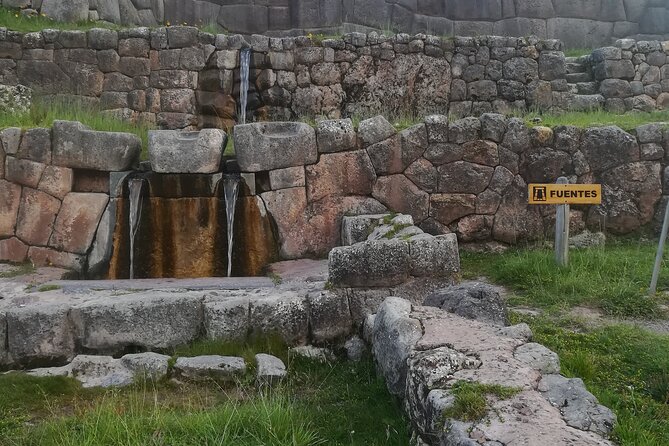
Finally, you end at Tambomachay, a center of worship to water. This is one of the tour stops where you can actually connect architecture to nature. The Incas prayed for rain to nourish crops, and that is why Tambomachay is sometimes called the Temple of Fertility. The aqueducts still carry crystal-clear water, which makes the place more than just scenery.
Tambomachay includes a clever water setup: water is channeled from a small waterfall and split into two cascades. There is also legend attached to the water and fertility. It says if women drink from the waters, they can conceive easily, and the side matters for male or female children. Whether you treat that as folklore or cultural belief, the story helps you see the site as intentionally designed, not random.
Time is about 50 minutes, and admission is not included. Access also mattered here. The tour info says access was restricted, with facilities allowed only for the Inca and his entourage.
A few more Cusco days worth comparing
- Classic Inca Trail Trek 4D/3N to Machu Picchu (Group Service)
★ 5.0 · 8,653 reviews - Cusco: Rainbow Mountain and Red Valley Day Trip with Meals
★ 4.9 · 4,893 reviews - Machu Picchu: 4-Day Inca Trail Trek with Panoramic Train Ride
★ 5.0 · 4,568 reviews - Salkantay Classic Trek 5 Days from Cusco
★ 5.0 · 4,062 reviews
Price and ticket math: what $12.80 turns into
The headline price is $12.80 per person for about 5 hours, and that base includes more than just a driver. You get pickup from the Historic Center, a bilingual guide, and comfortable authorized transportation. That is real value in Cusco, where getting from one major site to another can cost time and stress if you DIY.
But you should plan your budget around the separate admissions. Here is what the tour data lists as not included:
- Qorikancha: S/. 20.00 soles per person
- Cusco Cathedral: S/. 40.00 soles per person
- Archaeological tourist ticket (PARTIAL BTC): S/. 70.00 soles per person
- Tips and souvenirs are also not included
It is worth saying the quiet part out loud: your final spend depends on which stops are covered by that partial BTC ticket and how you handle each entrance. Still, it is safe to expect the total cost will be meaningfully more than the $12.80 headline once you add entrances. On the plus side, you are visiting multiple major sites in one coordinated half day, with transport and guide time included.
Also note the helpful offset: Puka Pukara is free on this route. So at least one stop does not add to your ticket load.
If you are someone who likes to see big sites with minimal friction, this kind of half-day tour usually wins. If you are trying to minimize every extra charge, you’ll need to do some ticket planning before you go.
What it feels like with a bilingual guide like Richard
A tour like this lives or dies on the guide. The info here says you get a professional bilingual guide, Spanish and English, and the pacing is designed for about six stops. That setup makes explanations easier because you are not jumping between totally unrelated themes every five minutes.
In one especially memorable case, the guide Richard stood out for making the day feel enjoyable even if someone arrived tired. His approach was described as excellent knowledge plus entertaining mannerisms, and the practical benefit was even bigger than the storytelling. He also helped with directions to the next destination afterward. That is the kind of small, real-world help that makes a tour feel like it supports your whole trip, not just the time on the clock.
Now, you should not assume you will always get Richard. But you can take the broader lesson: choose a tour where the guide actively connects the dots between sites. With Cusco, that connection is everything. Cathedral to sun worship to fortress engineering to water ritual, it could easily become a random list unless someone helps you read the city.
With a group cap of 18, you are also more likely to get questions answered without the whole group waiting in silence. It is a better format for travelers who like to understand what they are seeing.
Before you start, take advantage of the tour’s included items for comfort. The poncho suggestion and the sunscreen recommendation matter because you will be outside across several stops. Also, having a sun hat and sunscreen SPF 35 can turn what could feel like a harsh day into a manageable one.
Should you book this Cusco city tour?
Book it if you want a smart, efficient Cusco sampler with pickup, a bilingual guide, and multiple major stops in one half-day. It is especially worth it if you are arriving in town and you want to get your bearings fast, since the day is structured and includes water and snacks.
Skip or reconsider if ticket costs will make you uneasy. Since several entrances are not included, your final price will be higher than the $12.80 headline. Also, if you prefer a slower, more in-depth ruin experience, you might find five or six stops in one day a bit packed.
My take: this tour is a strong value when you want guidance plus logistics handled. If you show up prepared with a poncho, sun protection, and the mindset that this is a curated overview, you’ll walk away with a much clearer picture of Cusco as both an Inca and a Catholic city.
FAQ
How long is the Cusco city tour?
It runs for about 5 hours.
What’s included in the price?
Pickup from your accommodation in Cusco’s Historic Center, a professional bilingual guide (Spanish and English), and comfortable authorized tourist transportation are included.
Do I need tickets for the stops?
Yes. Entrance ticket costs are not included for Qorikancha, Cusco Cathedral, and archaeological sites covered by the tourist ticket (PARTIAL BTC). Pucapucara is listed as free.
Where does pickup take place?
Pickup is offered from your accommodation located in Cusco’s Historic Center. All pick-ups are around the city center.
Is the tour offered in English?
Yes, it is offered in English.
What should I bring for the day?
The tour info recommends a waterproof jacket or poncho for rain, plus a sun hat and sun protection cream (factor 35 recommended). Water and snacks are provided.
Is free cancellation available?
Yes. You can cancel for a full refund up to 24 hours in advance of the experience start time. If you cancel less than 24 hours before, the amount paid is not refunded.
Recently reviewed around Cusco
- 6-Day ||All Included|| Excursion – MachuPichu & Rainbow Mountain-Humantay Lake★ 4.5 · 8 reviews
- Horseback Riding thru the Mountains of Cusco★ 5.0 · 8 reviews
- Cuzco City Tour and Archaeological Ruins in Half Day★ 5.0 · 8 reviews
- Full Day – Rainbow Mountain tour – Group Service★ 5.0 · 8 reviews
- Half Day Tour in Cusco: Exploring the City and Four Ruins★ 4.5 · 8 reviews
- Machu Picchu and Sacred Valley 2 Day Tour★ 5.0 · 8 reviews
- Cusco 4 Days Machu Picchu and Sacred Valley | All included★ 5.0 · 8 reviews
- Walking Tour in Legendary & Historical Cusco City★ 4.5 · 8 reviews
City Tours, compared.
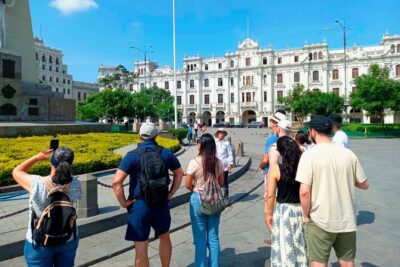
Lima Half-Day City Walking Tour (Small Groups)
Read our review →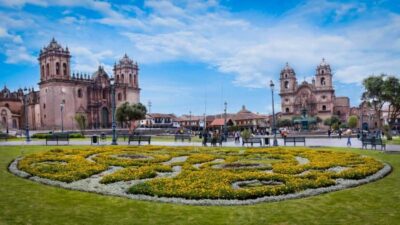
Half-Day City Tour with Sacsayhuaman and Q’enco
Read our review →
City Tour Panoramic Bus Departure From Larcomar
Read our review →
City Tour Cusco Qoricancha Sacsayhuaman y Tambomachay
Read our review →
Lima’s lively Heritage: Exploring the City’s Landmarks Half-day
Read our review →
Sightseeing Tour of the City on an Open-Top Bus
Read our review →
Lima City, Central Market & Catacombs Tour (Pick-up & Drop Off)
Read our review →Browse the lists this tour appears in