
Reviewed · HUARAZ TOURS
Climbing Mateo – Your first 5 thousand
This is a practical, exciting way to chase your first 5,000-meter summit in Peru, on the approachable peak called Mateo inside Huascarán National Park. I love the private setup, because you get close, hands-on coaching instead of getting lost in a big group. The main drawback to plan for is weather, since a cloudy day can make a snow climb feel longer and more technical for a first-timer.
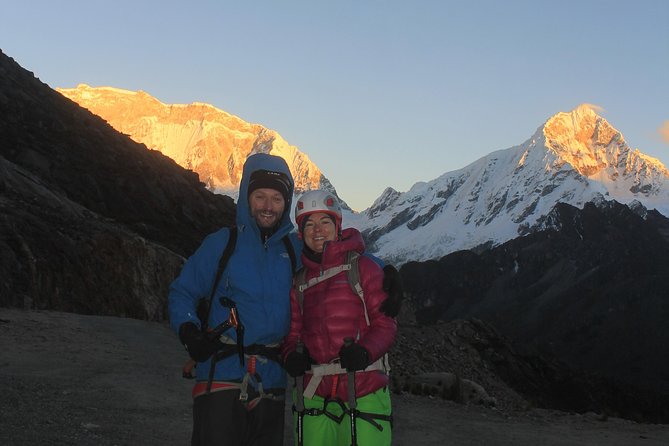
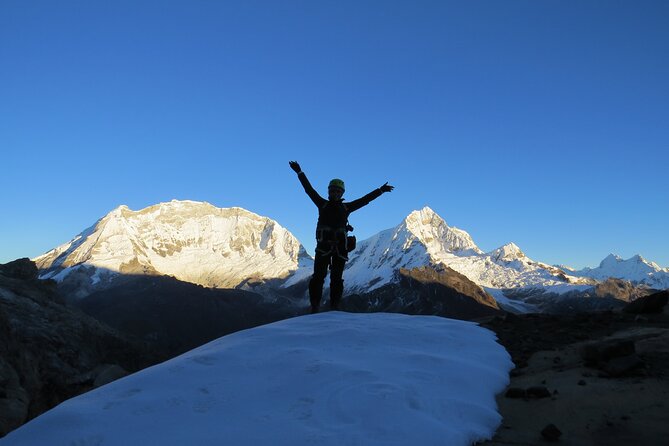
You start early from Huaraz, pushing out before dawn at 3:00 am, aiming for a morning summit and sunrise light over Chopicalqui, Contrahierbas, Huascarán, and Ulta. You also get the core gear for the job, so you are not scrambling at the last minute to rent crampons and an ice axe. Just know it is cold, and the schedule does not care if you slept badly.
The hike is clearly paced: about an hour on a moraine approach, then about 1 hour 30 minutes of ascent toward the summit. I like that meals are included during the climb, with a vegetarian option, because altitude plus hunger is a rough combo. If you are not in decent shape, the physical part will remind you fast.
Key things I’d pay attention to
- Sunrise-first timing: a 3:00 am start to reach the summit in the morning
- Moraine to summit rhythm: roughly 1 hour of moraine walking, then 1.5 hours of climbing
- Gear is handled: crampons, harness, helmet, and ice axe are provided for you
- Ropes and anchors come too: group technical equipment like ropes and ice screws are included
- Vegetarian meal included: you eat while you are out there, not after you are done
- Guides with real coaching: even when the day is tough, guides like Pablo focus on safety and progress
Why Huaraz and Mateo are a smart first high-altitude goal
Huaraz has a special pull for mountaineers because it sits close to serious peaks, but it still gives you a realistic pathway into snow travel. Mateo fits that idea: it is described as accessible for people who want to realize the dream of their first 5,000-meter experience. You are not signing up for weeks of logistics, training camps, or endless complicated planning. You are signing up for one focused, structured day that teaches you how a 5,000er feels.
Mateo is not just a random summit, either. The route is within Huascarán National Park, in the Quebrada Ulta area near Carhuaz, and it sits in the Contrahierbas Sur range (the Mateo designation). That matters because the park setting shapes everything: the snow conditions, the views, and the early-morning push.
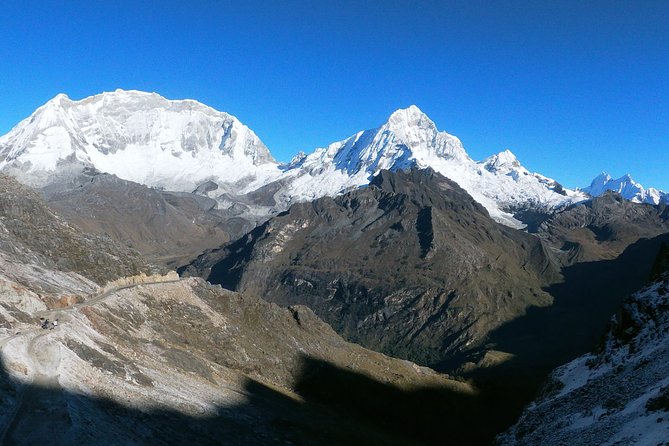
And the views are a big part of the payoff. The goal is to catch the sunrise from high enough to see a chain of snowy giants, including Chopicalqui, Contrahierbas, Huascarán, and Ulta. If the skies cooperate, it can feel like you are standing in a huge amphitheater of peaks. If the skies do not cooperate, you still get the accomplishment, the training value, and the sense of being out in the real Andes, not on a postcard.
A few more Huaraz days worth comparing
- From Huaraz: Hike to the Lagoon 69
★ 4.4 · 121 reviews - From Huaraz: Tour to the Pastoruri Glacier and Puya Raimondi
★ 4.3 · 68 reviews - Tour Climbing Nevado Mateo | Your First 5,150 m Summit | 12 Hours
★ 5.0 · 40 reviews
The day at a glance: 3:00 am start, moraine walk, summit push
This is a full day that starts before most people have even considered breakfast. The meet time is 3:00 am, which means your success on Mateo starts the night before. You want to sleep well, have your layers ready, and be calm about being awake so early. Yes, it is early. No, you do not get to negotiate with physics.
Once the day begins, you travel from Huaraz toward the mountain and park area. The climb then moves through two clear phases.
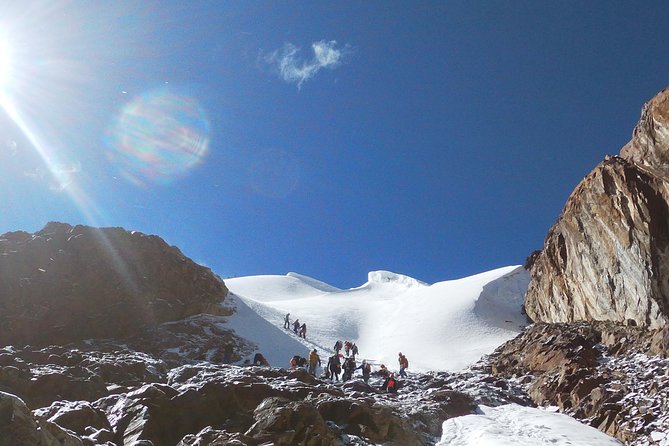
First comes the approach: about 1 hour hiking a moraine. Moraines are basically jumbled glacial debris, and they can feel uneven and slow underfoot. For a first-time snow climber, this is a good warm-up, because it helps you settle into movement, pacing, and footing before the real technical climbing begins.
Then the ascent: about 1 hour 30 minutes to reach the summit. This is where your crampons, ice axe, and harness system come into play. The point is not to sprint. The point is controlled steps, steady breathing, and good technique. For first-timers, the mental shift is often the hardest part: you are trading normal hiking rhythm for a rhythm that matches snow traction and movement on steeper ground.
You are aiming to reach the top during the morning, specifically to take advantage of sunrise. That is a clear reason for the early start, and it also helps you understand why the tour is sensitive to weather. Clouds and fog can change visibility fast at these altitudes.
What the included gear and bilingual guide coaching really means
You get a certified mountain guide, and the service is listed in English and Spanish. That detail matters more than it sounds. Snow climbing instruction is not the place to guess at terminology. Knowing the guide can explain and adjust in your language helps you stay relaxed and safe.
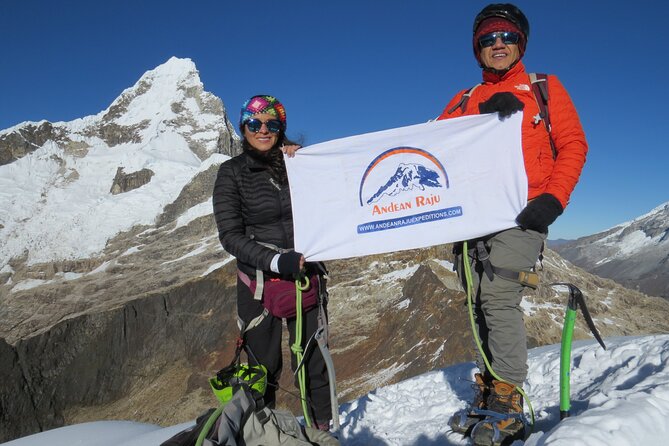
The bigger win is that you do not just get a guide. You also get the gear you need to move confidently on snow and ice. Your technical equipment for personal use includes crampons, harness, helmet, and an ice axe, plus mountain boots. That alone makes Mateo a smart first high-altitude choice, because buying or renting the full kit properly can get expensive and complicated.
For the technical part of the climb, you also get group equipment: ropes, an ice screw, snow stakes, carabiners, and other support tools. Even if you do not personally use every piece on every step, their presence changes how a guide manages risk. It means the day can adapt if conditions shift, and it means the guide is not improvising.
Meals during the climb are included, with a vegetarian option. This is not a small detail. On summit days, people tend to eat less because everything feels urgent. Having food provided helps you keep energy up without losing time hunting for lunch. And because it is integrated into the day, it also helps you stick to pacing.
One more thing I take seriously: the tour is private. That means the guide’s attention is on your group, not stretched across a line of people who are all moving at different speeds. A guide like Pablo, highlighted in one set of experiences, is described as focused on safety, preparation, and helping you reach your best potential. Even when weather is not ideal, the coaching approach is what keeps the day from feeling chaotic.
Views over Chopicalqui and the Contrahierbas Sur ranges, plus the cloudy-day reality
The planned reward is sunrise views over a big cluster of Andean peaks, including Chopicalqui, Contrahierbas, snowy Huascarán, and Ulta. That is exactly the kind of payoff you can feel in your bones after a cold start and careful climbing.
But I also like being honest about the cloudy-day problem. Snow climbs look beautiful in clear weather, but clouds happen. One of the most useful takeaways from real experience with this style of climb is that poor visibility can increase the effort for a first-timer. The route can feel less obvious. Timing matters more, because you cannot always rely on distant landmarks.
So how do you protect the experience when the day turns? You focus on what you can control:
- Stick to the guide’s movement cues.
- Keep your pace steady, not aggressive.
- Don’t let the lack of views push you into rushing.
The upside is that even with limited visibility, you are still training for your first 5,000er. You learn crampon movement, ice axe habits, and how to stay calm under pressure. In a practical sense, that is what you are paying for.
A different kind of day out of Huaraz:
- From Huaraz: Tour to Llanganuco Lakes (Chinancocha Lake)
★ 3.6 · 19 reviews - Huaraz: Laguna 69 | Cordillera Blanca | Hike to Lake 69
★ 4.5 · 9 reviews - Full Day to Rocotuyoc and Congelada Lagoons
★ 3.7 · 9 reviews - Ancash: Trekking to Paron Lagoon with Entrance | Full day|
★ 4.1 · 9 reviews
Price and value: what $120 covers, and what you still handle
At $120 per person, this climb is priced like a day where the work is all organized for you. And that is the key to value here: you are not just paying for a guide, you are paying for the whole structure, from transport to technical equipment.
Included value points are straightforward:
- Certified mountain guide (English, Spanish)
- Meals during the climb (vegetarian option available)
- Private transport
- Technical equipment for personal use (crampons, harness, ice axe, mountain boots, helmet)
- Group equipment (ropes, ice screw, snow stakes, carabiners, and more)
- Basic first aid kit
- Permanent and personalized assistance
That package can be more cost-effective than piecing things together yourself, especially if you are new and you would otherwise rent crampons or try to coordinate transport while also learning what you are actually doing.
What is not included is also important, because it affects your checklist and budget:
- Huascarán National Park entrance fee (S/. 30.00 Soles)
- Headlamp and sunglasses
- Appropriate clothing and personal medications
- Personal expenses
- Travel accident and health insurance
- Meals like breakfast, lunch, and dinner outside the climb window
I treat this as a “budget for preparedness” situation. You are paying for technical readiness. You still need to bring your comfort and safety basics, especially your lighting (a headlamp) and eye protection (sunglasses), because the climb starts at 3:00 am and you will be in snow conditions.
Transport, private timing, and how to pace yourself on altitude
The tour includes private transport, and it starts from the Huaraz area. The meeting point is described as near public transportation, which usually means you are not stranded in some remote spot with no pickup clarity. You still want to arrive early and ready, because a departure at 3:00 am rewards people who are organized.
Altitude is the silent factor on any 5,000-meter mission. The tour itself is one day, which means you should plan your days in Huaraz with altitude in mind. A strong piece of advice from real climbing experience with Mateo is to take a few days to get used to the altitude. Even if you feel fine walking around town, climbing on snow is a different kind of exertion. Give your body time, and you will enjoy the day more.
Pacing is also part of safety and enjoyment. The itinerary is structured with a moraine approach and an ascent block, and that helps you understand the effort. The moraine section is your “settle in” phase. The ascent is your “focus and climb smart” phase.
One good practical mindset for first-timers: treat this as technique practice first, summit bragging second. When you prioritize smooth movement, your body gets less stressed. That usually leads to better energy and a better chance of reaching the top conditions allow.
What to pack for Mateo: the items that are not covered
Since a lot is included, you might be tempted to pack lightly. Do not. You still need the basics for cold, early mornings, and snow glare.
From what is listed as not included, I would plan on packing:
- Headlamp (you need light early and in low visibility)
- Sunglasses (snow glare can be intense)
- Appropriate clothing for cold conditions and wind
- Personal medications and any required essentials
- Anything you consider personal expenses
- Travel insurance you can rely on for accident and health coverage
Also, because you are starting at 3:00 am, you want your layers ready to go quickly. Bring gloves you can actually use, not just look at. And bring clothing that you can layer without fumbling, since you will likely be getting adjusted to harness and crampons early.
If you are unsure about layering for Huaraz conditions, ask a local outdoor shop or your hotel front desk what they recommend for early starts. You are not overthinking this. Cold adds fatigue, and fatigue makes technique harder.
Who should book this private Mateo climb, and who should wait
This climb says most travelers can participate, which is encouraging for first-timers. But “can participate” still depends on your fitness and your altitude readiness. The climb requires good physical condition, and it is best when you have already given yourself time to acclimatize in Huaraz.
You will get the most out of this experience if you:
- Want your first 5,000-meter summit and a guided intro to snow climbing
- Like structured days with clear phases and a guide who stays close
- Prefer private attention over a crowded group atmosphere
- Are ready to learn crampon and ice axe movement in a real environment
You should think twice or wait if:
- You have not handled altitude well in the past
- You know you struggle with very early mornings and long cold starts
- You are not in decent physical shape and you would rather ease in gradually
The good news is that the gear is included, and the guide support is intense. For many people, that turns a scary dream into a doable day.
Should you book Climbing Mateo – Your first 5 thousand?
If your goal is a real first step into high-altitude snow climbing, I think booking Mateo is a strong move. The private guide, technical gear provided, and meals during the climb make it a practical choice, not a risky experiment. Plus, the sunrise plan gives you a clear reason to care about the timing.
I would only hesitate if your main priority is scenery in perfect weather, because conditions can turn cloudy and visibility can drop. Even then, you are still getting an organized training day and the experience of moving on snow with proper equipment and a certified guide.
If you can handle early mornings, you are reasonably fit, and you give yourself time to adjust to altitude in Huaraz, Mateo is the kind of climb that can change how you see your own possibilities.
FAQ
What time does the Climbing Mateo tour start?
The start time is 3:00 am. The schedule is designed so you can reach the summit during the morning and take advantage of sunrise.
Is this tour private or shared?
This is a private tour/activity. Only your group participates.
What climbing gear is included?
You get technical equipment for your personal use, including crampons, a harness, a helmet, and an ice axe, along with mountain boots. You also get group equipment like ropes, an ice screw, snow stakes, and carabiners.
Are meals included?
Yes. Meals during the climbing are included, with a vegetarian option. Breakfast, lunch, and dinner outside the climb are not included.
How much is the Huascarán National Park entrance fee?
The entrance fee to Huascarán National Park is S/. 30.00 Soles.
Do I need travel health or accident insurance?
Yes. Travel accidents and health insurance are listed as not included. You should plan to arrange your own coverage.
What personal items should I bring since they are not included?
You should bring a headlamp and sunglasses, plus appropriate clothing for cold and snow conditions and any personal medications you need.
What happens if the weather is poor or the minimum number of travelers is not met?
This experience requires good weather. If it is canceled due to poor weather, you will be offered a different date or a full refund. If it is canceled because the minimum number of travelers is not met, you will be offered a different date or experience or a full refund.
Recently reviewed around Huaraz
- Tour Climbing Nevado Mateo | Your First 5,150 m Summit | 12 Hours★ 5.0 · 40 reviews
- Huaraz: Full-day Tour to Lake Parón with Optional Lunch★ 4.9 · 4 reviews
- From Huaraz: Lake 69 Trek Day Tour – White Mountain Range★ 4.7 · 7 reviews
- Huaraz: 3-hour Trek to Laguna 69 with Optional Lunch★ 4.7 · 7 reviews
- Huaraz: Laguna 69 | Cordillera Blanca | Hike to Lake 69★ 4.5 · 9 reviews
- Huaraz: Pastoruri Glacier Day Trip★ 5.0 · 8 reviews
- Huaraz: Visit to Laguna 69★ 4.2 · 5 reviews
- Huaraz-Excursion to the Pastoruri Snows and Puyas Raymondi★ 3.3 · 4 reviews
Huaraz Tours, compared.
Tour Climbing Nevado Mateo | Your First 5,150 m Summit | 12 Hours
Read our review →
Ancash: Trekking to Paron Lagoon with Entrance | Full day|
Read our review →
Browse the lists this tour appears in