
Reviewed · MARAS SALT MINES
From Cusco: Chinchero, Moray, Maras, Ollantaytambo and Pisaq
This one-day run through the Sacred Valley is interesting because it strings together the big hitters of Inca life, farming, and religion in a single, guided loop. I like that you get history with context, not just postcard views. I also like the practical mix of archaeology and everyday culture, especially the weaving stop and the lunch in Urubamba. The main drawback to weigh is that the schedule is tight, so you will be moving and spending less time than you might want at each site.
Two things I really appreciate: you get clear explanations from guides such as Carlos or Henry, and you visit major places you could otherwise struggle to sequence on your own. Moray’s circular terraces, Maras salt mines, and the ruins of Ollantaytambo and Pisac are all different sides of the Inca world, not repeats of the same view. The consideration: if you are hoping for slow strolling and deep time in every corner, this tour is more of a well-paced sprint.
You also go high and low in one day, so the “quick rhythm” feels even faster under altitude. Bring the right gear, and you will enjoy it more. If you know you dislike shop stops, plan to keep expectations realistic, because some stops are built into the day.
Key points at a glance
- Chinchero + weaving cooperative, so you see how local textiles connect to Inca-era traditions
- Moray’s circular terraces, explained as agriculture experiments tied to altitude
- Maras salt mines, with thousands of small pools used since Inca times
- Ollantaytambo’s built-to-last town ruins, including temples and ceremonial areas
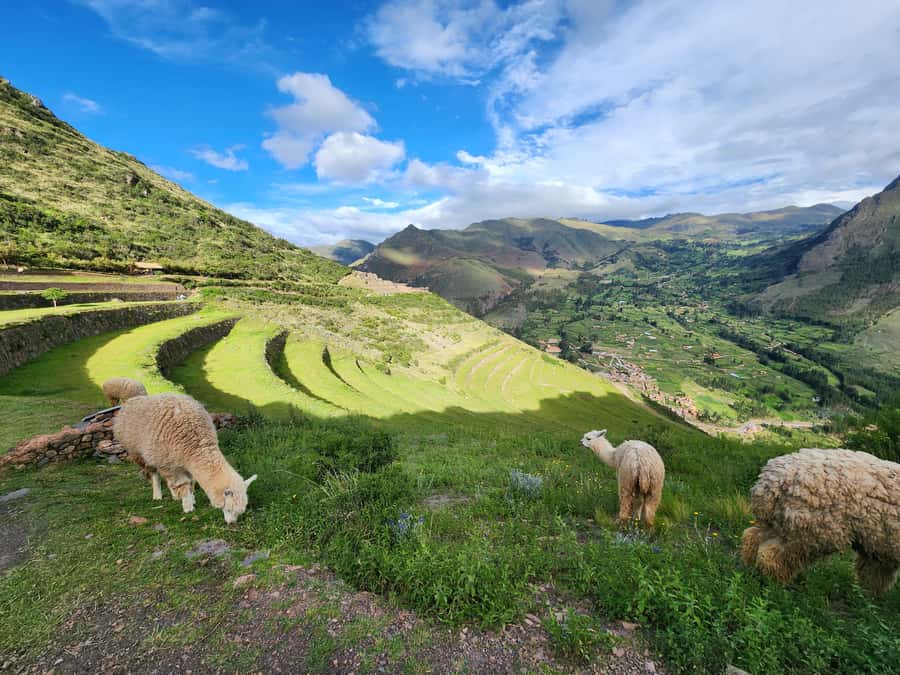
- Pisac’s terraces, tombs, and religious structures, set against dramatic mountain backdrops
- Bilingual guiding (Spanish and English), with extra context that makes the ruins easier to read
One Day, Five Sacred Valley Stops: How the Route Really Feels
This is a classic “Cusco to the Sacred Valley highlights” day trip, starting with hotel pickup and then running the sites in a steady order. The core idea is simple: you’ll see the major Inca-related landmarks most people came for, and you’ll do it with transport and a guide handling the story and timing.
A typical day moves like this. First comes a van ride into the valley, then the stops begin. Chinchero starts your day with a mix of town atmosphere and archaeology. Next you hit Moray for the agricultural terraces, then continue to Maras for the salt mines. Lunch is in Urubamba before you head to Ollantaytambo, one of the most intact Inca towns in the region. The day ends at Pisac, then you return to Cusco, finishing around Plaza Regocijo in the late afternoon or early evening.
The practical reality is that every site is given a defined time window. The upside is you see a lot. The downside is you will not have the kind of freedom you get on a slower DIY day. If you plan to visit Sacred Valley sites anyway, this format is good value because the transport and guiding are built in.
More of Chinchero:
- Cusco:Chinchero,Moray & Salt Mines drop-off in Ollantaytambo
★ 4.8 · 793 reviews - Sacred Valley: Chinchero, Moray, Ollantaytambo & Pisac+Lunch
★ 4.8 · 501 reviews - Cusco:Sacred Valley Pisaq,Ollantaytambo,Chinchero with Lunch
★ 4.8 · 183 reviews
Chinchero: Inca Ruins, a Colonial Church, and Textiles That Still Matter
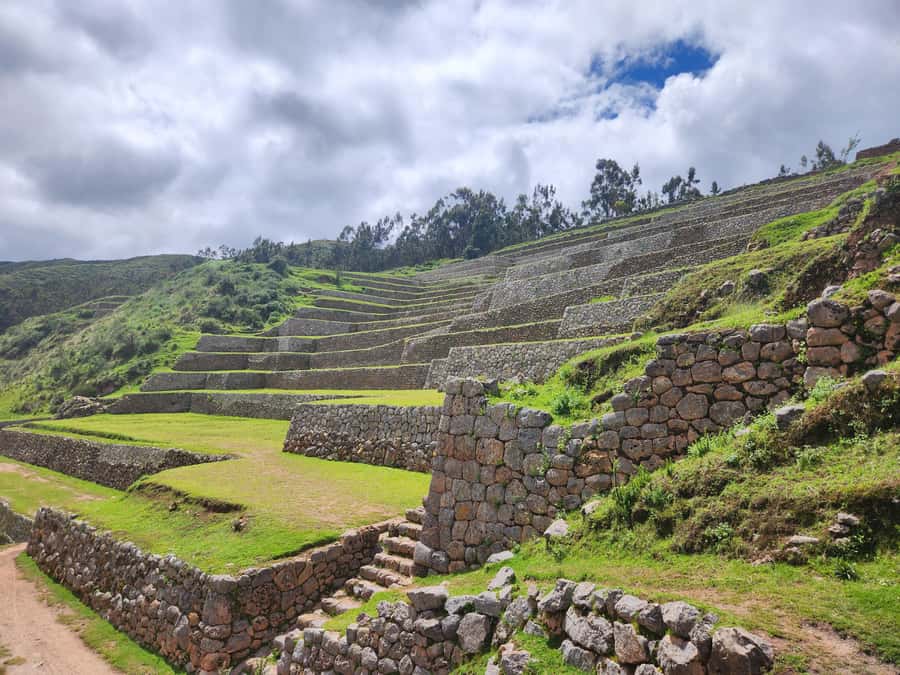
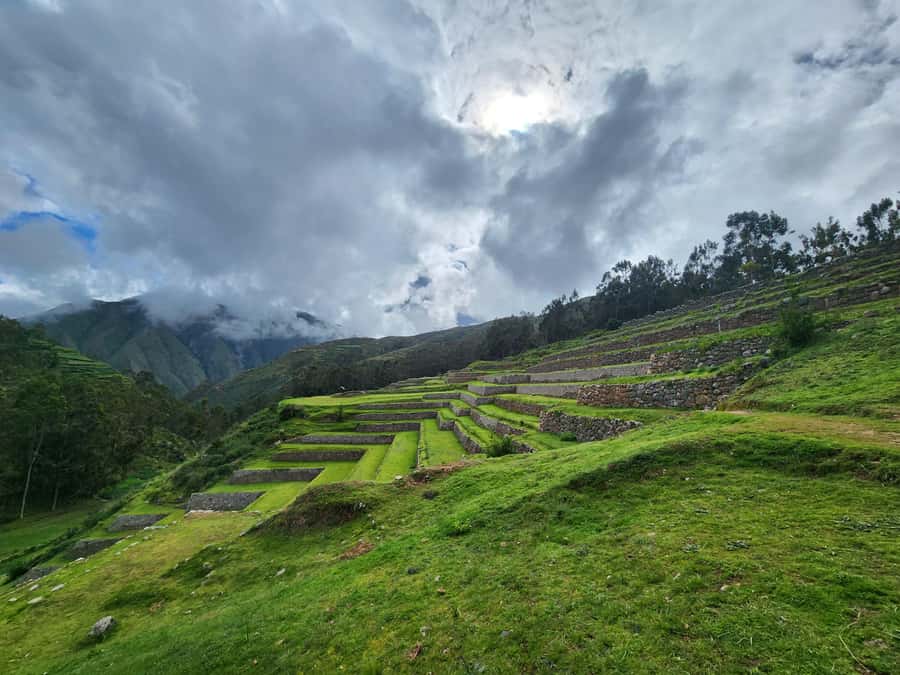
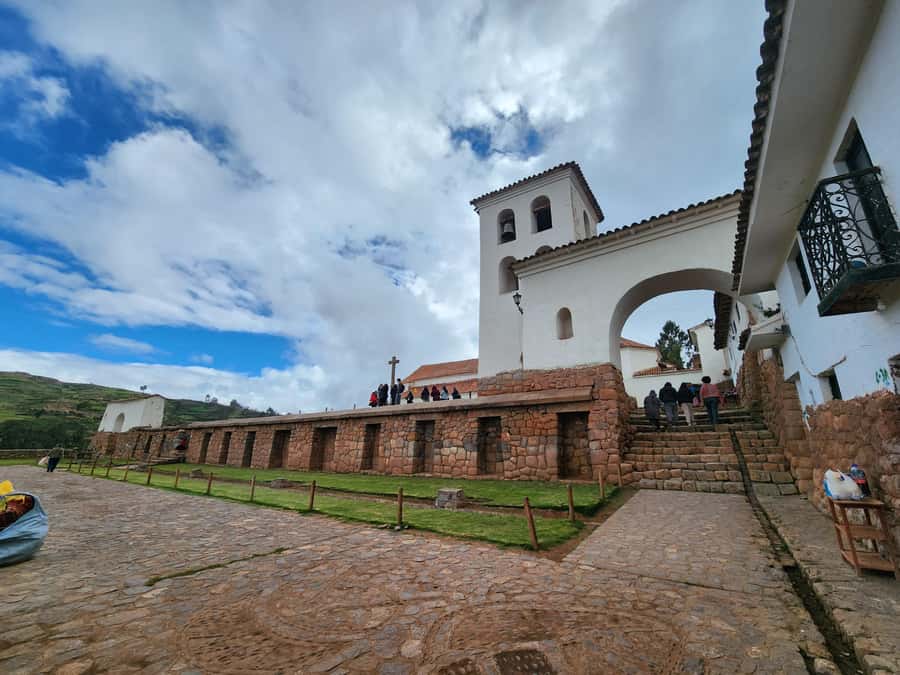
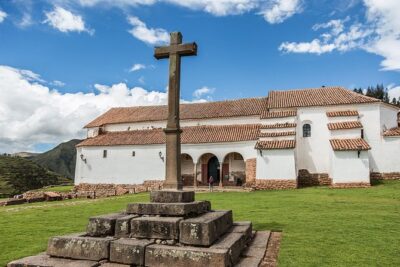
Chinchero is one of those places where you can learn something quickly and then look longer because you know what you are seeing. The highlight here is the combination of a colonial church and nearby Inca ruins, which helps you understand how Spanish-era layers were placed over older Indigenous space.
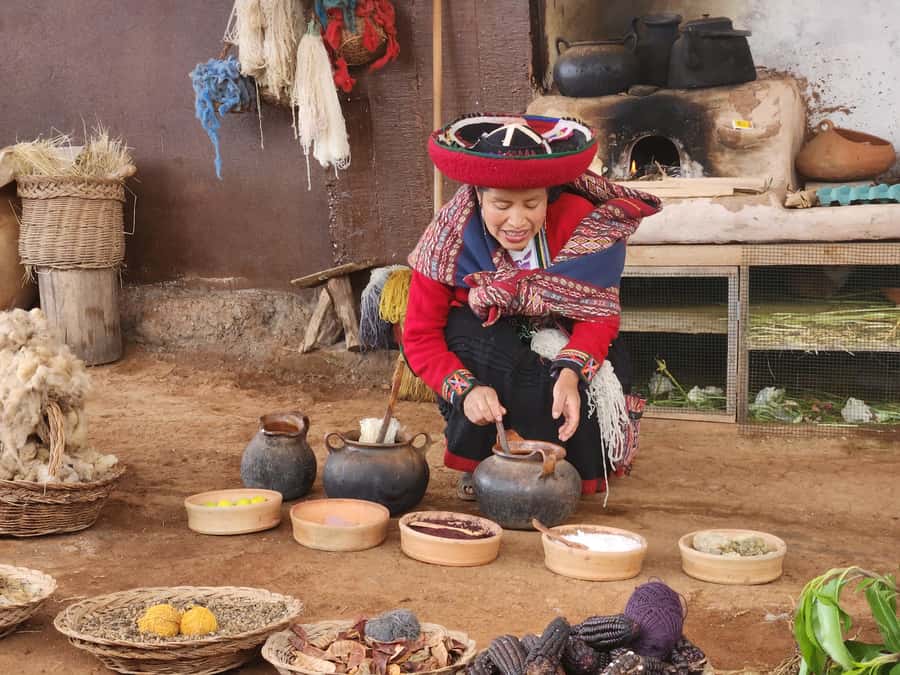
Time at Chinchero usually includes a photo stop plus a guided visit. It’s also where the weaving cooperative enters the picture. You’ll be shown traditional Andean weaving techniques, and you’ll get a sense of how fiber work is not just a craft. It is tied to identity, skills passed through generations, and the local economy.
What makes this stop worth it is that it breaks up the day. Without Chinchero and the textile angle, the route can feel like pure “stone viewing.” With it, you get a human scale. You also get time to recharge with lighter walking before the bigger climbs at later sites.
If you like shopping, you will likely have an opportunity here because cooperatives often connect demonstrations with sales. If you do not, you can still focus on the explanation and the weaving details without feeling pressured, just keep an eye on your remaining time.
Moray’s Circular Terraces: Altitude Farming Experiments Made Visible
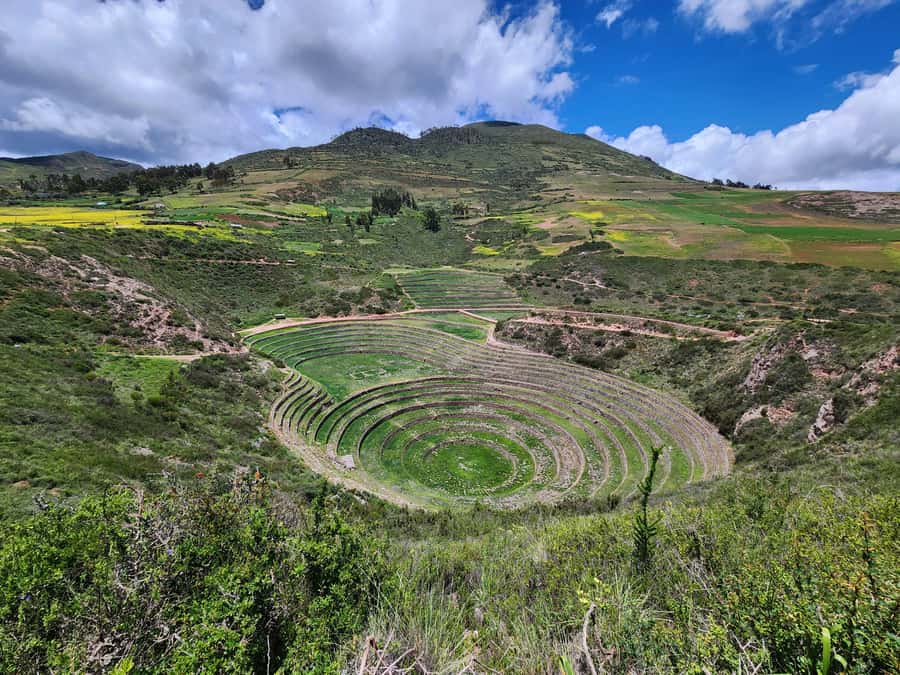
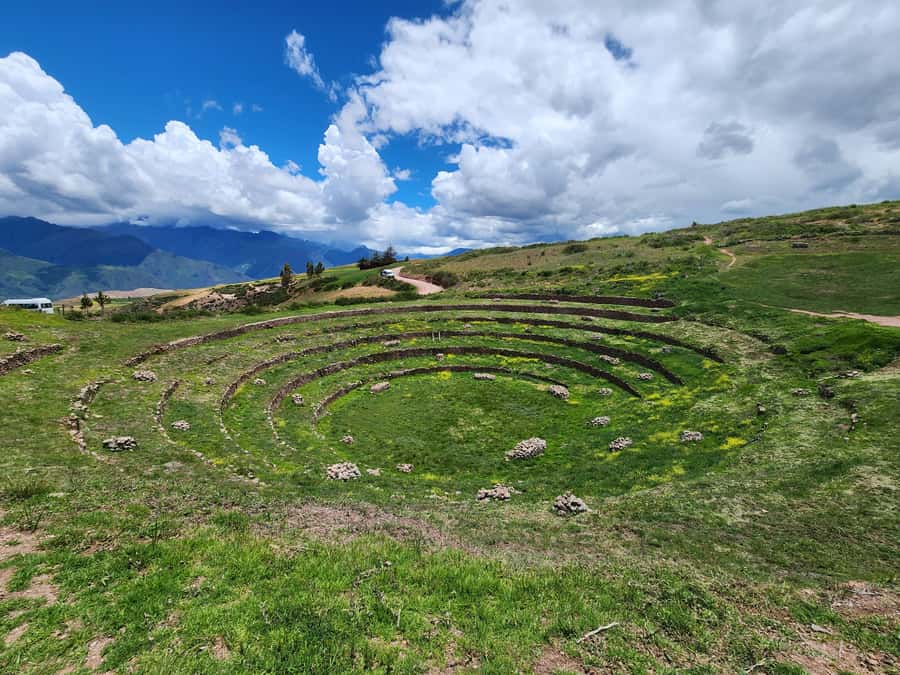
Moray is the Sacred Valley stop that feels scientific, even though it’s ancient. The signature feature is the set of circular terraces, which you can see and then wrap your head around as a system for agriculture.
Moray’s guided visit usually takes about half an hour, which means you will get a snapshot rather than a long wander. But even in a short visit, the terraces make sense fast once your guide connects them to altitude and crop testing. The common explanation is that the Incas used these rings like a kind of experimentation tool, adapting what could grow across different temperatures and elevations within a single area.
Here’s why I think Moray is more than a photo stop. It teaches you that Inca engineering was not only about walls and temples. It was also about managing water, soil, and planting conditions. When you know this, the rest of the day clicks into focus, especially Maras and the farming logic of the valley.
One caution: Moray is still a walk through uneven ground and terraces. Comfortable shoes matter more than style here.
Maras Salt Mines: Thousands of Pools and an Inca-Old Industry
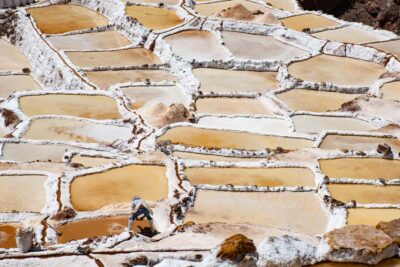
Maras is where the Sacred Valley becomes practical and visual. The salt flats consist of thousands of small pools, harvested from natural brine. This is not a “theory” site. You see the process on the ground, which makes the history feel immediate.
Your visit is typically paired with a photo stop and a guided segment. You’ll learn that the salt harvesting has roots in Inca times, long before modern methods and modern labels. Even if you’re not the type who reads every technical detail, the sheer number of pools gives you a strong sense of scale.
Budget note: entrance to Maras is listed as not included, so you should expect to pay an additional fee on the day (20 soles is stated for Maras). Keep some local currency handy, and don’t wait until the last minute to ask the guide how it works.
Also, Maras is a good moment to slow down mentally. After a terrace-heavy site, the salt pools bring a different rhythm. It’s detailed, shiny, and oddly calming, even though it is work that has been happening for centuries.
More of Ollantaytambo:
- Cusco: Sacred Valley, Pisac, Ollantaytambo, Salt Mines Moray
★ 4.6 · 1,058 reviews - Pisac Indian Market and Ollantaytambo Fortress with Lunch
★ 4.5 · 395 reviews - Combo Sacred valley Pisac Moray Salt mines and Ollantaytambo
★ 5.0 · 202 reviews - Full-Day Excursion to Sacred Valley, Pisac and Ollantaytambo from Cusco
★ 4.5 · 174 reviews
Urubamba Lunch Buffet: The Fuel Stop That Makes the Day Work
Lunch in Urubamba is where the tour earns its keep. You get a lunch buffet included, served after the morning sites and before you head toward Ollantaytambo. This timing matters because the day can feel like a continuous loop of stairs and uneven ground.
A buffet also helps you match the meal to how your body feels at altitude. You can eat lighter if you are feeling sluggish, or choose more substantial portions if you need energy. In one of the guide-led experiences like this, people have said the buffet is delicious, but also that the timing can feel quick if you want to linger.
Here’s my practical advice: treat lunch as a reset. Drink some water, eat enough to get through the afternoon, and keep sunscreen and your hat within reach for the next stretch. The sites after lunch are your biggest “ruins and walking” portion, so don’t arrive hungry or under-hydrated.
Ollantaytambo: A Town Built for Power, Religion, and Control
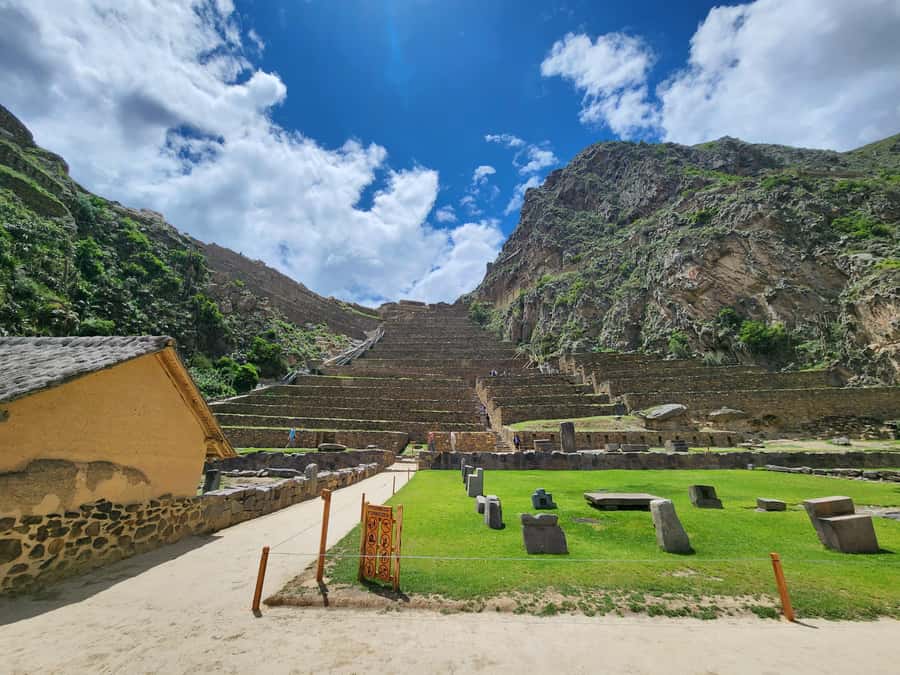
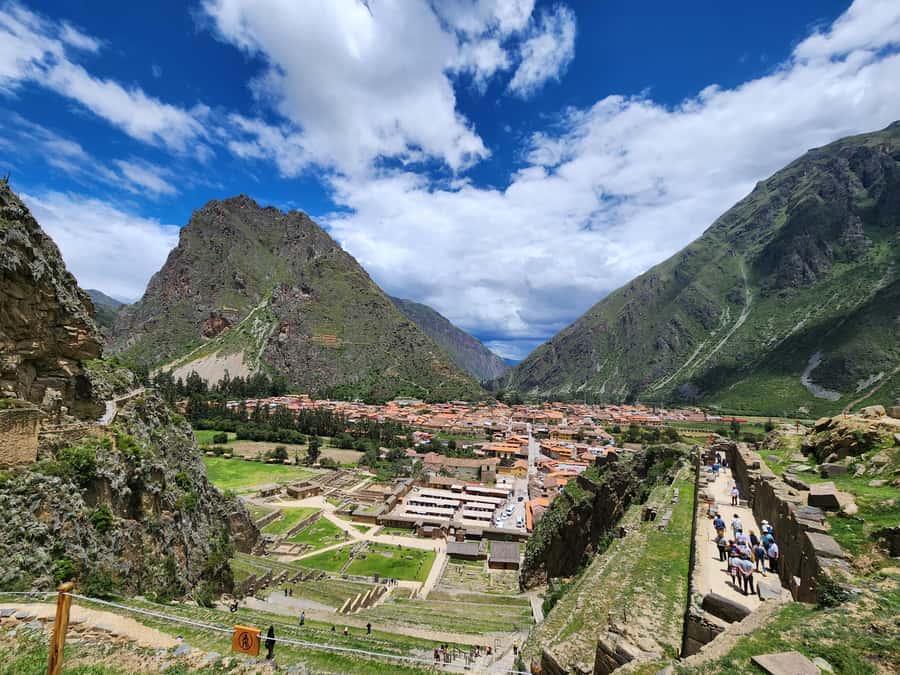
Ollantaytambo is the Sacred Valley stop with the strongest “real place” feeling. It is not just ruins sitting in a field. It’s a well-preserved Inca town, and that changes how the site reads.
What you will see during your guided visit typically includes terraces, temples, and a ceremonial center. You’ll also learn why this place mattered. Ollantaytambo served as an administrative and religious center in the Inca Empire, and the architecture reflects that significance.
This is one reason the guided element matters. Without context, you may see a mix of walls and levels. With context, you understand how space was organized for authority, ceremony, and community life. The strategic location also helps explain why this town held influence.
The drawback is the same theme as the whole day: time is limited. You get enough to understand the major features, but you won’t have all day to explore side corners. If you love ruins photography, focus on the most prominent terrace and temple areas first, then use your remaining minutes for quieter angles.
If you are planning a Sacred Valley trip primarily for Ollantaytambo, this tour gives you a good overview. If you are the type who wants hours here, consider adding an extra day later.
Pisac Archaeology: Terraces, Tombs, and the Best Backdrop for Closing Time
Pisac is known for its extensive Inca ruins, and the site layout makes it easy to see why it attracts attention. You’ll encounter terraces, tombs, and religious structures, all set against a dramatic mountainous backdrop.
Your visit includes a photo stop and guided time, and it tends to happen near the end of the day. That can mean you walk fast. In one experience like this, people said you still get time to move around at Pisac even if you arrive close to closing. Still, the overall feeling can be rushed because it is late in the schedule.
Why I still like putting Pisac at the end: by then, you have seen the agriculture logic in Moray and the extraction logic in Maras. When you reach Pisac, the ruins feel less like separate attractions and more like parts of a system. Terraces connect to farming. Tombs connect to belief. Religious structures connect to the spiritual map the Incas laid out.
If you want the best results with limited time, aim for the terrace areas where you can get both the structure and the overall layout in one view. Then decide if you want the closer-up details in tombs or if you prefer wide views for photos.
Price and Logistics: What Your $35 Covers, and What Costs Extra
The listed price is $35 per person for a full day with hotel pickup, van transport, a professional guide in Spanish and English, and a lunch buffet. That is the value part.
Where you need to plan is ticketing. Tourist ticket costs are listed at 70 soles, and entrance to Maras is 20 soles, both not included. So your real budget is not just the $35. It’s the $35 plus the archaeological entry costs you’ll pay on the day.
Is it still a good deal? For most people, yes, because you are buying three things together: transport from Cusco, someone to explain the sites, and lunch. If you try to cobble it together on your own, you may save money on the guide, but you often lose time and spend more on transportation and coordination.
The other logistics issue is time pressure. Because this is a one-day loop covering five major stops, your time at each site is necessarily brief. If you are the kind of traveler who wants to linger, this format can feel like a checklist. If you want a smart overview and you’re okay moving briskly, it is very solid value.
Guides Make or Break the Day: Carlos and Henry’s Role in Getting It Right
The best part of this kind of Sacred Valley tour is not the van. It’s the explanations. Guides like Carlos or Henry can make Inca sites easier to understand quickly, which is what you need when you cannot stay for hours.
In bilingual tours, it can also mean the guide shifts between Spanish and English to include everyone. One practical thing to know is that switching languages can slow down the flow of explanations a bit, but it still helps because you get the core points in more than one language.
What to listen for as you walk:
- how the site’s function ties to daily life, not only ceremonies
- why terraces were built and how they connect to altitude or irrigation
- why towns like Ollantaytambo mattered politically, not only spiritually
When a guide does this well, even a short visit feels more satisfying. You stop seeing random walls and start seeing systems.
Tips to Keep This Day Comfortable (and Not Exhausting)
This tour covers a lot of ground on foot, and the Cusco Region altitude can add to fatigue. You will enjoy it more if you treat this like a long walking day.
Bring:
- comfortable walking shoes
- a hat
- sunscreen
- a camera
- water
Also, get smart about pacing. The van moves you along, but your legs do the real work at every stop. Wear gear you can walk in right away, because you will likely spend time moving on terraces and uneven paths.
One more tip: set yourself up for quick wins with photos. If you want to capture the signature views at Chinchero, Moray, Maras, Ollantaytambo, and Pisac, decide in advance what you want. When time is short, you save energy by shooting with purpose.
Finally, manage expectations. This is not a “spend all afternoon in one ruin zone” trip. It is a best-of circuit, and that can be exactly what you need if you’re short on time.
Should You Book This Sacred Valley Day Trip?
I would book it if you want a structured, efficient Sacred Valley introduction from Cusco, with transport and a bilingual guide doing the heavy lifting on context. It’s a great fit for first-timers who want to see Chinchero, Moray, Maras salt mines, Ollantaytambo, and Pisac in one day without worrying about tickets, routing, or timing.
I would think twice if you want slow travel, long wandering, or deep focus at just one site. The schedule is tight, and Pisac and Moray especially can feel rushed because the day builds momentum.
If you do book, do it with a simple plan: budget for the 70 soles tourist ticket and the Maras entrance fee, wear good shoes, and expect quick guided walks. You’ll come away with a clear picture of how the Incas shaped farming, extraction, town life, and belief across the Sacred Valley. That is a lot to fit into one day, and it’s exactly why this tour has strong appeal.
FAQ
What is the duration of the tour?
The tour lasts 1 day.
Does this tour include hotel pickup in Cusco?
Yes, hotel pick-up from Cusco is included.
Is lunch included?
Yes, lunch buffet in Urubamba is included.
Are entry tickets included in the price?
No. A tourist ticket cost of 70.00 soles is not included, and entrance to Maras is also not included (20.00 soles).
What languages does the guide speak?
The guide provides Spanish and English narration.
What should I bring for the day?
Bring comfortable shoes, a hat, a camera, sunscreen, and water.
Are drones allowed?
No, drones are not allowed.
Can I cancel for a refund?
Yes, you can cancel up to 24 hours in advance for a full refund.
More Visits to the Moray Terraces
- From Ollantaytambo:Moray, Salt Mines, Chinchero end in Cusco
★ 5.0 · 42 reviews - from Cusco:Chinchero,Moray & Salt Mines drop-off in Ollantaytambo
★ 5.0 · 40 reviews - Sacred Valley: Chinchero, Maras, Moray, Ollantaytambo Private or Small-Group
★ 5.0 · 36 reviews - Private Tour Sacred Valley, Chinchero, Maras Moray, Ollantaytambo
★ 5.0 · 29 reviews
More Visits to the Maras Salt Mines
- Valle Sagrado:Chinchero, Moray, Maras, Ollantaytambo y Pisac
★ 4.5 · 116 reviews - Full Day:Sacred valley,Alpaca farm,Maras,Moray and Ollantaytambo
★ 5.0 · 109 reviews - From Cusco: Chinchero, Moray, Maras and Ollantaytambo
★ 4.5 · 83 reviews - Complete Sacred Valley Tour Small group Pisac, Maras, Moray & Ollantaytambo
★ 5.0 · 45 reviews
Recently reviewed around Ollantaytambo
- Private Tour Sacred Valley, Chinchero, Maras Moray, Ollantaytambo★ 5.0 · 29 reviews
- Sacred Valley Tour From either Urubamba or Ollantaytambo★ 5.0 · 30 reviews
- Transfer from Cusco to Ollantaytambo★ 5.0 · 30 reviews
- Sacred Valley Private Tour: Chinchero, Ollantaytambo and Pisaq★ 5.0 · 33 reviews
- Sacred Valley: Chinchero, Maras, Moray, Ollantaytambo Private or Small-Group★ 5.0 · 36 reviews
- Machu Picchu Day Trip from Ollantaytambo and Urubamba★ 5.0 · 38 reviews
- Sacred Valley Pisac Ollantaytambo and Chinchero Full-Day Tour★ 4.5 · 39 reviews
- from Cusco:Chinchero,Moray & Salt Mines drop-off in Ollantaytambo★ 5.0 · 40 reviews
Maras Salt Mines, compared.
Sacred Valley & Maras Salt Mines Tour with Lunch
Read our review →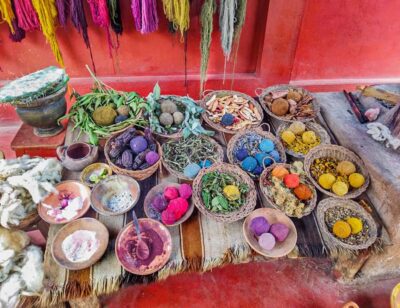
Moray, Maras Salt Mines & Chinchero Weavers Tour
Read our review →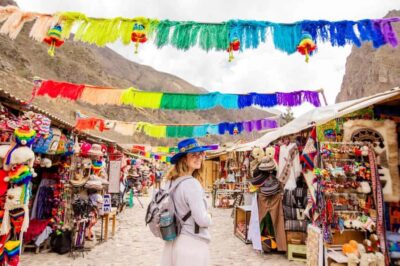
Sacred Valley, Pisac, Ollantaytambo, Salt Mines Moray
Read our review →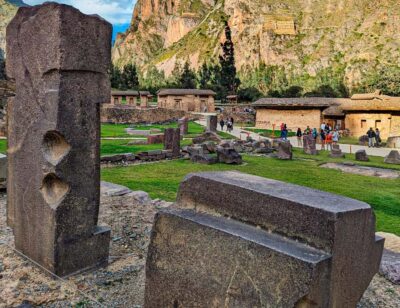
Chinchero,Moray & Salt Mines drop-off in Ollantaytambo
Read our review →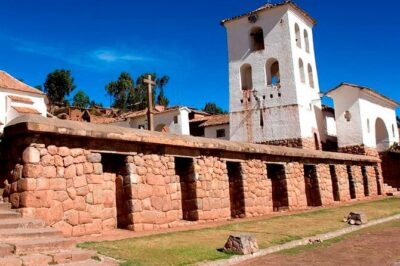
Sacred Valley and Maras Moray Tour with Full Day Buffet Lunch
Read our review →
ATV Tour to Moray Maras and Salt Mines in the Sacred Valley
Read our review →
Tour Sacred Valley & Maras – Moray with buffet lunch
Read our review →Browse the lists this tour appears in