
Reviewed · CHAN CHAN
Trujillo in a Day: Chan Chan, Huanchaco, Sun and Moon Temples
Trujillo in a Day is interesting because you get a fast, well-packed lesson in how northern Peru’s Moche and Chimú cultures built, worshiped, and controlled power long before the Incas. You start with massive adobe temples, then switch eras again and again, ending in Chan Chan, the huge Chimú capital that still feels strangely alive under the sun.
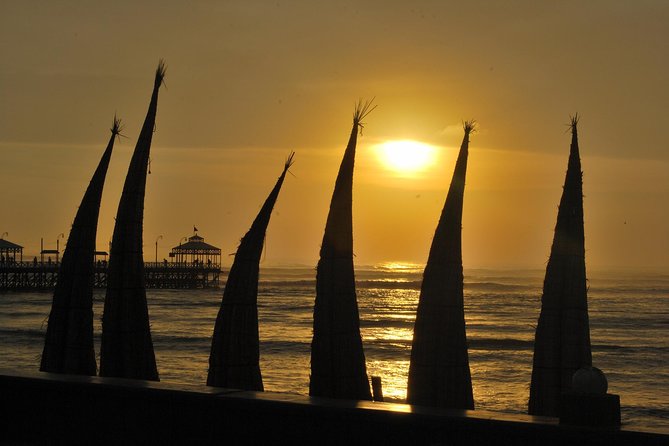
I love how the itinerary is built around clear contrasts. You’ll see the stepped and terraced design choices at the Temples of Moche, then you’ll compare that to the finer ceremonial details you find at later Chimú sites. I also like the Huanchaco stop, because the famous caballitos de totora reed boats connect archaeology to daily life, not just museum labels.
One thing to consider is that this is a long day. It runs about 8 hours, and some parts of archaeological sites can be closed on certain days, which can change what you can see up close. Still, the best part of the tour is that it stays moving, so you do not feel stranded.
Key highlights that make this day trip work
- Two giant adobe temples in one stop, so you can compare how the Moche built for different purposes
- Huanchaco’s caballitos de totora, with a 3,000-year connection to fishing and wave-riding talk
- A full Chimú arc in one day, from Huaca del Sol and Huaca del Golfo area temples to Chan Chan
- Guide-led meaning, not just ruins photos, with explanations of friezes, architecture, and ceremonial use
- Lunch is included in Huanchaco, with home cooked regional food in a seaside setting
Temples of Moche: Huaca del Sol and Huaca de la Luna in one focused morning
Your day starts with hotel pickup in Trujillo, then a short ride in an air-conditioned minivan to the Temples of Moche, the twin sites locals call the Huacas de Moche. This is a good way to begin because it lets you get your bearings early, before the heat and crowds (if any) make walking slower.
At the first main stop, you spend about an hour at La Huaca del Sol and La Huaca de la Luna. These are adobe brick constructions built by the Moche people between roughly the 1st and 8th centuries. The guide puts the sites into context: who the Moche were, how the temples fit into their worldview, and what the architecture might have been used for.
Here’s what I think makes this stop so satisfying for you. The Temples of Moche are not just two big piles of ancient mud. They are two different shapes with different jobs. Archaeologists think the stepped Temple of the Sun (Huaca del Sol) was tied to administration and military functions. The terraced Temple of the Moon (Huaca de la Luna) is linked to religious and ceremonial use.
And yes, you’ll be looking at decoration. The Temple of the Moon is known for detailed wall painting and fresco-like imagery in areas that have been exposed. People in the past have singled out how impressive the wall decorations are, even compared with what they expected from photos. If you are the type who likes symbolism, you’ll probably enjoy how the guide connects recurring figures and patterns to Moche beliefs and rituals.
Also, it helps that the bigger Temple of the Sun is visible at close range at least in part. One caution from real-world experiences: the Temple of the Sun is not always accessible at full capacity. If access is limited on your day, you may rely more on views and on-site interpretation. The upside is that the time you spend is still meaningful because the guide ties the two temples together instead of treating them like separate checkboxes.
More Chan Chan visits:
- Full Day Trujillo Piramides Sol y Luna , Chan chan y Huanchaco
★ 5.0 · 93 reviews - Full Day Tour Huacas, Chan Chan & Huanchaco – Trujillo
★ 4.5 · 64 reviews - Full Archaeological Chan Chan Tour
★ 5.0 · 30 reviews
Why Huaca del Arco Iris (Temple of the Dragon) matters after the Moche
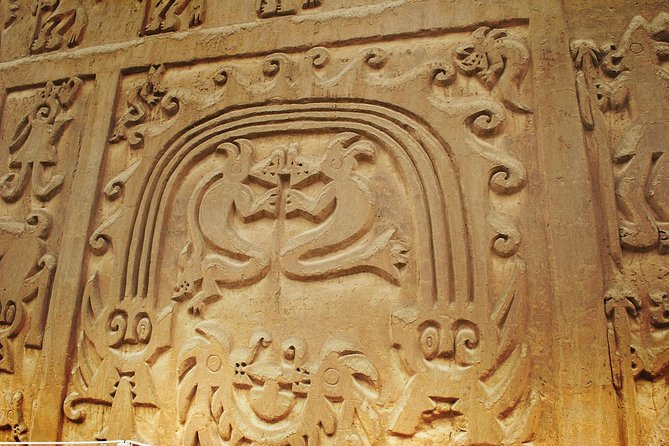
Next you head to Huaco el Dragon, also known as Huaca del Arco Iris, the Temple of the Rainbow. This stop is where the day becomes more than a museum crawl. It becomes a story about changing cultures in northern Peru.
Here’s the key timeline shift the guide will highlight: the Moche culture fades out, and around 900 AD the Chimú civilization expands into the region. The Chimú then rule the north until the Incas arrive in the 1400s. So when you move from the Temples of Moche to Huaca del Arco Iris, you are basically watching two different cultural toolkits for power and worship.
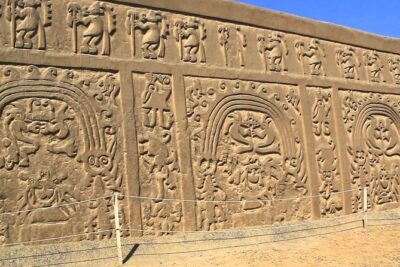
The building here is an adobe pyramid with intricate friezes, a visual layer that takes work to notice. You are not just looking at a structure, you’re looking at images arranged to communicate meaning. One of the most praised parts of this tour is how the guide helps you read those depictions, including how similar design languages show up later at Chimú sites.
There is a practical consideration. The Temple of the Dragon can have access limitations depending on conditions, including closures on some days. When that happens, the stop can feel shorter than you want, especially because the site is not as large as Chan Chan. Still, if the site is open as expected, this stop gives you an important transition point, setting you up to understand why Chimú art and architecture feel so deliberate.
Huanchaco: caballitos de totora and a lunch you will actually remember
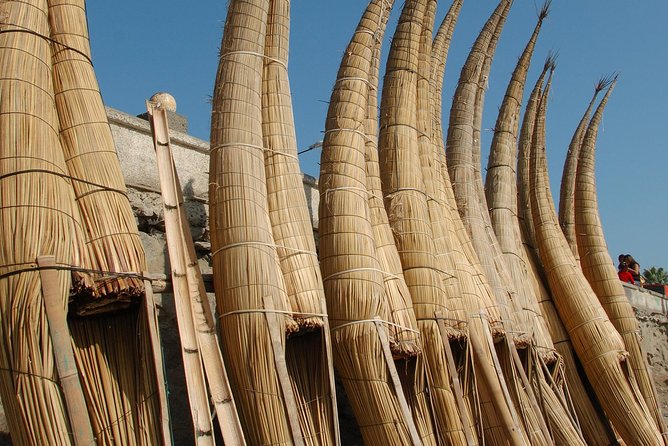
After the ruins, you switch gears with a coastal drive to Huanchaco, a fishing village and beach town known for the caballitos de totora, reed boats used by fishermen for about 3,000 years. This is not a random beach stop. The reed boats help explain how old traditions keep living, even when the rest of the region has changed.
This is also a place where the guide’s explanation makes a difference. You learn the cultural significance of these boats and hear the idea that the reed boards, ridden like horses, may be part of the story behind wave-riding traditions. Even if you take that as theory rather than proof, it’s a fun example of how locals connect the past to what happens on the water today.
Then comes lunch. Lunch is included, and you eat at an authentic restaurant in Huanchaco. People have praised the meal for being excellent, with home cooked regional specialties and service that feels properly cared for. One named lunch spot that comes up is El Sombrero, and the food gets a lot of credit, not just the ocean view.
I like this lunch structure because it makes the whole day feel human. You stop moving through clay-brick ruins and you actually eat something that belongs to the region you are in. And because lunch is built into the tour, you avoid the common problem in Trujillo day trips, where you burn time searching for food between sites.
One tip for you: since food and drinks beyond lunch are not included, plan your water and extras. If you arrive thirsty, you will feel it more on the later Chan Chan walk.
Chan Chan: the Chimú capital on a scale that messes with your sense of size
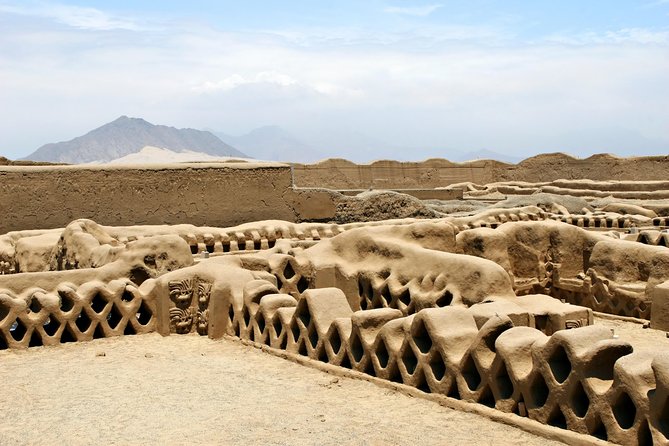
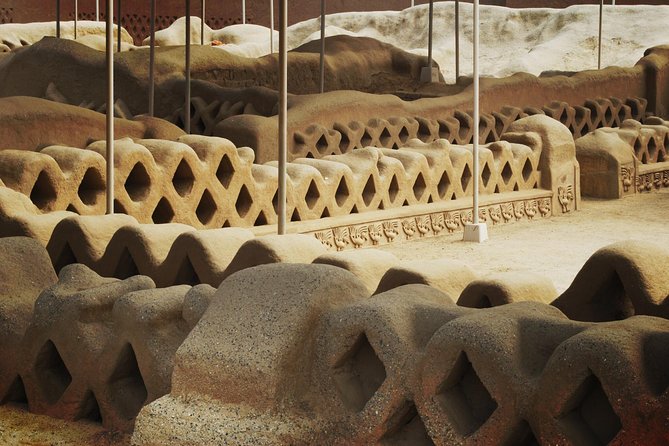
After lunch, you head to Chan Chan, the huge archaeological complex that was the center of Chimú politics and commerce. This place is World Heritage-listed, and it is considered the largest pre-Columbian city in South America. The site covers about 7 square miles (around 18 square kilometers), so even when you tour with a guide, you do not see everything.
The payoff is in how the guide helps you make sense of what is open. You’ll look at shrines, cemeteries, barns, reservoirs, and ceremonial plazas. Everything is adobe brick and mud, which can look repetitive if you only glance quickly. But with the right explanation, the complexity comes through: different sections served different functions, and the design supports water, storage, and ritual space.
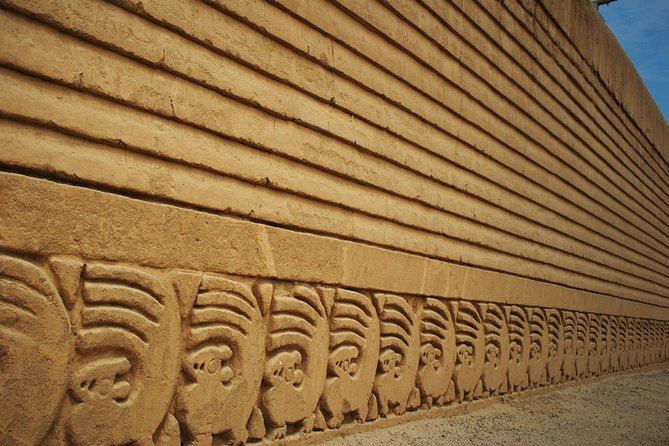
The stop most people focus on is the Nik-An Palace. It’s a complex with ceremonial courtyards and walls adorned with friezes. This is where you can start connecting the earlier stops to the later Chimú visual style. If you liked the friezes at the earlier huaca sites, you’ll probably feel more confidence reading what you see here.
One practical reality about Chan Chan: parts can be closed to the public, and you might only access a portion of the whole city. I would not treat that as a deal-breaker. The site is still enormous, and the guide’s job is to help you understand the big picture, even if you cannot walk every corridor.
Also, Chan Chan is the kind of place where being tired makes you miss details. If you pace yourself at lunch, you’ll enjoy this more. Take slow breaks, keep your camera ready, and remember that the best rewards here come from noticing patterns in the walls and thinking about why builders put images in those exact positions.
A few more Trujillo days worth comparing
- Customize Cruise Ship Full Day tour – English Guide
★ 4.5 · 42 reviews - Private tour full day chan chan & huacas sun and moon in SUV
★ 5.0 · 24 reviews - Full Day in Trujillo from Puerto Salaverry
★ 5.0 · 22 reviews - Shore Excursion from Salaverry port
★ 4.5 · 17 reviews
How the guide makes or breaks the day
This tour can feel very good or very frustrating depending on how the guide frames it. The good news is that the most praised sessions share a theme: strong storytelling plus solid English, so you do not get stuck reading info you could have found alone.
You might meet guides with names like Flor, Oscar, Jose, Henry, or Eli. Across those experiences, people often highlight the guide’s ability to explain what the friezes depict, how each site functioned, and how Moche and Chimú beliefs show up in architecture. That is exactly the difference between seeing ruins and understanding why those ruins exist.
If you want to get the most out of the day, do two things. First, ask one question early, like what function the temple served. Second, during the friezes and wall art, pick one symbol or figure type and follow it through the day. The guide’s explanations give you a thread, and you’ll start noticing repeated ideas instead of random imagery.
There is also a caution, based on real experiences: if you get a guide who sticks strictly to what you can already read on signs, the day can feel like an expensive taxi ride. You cannot fully control that. But you can increase your odds by going in ready to interact, and by paying attention when the guide talks about how the sites were used.
Transport, timing, and comfort for an 8-hour circuit
This is an 8-hour day trip that starts at 9:00 am, with hotel pickup in Trujillo and then hotel drop-off at the end. The travel times between stops are short enough that you still get meaningful time at each place, but long days add up.
The minivan and pickup matter because Trujillo traffic can be unpredictable, and spending less time figuring out logistics lets you focus on the sights. Also, the rides are in an air-conditioned vehicle, which helps a lot once you leave the morning cool and head toward the afternoon heat.
Bring practical basics. Wear comfortable shoes with grip, since archaeological paths can be uneven. Use sun protection. Even if you do not think of yourself as a sun person, you will feel it at Chan Chan. And remember that the tour does not include food and drinks beyond lunch, so plan your water choices.
Lastly, keep your expectations flexible about closures. Even if the schedule is the same, access to certain areas at temples can change. The way the tour holds up is that it still includes multiple sites, so one partial closure does not cancel the whole day’s value.
Price and value: is $153 worth it for this mix?
At $153 per person, this is not a budget-only outing. The key question is value, and here’s where it earns points.
Your money covers hotel pickup and drop-off, a professional guide, and lunch. It also includes entrance tickets for the Temples of Moche and for Huaca del Arco Iris, while Chan Chan is listed as free. So you are not paying separately for every stop once you’re already on the day trip.
Then there is the big value driver: the guide context. If you care about understanding architecture, friezes, and ritual use, a guided full-day circuit is often cheaper than trying to stitch the same day together yourself with multiple admissions, transportation, and local interpretation.
If you are only interested in taking photos and moving fast, you might feel that the guided time is less useful. But if you want explanations that connect the Moche and Chimú worlds, the price starts to feel reasonable, especially with lunch handled and logistics managed.
Should you book this Trujillo day trip?
Book it if you want a high-effort day that teaches you how northern civilizations expressed religion and power through adobe architecture, then backs it up with an easy coast-side culture break in Huanchaco. This tour is also a strong choice if you have limited time in Trujillo and you want a structured way to see more than just one major ruin.
Skip or rethink it if you are sensitive to long days, or if you hate the idea that some areas at archaeological sites may be limited on the day you go. Also, if you know you will not engage with the guide at all, you may find better value in a lighter plan where you control every stop.
If you fall in the middle, go for it. The combination of temples, the Huanchaco reed-boat tradition, and the size and detail of Chan Chan is a rare full-spectrum day in Peru’s north.
FAQ
What does this tour cost?
The price is $153.00 per person.
How long is the day trip?
It lasts about 8 hours.
What time does the tour start?
The start time is 9:00 am.
What’s included with the tour price?
Hotel pickup and drop-off, a professional guide, and lunch are included.
Which sites do we visit?
You visit La Huaca del Sol and Huaca de la Luna (Temples of Moche), Huaca del Arco Iris (Temple of the Dragon), Huanchaco for the beach area and reed boats, and Chan Chan.
Are entrance tickets included?
Yes for the Temples of Moche (La Huaca del Sol and Huaca de la Luna) and for Huaca del Arco Iris. Chan Chan is listed as free.
What about food and drinks other than lunch?
Food and drinks are not included unless specified. Lunch is included.
Is this a private tour, and can it be changed if I cancel?
It is private, meaning only your group participates. It is non-refundable and cannot be changed for any reason.
Recently reviewed around Trujillo
- Trujillo Shore Excursion from Salaverry Port★ 5.0 · 9 reviews
- El Brujo – Archeological site & Museum★ 4.5 · 11 reviews
- Full Day Group shore excursions Tours from salaverry port★ 5.0 · 13 reviews
- Shore Excursion from Salaverry port★ 4.5 · 17 reviews
- Full Day in Trujillo from Puerto Salaverry★ 5.0 · 22 reviews
- Private tour full day chan chan & huacas sun and moon in SUV★ 5.0 · 24 reviews
- Shore Excursion from Salaverry port★ 4.5 · 8 reviews
- Pyramids of the Sun and the Moon, Huanchaco and Chan Chan★ 4.8 · 11 reviews
Chan Chan, compared.
Full Day Trujillo Piramides Sol y Luna , Chan chan y Huanchaco
Read our review →
Full Day Tour Huacas, Chan Chan & Huanchaco – Trujillo
Read our review →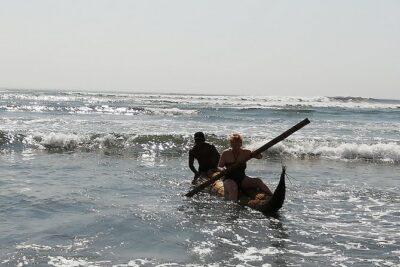
Private tour full day chan chan & huacas sun and moon in SUV
Read our review →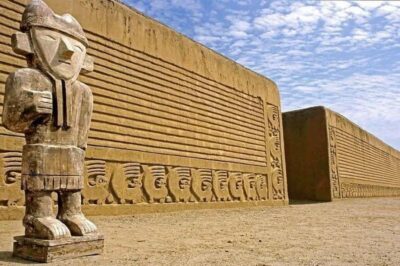
Pyramids of the Sun and the Moon, Huanchaco and Chan Chan
Read our review →Pyramids of the Sun and the Moon, Huanchaco and Chan Chan
Read our review →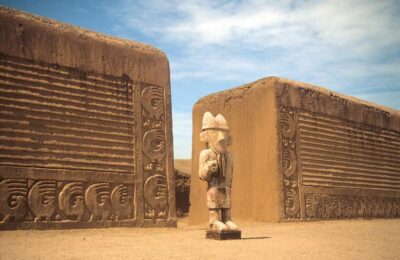
Browse the lists this tour appears in