Reviewed · CUSCO TOURS
Camelid Center Visit in Cusco: Alpacas, Culture & Weaving
Cusco has plenty of stone and sun, but this experience adds something different, up close camelids and real textile know-how. You spend time with all four native Andean camelids and then watch traditional weaving that uses natural dyes and time-tested tools.
I love the easy-to-follow way of telling the camelids apart, and I especially like how the weaving lesson is taught by local artisans, not just as a quick demo. With guide Waldo, the whole visit also feels practical, he explains how these animals and textiles fit into Andean life.
One thing to consider: this is a tight 2-hour format, so it is not a long farm day. Also, snacks are not included, so you may want to plan a water break and a small bite before or after.
Key things that make this Camelid Center visit special
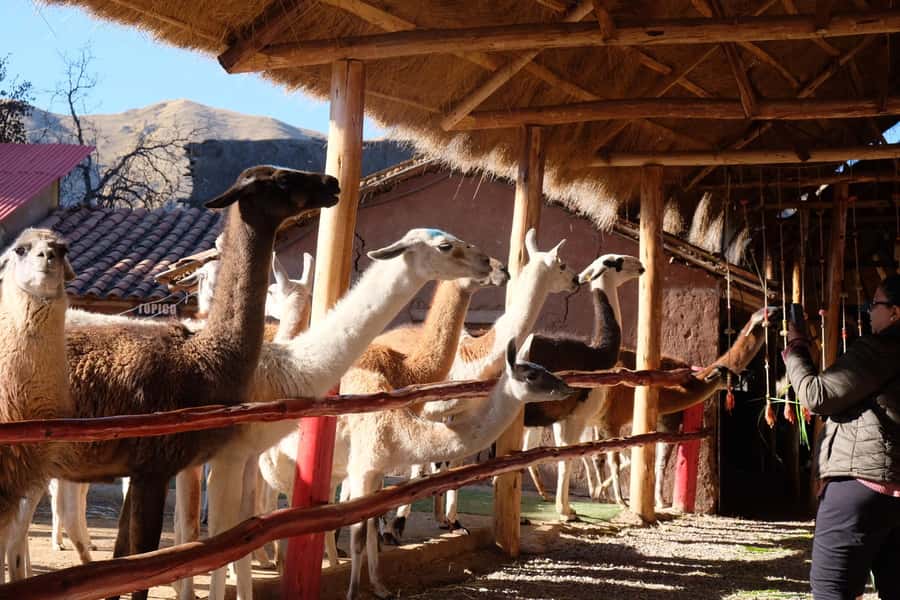
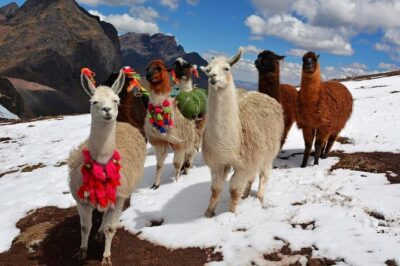
- You meet all four camelids: llamas, alpacas, vicuñas, and huanacos, not just one or two
- Close-up photos and animal feeding with mountain views as your backdrop
- Waldo keeps it clear and focused, sharing plenty of details while keeping a calm pace
- Hands-on weaving techniques explained using traditional tools and natural dyes
- A real artisan store stop, with handmade alpaca wool products like scarves and ponchos
- Private group format, so you can move at your own speed and ask questions
Cusco pickup to Huayllarcocha photo stop, how the timing really works
This tour is designed as a quick, satisfying break from Cusco. You get picked up in Cusco by car, and the drive to the camelid area is short, often about 20 minutes. It is an easy way to see a working Andean environment without losing half a day to transportation.
Once you arrive, the visit begins with a photo stop at Huayllarcocha. This part is your chance to reset after the drive, get your bearings, and start spotting the animals and the setting around you. It also sets the tone: this is not staged, you are visiting a working camelid center.
The whole experience is about 2 hours. The core time is spent at the center with guided interaction, feeding, weaving, and time in the store. That means you will likely want to treat it like a focused cultural stop, not a slow wander.
A few more Cusco days worth comparing
- Classic Inca Trail Trek 4D/3N to Machu Picchu (Group Service)
★ 5.0 · 8,653 reviews - Cusco: Rainbow Mountain and Red Valley Day Trip with Meals
★ 4.9 · 4,893 reviews - Machu Picchu: 4-Day Inca Trail Trek with Panoramic Train Ride
★ 5.0 · 4,568 reviews
Meeting llamas, alpacas, vicuñas, and huanacos without the guesswork
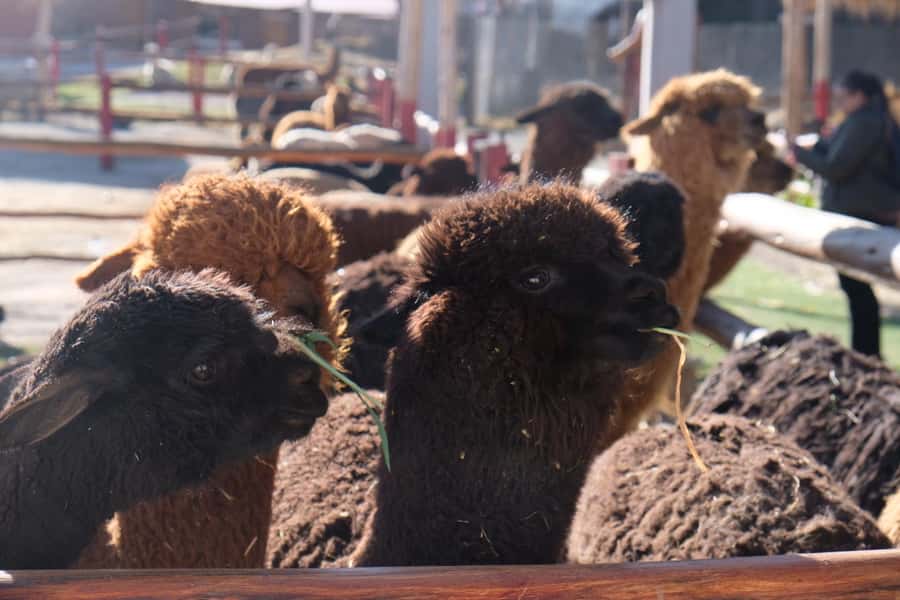
The headline here is simple: you meet all four native Andean camelids in one visit. That sounds like a brochure promise, but the value is how the guide helps you actually tell them apart. Waldo explains differences so you are not just taking pictures and guessing.
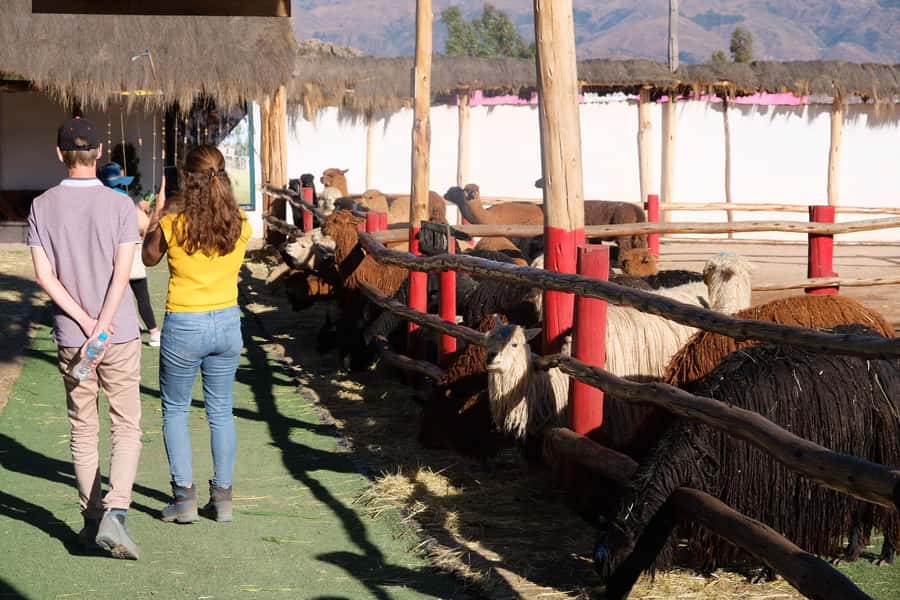
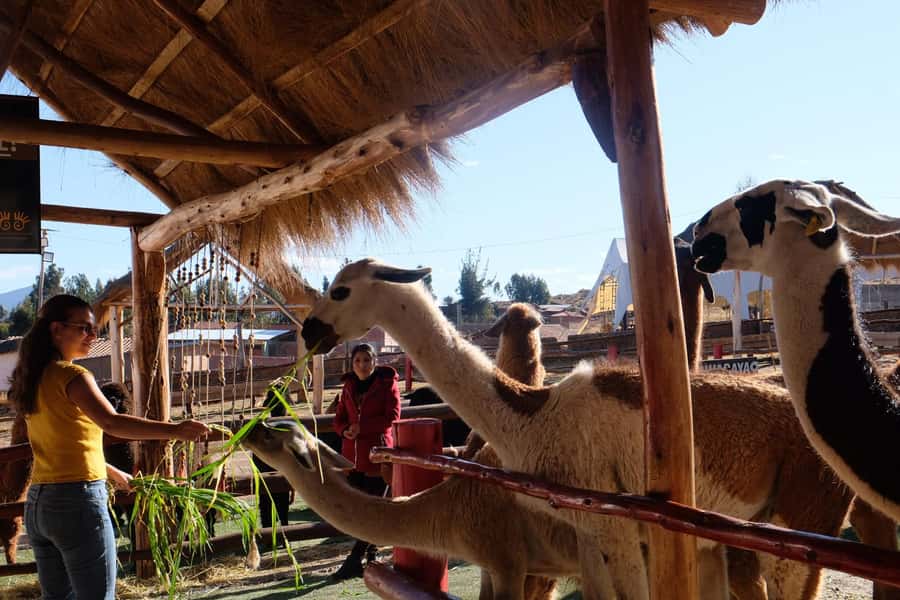
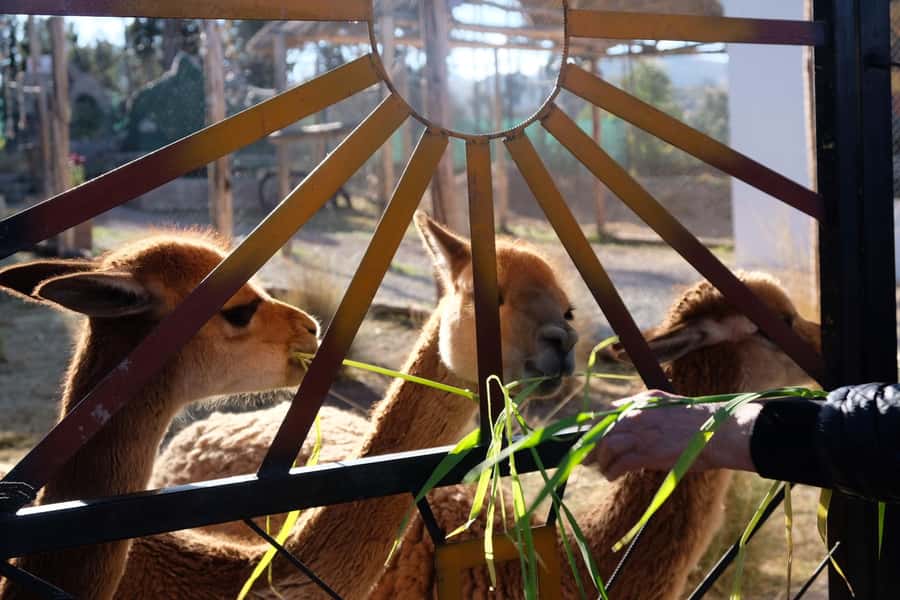
Expect close-up interaction time with animals and plenty of opportunities for photos. You can also feed them during the visit, which tends to be the moment most people remember. You are not just observing from afar, you are learning the animals’ personalities and habits from a respectful distance.
Here is what is useful for you as you plan your day: you will come away with an actual mental checklist. The tour is built around identification, so you can leave knowing what you are looking at when you see them later in Peru.
One more practical point, this experience works well if you are traveling with kids or mixed ages. The animals do the heavy lifting for attention, and the guide keeps the explanations at a level that most people can follow without feeling lectured.
Feeding and photos: how to get the best moments in 2 hours
In a 2-hour window, photo timing matters. I would treat the first animal time as your warm-up session, so you see how the animals behave and where they like to hang out. Then you can go for your closer, better shots once you know what is happening.
You will likely have time for both wide shots and close-ups. Mountain views are part of the setting, so you can usually get at least a few photos that show the animals against the highland scenery. Feeding time is usually the most photo-worthy, because the animals come closer when they know you have something for them.
Do not stress about getting every angle. The guide is there, and Waldo keeps things moving without feeling rushed. I like this balance because it helps you relax and enjoy the animals, instead of feeling like you are on a schedule.
Weaving with natural dyes: what you learn and why it matters
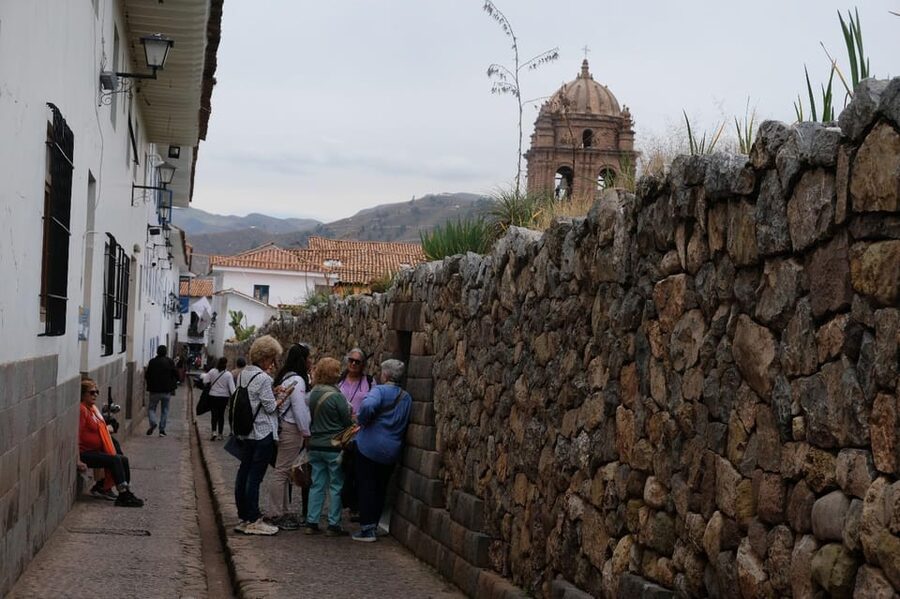
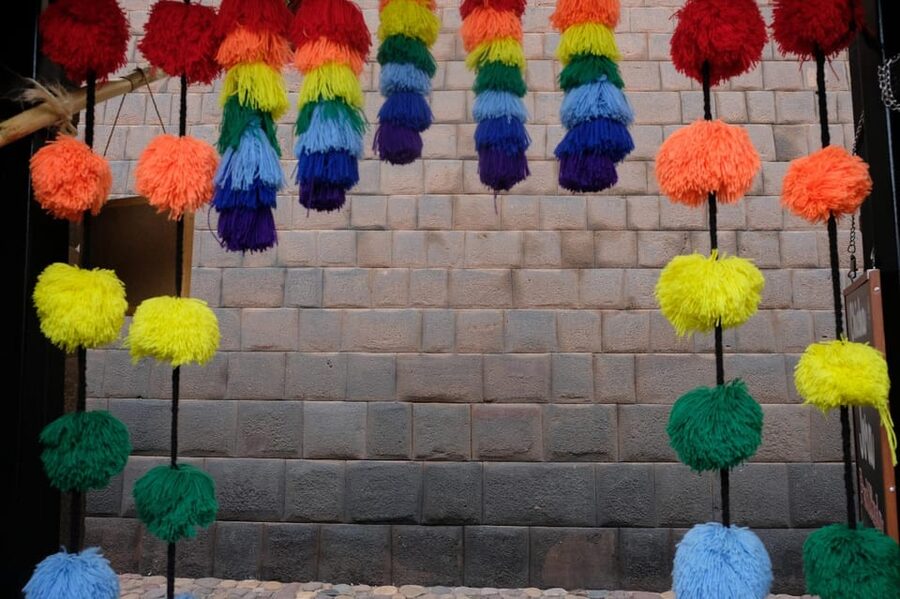
After the camelid time, you shift from nature to culture: traditional Andean weaving techniques taught by local artisans. This is not just watching a person passively demonstrate. You get to see how the tools are used and how the process connects to local materials and traditions.
What makes this valuable is the connection between technique and meaning. The lesson focuses on traditional tools and natural dyes, so you understand that the textiles are not random crafts. They are part of an inherited skill set that communities have kept alive for generations.
Waldo also helps connect this to the wider Andean context. One booking notes that he explains why camelids and their textiles mattered to the Inca. Even if you already know a little, you will likely appreciate the way he links animals, wool, and woven products into a single story.
If you love crafts, this is the kind of stop where you start looking at sleeves, edges, and patterns differently. And if you do not usually care about weaving, it still works because you are learning something tangible, with a real person explaining the work.
A different kind of day out of Cusco:
- Salkantay Classic Trek 5 Days from Cusco
★ 5.0 · 4,062 reviews - 4-Day Salkantay Trek with Sky Camp Stay
★ 5.0 · 3,346 reviews - Short Inca Trail to Machu Picchu 2D/1N
★ 5.0 · 3,007 reviews - Excursion to Rainbow Mountain Full Day Optional Red Valley
★ 5.0 · 2,996 reviews
The artisan store stop: buying alpaca wool that supports local makers
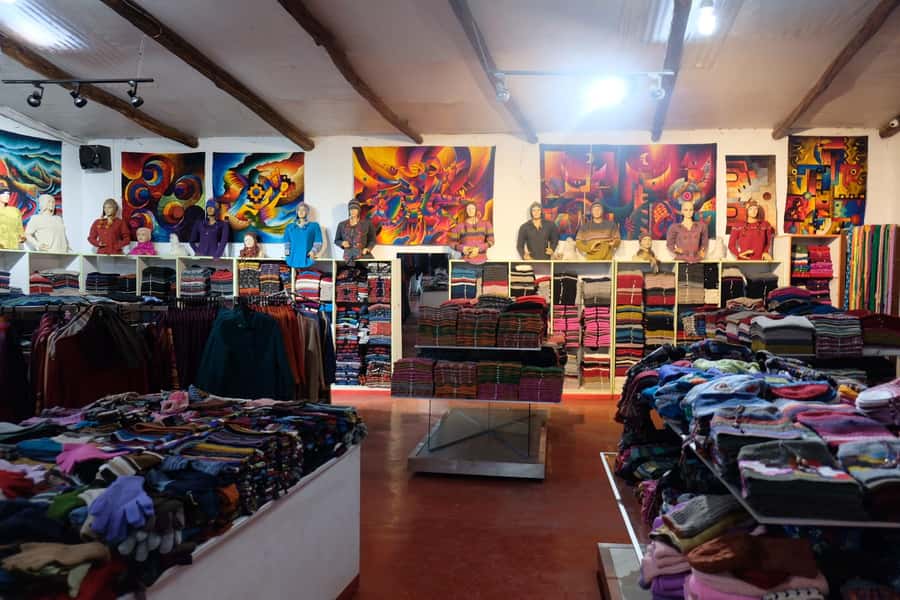
The tour ends with time to visit the center’s artisan store. This is where you can shop for handmade alpaca wool products like scarves, sweaters, and ponchos. It is also a chance to support local farmers and businesses, which is one of the reasons this tour feels better than a generic souvenir stop.
What I like about this setup is that the store time matches the learning time. You have already seen the animals and the weaving process, so when you shop, you are buying with context. You can ask questions and think about what you saw, rather than treating purchases as a last-minute impulse.
You should expect some options at different price points, but the big value is that you are not guessing whether something is real. The tour is built around authentic, handmade products from the center.
Quick tip: if you buy gifts, consider getting them here instead of later. You already spent time learning what alpaca wool goods look and feel like, so you are more likely to choose something you will actually enjoy using.
Waldo and the private-group pace: who you are with changes everything
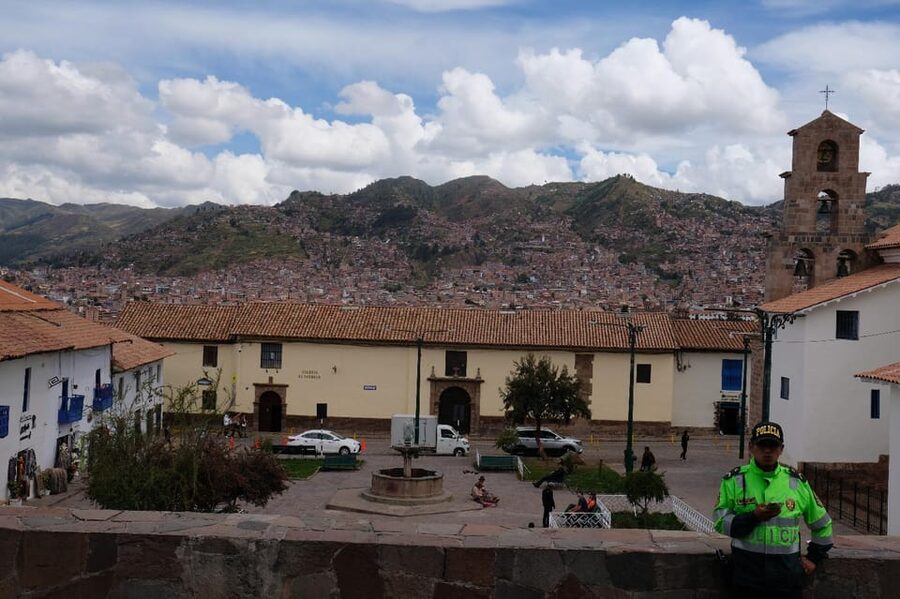
This is a private group experience, and that matters. In practice, it means you can ask follow-up questions without feeling like you are waiting for the rest of the group. It also means the pace can stay comfortable, especially if your energy level changes at altitude or after a day of walking in Cusco.
Waldo stands out in how he runs the visit. Multiple experiences describe him as organized, flexible with time, and very willing to help you make the most of your day. Some people even mention that he added extra time or drove them to additional scenic spots nearby.
That flexibility is not guaranteed, but it is a strong sign you are in good hands. It also hints at why the experience has high satisfaction: the tour feels like a guide who cares, not a checklist.
Languages are another practical plus. The guide works in English, Spanish, and French, so you will not feel stuck if your Spanish is basic. You can still ask questions and get clear answers.
Price and value: why $25 can feel like more than 2 hours
At about $25 per person for a 2-hour tour, you are paying for more than a quick animal encounter. Your price includes guided interaction with all four camelids, time for photos and feeding, a weaving demonstration, access to the artisan store, and transportation from Cusco.
Then there is the real value factor: the experience is structured so you learn. You do not just see animals, you learn how to tell them apart. You do not just watch weaving, you learn how it is done and why it matters. That kind of learning is what turns a short visit into something you remember.
One small watch-out is snacks are not included. If you are doing this part way through a busy Cusco day, bring water and plan a snack before you go. The tour can be active and you will likely want to stay comfortable during the animal and store time.
Who should book this Camelid Center visit, and who might skip it
I think you should book if you want a short, high-reward activity outside Cusco. This is great for animal lovers, culture seekers, and families because it mixes interaction, learning, and hands-on craft. It also works if you have limited time and want something meaningful without committing to a full-day excursion.
You might skip it if your main goal in the Cusco area is ruins, hikes, or purely historical sites. This tour gives you Andean life through animals and textiles, so it is cultural and natural rather than archaeological.
It also fits well if you are the kind of person who likes to buy thoughtfully. The store stop feels more grounded because you already learned what you are buying.
Should you book this tour or choose another Cusco plan?
If you want an efficient, friendly way to connect with Andean culture, this is a strong pick. You get four camelids in one visit, weaving taught by local artisans, and time to shop real handmade alpaca wool, all with a calm private-group pace and pickup in Cusco.
My call: book it if you can spare 2 hours and you are excited by animals or textiles. If you are hungry and hate any chance of waiting, plan a bite before you go since snacks are not included. Otherwise, this is the kind of day-trip stop that leaves you with both photos and something you actually learned.
FAQ
How long is the Camelid Center visit from Cusco?
The experience runs for about 2 hours.
What animals will I see during the visit?
You will meet all four native South American camelids: llamas, alpacas, vicuñas, and huanacos.
Will I be able to feed the animals and take photos?
Yes. The visit includes time for photos and animal feeding, along with close-up encounters.
Is traditional weaving included, and is it part of the guided experience?
Yes. You’ll watch a demonstration of traditional Andean weaving techniques from local artisans.
Do I get time to shop alpaca wool products?
Yes. The tour includes access to the center’s artisan store with handmade alpaca wool items like scarves, sweaters, and ponchos.
Is pickup included?
Yes. The guide will pick you up in Cusco by car and transport you to the camelids center.
What language options are available, and are snacks included?
The guide is available in English, Spanish, and French. Snacks are not included.
Recently reviewed around Cusco
- Cusco Cooking Class by ChocoMuseo in Cusco★ 5.0 · 29 reviews
- Private Tour Sacred Valley, Chinchero, Maras Moray, Ollantaytambo★ 5.0 · 29 reviews
- ATV Adventure to Moray and Maras Salt Mines – Half Day★ 4.5 · 29 reviews
- 1-day excursion to Machu Picchu from Cusco★ 5.0 · 29 reviews
- From Cusco: Humantay Lake with Breakfast and Buffet Lunch★ 4.5 · 29 reviews
- 4 Day – Inca Jungle to Machu Picchu★ 5.0 · 29 reviews
- 2-Day Machu Picchu Tour by Train from Cusco★ 4.5 · 29 reviews
- 2-Day Sacred Valley and Machu Picchu Tour By Train★ 4.5 · 29 reviews
Cusco Tours, compared.
Classic Inca Trail Trek 4D/3N to Machu Picchu (Group Service)
Read our review →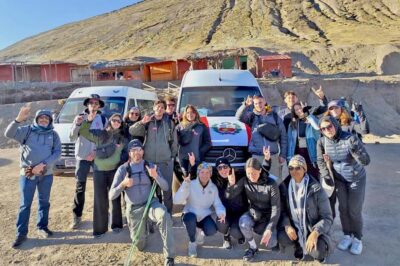
Rainbow Mountain and Red Valley Day Trip with Meals
Read our review →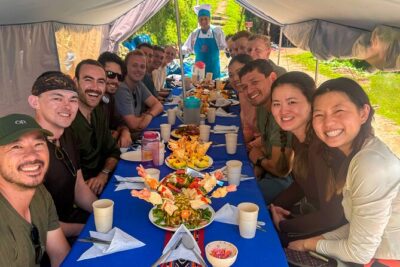
4-Day Inca Trail Trek with Panoramic Train Ride
Read our review →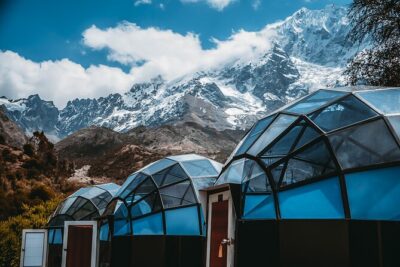

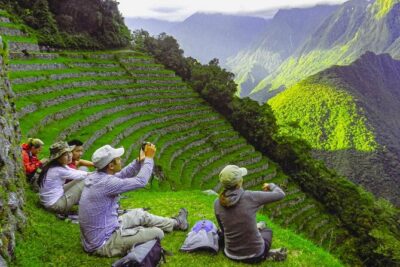
Excursion to Rainbow Mountain Full Day Optional Red Valley
Read our review →