
Reviewed · CITY TOURS
Cusco City Tour – Group Service
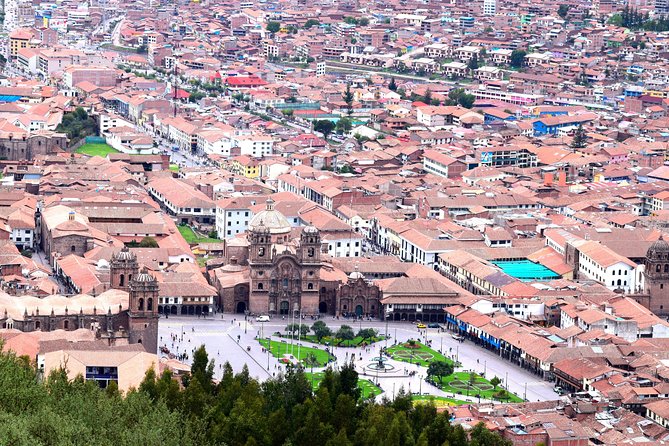
This Cusco city tour is interesting because it stitches together the old Inca sacred places and the Spanish-era Catholic landmarks in one smooth afternoon route. I like the small-group feel, and I like that you get a real mix of sites, from major showstoppers to the more atmospheric archaeological corners.
One thing to keep in mind is that entrance fees are not included for the Cathedral, Qorikancha, or the other archaeological stops. Each location is timed to about 40 minutes, so you’ll move with purpose, not linger for long.
Key points before you go
- Hotel pickup window: usually between 13:00 and 14:00, based on where you’re staying.
- Small group size: up to 15 travelers, which makes it easier to ask questions and pause when needed.
- English guide: the tour is offered in English.
- Fixed stops, smart pacing: about 40 minutes at each of the 6 main sites.
- Bring extra for entries: the tour price does not cover the Cathedral, Qorikancha, or the archaeological site tickets.
A 2:00 pm start with hotel pickup that keeps your morning open
This tour runs about 5 to 6 hours and starts at 2:00 pm. You’ll get picked up from your hotel or Airbnb lobby or front door somewhere between 13:00 and 14:00, depending on your location in Cusco. The tour meets at Plaza Regocijo and ends back at the same meeting point, which makes it easy to plan dinner afterward.
For me, the timing is a plus. You’re not burning your whole day before you even visit the stones. You also avoid the most hectic morning rush that you can hit with early departures, since your afternoon slot still gives you daylight for photos and the chance to slow down if the group needs a breather.
The group stays small, with a maximum of 15 travelers, and transportation is included. That combination matters in Cusco, where getting in and out of traffic and finding parking can eat up time fast if you’re doing things on your own.
Also worth noting: you’ll have a mobile ticket, and the experience is offered in English. If you prefer to travel with clear explanations you can follow, this setup usually feels comfortable.
More City Tours in Cusco
- Cusco: Half-Day City Tour with Sacsayhuaman and Q’enco
★ 4.6 · 1,129 reviews - City Tour Cusco Qoricancha Sacsayhuaman y Tambomachay
★ 4.7 · 617 reviews - Cusco City Tour Four Ruins in Half-Day
★ 5.0 · 530 reviews
Price and logistics: what you actually pay, and what you pay on top
The tour price is $15.39 per person, and that includes a professional tour guide, all transportation, hotel pickup, and a first aid kit. That’s the core value: you’re paying for someone local to organize the route, handle the logistics, and bring the sites to life with commentary, while you just show up.
But the big “budget reality” is the entrances. The tour does not include admission for the Cathedral, Qorikancha, or the other listed archaeological sites. The non included costs shown are:
- Partial tourist ticket: S/70.00
- Qorikancha (Temple of the Sun): S/20.00
- Cathedral: S/40.00
And meals and tips are also not included.
So, I’d treat the advertised price as the transportation and guide fee, then plan extra money for site entry. If you’re traveling with a tight budget, that’s not a dealbreaker, just don’t be surprised when you reach the first ticket counter.
Practical tip: Cusco runs on Peruvian soles for most small purchases, so it’s smart to have cash ready for the entrances. Also, build in a little buffer for waiting, since tickets and lines can vary by day.
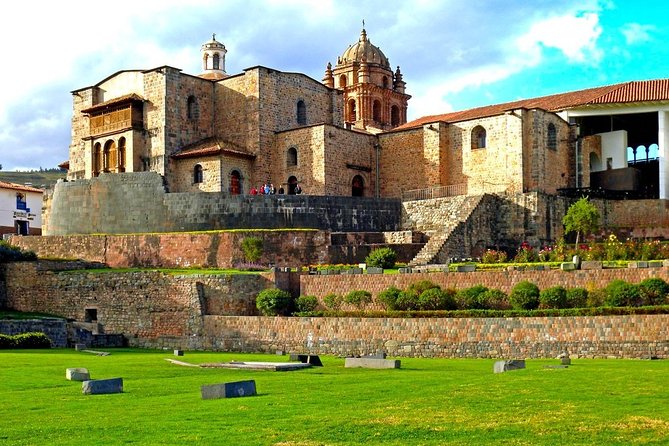
Cusco Cathedral: Christian-Andean syncretism in a 40-minute stop
The first stop is Cusco Cathedral, and it’s a symbol of Andean-Christian religious syncretism. In plain terms, you’re seeing how Spanish Catholic worship took root in Cusco while Andean ideas and local tradition still shaped what people built.
You’ll have about 40 minutes here. That’s long enough to step inside, look at chapels and altars, and get your bearings without turning it into a full museum visit. Admission is not included, so decide early if you want quick photos from key angles outside first, then go in, or go straight inside and let the guide set the order.
What I like about opening with the Cathedral is contrast. It gives you a quick “today’s Cusco” anchor before you shift into the Inca sacred world.
Qorikancha (Coricancha): when Inca walls become today’s main landmark
Next up is Qorikancha, also called Coricancha. This was the most important Inca temple, and the description emphasizes the precision of its walls, even saying it’s famous for perfection that surpasses Machu Picchu. Regardless of how you interpret comparisons, you’re in a place that people treat like a headline.
Expect another 40 minutes. Admission is not included, with an entry price listed at S/20.00 for Qorikancha.
This stop is valuable because it’s one of the most direct examples of how Cusco’s Inca core remains visible under later layers. Even if you’ve seen photos before, seeing the scale and the craftsmanship in person tends to land differently.
Also, this is a great place to ask your guide a simple question like: why was this site so important? A good guide will connect the dots quickly between Inca religion, the sun, and how sacred buildings were organized.
A few more Cusco days worth comparing
- Classic Inca Trail Trek 4D/3N to Machu Picchu (Group Service)
★ 5.0 · 8,653 reviews - Cusco: Rainbow Mountain and Red Valley Day Trip with Meals
★ 4.9 · 4,893 reviews - Machu Picchu: 4-Day Inca Trail Trek with Panoramic Train Ride
★ 5.0 · 4,568 reviews - Salkantay Classic Trek 5 Days from Cusco
★ 5.0 · 4,062 reviews
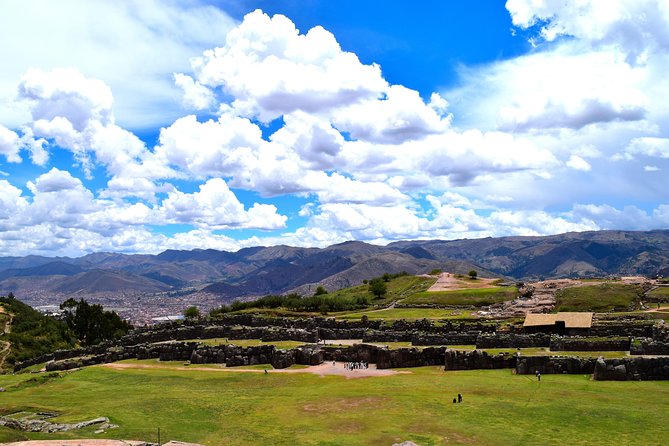
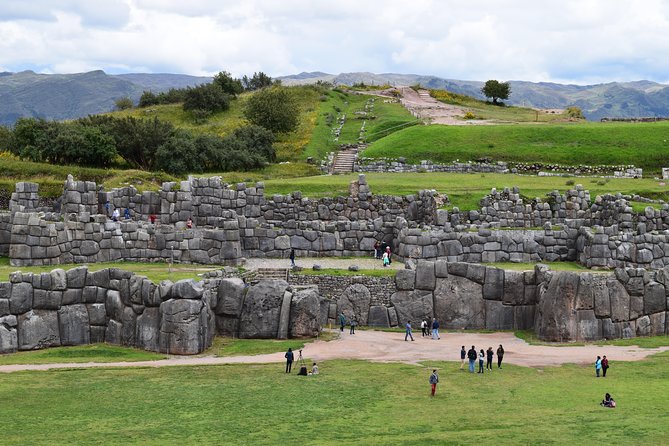
Sacsayhuamán: 20,000 workers, 125-ton stones, and why it still feels weird
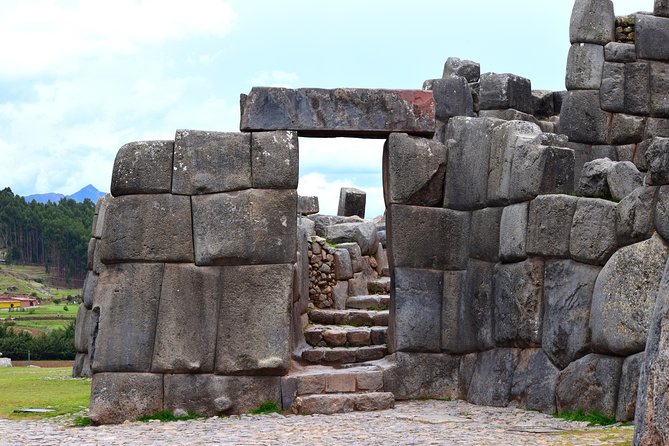
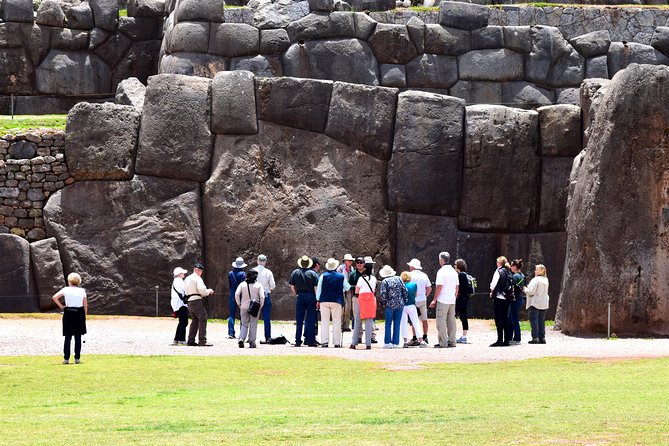
Then you’ll reach Sacsayhuamán, one of the most eye-catching archaeological sites in the area. The story here is intense: construction is associated with Inca Pachacutec in the 15th century, and the account says more than 20,000 men extracted stones and moved them about 20 kilometers to the hill where Cusco sits.
Even today, the site is estimated to retain around 40 percent of its original structure, yet it still includes structures with stones weighing up to 125 tons. That “how did they do that?” tension is exactly why this stop is worth the time. You’re not just looking at ruins, you’re staring at engineering that feels like a puzzle.
You’ll have about 40 minutes. It can feel like a lot at first glance, so I’d treat this as a site for slow looking, not a race to “see everything.” If your legs feel it, this is a good place to pause and let your guide explain what to notice.
A possible consideration: archaeological terrain can be uneven, so wear solid shoes you’re comfortable walking in for a few stretches.
Q’enqo: a labyrinth linked to Kaypacha and multiple gods
At Q’enqo, the theme shifts from big stone blocks to sacred symbolism and spatial design. The name Qenqo is described as meaning labyrinth. Here, the site is tied to the Andean worldview and is associated with Kaypacha, a legendary snake said to give rise to life.
The tour description explains that the Incas used this place as a kind of spiritual bridge, communicating with gods tied to the sun, earth, mountains, moon, and stars. You’ll also see features mentioned like the amphitheater, mazes, canals, and a sacrificial room.
You’ll get about 40 minutes. Because the name and shape are part of the story, I think it’s worth slowing down just a bit here and letting the guide describe what you’re looking at. If you want a memorable moment from the whole afternoon, Q’enqo can deliver it, because it feels like a “place with purpose,” not just leftover stone.
Again, admission is not included for this stop, so build it into your plan.
Puka Pukara: uneven stones, canals, aqueducts, and the idea of Inca roads
Puka Pukara adds a different texture to the tour. You’ll encounter enclosures and structures described as inner squares, canals, aqueducts, baths, and a well-known ancient road connected to the network of Inca roads called Qhapaq Ñan.
One detail that makes this site stand out is the stone quality. The description says the buildings use rocks of different sizes, small and medium, and the surface is very uneven compared to other archaeological sites. That means the physical experience of walking around Puka Pukara feels different from smoother, more polished areas.
You’ll have 40 minutes, which is enough to walk through key areas and understand what each element is likely meant to do. If you love practical ancient engineering details, like water management and movement routes, this stop is one of the better bets.
Admission is not included here too, and your tickets for archaeological sites should cover at least part of the entry structure, depending on what you purchase.
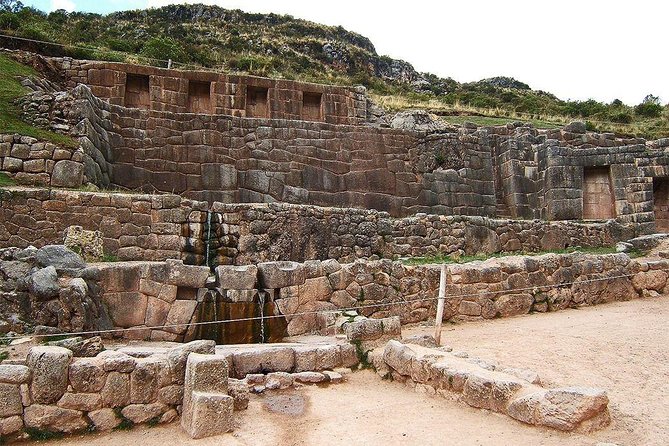
Tambomachay: Baños de Inca and the simple power of water
The last archaeological stop is Tambomachay, also known as the Baños de Inca. This one is highlighted for stonework mastery and an astonishing subterranean hydraulic system.
The explanation you’ll hear is straightforward and very Andean: the Inca revered water as a life-giving deity. So you’re not just looking at a “bath area,” you’re looking at how they handled water, fed it where it needed to go, and built sacred meaning into it.
You’ll get another 40 minutes. This stop can be a nice emotional landing point after the symbolic labyrinth of Q’enqo and the massive stone spectacle at Sacsayhuamán. It feels more human in a way, because water is something you can imagine used daily.
As with all the sites, admission is not included, but the tour ends back at Plaza Regocijo after transportation.
Guides and pacing: why a group tour can still feel personal
For a half-day city tour, the biggest make-or-break factor is usually the guide. The good news here is that the guide experience is a strong part of the overall feel, with names like Jonathan and Ernesto showing up tied to storytelling and flexibility. Other names associated with excellent service include Paul Cano, Johan, Guido, Justino, Rodrigo, Frank, and Persi.
What stands out in the way this tour runs is the pacing. You’re scheduled for about 40 minutes per stop, but the descriptions around guide behavior point to a real effort to avoid rushing. If the group feels tired, a guide may wait so people can keep up comfortably. That matters in Cusco, because altitude and walking load can sneak up on you even when you only have a few hours.
In a group of up to 15, you also usually get a bit more conversational time than the big-bus tours. I like that because questions help you connect the dots between sites instead of treating each location like a separate postcard.
If you want to take lots of photos, this tour can still work well. Just remember that “photo time” is easiest when your guide is moving the group in an orderly way. A steady guide makes your stops feel efficient, not chaotic.
Weather, comfort, and how to get the most from your afternoon
This experience requires good weather. If it’s canceled because of poor weather, you’ll be offered a different date or a full refund. That’s important in Cusco, where clouds and rain can change visibility and make stone paths slick.
For comfort, keep your expectations realistic. You’ll be in and out across several sites, each with fixed time blocks. Bring a light layer you can manage, and wear shoes you trust on uneven ground.
If you’re sensitive to altitude, pace yourself from the start. The tour begins at 2:00 pm, but you can still feel the altitude before the sightseeing even starts. Drinking water and walking slower than you normally would can turn the whole afternoon from “survival mode” into “wow.”
Also, plan your meal separately. Meals are not included, so you’ll want either lunch that ends before pickup, or a post-tour plan ready.
Should you book the Cusco City Tour with this group service?
Yes, I think it’s a strong choice if you want a structured introduction to Cusco’s Inca and colonial landmarks without doing planning math all day. The price is reasonable for the transportation and guide you get, and the small group size makes it easier to stay human during a fast-paced afternoon.
Book it if:
- You want a 5 to 6 hour highlights route that covers 6 major sites.
- You prefer a guided explanation in English.
- You like the idea of seeing both Inca sacred sites and the Cusco Cathedral side of the story.
Skip it or consider alternatives if:
- Entrance fees are a dealbreaker for your budget, since you’ll pay extra for the Cathedral, Qorikancha, and archaeological site tickets.
- You prefer long, slow visits in one place. This tour is built on timed stops.
If your priority is variety and context, this one delivers. You’ll leave with a clearer sense of why Cusco still feels like a layered spiritual city, not just a place to pass through.
FAQ
How long is the Cusco City Tour?
The tour lasts about 5 to 6 hours.
What time does the tour start?
The start time is 2:00 pm.
Do you get hotel pickup?
Yes. Pickup is offered from your hotel, Airbnb, hostel, or similar, usually between 13:00 and 14:00 depending on where you are staying.
Where does the tour start and end?
The meeting point is Plaza Regocijo and the activity ends back at the meeting point.
Is the tour offered in English?
Yes, it is offered in English.
What is included in the price?
Included items are a professional tour guide, all transportation, pick-up from your hotel, and a first aid kit.
What is not included?
Not included are entrance fees to archaeological sites (including a partial tourist ticket), Qorikancha admission, Cathedral admission, meals, and tips.
How many people are in the group?
The tour has a maximum of 15 travelers.
Do I need to pay admission at each stop?
Admission is not included for the listed stops, and entry prices are provided for the partial tourist ticket, Qorikancha, and Cusco Cathedral.
Can I cancel for a full refund?
Yes. You can cancel for free up to 24 hours in advance for a full refund, and cancellations are based on local time. If canceled due to poor weather, you’ll be offered a different date or a full refund.
Recently reviewed around Cusco
- 6-Day ||All Included|| Excursion – MachuPichu & Rainbow Mountain-Humantay Lake★ 4.5 · 8 reviews
- Horseback Riding thru the Mountains of Cusco★ 5.0 · 8 reviews
- Cuzco City Tour and Archaeological Ruins in Half Day★ 5.0 · 8 reviews
- Full Day – Rainbow Mountain tour – Group Service★ 5.0 · 8 reviews
- Half Day Tour in Cusco: Exploring the City and Four Ruins★ 4.5 · 8 reviews
- Cusco 4 Days Machu Picchu and Sacred Valley | All included★ 5.0 · 8 reviews
- Machu Picchu and Sacred Valley 2 Day Tour★ 5.0 · 8 reviews
- Walking Tour in Legendary & Historical Cusco City★ 4.5 · 8 reviews
City Tours, compared.
Lima Half-Day City Walking Tour (Small Groups)
Read our review →
Half-Day City Tour with Sacsayhuaman and Q’enco
Read our review →
City Tour Panoramic Bus Departure From Larcomar
Read our review →
City Tour Cusco Qoricancha Sacsayhuaman y Tambomachay
Read our review →
Lima’s lively Heritage: Exploring the City’s Landmarks Half-day
Read our review →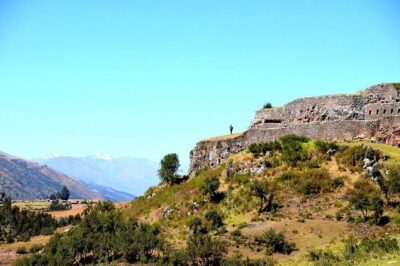
Sightseeing Tour of the City on an Open-Top Bus
Read our review →
Lima City, Central Market & Catacombs Tour (Pick-up & Drop Off)
Read our review →Browse the lists this tour appears in