
Reviewed · SALKANTAY TREK
From Cusco: 4-Day Salkantay Trek with Meals & Equipment
If you want the classic Machu Picchu payoff but with fewer crowds and more real mountain time, the Salkantay Trek is a smart way to get there. I like that you get big scenery moments like Lake Humantay and the dramatic climb to the Salkantay Pass, then you finish at Machu Picchu in the early morning calm.
The main consideration is logistics on the last day. You have tight timing around the Machu Picchu entry window, plus an optional bus and a train back to Ollantaytambo that depends on availability. If anything slips with ticketing, it can eat into your Machu Picchu time.
One more practical note: this is a small-group trek limited to 15 people, with mornings starting very early. That can feel efficient on the trail, but if you are not a morning person, plan to set your expectations accordingly.
Key things to know before you go
- 4:45 AM to 5:30 AM pickup in Cusco sets the pace, so you avoid mid-morning bottlenecks later.
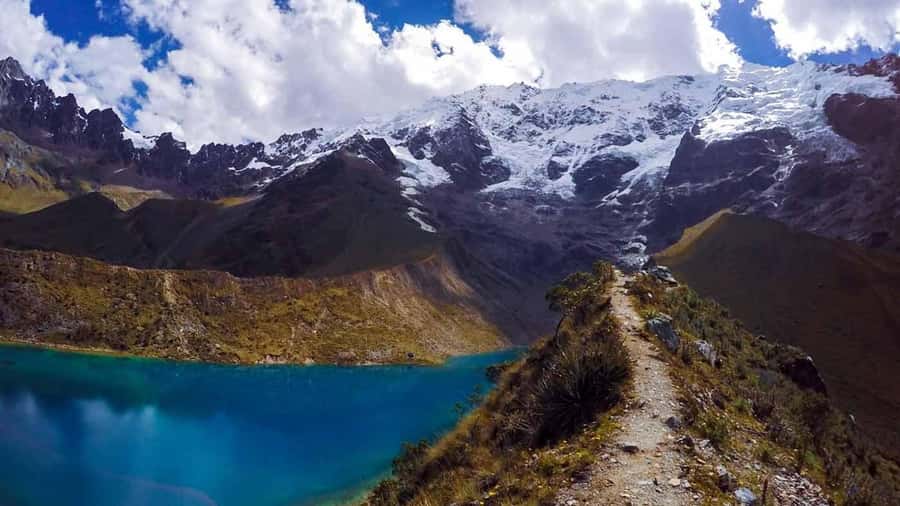
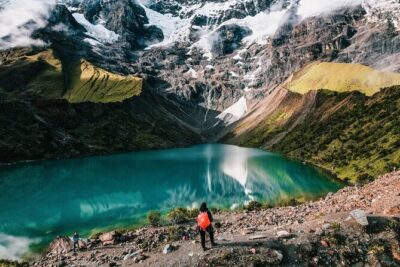
- Lake Humantay visit on Day 1 gives you a photogenic high-altitude moment before the hardest day.
- Salkantay Pass Day 2 is the toughest with a steep push toward the highest point of the trek.
- Chaullay huts at about 2,900 m add real flavor compared to generic camps.
- The Machu Picchu game plan is early to help you see the site before the busiest hours.
- Equipment and meals are mostly covered, but you still need to budget for a few add-ons.
Why the Salkantay Trek feels different from the usual Machu Picchu route
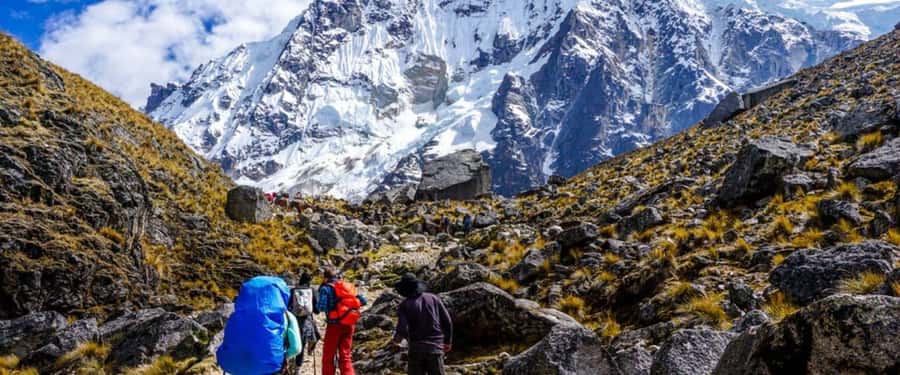
The Salkantay Trek is famous for a reason, and it is not just because it is scenic. It is also a pressure valve for crowds. Instead of following the most crowded Machu Picchu paths, this route spreads people out across a multi-day hike, so the mountains feel bigger and less choreographed.
On this 4-day version, you get a clean arc: Cusco area altitude ramp up, a high-mountain pass day, then descent into warmer valleys and finally Aguas Calientes. You finish with Machu Picchu, which is a UNESCO World Heritage site, but you reach it with a different rhythm than the typical quick day trip.
I also like how the itinerary keeps giving you a reason to keep moving. Day 1 is not just “walking time.” You start toward Soraypampa (3,900 m), you reach camp, then you visit Humantay Lagoon, and you end the day with dinner and a proper camp setup. Day 2 aims at the big payoff: the pass area with views of Mount Salkantay (6,264 m).
More Hiking & Trekking in Cusco
- Classic Inca Trail Trek 4D/3N to Machu Picchu (Group Service)
★ 5.0 · 8,653 reviews - Machu Picchu: 4-Day Inca Trail Trek with Panoramic Train Ride
★ 5.0 · 4,568 reviews - Salkantay Classic Trek 5 Days from Cusco
★ 5.0 · 4,062 reviews
Day 1: Cusco to Soraypampa, with Humantay Lagoon in the afternoon
You are picked up from your Cusco meeting point between 4:45 AM and 5:30 AM, then travel by bus about two hours. The first stop is Mollepata, where you break for breakfast (not included), bathroom stops, and any last-minute supplies. This is a key moment, because once you start hiking, you are on trail time.
Around 9:30 AM, the trek begins toward Soraypampa (about 3,900 m). At a regular pace, the walk takes roughly 4 hours. What matters here is not speed, it is finding a rhythm you can hold. You are already at altitude, and the day is designed to get you up there without throwing you straight into the steepest climb.
After you arrive, you get lunch at Soraypampa, then in the afternoon you head to Humantay Lagoon. This stop is one of the best “wow for your effort” moments on the whole itinerary. High altitude plus that bright, reflective lake look equals photos you will actually care about later. Then you finish the day with a hot dinner.
Sleeping arrangement note: you will be in a camp setup with tents and a kitchen team. It is not a rougher-than-necessary adventure, it is more like supported camping.
Day 2: Soraypampa to the Salkantay Pass, then down to Chaullay
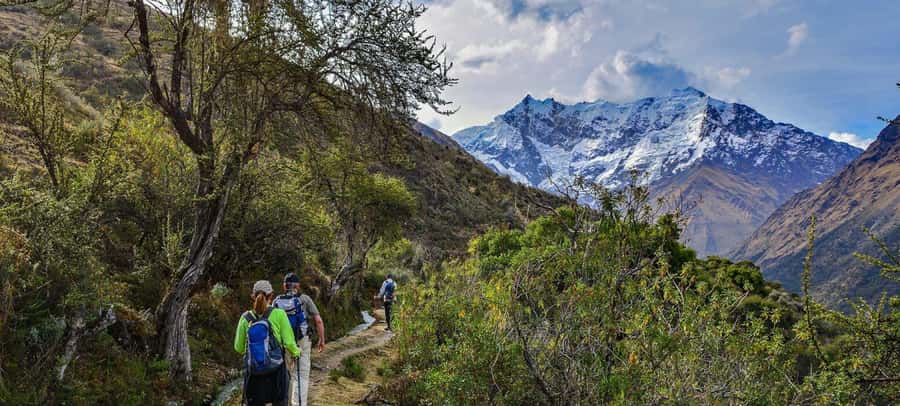
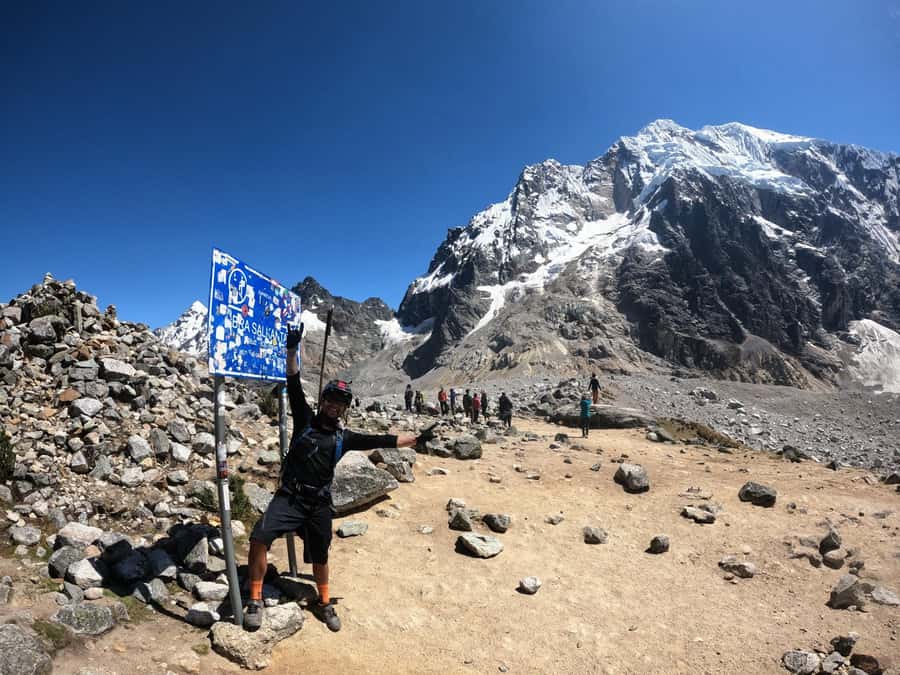
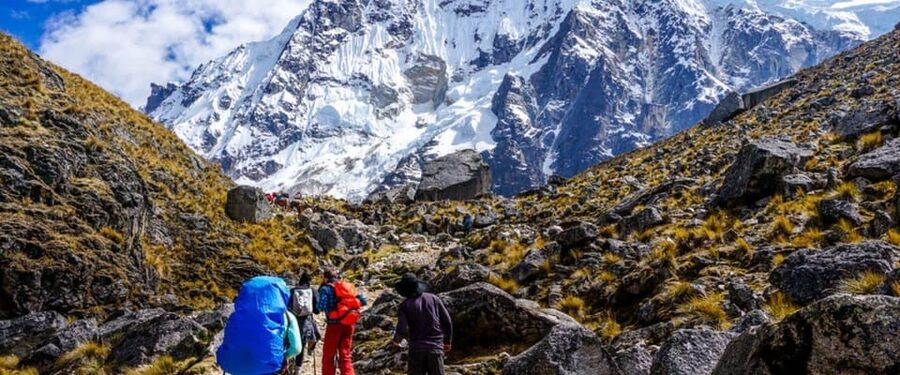
Day 2 starts early. You eat breakfast around 5:00 AM, then begin the climb around 6:00 AM. This is the hardest day of the trek. The climb is about 6 kilometers uphill through mountain scenery, and it is aimed at the trek’s highest point.
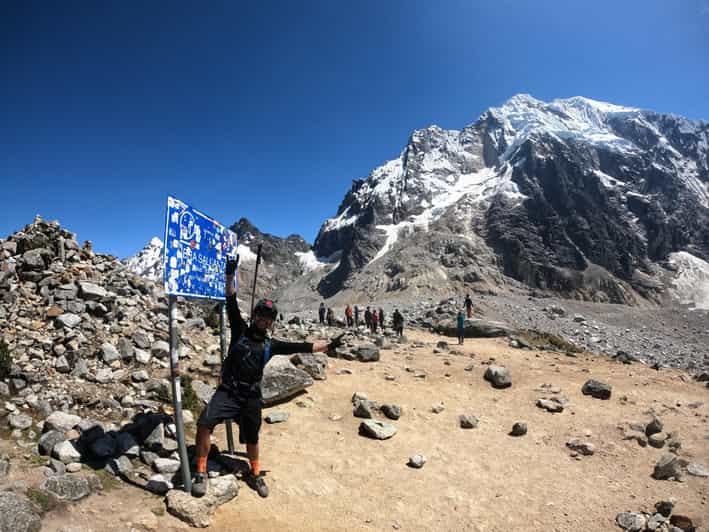
As you push up, you get views of Salkantay, including the snow-capped peaks. The pass area is the emotional peak of the whole hike. Even when you are tired, the views have a way of resetting your brain, and you stop thinking only about your legs.
You reach the top and then start descending. Around 1:00 PM, you get a Peruvian lunch in Huayracmachay. This lunch stop matters, because you spend the morning working uphill, then the afternoon becomes about controlled walking downhill.
After lunch, the route continues downhill for about 3 hours to camp in Chaullay (around 2,900 m). Here’s a nice detail: you sleep in very spectacular indigenous huts. That is not just a marketing line. It changes the feel of the night, because it adds local material and a different kind of atmosphere than a generic campsite.
Dinner follows at around 6:00 PM. Then you recover, because Day 3 is long and includes travel.
Day 3: Santa Teresa Valley to Aguas Calientes, finishing on the railway track
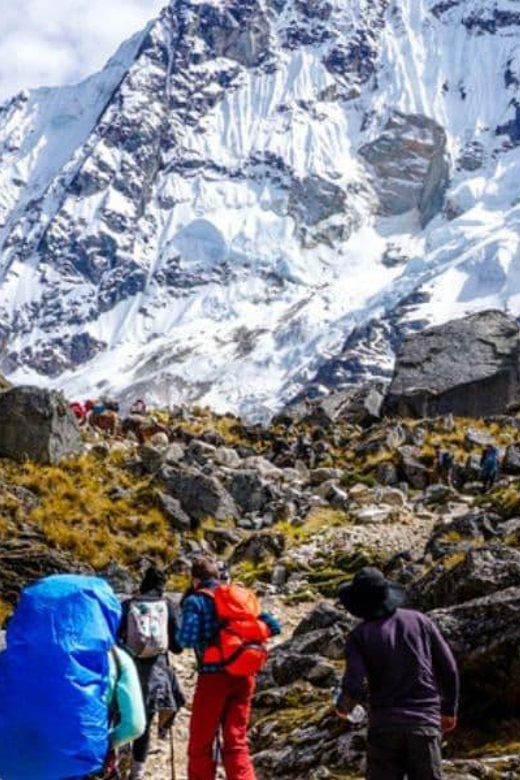
You start walking at 6:00 AM. The day begins with a trek toward the small town of La Playa through the Santa Teresa Valley. You will have lunch there (included), then you shift from walking to short transport.
Next you head toward the hydroelectric plant area for about 1.5 hours, then you walk roughly 10 kilometers on the railroad track to Aguas Calientes. That section is a classic Salkantay vibe, part steady walking, part “we are almost there” momentum.
Aguas Calientes is where you overnight. Your package includes one night in Aguas Calientes (hostel). This is a smart placement in the itinerary because you need a full early morning for Machu Picchu, and staying overnight keeps the plan realistic.
Pay attention to possible add-on costs on this day. The package notes a paid transfer connected to the hydroelectric approach (listed at PEN 30.00) and it also notes there may be additional buses for 10 or 20 extra soles as things move toward Aguas Calientes. If you assume everything is fully covered without checking, you might feel surprised at some point in the day.
More Salkantay treks:
- 4-Day Salkantay Trek with Sky Camp Stay
★ 5.0 · 3,346 reviews - Salkantay Trek 5D/4N with Glass Cabins, Domes and Hobbit House
★ 5.0 · 2,488 reviews - 5-Day Premium Salkantay Trek
★ 5.0 · 788 reviews - Ultimate Salkantay Trek to Machu Picchu 5 Days
★ 5.0 · 588 reviews
Day 4: Machu Picchu early entrance, guided time, then train back to Cusco
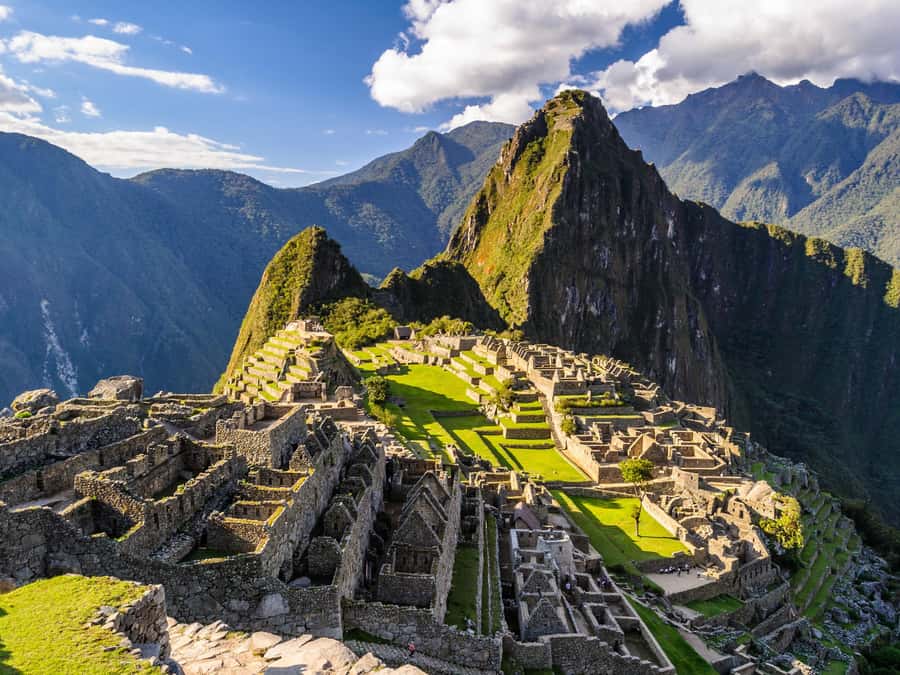
You wake up early in Aguas Calientes to get into Machu Picchu with better timing, before the busiest crowd rush. The Machu Picchu control point opens 6:00 AM to 3:00 PM, so you are not gambling with a late arrival.
You enter the site with a 2-hour guided tour. The exact start of your guided time depends on your ticket and the day’s schedule, but the structure is clear: you get guided introduction time inside the Royal Citadel area, then you continue on your own afterward.
There is an optional bus up to Machu Picchu listed at $12.00. If you hate steep walking right after a long trek, treat this as a helpful option rather than an upsell.
After Machu Picchu, you take the train from Aguas Calientes to Ollantaytambo. The listed train times are 4:22 PM or 6:20 PM, depending on availability. Then a group minivan takes you back to Cusco, dropping you at Plaza San Francisco.
Here is the practical truth: the whole last day is a tight schedule. If you want time to linger at viewpoints, I suggest you plan for the possibility that you might need to prioritize what you see first during the guided portion.
What is included, and why it helps you on a trekking trip
This tour is priced as a supported trekking package, not just a walking route. That matters when you are tired, when weather changes, and when you would rather spend your energy on the trail than on logistics.
Included highlights that genuinely add value:
- A professional English-speaking guide (Spanish is also possible), plus a pre-departure briefing.
- Meals: 3 breakfasts, 3 lunches, 3 dinners, a daily morning snack, and daily tea service, except the last day.
- Vegetarian or special menus at no additional cost.
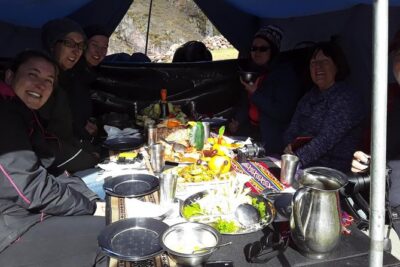
- Camp setup: dining tent with tables and chairs, plus a kitchen team.
- Camping support: domes with 4 people per dome and cabins for 2 people, plus mats and bedding support as listed.
- Pack animals to transport tents, food, and kitchen utensils every day from Day 1 to Day 4.
- Personal gear transport by pack animals up to 5 kg per person on Days 1 through 3.
You also get practical safety elements: a first aid kit with emergency oxygen bottle. I also like the inclusion of biodegradable hand soaps and biodegradable dishwashing detergents, because it signals the trip is trying to manage waste properly.
One more detail that helps you pack smart: you only get to send personal equipment up to 5 kg for Days 1 to 3. Pack light enough that you can carry what matters daily, and let the team carry the rest.
What is not included, and how to budget without surprises
The “not included” list is where budget trips often go wrong. Here is what you should keep an eye on, because these are the most likely add-ons.
Expect potential extra costs for:
- Breakfast on Day 1 is not included.
- Lake entrance fees: 20 soles for Lake Salkantay and Humantay.
- Drinking water is not included as a packaged item. You can purchase along the way or bring filters.
- On Day 3, there may be extra buses and a paid transfer linked to the hydroelectric approach (noted as PEN 30.00, and buses for 10 or 20 soles).
- Optional Machu Picchu bus: $12.00.
- Lunch on the last day after your Machu Picchu guided tour is not included.
- Walking sticks: offered as a rental for $20 a pair for the entire trip.
- Sleeping bag: offered with a stated comfort temperature of -10ºC. Rental is $20 for the entire trip.
One thing I suggest: before you go, decide if you will truly need a walking stick and sleeping bag. If you already own gear, you can reduce extra fees. If not, those add-ons are small compared with the overall trip cost.
Price and value: is $410 a fair deal for this 4-day arc?
At $410 per person, this package is doing a lot for you. It includes Machu Picchu entrance and the train ticket from Aguas Calientes to Ollantaytambo, plus camp meals and a guide. Those are not small items, and they are the kind of logistics that can turn a trek into a headache if you handle everything solo.
The main reason this can be good value is that it reduces the number of moving parts. You show up in Cusco, you hike with camp support, you overnight in Aguas Calientes, and you have scheduled train return. For a 4-day trek, that is a strong convenience factor.
Your cost risk is mainly “small extras” that add up:
- Lake entrance fees
- A couple of transfers and bus options around Day 3
- Optional Machu Picchu bus
- Last-day lunch
- Gear rentals if you do not bring your own
If you are the type who likes certainty, bring what you can (or rent only what you must), and keep some spare cash for Day 3 and Day 4.
Logistics and timing to take seriously (especially on the last day)
This tour includes multiple time-sensitive checkpoints. The early Cusco pickup starts your day fast, then the Machu Picchu day is scheduled around the 6:00 AM to 3:00 PM entry window.
The most important practical move I recommend is to confirm your Machu Picchu entry and train details well before Day 4. Tickets can be issued in different ways depending on how reservations are handled, and on a tight schedule you do not want to be solving paperwork problems after you have already hiked for hours.
Also plan around the “optional bus” reality. Even if the bus is optional, the day can still feel long. If you want Machu Picchu time to feel relaxed, budget for that $12.00 bus decision up front rather than making it late when your energy is gone.
Who this Salkantay trek suits best
I think this trek fits best if you:
- Want a less-crowded alternative on your way to Machu Picchu.
- Like structured hiking with a guide, meals, and camp setup.
- Are okay with early mornings and a tough uphill Day 2.
- Appreciate cultural texture, like sleeping in indigenous huts at Chaullay.
It might be less ideal if you:
- Hate tight schedules on the last day.
- Expect every transport and meal to be included without any add-ons.
- Want a very slow, flexible pace with lots of resting time between major sites.
Should you book this 4-day Salkantay Trek from Cusco?
My take: book it if you want a supported, well-paced trek with the real scenery moments of Salkantay plus Machu Picchu at the end, and you are willing to manage a few add-on costs. The trek itself is the star here, and the itinerary gives you a high-payoff route rather than just “walk and repeat.”
Before you pay, do two things. First, confirm you will receive your Machu Picchu entry and train details in advance, so you are not stressed on Day 4. Second, decide early whether you will rent the sleeping bag or walking stick, and budget for the Lake fees and possible Day 3 transport extras.
If you do that, this can be a very satisfying way to earn your Machu Picchu view.
FAQ
What time do they pick you up in Cusco?
Pickup from the Cusco meeting point is scheduled between 4:45 AM and 5:30 AM.
Does the price include meals during the trek?
Yes. The package includes 3 breakfasts, 3 lunches, and 3 dinners, plus a daily morning snack and daily tea service, except the last day. Breakfast on the first day is not included.
Is Machu Picchu entrance included?
Yes. Entrance to Machu Picchu is included, and you also get a 2-hour guided tour.
Are vegetarian meals available?
Vegetarian or special menus are available at no additional cost.
How much personal equipment can I have transported by pack animals?
You can send personal equipment up to a maximum of 5 kg per person for Days 1 to 3.
Do I need a sleeping bag or walking stick?
A sleeping bag is not included, and walking sticks are not included. They can be rented for $20 each for the entire trip (sleeping bag) and $20 for the entire trip (walking sticks).
What extra costs might come up on the way?
Common add-ons listed are the 20 soles entrance fees for Lake Salkantay and Humantay, a PEN 30.00 transfer to the hydroelectric area, possible additional buses of 10 or 20 soles on Day 3, the optional $12 bus to Machu Picchu, and lunch on the last day after your guided tour.
Recently reviewed around Cusco
- Cusco Cooking Class by ChocoMuseo in Cusco★ 5.0 · 29 reviews
- ATV Adventure to Moray and Maras Salt Mines – Half Day★ 4.5 · 29 reviews
- 1-day excursion to Machu Picchu from Cusco★ 5.0 · 29 reviews
- Private Tour Sacred Valley, Chinchero, Maras Moray, Ollantaytambo★ 5.0 · 29 reviews
- From Cusco: Humantay Lake with Breakfast and Buffet Lunch★ 4.5 · 29 reviews
- 4 Day – Inca Jungle to Machu Picchu★ 5.0 · 29 reviews
- 2-Day Machu Picchu Tour by Train from Cusco★ 4.5 · 29 reviews
- 2-Day Sacred Valley and Machu Picchu Tour By Train★ 4.5 · 29 reviews
Salkantay Trek, compared.
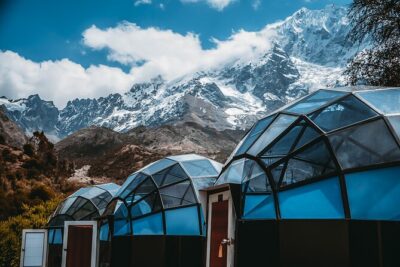
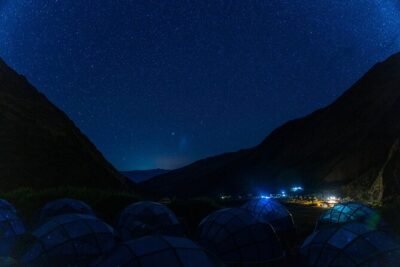
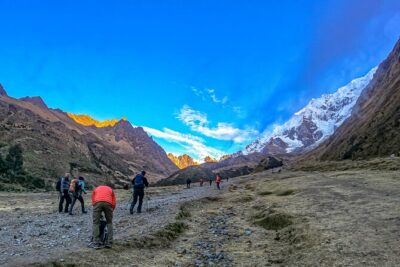
Salkantay Trek 5D/4N with Glass Cabins, Domes and Hobbit House
Read our review →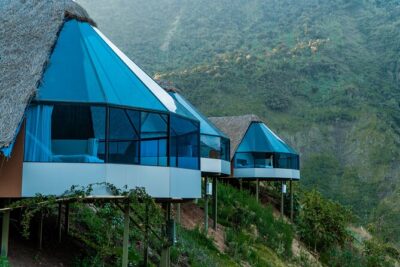
Ultimate Salkantay Trek to Machu Picchu 5 Days
Read our review →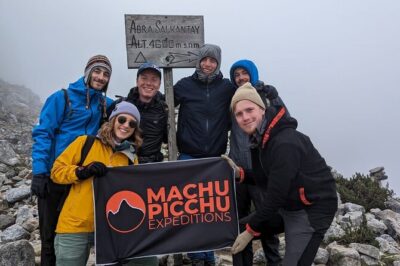
Salkantay Trek to Machu Picchu 5 Days / 4 Nights by Glamping
Read our review →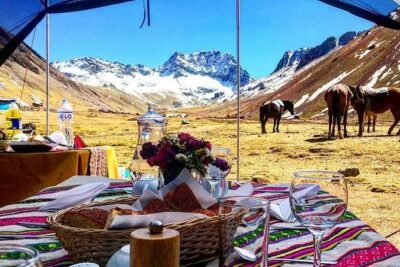
Humantay Lake and Salkantay Pass Trek – 2 Days / 1 Night
Read our review →Browse the lists this tour appears in