
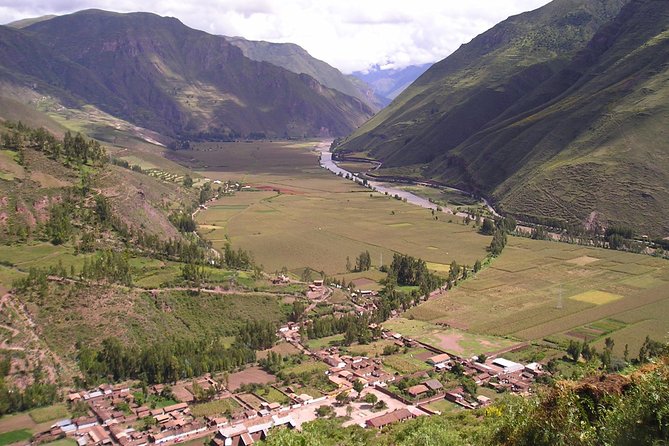
Reviewed · SACRED VALLEY
Full day tour of Sacsayhuaman,Q’enQo, Puka Pukara, and Sacred Valley Tour
This is an interesting Cusco day because it stitches together key Inca sites around the city and in the Sacred Valley without making you plan a thing. I like the cover-a-lot structure, and I also like that you get a professional guide to connect the dots between each ruin and what the Incas were doing there. One drawback to consider is the pace: with a 12-hour day and multiple stops, you will want good footwear and realistic expectations about lingering.
Two names you will hear a lot are Jorge (guide) and Freddy (driver). In at least one recent run, they arrived on time, kept the energy up, and Jorge actively encouraged questions while explaining at a comfortable speed. Just keep in mind the tour price does not include your full site entry ticket, and lunch is also on you.
Key highlights worth your time
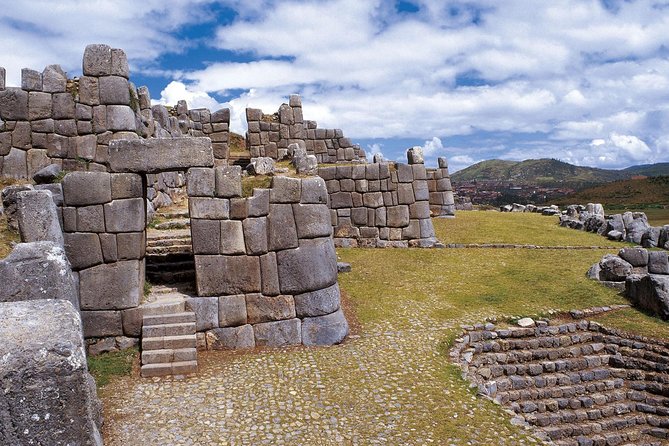
- Big-stone Cusco power stop (Sacsayhuaman): zigzag walls and massive cut stones that still make you stop and stare.
- Myth and architecture at Qenqo: underground tunnels tied to Andean beliefs about life and the afterworld.
- Sacred Valley classics without the stress: Pisac mountain ruins plus time in Ollantaytambo, a town people often skip.
- Hands-on culture in Chinchero: weaving demonstrations with no stated fee for the class.
- Small-group feel: a maximum group size of 12 helps questions stay possible.
A long day built around the Cusco-Inca hits
This full-day tour is made for one main type of traveler: the person who wants the major sites near Cusco and in the Sacred Valley in a single swing. It starts with a hotel pickup at 7:00am and runs to about 6:30pm or 7:00pm, depending on traffic and timing.
You also need to know what kind of day this is. The schedule is not one slow museum stroll. It is more like a “see, learn, move, repeat” itinerary, with guided time at each stop plus a little personal wandering.
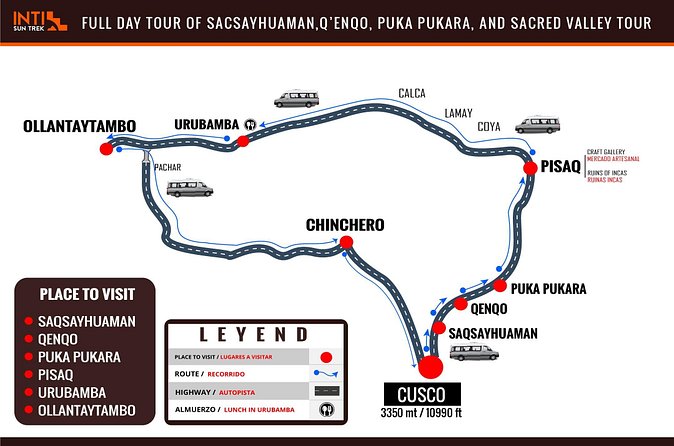
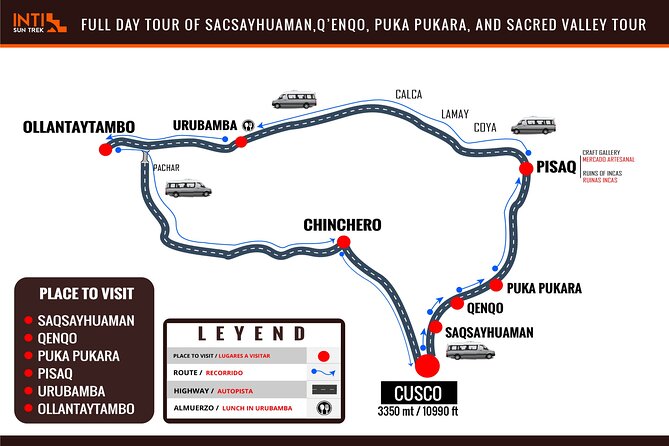
The tour is listed as visiting eight places total (focused on ruins outside the city), even though the schedule calls out seven major stops by name. That matters because you should plan for a full day of transit and short walks, not a relaxed hop between attractions.
More Full-Day Tours in Cusco
- Excursion to Rainbow Mountain Full Day Optional Red Valley
★ 5.0 · 2,996 reviews - Excursión to Humantay Lake Full Day from Cusco
★ 5.0 · 2,150 reviews - From Cusco: Full-Day Group Tour of Machu Picchu
★ 4.7 · 1,767 reviews
Price and tickets: what $180 really means
The tour costs $180 per person, and it includes the big operational pieces: hotel pickup, tour transportation, and a professional guide in English.
What is not included is where your budget can creep up: you need the full Boleto Turistico del Cusco, the official tourist ticket, priced at 130 soles per person. The tour notes say this ticket is the key to entry for multiple sites like Sacsayhuaman, Qenqo, and Tambomachay, and it also lists some stops as free. In real life, the safest move is to budget for the full ticket since that is what the tour requires you to have.
Food and drinks are not included, and lunch is an extra cost. The day includes a stop for lunch in Urubamba, and one guide-run included a peruvian buffet restaurant stop toward the end, but that does not change that your meal is still an extra expense.
So the value equation looks like this: you pay for a long, guided route with transportation and organization. If you were doing this on your own, you would likely spend time coordinating rides, entry timing, and a guide for context. This tour buys you that convenience.
How to show up: dress code, shoes, and altitude reality
The tour requests smart dress, meaning no jeans, sportswear, joggers, or sneakers. Comfortable walking shoes are recommended. That sounds fussy, but it is really about keeping you comfortable for uneven stone and stairs while still presenting a bit nicer for the day.
Now add altitude. One stop, Tambomachay, sits at about 12,150 feet (3,700 meters). Even if you feel fine in Cusco, higher points can make your breathing a little heavier. Bring a light layer, sip water, and keep your pace steady during guided walks.
The tour also has a practical group detail: near public transportation, hotel pickup included, and a maximum of 12 travelers. That means you are not stuck in a giant bus crowd, which helps when stops get busy.
Stop 1: Sacsayhuaman’s zigzag terraces and giant stones
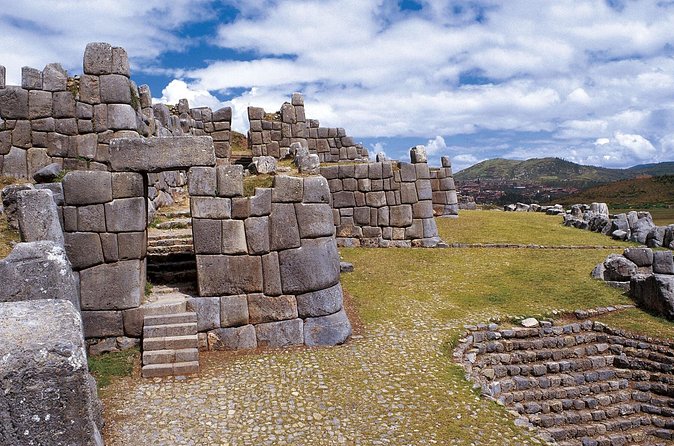
Sacsayhuaman is the Cusco site people bring up for a reason. It sits on a high hill above the city, and the defining feature is scale. Inca builders cut and polished enormous stones, with many weighing several hundred tons, then arranged them into terraces and zigzag walls that run for hundreds of feet.
Even though only part of the original complex remains, it is still a wow moment. This is one of those places where a good guide matters, because the “what you are seeing” gets clearer fast once someone explains the engineering logic.
Time on site is about 1 hour, with admission not included in the tour price. You will get enough time to grasp the main sections and take some photos without feeling like you are sprinting.
A small consideration: you are going to be walking on and around uneven stone. If your footwear is too thin or too slippery, you will feel it.
More Sacsayhuaman visits:
- Cusco: Half-Day City Tour with Sacsayhuaman and Q’enco
★ 4.6 · 1,129 reviews - City Tour Cusco Qoricancha Sacsayhuaman y Tambomachay
★ 4.7 · 617 reviews - Cusco City Sightseeing and Sacsayhuaman Archeological Park Tour
★ 4.5 · 101 reviews - Cusco: Half-Day City Tour with Sacsayhuaman and Qenqo
★ 4.5 · 77 reviews
Stop 2: Qenqo and its serpent-world tunnels
Next up is Qenqo, a name that points toward labyrinth imagery. The key idea is that the site connects to Andean belief systems, including a legendary serpent associated with life, plus the idea that underground spaces can link the world of people with the world of the dead.
What you should look for is the architecture as symbolism. Qenqo is known for its underground tunnels and cave-like areas, and it is one of the more visited archaeological sites in Cusco. If you only have one “myth meets stone” stop today, Qenqo is a strong pick.
Time here is shorter, about 30 minutes, and admission is not included in the tour price. The upside is that the visit is focused. You will not get lost in a huge site. The downside is that if you love geology, carvings, or detailed archaeology, you may wish you had longer.
Stop 3: Puca Pucara for water, roads, and practical Inca design
Puca Pucara sits on the outskirts of Cusco and feels more “functional” than dramatic. The complex includes squares, water channels, bathrooms, terraces, and even an ancient Inca road connected to the broader qhapac ñan road system.
The buildings here are constructed with small and medium-sized stones, which gives you a different look compared to the super-giant stonework at Sacsayhuaman. If you are trying to understand how Incas adapted materials and building techniques across locations, Puca Pucara helps.
Time is about 30 minutes, and the notes list admission as free for this stop. Still, because your full tourist ticket is part of the tour requirement, bring it anyway.
This is also a good break in the day mentally. It shifts you away from the heavy wow-factor and into “how did they build for daily systems” mode.
Stop 4: Tambomachay’s terraces, niches, and continuously fed water
Tambomachay is set on a hill about 4 miles north of Cusco, high enough that you should respect altitude. The structure includes three stepped terraces of precise Inca stonework, plus trapezoidal niches on some retaining walls.
The standout practical feature is water. Tambomachay is built over, or into, a natural spring, and that spring continuously feeds aqueducts, canals, and little waterfalls that spill along the terraces.
Time here is 40 minutes, and admission is not included in the tour price. This is a great stop for travelers who like both engineering and atmosphere. You get the stonework, then the sound and movement of water to anchor the place.
If you get winded easily, pace yourself. You are at a high elevation here, and the uphill walking can add up in a long day.
Stop 5: Pisac’s mountain ruins and why this is often the highlight
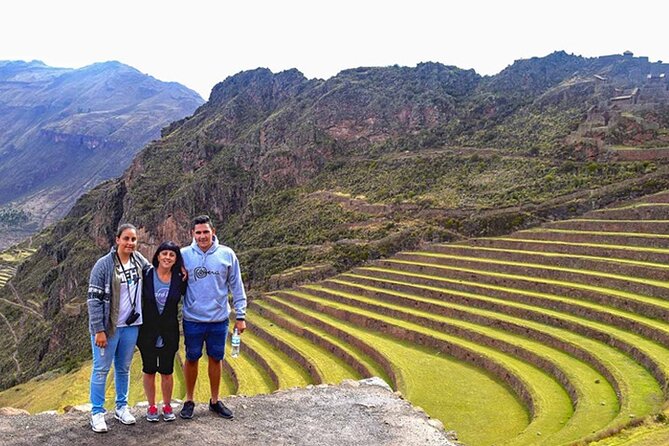
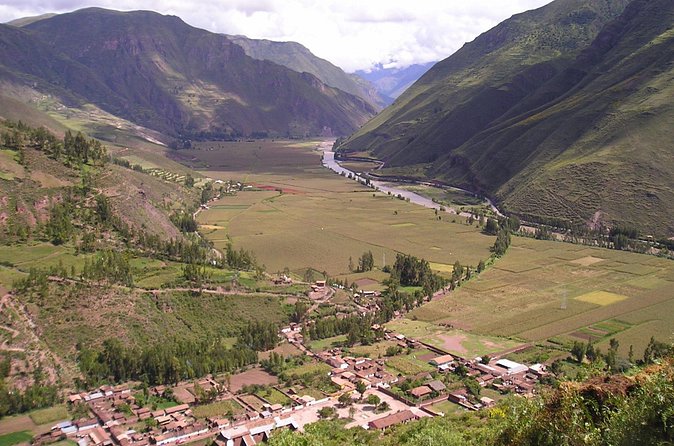
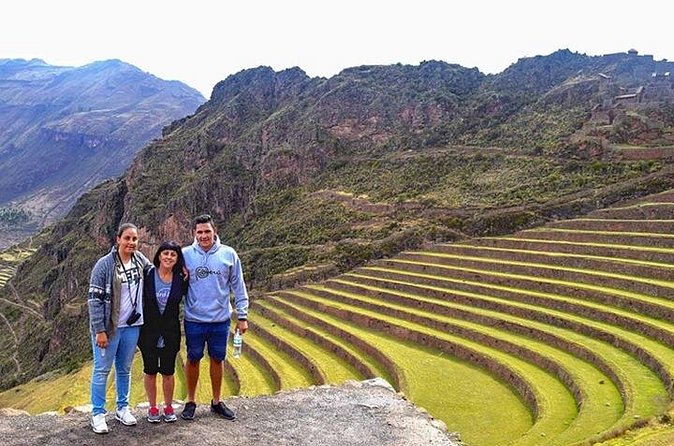
Pisac is one of Peru’s more intact archaeological sites, and it is easy to see why it is considered a standout stop in a Sacred Valley day. The ruins sit on top of a mountain above the town of Pisac, and the views down over the valley help the ruins land in your brain.
What makes Pisac rewarding is that it shows off ingenious Inca architecture, not just isolated stone blocks. If you care about how terraces, paths, and agricultural design can be part of the same system, you will likely appreciate this place.
Time is 1 hour, and admission is listed as free here. The notes also point out an important reality check: the charming town of Pisac can tempt you to stay longer. If you have only one day in this area, Pisac gives you enough to enjoy it without turning the day into a wandering detour.
Stop 6: Ollantaytambo town time, not just ruins
Ollantaytambo often gets treated like a stop on the way to somewhere else. This tour gives you more than a quick glance, with about 1 hour 30 minutes at the archaeological park in the area and time to sit with the town vibe.
The setting matters: Ollantaytambo is a key transit point between Cusco and Machu Picchu, and that role still shapes the town. You get a sense of daily life in modern Peru while you look at Inca-era bones of the place.
Admission is not included in the tour price. If you like photos and also like context, this is one of the best “balance” stops: ruins plus real-world town energy.
Stop 7: Chinchero weaving demonstrations, culture you can watch
Chinchero is the cultural finish that keeps the day from becoming only stone and stairways. Chinchero is known for weaving, and the tour includes a demonstration at the cooperative.
You can expect yarn washing and explanations of weaving steps, including terms around dyeing and knitting. The notes specifically say the demonstration is class-like and that there is no fee for the demonstration classes. The ladies involved typically include people of different ages, which makes it feel more like a living craft than a staged show.
Time here is about 1 hour, and admission is listed as free. If you want a souvenir that feels connected to real process, this is where the day gives you that option through understanding, even if you do not purchase anything.
Timing, pacing, and how not to feel rushed
A 12-hour schedule is long, but the stop structure is pretty sensible. You get:
- Shorter visits for Qenqo and Puca Pucara (about 30 minutes each)
- A longer block for Sacsayhuaman (1 hour)
- A medium block for Tambomachay (40 minutes)
- Longer Sacred Valley focus at Pisac (1 hour)
- Town and park time at Ollantaytambo (1 hour 30 minutes)
- A culture stop at Chinchero (1 hour)
Each place includes guided time of at least 40 minutes, plus extra minutes for your own exploration. That extra freedom is important. It means you can step away briefly to find a better angle, take a breath, or just sit and watch without losing the thread.
Still, plan for transit time. You will be moving. If you hate car time, bring something to pass the hours in your bag, and keep your expectations in check about how long your legs will want to work.
The guide and driver make or break a day like this
One of the most praised aspects of this tour is the human side. Jorge, the guide, and Freddy, the driver, keep the day running smoothly. There is also a clear pattern in how Jorge teaches: he encourages questions and takes time to explain details.
That matters because Cusco’s Inca sites can blur together if you are just hopping from viewpoint to viewpoint. With a guide who is happy to answer questions, you get more than “I saw a ruin.” You get meaning.
In at least one recent experience, the group also got taken to a delicious peruvian buffet restaurant toward the end of the day, aligning with the tour’s Urubamba lunch stop concept. That is not the same as included meals, but it is a nice perk when your day has been heavy on walking.
Who should book this tour, and who might want a different plan
This is a strong fit if:
- You want major Cusco and Sacred Valley sites in one day
- You like guided history that explains what you are looking at
- You travel efficiently and do not mind long transit
You might hesitate if:
- You hate early mornings, since pickup is at 7:00am
- You need lots of downtime between stops
- You are sensitive to altitude, since Tambomachay is around 3,700 meters
Families can participate, and children under 5 are allowed at no charge. The max group size of 12 helps keep things from feeling chaotic.
Should you book this full-day Cusco to Sacred Valley tour?
If you have limited time in Cusco and you want a structured day with a guide, this tour is a practical choice. You get the big-ticket Inca stops around Cusco, then you transition into Sacred Valley icons like Pisac and Ollantaytambo, plus a culture stop in Chinchero.
Do it with eyes open on cost and endurance. Budget for the 130 soles tourist ticket, and plan for lunch expenses. Also pack for comfort: walking shoes, layers, and a realistic mindset for a 12-hour schedule.
If you are the type who thrives on “see a lot, learn a lot, move on,” you will probably enjoy this day.
FAQ
What time does the tour start and finish?
It starts at 7:00am and finishes at about 6:30pm to 7:00pm.
Is hotel pickup included?
Yes, hotel pickup is included. You should wait for the driver at your hotel lobby.
How long is the tour?
The duration is about 12 hours (approx.).
Is the tour offered in English?
Yes, it is offered in English.
Do I need admission tickets?
Yes. The tour says you need the full Boleto Turistica del Cusco ticket, which costs 130 soles per person. Some stops are listed as free in the schedule notes, but the full ticket is still required by the tour details.
Is lunch included?
No. Lunch and food and drinks are not included, though the tour will stop for lunch in Urubamba.
How many places will I visit?
You visit eight places in total, focused on ruins outside the city. The schedule lists seven major stops by name.
What is the group size?
The tour has a maximum of 12 travelers.
Is free cancellation available?
Yes, you can cancel for a full refund up to 24 hours in advance of the experience start time.
More Sacred Valley Days
- From Cusco: Sacred Valley & Maras Salt Mines Tour with Lunch
★ 4.8 · 2,227 reviews - 2-Day Tour: Sacred Valley and Machu Picchu by Train
★ 5.0 · 1,127 reviews - Cusco: Sacred Valley, Pisac, Ollantaytambo, Salt Mines Moray
★ 4.6 · 1,058 reviews - Sacred Valley and Maras Moray Tour with Full Day Buffet Lunch
★ 5.0 · 670 reviews
Recently reviewed around Cusco
- 6-Day ||All Included|| Excursion – MachuPichu & Rainbow Mountain-Humantay Lake★ 4.5 · 8 reviews
- Horseback Riding thru the Mountains of Cusco★ 5.0 · 8 reviews
- Cuzco City Tour and Archaeological Ruins in Half Day★ 5.0 · 8 reviews
- Full Day – Rainbow Mountain tour – Group Service★ 5.0 · 8 reviews
- Half Day Tour in Cusco: Exploring the City and Four Ruins★ 4.5 · 8 reviews
- Cusco 4 Days Machu Picchu and Sacred Valley | All included★ 5.0 · 8 reviews
- Machu Picchu and Sacred Valley 2 Day Tour★ 5.0 · 8 reviews
- Walking Tour in Legendary & Historical Cusco City★ 4.5 · 8 reviews
Sacred Valley, compared.
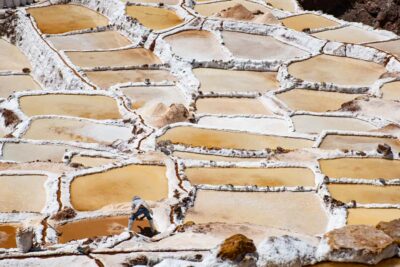
Sacred Valley & Maras Salt Mines Tour with Lunch
Read our review →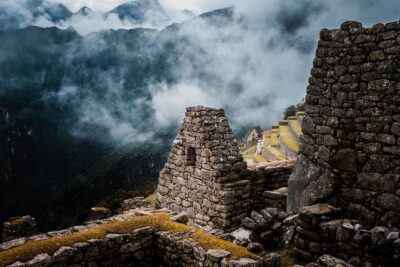
2-Day Tour: Sacred Valley and Machu Picchu by Train
Read our review →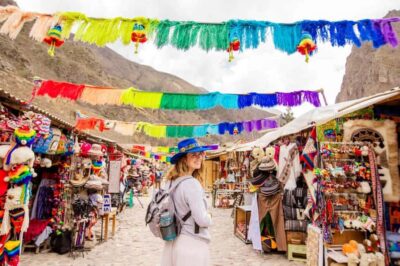
Sacred Valley, Pisac, Ollantaytambo, Salt Mines Moray
Read our review →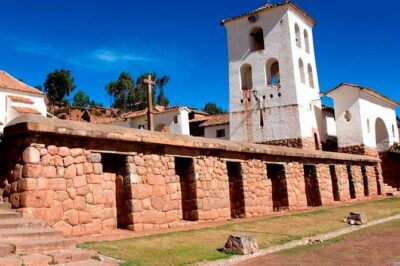
Sacred Valley and Maras Moray Tour with Full Day Buffet Lunch
Read our review →

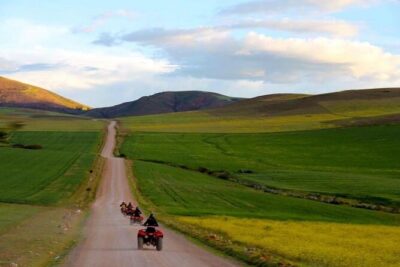
ATV Tour to Moray Maras and Salt Mines in the Sacred Valley
Read our review →
Browse the lists this tour appears in