
Reviewed · MACHU PICCHU
Machu Picchu: 5-Day Salkantay Trek with Panoramic Train
Salkantay is the Machu Picchu route that still feels wild. You go from Humantay Lake’s turquoise shimmer to high passes, then down through cloud forest, and finally arrive at the citadel like you worked for it. What makes this trip especially interesting is the mix of trail effort plus comfort upgrades, like glamping and mule-supported camping gear.
I especially like the way the itinerary builds meaning into the day. Between the Salkantay Pass views, the traditional Pachamanca meal, the coffee farm stop, and the first Machu Picchu reveal from Llactapata, it never feels like you’re just checking boxes. One more thing I like is the team setup, including oxygen equipment and solid logistics that help if your altitude day isn’t going smoothly.
The one consideration is altitude and pace. You’re hitting a high point around 4,630 m and you’re not on an easy schedule. If you have back or heart issues, are pregnant, or you need mobility support, this is not a good match. Even for healthy hikers, plan for day-one altitude to be real.
Key Things That Make This Trek Worth Your Time
- Glamping at high altitude, then camping closer to Machu Picchu, so you get comfort without losing the outdoors feel
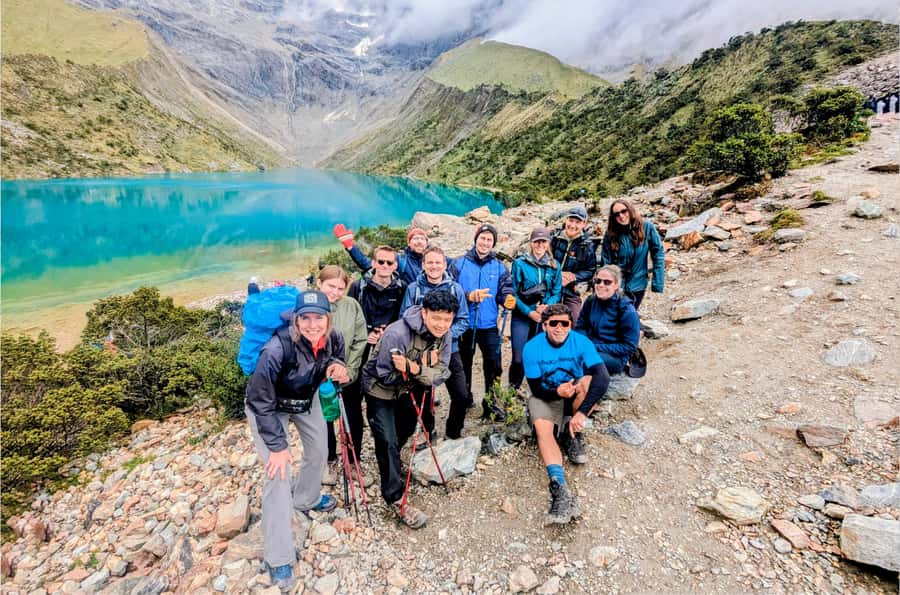
- Humantay Lake and Salkantay Pass hit hard, visually, and in terms of effort
- Pachamanca + coffee experience gives you culture, not just scenery
- Llactapata night with the citadel in sight is one of those slow-breathing moments you remember
- Sunrise Machu Picchu plus a Vistadome or 360° train makes the finale feel complete
- Safety matters here, with satellite phone support and an oxygen tank on hand
Why Salkantay Still Feels Like Peru, Not a Conveyor Belt
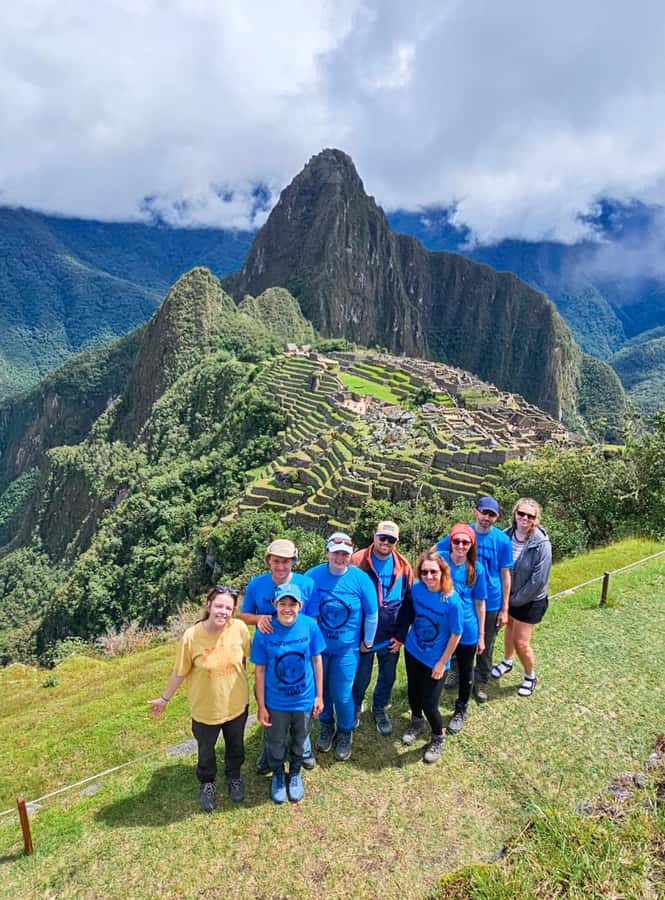
If you only ever see Machu Picchu from a tour bus, you miss how dramatic it is to approach it through Andean terrain. This trek gives you the full build-up. You start high, you climb higher, then you tumble down through changing environments. You feel the altitude. You feel the weather. You earn the view.
The “meaning beyond the challenge” angle isn’t a slogan. It shows up in how the days are shaped. Day 3 isn’t only hiking, it also includes hands-on food culture with Pachamanca and a coffee tasting. Day 4 keeps you connected to nature and biology at Mandor Botanical Gardens, before you reach the hot springs town of Aguas Calientes. By the time you’re at Machu Picchu, your brain is ready for it.
More Hiking & Trekking in Cusco
- Classic Inca Trail Trek 4D/3N to Machu Picchu (Group Service)
★ 5.0 · 8,653 reviews - Machu Picchu: 4-Day Inca Trail Trek with Panoramic Train Ride
★ 5.0 · 4,568 reviews - Salkantay Classic Trek 5 Days from Cusco
★ 5.0 · 4,062 reviews
Day 1: Cusco to Humantay Lake, then Glamping at 4,150 m
Your morning starts early, with hotel pickup around 4:30 a.m. Cusco to the trail area involves a scenic drive to Mollepata, where you’ll eat breakfast. After that, you meet your trekking team and get moving from the trailhead.
The hike to Humantay Lake is about 3 hours, and you’re walking at roughly 4,200 m. This is one of those spots where you stop not because the program says so, but because the view forces a pause. The water is described as turquoise and it really is the kind of color that makes camera settings feel inadequate.
After the lake, you descend to Soraypampa for lunch. Then you climb gently for about 2 hours to the Salkantay Glamp Campsite around 4,150 m. “Glamping” here is not luxury hotel bedding, but it is the kind of campsite comfort that makes the altitude more tolerable: a cozy tent setup, warm dinner, and time to watch the stars before you sleep.
Practical note: bring warm layers even if it looks sunny. At these elevations, temperature swings can be sharp.
Day 2: Salkantay Pass (4,630 m), Wayracmachay, and Cloud Forest Huts
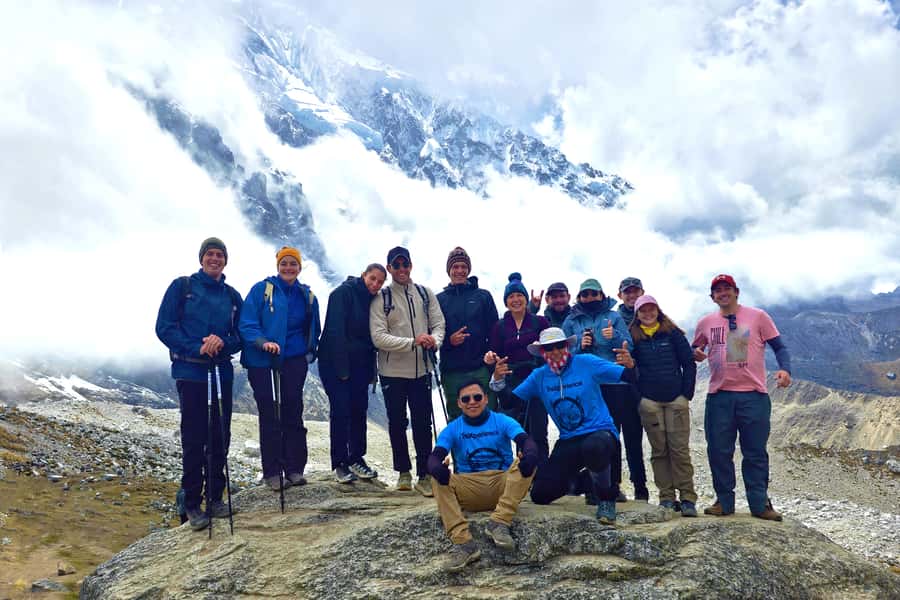
Day 2 is the big elevation day. You start with fresh coffee or coca tea, then hike up to the Salkantay Pass, around 4,630 m, the highest point on the trek. Expect it to be a steady climb. It’s less about speed and more about controlling your breathing.
Along the way, there’s a stop at a nearby glacial lake for views before you start a long descent. Lunch happens at Wayracmachay, then the trail changes character. The highlands shift toward lush cloud forest, and your feet get a different kind of terrain underfoot.
By evening, you reach Collpapampa at about 2,770 m and sleep in comfortable Andean huts. This is a good contrast to the first night. Glamping first night, huts second night, then later you get closer to Machu Picchu. It’s a nice rhythm for your body and your morale.
Altitude reality check: one traveler story singled out the value of medication like acetazolamide when altitude symptoms hit on the first day. I’m not a doctor, so I can’t tell you what you should take, but it’s a reminder to talk to your clinician ahead of time if altitude is a concern.
Day 3: Pachamanca, Coffee Farms, and Llactapata’s First Machu Picchu View
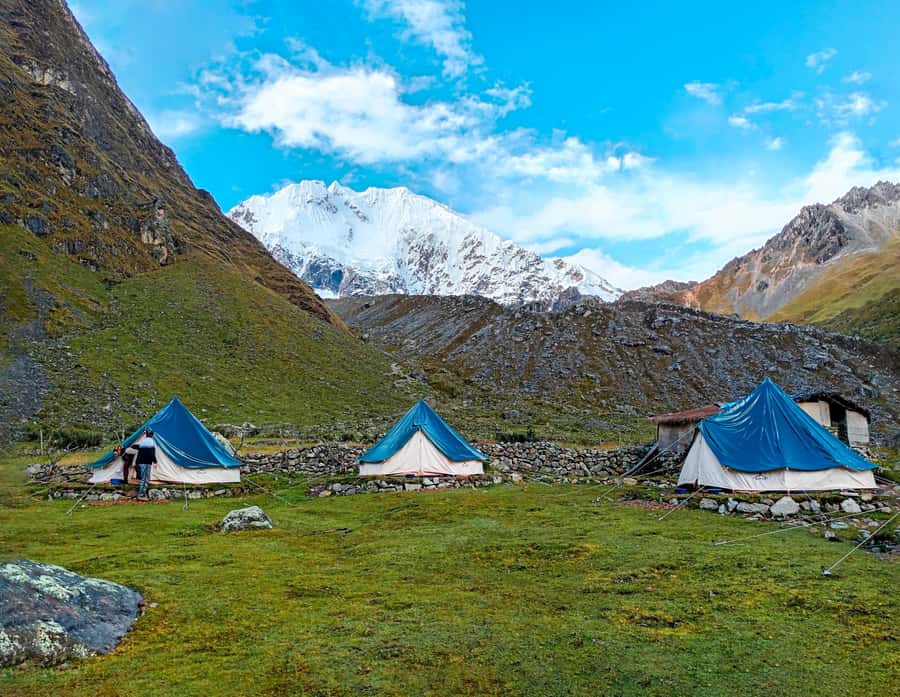
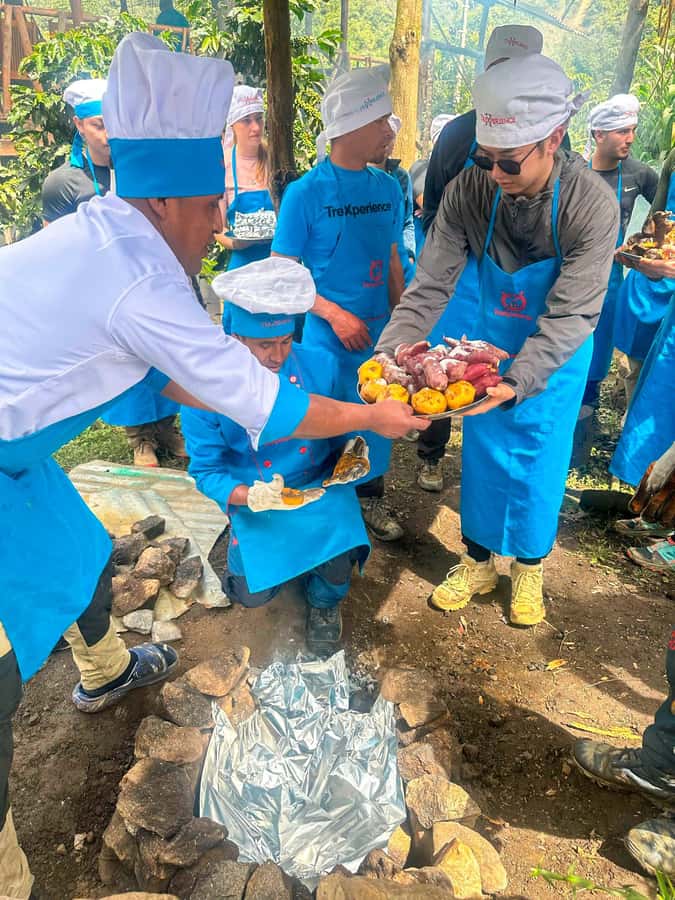
Day 3 is where the trek becomes less strictly “survival hiking” and more “Peru with meaning.” After breakfast, you hike through scenic trails with wooden bridges, waterfalls, and plantations. You also drop in altitude, arriving at Lucmabamba around 2,000 m.
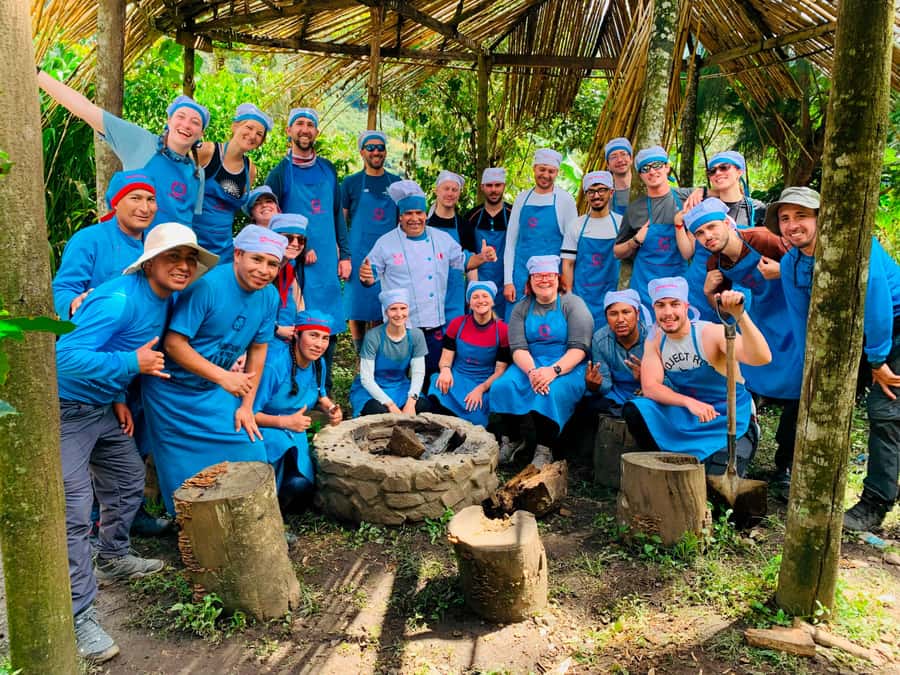
Here you get a traditional Pachamanca Barbecue. This is a cooking style tied to local tradition, and it’s a welcome change from trail food monotony. After that, you visit coffee farms and taste freshly brewed coffee. Even if you’re not a coffee snob, it adds texture to the journey. You’re not just moving through places, you’re meeting what locals grow and how they prepare everyday life.
In the afternoon, the trek connects to the Inca Trail for about 3 hours to reach Llactapata (around 2,750 m). Llactapata is an Inca site with your first stunning perspective of Machu Picchu. Then you camp overnight with the citadel right there in your sightline. This is one of those nights where you understand why people cry at Machu Picchu. It starts here, not at the main gates.
If you’re a slow hiker or you like to stop for photos, this day is still doable. Many people find they have to adjust pace. That’s normal, not a failure.
More train journeys to Machu Picchu:
- 2-Day Inca Trail to Machu Picchu with Panoramic Train
★ 5.0 · 1,876 reviews - Machu Picchu Full Day from Cusco by Panoramic Train
★ 5.0 · 857 reviews - Lares Trek to Machu Picchu 4 days with Panoramic Train
★ 5.0 · 298 reviews - Cusco: Machu Picchu 2-Day Inca Trail with Panoramic Train
★ 4.9 · 260 reviews
Day 4: Hydroelectrica to Aguas Calientes, plus Mandor Gardens
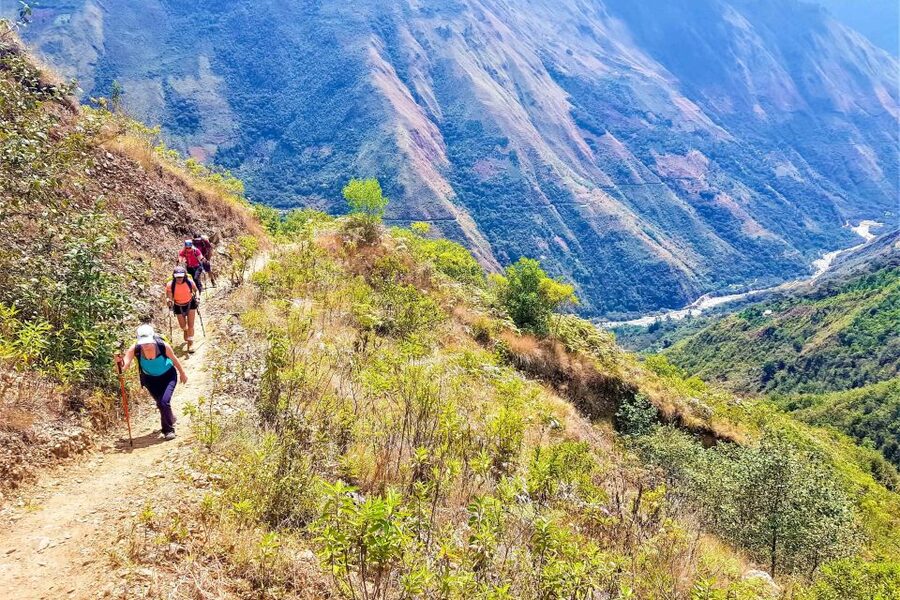
Morning at Llactapata is special because you can see Machu Picchu from your tent. You’ll have coffee, then you start a 2-hour descent to the hydroelectric station.
From there, there’s a final brunch with your team, and then you hike for about 3 hours along the railway and Urubamba River to Aguas Calientes. This is the “movement through river valley” day. It feels different from the pass and the cloud forest. The air often feels warmer. The pace feels more human.
Along the way, you stop at Mandor Botanical Gardens, which are known for birdlife and orchids. It’s a useful break, especially if your legs are a little done at this point.
You check into a 3-star hotel in Aguas Calientes. In the evening, you can explore town or relax in the hot springs, then eat dinner at a local restaurant.
One practical idea: if you want the hot springs, plan for modest timing. You still have a big Machu Picchu morning on Day 5, and you don’t want to cook your legs.
Day 5: Sunrise Machu Picchu Tour, then Vistadome or 360° Train Back to Cusco
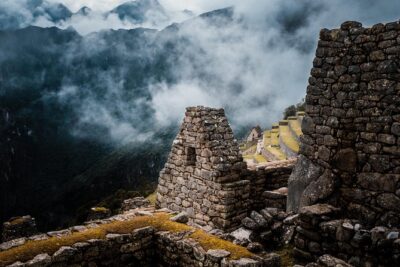
Machu Picchu Day is designed like a finale should be. You eat early breakfast, then take the first buses up to witness sunrise. Watching the citadel wake up in light is one of those moments that feels almost unreal, even if you’ve read about it for years.
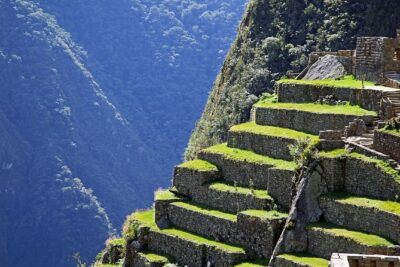
You get a guided tour of the citadel lasting about 2 to 3 hours. After that, you have options for exploring on your own. You might hike Huayna Picchu or Machu Picchu Mountain, but those passes need to be booked in advance.
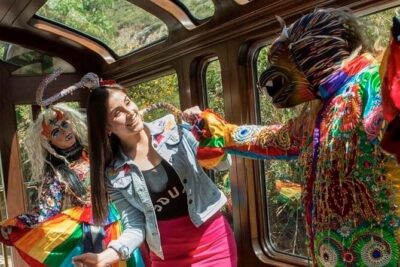
Then you go back to Aguas Calientes for lunch, and you board the Panoramic Vistadome or 360° train to Ollantaytambo. From there, a private van takes you back to Cusco, arriving around 7:30 p.m.
This train segment is more than transport. It’s a mental shift. After days of altitude and stair-like trail gradients, it lets your body recover while you look at the valley from a different angle.
What You Actually Get for the $655 Price
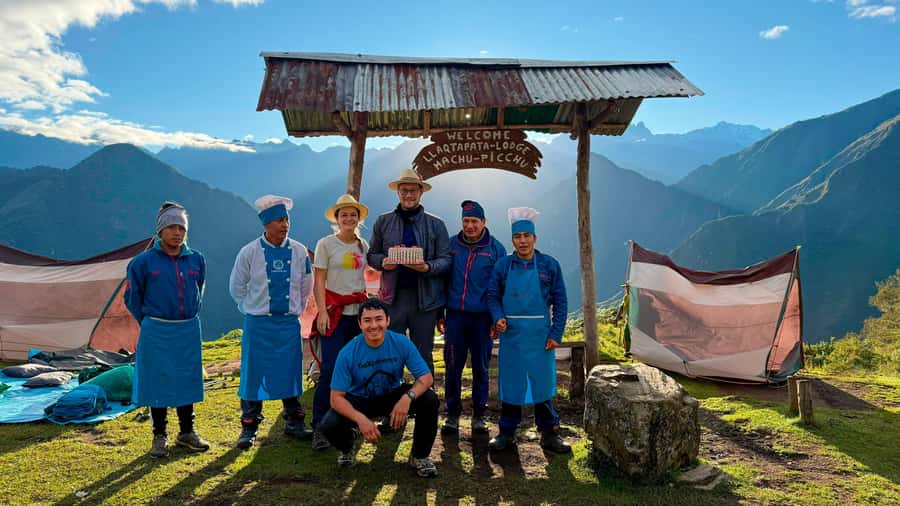
At $655 per person for five days, this trek competes with other guided Machu Picchu routes, but it’s built with real value drivers.
You’re paying for:
- A high-impact trek experience with entrance tickets included
- Managed camping logistics, including duffle support up to 7 kg carried by muleteers
- Meals: 4 breakfasts, 3 lunches, 3 dinners, plus water and daily snacks
- Safety gear and support: satellite phone, first-aid kit, and an oxygen tank
- More than one accommodation style: 2 nights camping, 1 night glamping, and 1 night in a 3-star hotel
- Train return via Panoramic Vistadome or 360° service, plus bus and van transfers
The big value win is that you’re not lugging everything yourself. You’ll carry a smaller backpack, and the system handles the heavy camping gear. If you’ve done treks where you feel like you’re hauling your own house, you’ll appreciate this.
Is it cheap? No. But when you factor in the included meals, guide team, equipment, and the Machu Picchu access, it becomes a solid deal for what you get.
The Small Things That Make the Big Days Work
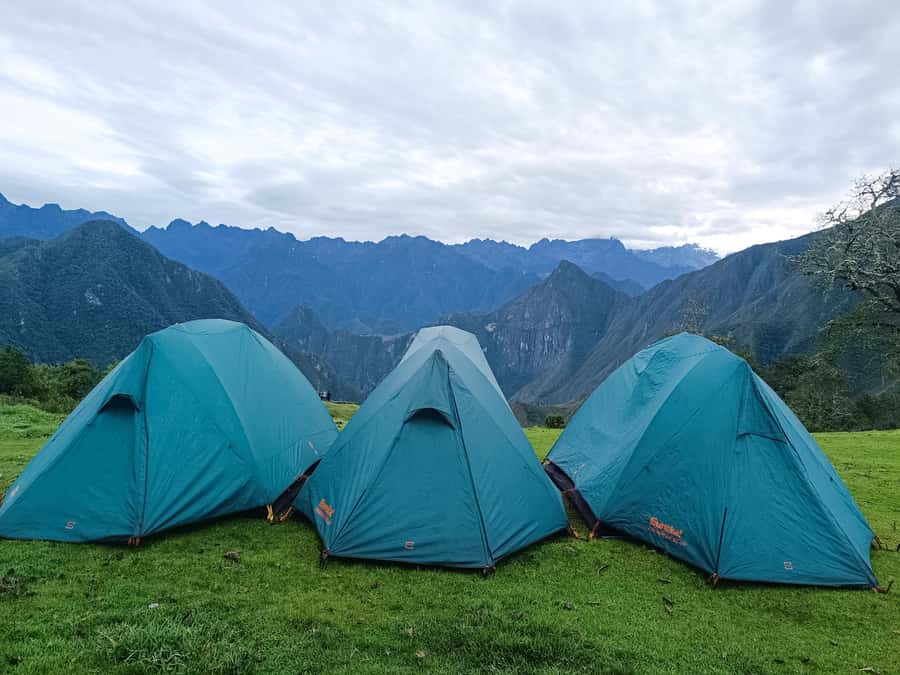
This tour leans on practical details that keep your energy for the trail.
You’ll have:
- A duffle bag up to 7 kg for camping gear, carried by muleteers
- A sleeping pad, pillow, rain poncho, and hand towels provided
- Satellite phone communication and a first-aid setup
- Guides who run a tight schedule but can handle real human limits
Several guide names came up in the strong experiences, including Cesar Augusta, Jose, Gilbert, Roger, and Alex, along with support team members like Elias and Renato. I don’t think that matters because of celebrity names. It matters because on Salkantay, good guidance is how you reduce stress and keep the group safe when altitude hits.
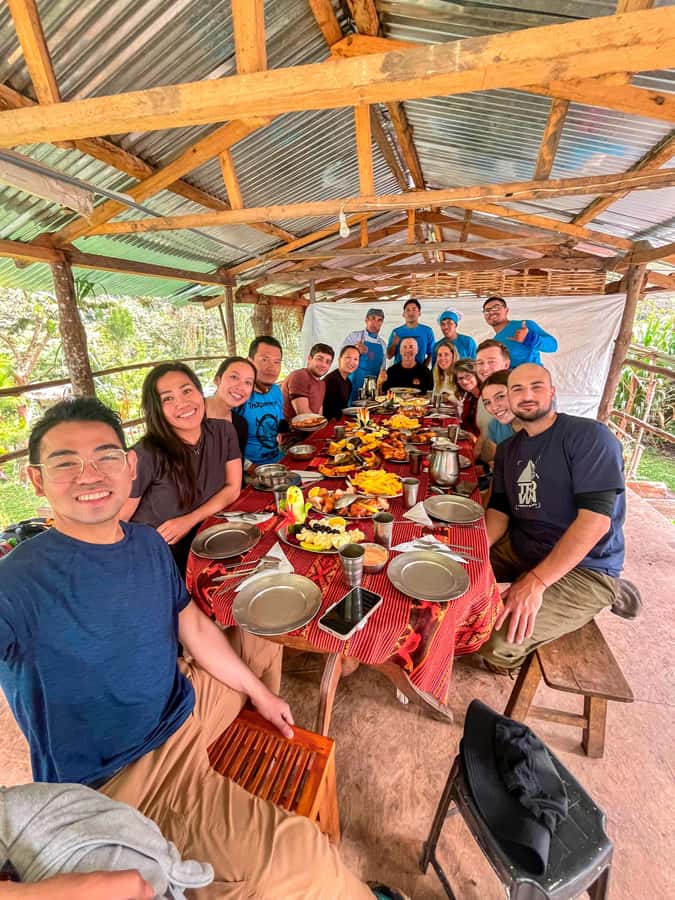
Food is another practical win. You get multiple meals with daily snacks and water. Vegetarian options are available if you request them ahead of time, and people doing this trek often point out that the meals feel like more than basic fueling.
Packing and Pacing: What to Bring, What to Rent, and What to Skip
You’ll need to bring key items like:
- Passport (required for Machu Picchu access)
- Comfortable hiking shoes
- Sunglasses and sun hat
- Sunscreen and insect repellent
- Rain gear and warm layers
- Toiletries, cash, and any personal meds
The tour notes that you should use a lightweight backpack around 25 L, because larger bags can’t be taken into Machu Picchu.
What is not included, but can be rented:
- Sleeping bag (can be rented)
- Inflatable mattress (can be rented)
- Trekking poles (can be rented)
My advice: if you already own trekking poles and a sleeping bag you trust, bring them. If not, renting can be a smart way to avoid carrying bulky gear across flights.
Also, plan for the fact you’re at high altitude. A head torch helps. Extra camera batteries help more than you think.
Who This Trek Fits Best, and Who Should Sit This One Out
This is a real hiking itinerary, with altitude and long walking days. It’s ideal if you want:
- A guided, small-group experience (limited to 16 participants)
- A mix of nature, culture, and Machu Picchu
- Camping that’s supported, not chaotic
- A “challenge with comfort” approach, especially on the first nights
It is not suitable for:
- Pregnant women
- People with back problems
- People with mobility impairments
- Wheelchair users
- People with heart problems
If you’re somewhere in the middle, for example you’re fit but altitude-sensitive, you should still talk with a doctor. At least one person benefited from altitude medication, and that’s a good reminder to plan early rather than wing it.
Should You Book This Machu Picchu Salkantay Trek?
Book it if you want Machu Picchu with a story attached. This route is built for the part of travel where your body is involved, where you see Humantay Lake, cross Salkantay Pass, and get that first Llactapata look before you ever stand in the main citadel.
Skip or consider alternatives if you know altitude is a serious issue for you or if you can’t handle long days on foot. Also, if you hate early mornings, this might test you. Day 5 is sunrise timing, and Day 1 starts early too.
If you’re ready for the hike, this is one of the more well-rounded approaches: glamping comfort, real cultural stops like Pachamanca and coffee, and a final train ride that turns the journey into a clean ending.
FAQ
FAQ
What time is hotel pickup in Cusco?
Pickup is around 4:30 a.m. from your hotel or Airbnb near Cusco’s historic center.
How high do you hike on the Salkantay Pass?
The trek reaches about 4,630 m at the Salkantay Pass, which is listed as the highest point on the route.
Where do you stay during the trek?
You’ll have 2 nights camping, 1 night glamping during the Salkantay portion, and 1 night in a 3-star hotel in Aguas Calientes.
Is Machu Picchu sunrise included?
Yes. You take buses early so you can watch sunrise over Machu Picchu, then you do a guided tour of the citadel.
Do I need to book Huayna Picchu or Machu Picchu Mountain in advance?
Yes. Those passes need to be booked in advance if you want to hike them.
What’s included in the return from Machu Picchu to Cusco?
After exploring Machu Picchu, you return to Aguas Calientes for lunch, then take a Panoramic Vistadome or 360° train to Ollantaytambo. A private van returns you to Cusco around 7:30 p.m.
What should I bring, and what can I rent?
Bring your passport, hiking shoes, sun hat and sunglasses, sunscreen, rain gear, and warm layers. A sleeping bag, inflatable mattress, and trekking poles are not included, but can be rented.
More Ways to Reach Machu Picchu
- Short Inca Trail to Machu Picchu 2D/1N
★ 5.0 · 3,007 reviews - From Cusco: Full-Day Group Tour of Machu Picchu
★ 4.7 · 1,767 reviews - Machu Picchu Day Trip from Cusco
★ 4.5 · 1,644 reviews - 2-Day Tour: Sacred Valley and Machu Picchu by Train
★ 5.0 · 1,127 reviews
More Salkantay Treks
- 4-Day Salkantay Trek with Sky Camp Stay
★ 5.0 · 3,346 reviews - Salkantay Trek 5D/4N with Glass Cabins, Domes and Hobbit House
★ 5.0 · 2,488 reviews - 5-Day Premium Salkantay Trek
★ 5.0 · 788 reviews - Ultimate Salkantay Trek to Machu Picchu 5 Days
★ 5.0 · 588 reviews
Recently reviewed around Cusco
- Cusco Cooking Class by ChocoMuseo in Cusco★ 5.0 · 29 reviews
- ATV Adventure to Moray and Maras Salt Mines – Half Day★ 4.5 · 29 reviews
- 1-day excursion to Machu Picchu from Cusco★ 5.0 · 29 reviews
- Private Tour Sacred Valley, Chinchero, Maras Moray, Ollantaytambo★ 5.0 · 29 reviews
- From Cusco: Humantay Lake with Breakfast and Buffet Lunch★ 4.5 · 29 reviews
- 4 Day – Inca Jungle to Machu Picchu★ 5.0 · 29 reviews
- 2-Day Machu Picchu Tour by Train from Cusco★ 4.5 · 29 reviews
- 2-Day Sacred Valley and Machu Picchu Tour By Train★ 4.5 · 29 reviews
Machu Picchu, compared.
Classic Inca Trail Trek 4D/3N to Machu Picchu (Group Service)
Read our review →
4-Day Inca Trail Trek with Panoramic Train Ride
Read our review →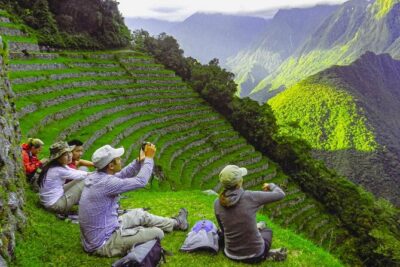
2-Day Inca Trail to Machu Picchu with Panoramic Train
Read our review →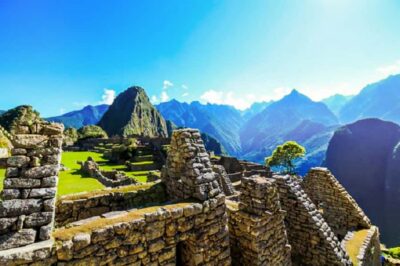
2-Day Tour: Sacred Valley and Machu Picchu by Train
Read our review →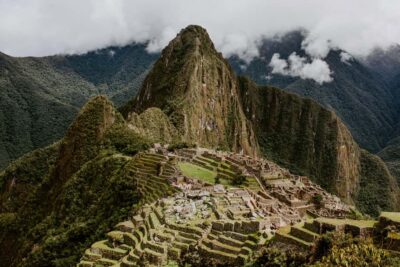
Browse the lists this tour appears in