
Reviewed · AREQUIPA TOURS
Golden hour, legends of Arequipa and Peruvian Coffee
This Arequipa tour is interesting because it strings together San Lázaro neighborhood life and a volcanic-stone architectural stop near the Plaza de Armas. You also get a coffee pause built into the route, so you are not just sprinting between landmarks.
I like that it mixes everyday culture with old-school context. The alpaca and textile experience at Mundo Alpaca Arequipa is interactive, and the break at Lautrec Cafe includes two Peruvian coffees.
One drawback to keep in mind is timing. It is listed at about 3.5 hours, but a tour like this can run shorter if explanations get trimmed or if a site has access issues on the day. If you want classic sunset-style golden hour photos, make sure the timing works for you.
Key highlights worth planning for
- Small group size (max 8), which makes it easier to ask questions and keep a relaxed pace
- English-language tour with a smooth center-city route that ends at Plaza de Armas
- Mundo Alpaca Arequipa focuses on fiber basics and Pre-Inca textile ideas, not just cute animals
- Tambo el Matadero by the Chili River, built in ashlar and linked to older uses of the area
- Lautrec Cafe coffee stop with two Peruvian coffees in a place that feels like a mini art space
- Cloisters of the Company as a volcanic-stone architectural finale with arches and vaults
Golden hour timing in Arequipa, starting at 2:30 pm
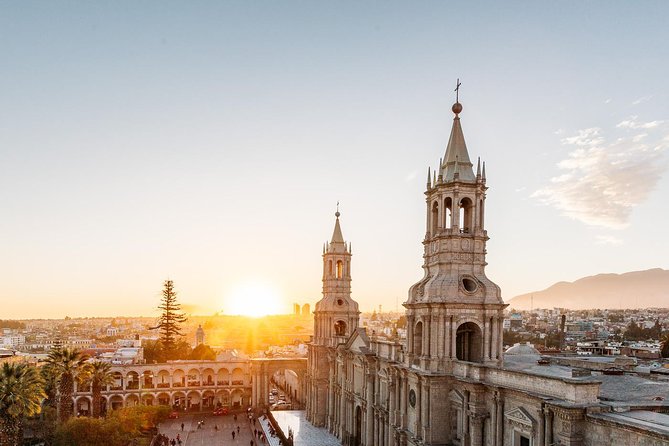
The name promises golden hour, but the practical reality is that the tour starts at 2:30 pm. That is often still nice light for photos, especially in Arequipa where the stone tones look good in afternoon sun. Just do not assume it will be a full sunset photo sprint.
If you are the type who wants peak glow, I suggest you treat this as a warm-light walking tour through meaningful places. By the time you reach the Plaza de Armas area, the light may be perfect for street scenes and building facades. If it is not, you will still get a strong set of cultural stops, and the coffee break helps reset your brain.
Also, the tour ends in the Plaza de Armas zone, so you can keep exploring right after. In other words, even if the “golden hour” part is more of an afternoon version, you still finish at a great anchor point.
Other Arequipa days people book on the same trip:
- 2 day 1 night trek / Colca Canyon
★ 5.0 · 1,069 reviews - From Arequipa: Colca Canyon Full-Day Guided Tour with Meals
★ 4.5 · 982 reviews - Tour to the Salinas Lagoon and National Reserve in Arequipa
★ 4.5 · 548 reviews
Price and value: what $29 gets you (and what it does not)
At $29 per person, the value comes from the mix of included time and included admissions, not from one big museum-ticket moment. Several stops are listed as free entry tickets, so you are mostly paying for guided flow and cultural explanations. Then you have two paid moments that are built into the schedule: the coffee experience at Lautrec Cafe and admission to the Cloisters of the Company.
You also get a capped group size, up to 8 travelers. That matters in a city like Arequipa where the streets can feel tight and the details matter. With a small group, your guide can slow down when you ask questions, and you are less likely to feel like you are being herded.
Practical note: the tour uses a mobile ticket and confirmation is received at booking. You are also near public transportation, and service animals are allowed. None of that is exciting, but it makes a day plan easier.
Stop 1: Barrio de San Lázaro, Yarabaya roots and ashlar details
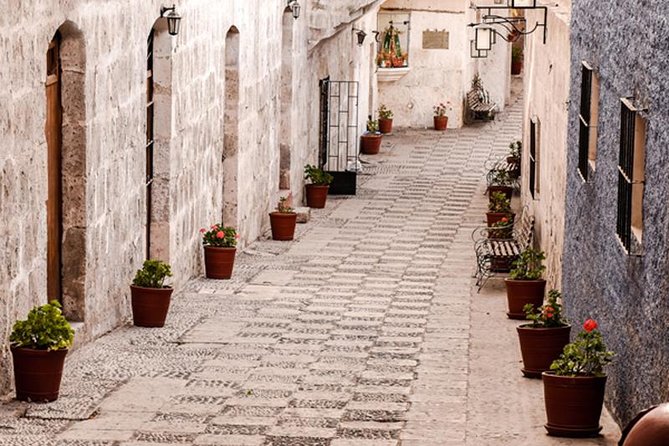
You begin in the Barrio de San Lázaro, described as built on an older pre-Hispanic Yarabaya town. That is a big deal because it frames the neighborhood as layered, not just a cluster of buildings. You get small streets, squares, passages, and mansions, so the area feels lived-in rather than staged.
This stop focuses on smaller-scale sights that reward close looking. The church of San Lázaro is the headline, and you also get a small bridge made of ashlar and references around Campo Redondo. If you like architecture at human scale, this is where the tour starts to feel special.
Time here is about 20 minutes. That is enough for a first orientation walk, but not enough to turn this into a long neighborhood wander. If you want to linger, you can always stretch your walk after the tour. I would just make sure you do not lose your spot if your group is moving on quickly.
Stop 2: Mundo Alpaca Arequipa, textiles, fiber classification, and animal time

Next up is Mundo Alpaca Arequipa. This is not only about seeing alpacas. The focus is on ancestral techniques and how fiber gets classified, plus local machinery and what that means for Pre-Inca textile traditions.
What makes this stop worth your time is that it is educational in a practical way. You are not just hearing about textiles, you are getting the idea of how people separated, worked, and produced materials. Even if you do not buy anything, it changes how you look at clothing, weaving, and the logic behind patterns.
You also get an interaction with the animals in a natural exhibition environment. That part tends to be the emotional hook, and for many people it is the most memorable minute of the day. If you travel with kids or you simply like hands-on experiences, this stop usually hits the sweet spot.
This portion is about 30 minutes and is free entry. That timing is good because it gives you enough for explanations without eating your whole afternoon. Still, if you have a strong interest in textiles, you may want extra time later in town to shop or browse on your own.
A few more Arequipa days worth comparing
- From Arequipa: Sillar Route Trek
★ 4.2 · 461 reviews - Colca Full Day Tour
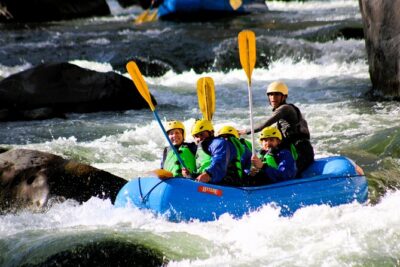
★ 4.5 · 429 reviews - Rafting Arequipa – Chili River Canoeing – Cusipata Rafting Arequipa
★ 5.0 · 332 reviews - Arequipa: Chili River White Water Rafting with Hotel Pickup
★ 4.8 · 329 reviews
Stop 3: Tambo el Matadero and the Chili River, built in ashlar
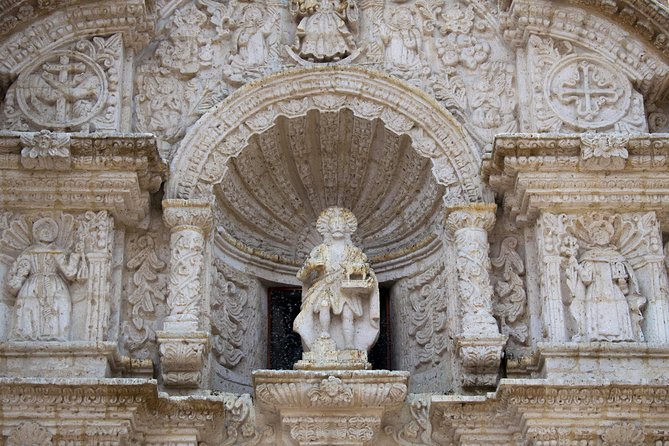
Then you move to Tambo el Matadero, also referred to as the Tambo el abattoir or Barrio del Solar by the Chili River. The description ties the site to animal sacrifice and notes that the main building used three levels that take advantage of the gap between the street and the riverbank.
Even if you are not a history buff, this stop helps you understand how people used geography. A location next to a river is not just scenery. It is water access, movement, and a built environment shaped to function.
This is a shorter stop at about 20 minutes and has free entry. That means you will get key context, but not a full archaeological deep dive. If you want to study details, bring your curiosity and be ready to ask your guide what they think is most important to notice in the structure.
Stop 4: Lautrec Cafe break, two Peruvian coffees plus art on the walls
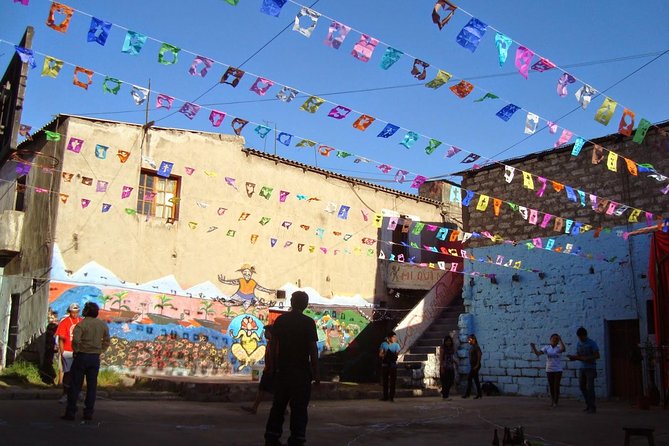
Your scheduled break is at Lautrec Cafe. It is described as a local cafeteria that includes two Peruvian coffees. That alone makes the tour feel more human. You get a moment where you can sit, sip, and let the information from the earlier stops settle.
What I like about this stop is the setting. It is described as a true museum-like space, with exhibitions of local artists and university students. So even though you are drinking coffee, you are also taking in a small dose of local creativity. It is a good counterbalance to churches and stone architecture.
The stop is around 30 minutes with admission included. If you tend to feel rushed on tours, this is the one piece that can help you reset. I also think it is a nice way to taste coffee in Arequipa without turning your afternoon into a separate mission.
One practical caution: coffee is included as part of the scheduled experience, but like any partnered activity, access can vary on a given day. So if you have strong expectations of specific tasting timing, ask your guide right after meeting what is planned for your group that day.
Stop 5: Plaza de Armas, short historical grounding
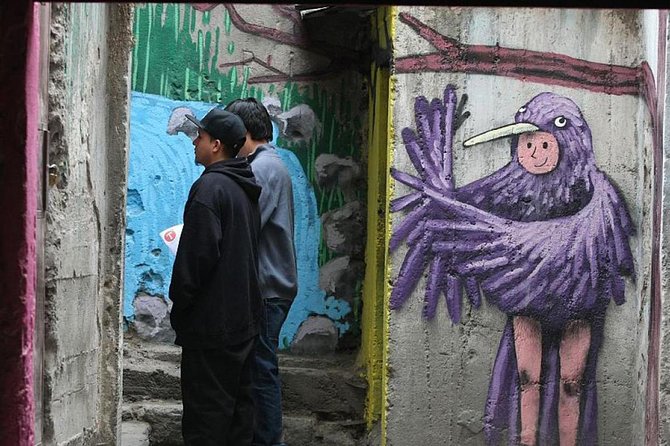
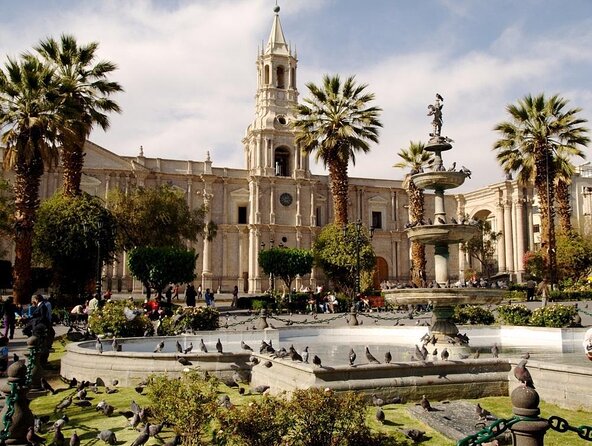
From there you reach Plaza de Armas for a historical explanation, about 15 minutes. This is your city anchor moment. It helps you place what you saw earlier into the bigger Arequipa story, so you do not leave with just a list of stops.
Plaza de Armas is also a good time to slow down and take in the overall urban layout. Even if you have seen photos before, the square gives you a sense of how the city’s public life organizes space. Since the tour is ending soon after this, it is a good moment to decide what you want to do next.
Time here is tight, so treat it as orientation rather than a full exploration. You will have your next chance when the tour ends.
Stop 6: Cloisters of the Company, volcanic stone arches and vaults
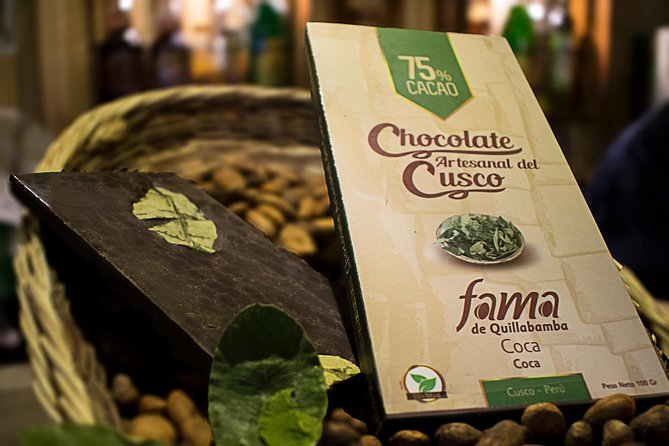
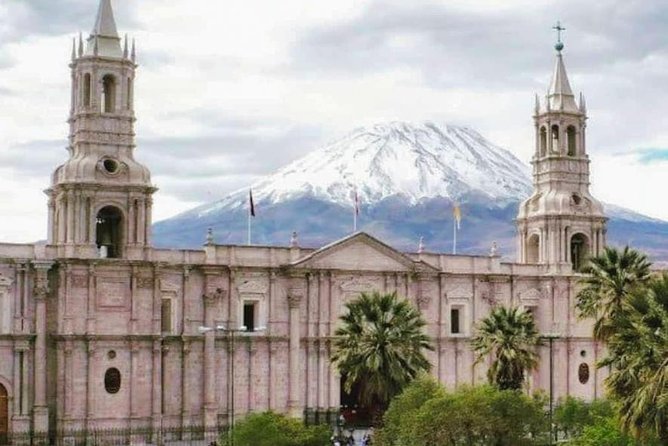
Your final stop is the Cloisters of the Company, located about half a block from Plaza de Armas. This is presented as one of the largest examples of volcanic stone construction within Arequipa’s white city. You go through arches and ashlar vaults, and the design is explained through its history and symmetry.
This is the kind of place where your eyes learn to move differently. Instead of only looking outward at the street, you start tracking how stone shapes space inside. The arches give you natural frames for photos, and the vaults make the building feel structured and intentional.
This portion is about 20 minutes, and admission is included. That is a good length for finishing strong. By the time you leave, you are close enough to the Plaza to keep walking, grab dinner, or just take a breather.
Also, if you are the type who wants to compare architecture styles, this stop is a great “final proof.” You can look at it and then recall what you saw earlier, neighborhoods and rivers and smaller stone details. It all starts to click as parts of one city.
Getting the most out of this route: pace, photos, and smart questions
Here is how I would make this tour work best for you.
First, wear comfortable shoes. You are moving through multiple city stops that include small streets and older stone structures. Even if the walk is not long, the footing and street surfaces can vary.
Second, treat the “golden hour” label as a bonus, not the core product. Plan to enjoy it for the warm light if it happens, but keep your expectations anchored to culture and architecture. The tour’s value is in connecting San Lázaro, alpaca textiles, a riverbank tambo, and the final cloisters.
Third, bring two questions for your guide. One question about what to look for in volcanic stone construction, and one about how fiber classification connects to Pre-Inca textiles. You will get more out of the stops if you listen with a purpose.
Finally, manage timing expectations. The tour is listed at about 3 hours 30 minutes, starting at 2:30 pm, but timing can change based on site access and the flow of explanations. If your schedule is tight for later plans, build in buffer time. If coffee or site entry timing matters to you, ask early in the tour.
Who should book this tour, and who might skip it
This tour is a good fit if you want a compact Arequipa afternoon with a guided thread. You like variety: a neighborhood start, alpacas and textiles, a historic river-adjacent site, and a finish at Plaza de Armas with a volcanic stone architectural stop. The small group size helps, especially if you enjoy asking questions.
It is also a solid choice for travelers who want a coffee included in the plan. Two Peruvian coffees at Lautrec Cafe means you do not have to hunt for a café mid-walk.
You might skip it if you only want major monuments and long museum time. This route is short at each stop, and the emphasis is on guided context rather than deep investigation. Also, if golden hour is the sole reason you are booking, start time at 2:30 pm may feel more like afternoon light than sunset glow.
Should you book Golden hour, leyendas de Arequipa y Peruvian Coffee?
I think it is worth booking if you want an efficient, culture-forward afternoon in Arequipa’s center. For $29, you get guided visits across multiple meaningful stops, plus two Peruvian coffees and admission to the Cloisters of the Company. The small group size also makes the experience feel more like a shared walk than a scripted march.
Just book with flexible expectations about timing. If your plan depends on exact golden hour timing or a specific stop being open, it is smart to ask your guide what the plan is for that day. And if you are trying to pair this with a reservation later, give yourself a buffer.
If you want a guided way to learn how neighborhoods, textiles, river geography, and volcanic stone architecture all connect in Arequipa, this is a practical choice.
FAQ
Where is the tour meeting point?
The start is listed at C. Zela 301, Arequipa 04001, Peru. The ending point is Plaza de Armas, Arequipa 04001, Peru.
What time does the tour start?
The start time is 2:30 pm.
How long is the tour?
The duration is approximately 3 hours 30 minutes.
How much does it cost?
The price is $29.00 per person.
Is the tour offered in English?
Yes, it is offered in English.
What is the group size?
The tour has a maximum of 8 travelers.
Is a mobile ticket used?
Yes, the tour uses a mobile ticket.
What is included for coffee?
Lautrec Cafe includes two Peruvian coffees.
Is it refundable if I cancel?
No. The experience is non-refundable and cannot be changed for any reason.
Does weather affect the tour?
Yes. The experience requires good weather. If it is canceled due to poor weather, you will be offered a different date or a full refund.
Recently reviewed around Arequipa
- Colca Trek – 2 Days Tour★ 5.0 · 8 reviews
- Arequipa and Secret Bars★ 4.5 · 8 reviews
- Walking Tour Arequipa Including Santa Catalina Monastery★ 4.0 · 8 reviews
- 3 Hour Congata Rover Biking Ride Tour in Arequipa★ 5.0 · 8 reviews
- 2-Day Group Tour to Colca Canyon from Arequipa to Puno★ 4.0 · 9 reviews
- Colca Canyon Tour 2 Days★ 5.0 · 9 reviews
- Colca Canyon / 2 Day 1 Night Trek★ 4.5 · 9 reviews
- Tour 10 Hours Pillones Waterfall and Puruña Stone Forest★ 5.0 · 9 reviews
Arequipa Tours, compared.
Tour to the Salinas Lagoon and National Reserve in Arequipa
Read our review →
Rafting Arequipa – Chili River Canoeing – Cusipata Rafting Arequipa
Read our review →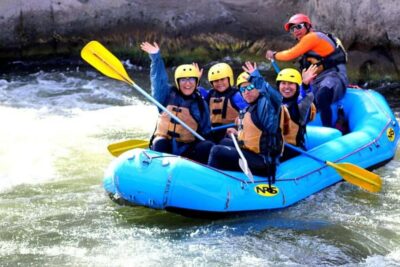
Chili River White Water Rafting with Hotel Pickup
Read our review →
Browse the lists this tour appears in