
Reviewed · COOKING CLASSES
Peruvian Cooking Class in arequipa
This Peruvian cooking class in Arequipa is interesting because you cook in a real kitchen setting, with a family-run feel, and you go from ingredients to plated courses in about 3 hours. I love that all the ingredients and equipment are provided, and you can customise your dishes for dietary requirements. One consideration is that it is genuinely a lot of food, so come hungry and plan for a big meal.
You’ll also get plenty of human interaction, not just a lecture. In many sessions, hosts like Marisa and Mari work with an English translator such as Leo or Fernando, so you can keep up and actually enjoy the conversation while you cook. And yes, you’ll taste what you make with Maras pink salt.
Key highlights you will care about
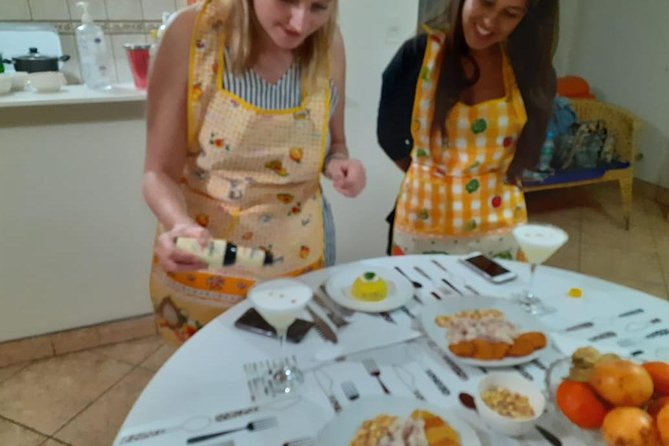
- All ingredients and cooking tools included, so you can focus on learning instead of shopping
- Private setup for your group, with hands-on cooking and plenty of chatting
- Pisco Sour prep lesson, including shaking your own drink and hearing the background story
- Classic dishes with local touches, like ceviche with a modern angle and causa rellena style potato layers
- Maras pink salt added to the dishes for that signature Peruvian finish
- Vegetarian swap is built in, with fish replaced by sweet cucumber (a local fruit option)
A family-style Arequipa kitchen class, not a staged show
If your goal in Arequipa is to do something that feels personal and local, this cooking class is a strong pick. You’re not standing at a distance watching someone else perform. You cook. You smell the ingredients. You get your hands into the steps, then sit down and eat what you made.
The vibe is also part of the value. People often describe it as family-run, friendly, and relaxed. That matters because a cooking class can be awkward if the host is rushing or if language is a barrier. Here, the host and family team usually keep things moving at a comfortable pace, and English support has shown up through translators such as Leo and Fernando, depending on the session.
And because the whole point is learning what Peruvian food tastes like, you’ll get context along the way. You’ll hear about traditional Peruvian ingredients and the background behind popular classics, including the story behind the national cocktail.
More cooking classes in Arequipa:
- Peruvian Cooking Experience in Arequipa
★ 5.0 · 173 reviews - Arequipa: Peruvian Cooking Class
★ 4.4 · 9 reviews - Peruvian Cooking Class Cocktails and Market Tour in Cusco
★ 5.0 · 1,712 reviews
Where you meet and the schedule windows that actually work
The class runs across several daily time blocks, and they are built around a 3 hour rhythm. You can choose a session that fits your day:
- 10:00am to 13:00pm
- 14:30pm to 17:30pm
- 18:00pm to 21:00pm
You start at the meeting point: C. Macón 12, Arequipa 04017, Peru. The kitchen studio is in Los Portales de Cayma, Pasaje Larilari I-3. It is also described as near public transportation, which is handy because you do not need to arrange a complicated pickup.
One small practical note: the start time matters because you are heading to a kitchen studio and cooking right after. If you are late, you might lose prep time and end up rushing the experience.
What you cook, step by step, from sour aperitif to fruit parfait
This is built as a full course meal, not a single dish demo. Expect a progression that starts with drinks, moves through appetizer and main, and ends with a dessert you can’t really make at home unless you use the right flavors.
Here’s the flow you can plan around:
Aperitif: Passion fruit sour, then your own Pisco Sour
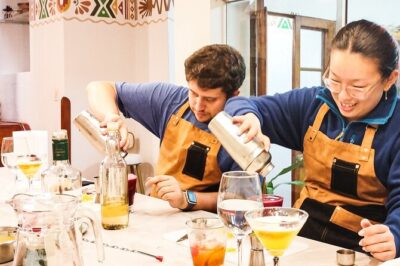
You begin with a passion fruit sour. Then the highlight for many people is that you shake your own Pisco Sours. You also get the history behind Peru’s national cocktail while you’re making it, so it’s not just hands-on, it’s meaning-on.
If you like the idea of learning a drink method, this is the part that turns the class from food-only into culture-with-your-hands. You’re actively building flavor, not just sipping.
More workshops in Arequipa:
- Chaqchao Chocolate Making Workshop
★ 5.0 · 104 reviews - #1 Reviewed Lima Cooking Class
★ 5.0 · 995 reviews - Peruvian Cooking Class, Local Market Tour & Exotic Fruit Tasting
★ 5.0 · 744 reviews - Cusco Cooking Classes and San Pedro Market Tour
★ 5.0 · 691 reviews
Appetizer: Ceviche with a modern twist
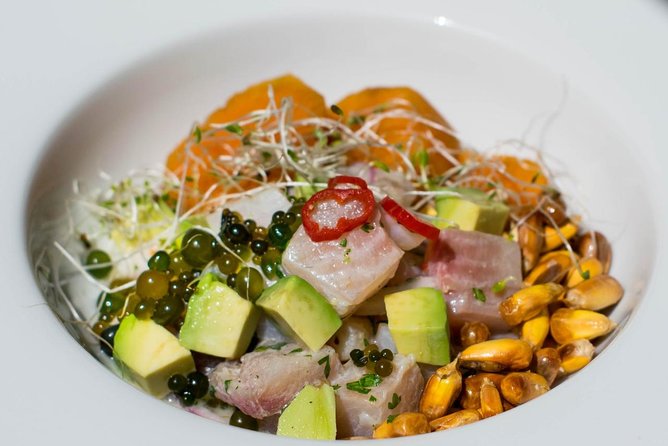
Next comes ceviche described as a modern twist, with a Japanese and Peruvian angle. The style is sashimi-like fish marinated using that cross-influence approach.
Ceviche works well for a class because it teaches you how acidity and seasoning change texture and flavor. It also gives you a chance to see how Peruvian staples can be used with fresh techniques without losing the core identity.
Main dish: Causa rellena, also known as a Limeña-style causa
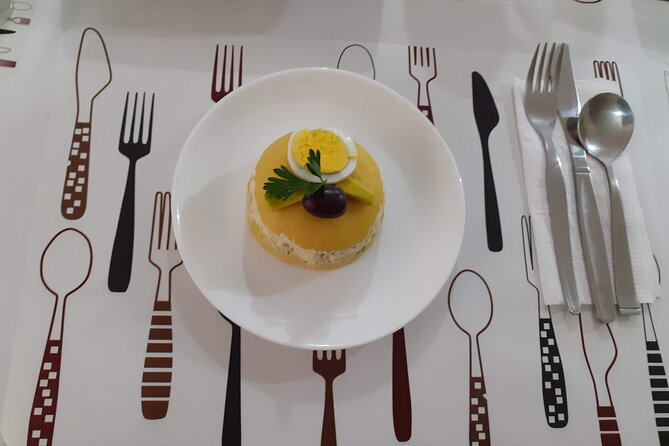
The main is called causa limeña in the overview, and causa rellena in the included list. Either way, you’re looking at that iconic layered stuffed potato style dish. You learn how it comes together so it feels structured, not just mashed potato.
For many cooks, causa is the moment where the class feels like real skill-building. You see how to form, layer, and season so it holds its shape when plated.
Dessert: Exotic fruits parfait with local fruit flavor
The finish is a fruit parfait made with local fruits, served in an elegant way. It’s a good closer because the earlier courses are often salty and tangy, and the dessert is lighter.
It’s also practical: you can taste how local fruits pair with the rest of the meal, then think about recreating the flavor combination later.
Pisco Sour making you can repeat at home
One reason this class is so popular is that it goes beyond tasting. You shake your own Pisco Sour and learn the story behind the drink while you’re making it.
That combo is powerful because you’re building muscle memory. You also start to understand why the balance matters. Pisco Sours are all about measured flavor, from the spirit base to the final balance. When you make it yourself, it becomes something you can order confidently, and even attempt again at home.
Also, the class includes either a Pisco Sour or a maracuya sour. So if you don’t want to overdo the spirit, you still get the core tasting-and-learning experience through the passion fruit style option.
Ceviche, with that cross-style marination approach
Ceviche is the appetizer you’ll likely remember because it sets the tone for the whole meal. The version described here is ceviche with a modern twist and a Japanese/Peruvian influence, served in a sashimi-like style with fish marinated in that flavor blend.
If you care about authentic Peruvian flavors, this matters because you’re not doing bland imitation. You’re seeing how Peru is able to take ingredients and techniques from outside and still keep the dish rooted.
And then there is the seasoning detail: dishes are seasoned with Maras pink salt. This is the kind of small ingredient choice that makes a cooking class feel real. It’s easy to skip salt details when you cook at home. Here, you get that finishing touch integrated into the meal.
Causa rellena: why the technique is the lesson
Causa is one of those dishes where it looks simple, but it is not. The layers need to hold. The seasoning needs to be balanced. And the texture needs to feel right, not watery or flat.
In this class, you learn the causa rellena style preparation. For me, that’s the value: you walk away with something more than a recipe list. You learn why steps matter. Even if you don’t replicate every detail at home, you can still cook a better causa because you understand the structure.
Plus, it helps you appreciate why Peruvian comfort food can also look like plated food from a restaurant. The class teaches you to make that happen at the kitchen table.
Vegetarian option: sweet cucumber replaces the fish
If you eat vegetarian or you have dietary restrictions, you are not stuck with a sad fallback option. The class can customize dishes, and the vegetarian direction here is specific: the fish is replaced with sweet cucumber, described as a local fruit option.
That is useful for two reasons. First, it keeps the dish in the same role category as the fish in the appetizer. Second, it signals that the class is designed to handle swaps thoughtfully, not just skip an ingredient and call it done.
Still, if you have any strict dietary needs beyond vegetarianism, I recommend you communicate them clearly when booking, since customization is specifically mentioned and you’ll want the correct substitutions.
Price and value: what you get for $50
At $50 per person, this class is priced like a practical local experience, not a luxury show. And you get a lot for that money:
- Multiple courses: sour aperitif, ceviche appetizer, causa main, and fruit parfait
- Included seasoning detail with Maras pink salt
- Drinks included, either a Pisco Sour or a maracuya sour
- Coffee and/or tea during the experience
- All ingredients and cooking equipment provided
- A private setup for your group
- English support has appeared through translators in past sessions, helping you follow along
The biggest value lever is that you do not have to add costs for shopping or cookware. Many cooking classes charge more and then expect you to buy ingredients or bring supplies. Here, you show up, cook, eat, and leave with both skills and a full meal.
Who should book this class, and who might think twice
This cooking class is a great fit if you want:
- A hands-on food experience in Arequipa
- To learn Peruvian classics, not just sample them
- A meal that includes drinks and multiple courses
- A private setup, so you can ask questions and move at your pace
- Friendly conversation while you cook, especially with English translation support during some sessions
It might be less ideal if:
- You have a light appetite. The meal is described as a lot of food, and the advice is basically go empty stomach.
- You dislike cooking. This is not a tasting tour only.
- You prefer dining out without any kitchen time.
If you’re traveling with a partner, it’s also a strong date-style activity. Couples often call out the laughter, the social feel, and the fact that you eat what you made.
Should you book the Peruvian cooking class in Arequipa?
If you’re on the fence, here’s my straight call. Book it if you want a memorable, cultural, practical meal where you learn by doing. The private group format, the included ingredients and equipment, and the course sequence from Pisco Sour to ceviche to causa and fruit parfait make it feel like more than just a snack.
Skip it only if you know you won’t enjoy hands-on cooking or you want something simpler and shorter on food. Otherwise, this is exactly the kind of local activity that adds texture to an Arequipa trip.
One last tip: arrive hungry, and don’t overbook right after if you can help it. You’ll likely want time to digest and enjoy the rest of your evening.
FAQ
How long is the Peruvian cooking class in Arequipa?
It runs for about 3 hours, depending on the session time you choose.
What times does the cooking class run?
The sessions are listed as 10:00am to 13:00pm, 14:30pm to 17:30pm, and 18:00pm to 21:00pm.
Is this a private experience or a shared group?
It is private. Only your group participates.
What dishes and drinks are included?
You’ll have a passion fruit sour and Pisco Sour or maracuya sour, plus ceviche, causa (listed as causa rellena), local fruits, and coffee and/or tea. Dessert is described as a local fruit parfait.
Are there vegetarian options?
Yes. The fish can be replaced with sweet cucumber, described as a local fruit option.
Are ingredients and cooking equipment provided?
Yes. All ingredients and cooking equipment are provided.
Where do I meet the host, and where is the kitchen studio?
You start at C. Macón 12, Arequipa 04017, Peru. The kitchen studio is in Los Portales de Cayma, Pasaje Larilari I-3.
Is transportation included?
Private transportation is not included.
What is the cancellation policy?
You can cancel for free up to 24 hours in advance for a full refund. If you cancel within 24 hours of the experience start time, the amount paid is not refunded.
Recently reviewed around Arequipa
- 2-Day Tour to the Magical Colca Canyon★ 4.5 · 29 reviews
- Full Day Tour to Colca Canyon from Arequipa★ 4.0 · 34 reviews
- Full Day Trip to Colca Canyon from Arequipa★ 4.0 · 34 reviews
- Full Day Tour To The Salt Lake Salinas in Arequipa★ 4.5 · 34 reviews
- Tour Fullday Colca Canyon with Breakfast and Typical Lunch★ 4.3 · 35 reviews
- Colca 2 Days and 1 Night★ 5.0 · 35 reviews
- 2 Day Trek Including Transfer to Puno / Colca Canyon★ 4.5 · 38 reviews
- 3-Day Colca Canyon trek with Professional Guide★ 5.0 · 40 reviews
Cooking Classes, compared.
Peruvian Cooking Class Cocktails and Market Tour in Cusco
Read our review →
Peruvian Cooking Class, Local Market Tour & Exotic Fruit Tasting
Read our review →
Cusco Cooking Classes and San Pedro Market Tour
Read our review →
Peruvian Cooking Class, Cocktails & Local Market Tour
Read our review →
Hands-on Peruvian Cooking Class & San Pedro Market Visit in Cusco
Read our review →
Local Market and Peruvian Cooking Class with Pisco Sour in Cusco
Read our review →
Traditional Peruvian Cooking Class and Market Tour in Cusco
Read our review →Browse the lists this tour appears in